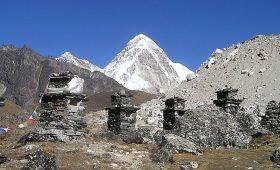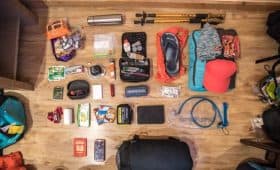

The Everest region is the most thrilling and exciting trekking region in the world. And trekking to Everest Base Camp is a lifetime experience and in a wish list for many adventure lovers.
Our 15 days Everest Base Camp trek is challenging yet, a rewarding trek. It is a world class hiking journey into the high Himalayas that leads to the base camp of the highest peak on earth i.e the Everest (8448m)
This trek combines tough terrains, high altitudes, and stunning landscape. And the breathtaking views of some of the tallest mountains in the world add beauty to this trek.
Moreover, you also get the chance to stay in the high altitude villages as you explore the local culture and traditions of the native Sherpas.
Overall, this trek gives you a deep sense of accomplishment like no other trek. It is higher in altitude than most other treks, so trekking to Everest Base Camp requires good preparation and physical fitness.
Now allow us to guide you through the day to day itinerary of our 15 days Everest Base Camp trek.
Table of Contents
- Highlights of the 15 Days Everest Base Camp Trek
- 15 Days Everest Base Camp Trek Itinerary
- Day 01: Arrive in Kathmandu
- Day 02: Fly to Lukla and Trek to Phakding
- Day 03: Trek to Namche Bazaar
- Day 04: Acclimatization Day at Namche
- Day 05: Trek to Tengboche
- Day 06: Trek to Dingboche
- Day 07: Acclimatization Hike to Nangkartshang Peak
- Day 08: Trek to Lobuche
- Day 09: Trek to Everest Base Camp and then to Gorak Shep
- Day:10 Hike up to Kala Patthar and Trek Down to Pheriche
- Day 11: Trek to Tengboche
- Day 12: Trek to Namche Bazaar
- Day 13: Trek to Lukla
- Day 14: Fly from Lukla to Kathmandu
- Day 15: Final Departure
- FAQs
- Conclusion
Highlights of the 15 Days Everest Base Camp Trek
- Scenic and adventurous flight from Kathmandu to Lukla
- Connect with the mountain people in the heart of the Himalayas
- Visit Tengboche Monastery
- Remarkable views of Khumbu icefall and glacier
- Climb Kala Patthar at an elevation of 5555m
- Reach base of the world’s highest Mt Everest
Want more information? Send us your query, and our experts will get back to you within 24 hrs.
15 Days Everest Base Camp Trek Itinerary
Day 01: Arrive in Kathmandu
Elevation : 1400m
One of our staff will receive you at the Tribhuvan International Airport and drive you to your respective hotel.
You will then check in at the Hotel and freshen up and take rest. In the evening you will have detail briefing about the trek.
Overnight at a three-star hotel.
Day 02: Fly to Lukla and Trek to Phakding
Elevation: 2804m Lukla, 2610m Phakding
Trekking hours: 3hrs
Today you will take an early morning flight from Kathmandu to Tenzing Hillary airport at Lukla. Upon arrival, you will meet your guide who will introduce you to the rest of the team and your porters.
This is the start of your trek as you will walk on a trail that gradually descends to Cheplung village. From here, you will get a glimpse of Mt. Khumbila, a sacred mountain. And further you will gradually descend until you reach Phakding.
Overnight at a lodge in Phakding.
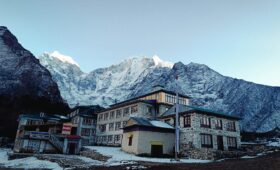
Day 03: Trek to Namche Bazaar
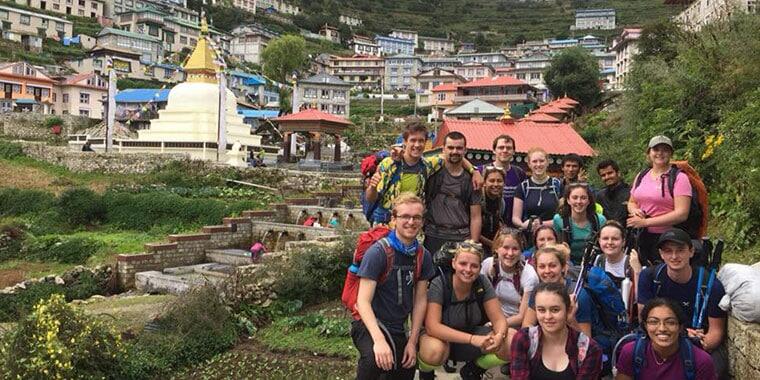
Elevation: 3441m, Namche Bazaar
Trekking hours: 5.5 hrs
Today’s trail passes through a pine forest and you continue your walk on the trail that goes north up to the Benkar valley. You will then cross the Dudh Koshi river and pass through Chumoa and Monjo villages before reaching the entrance of the Sagarmatha National Park.
Later, after crossing Hillary Suspension bridge, you pass through Jorsale village and walk alongside Dudh Koshi and Bhote Koshi river.
Further, you will ascend on a steep trail and reach Namche Bazaar. Namche Bazaar is the biggest town in the Everest region. It is home to many quality restaurants, hotels, lodges, shops, internet cafes, and bakeries.
Overnight at a lodge in Namche.
Day 04: Acclimatization Day at Namche
Today you will spend a day in Namche Bazaar in order to acclimatize and adjust to the thinning air. You can take a short distance hike to a museum where they exhibit the traditional customs of the Sherpa people.
You can also hike up to Sagarmatha National park and enjoy the sunrise over the Himalayas including the Mt. Everest, Lhotse, Nuptse, Ama Dablam, Thamserku, Kongde and so on.
Moreover, you can visit the Hillary school and a monastery which houses yeti scalp in the Khumjung village.
Overnight at Namche Bazaar.
Day 05: Trek to Tengboche
Elevation: 3860m, Tengboche
Trekking duration: 5hrs
The trek today continues along the rushing glacial waters of the Dudh Kosi river with magnificent views of the mountains.
Upon reaching Tengboche, you will have reached at an altitude of 3860m. At Tengboche, you will visit the Tengboche monastery. It is full of murals, thankas, a 20-foot Buddha sculpture, the musical instrument and robes of the Lamas.
You will also witness the prayer ceremony either in the evening or in the morning depending on how the trekking goes.
Overnight at a lodge in Tengboche
Day 06: Trek to Dingboche
Elevation: 4350m, Dingboche
Trekking duration: 5 hrs
Today, the trail from Tengboche drops to Dingboche. You will cross another exciting suspension bridge on the Imja Khola and climb to Pangboche amongst thousand mani stones.
Your uphill trek continues taking you to the quaint traditional Sherpa village of Dingboche. From here you will get the exquisite views of Lhotse, Island Peak, and Ama Dablam.
Overnight at a lodge in Dingboche.
Day 07: Acclimatization Hike to Nangkartshang Peak
Elevation: 5083m, Nangkartshang Peak
Trekking duration:4 hrs
Today is another acclimatization day as you take some time to avoid altitude sickness. On this day you will not proceed towards Everest Base Camp. Instead, you will take a hike to Nangkartshang peak just above Dingboche.
This peak is an excellent viewpoint esp of the gorgeous Ama Dablam. From here you will get to see Ama Dablam from its summit to its feet if the weather is clear.
While during the afternoon, you can spend the time strolling around the village and resting.
Overnight at a lodge.
Day 08: Trek to Lobuche
Elevation: 4910m, Lobuche
Trekking duration: 5 hrs
Today the trail continues along the lateral moraine of the Khumbu Glacier. You will pass by stone memorials for deceased climbers attempting the Everest summit.
Further, you will continue to climb as you head to the village of Lobuche which lies at the giant foot of Lobuche peak.
Take some good rest as some breathing problem may arise due to the altitude.
Overnight at a lodge in Lobuche.
Day 09: Trek to Everest Base Camp and then to Gorak Shep
Elevation: 5365m Everest Base Camp / 5180m Gorak Shep
Trekking duration: 8hrs
This is a big day where you will reach your final destination. Today’s trek will be a difficult one along the Khumbu glacier.
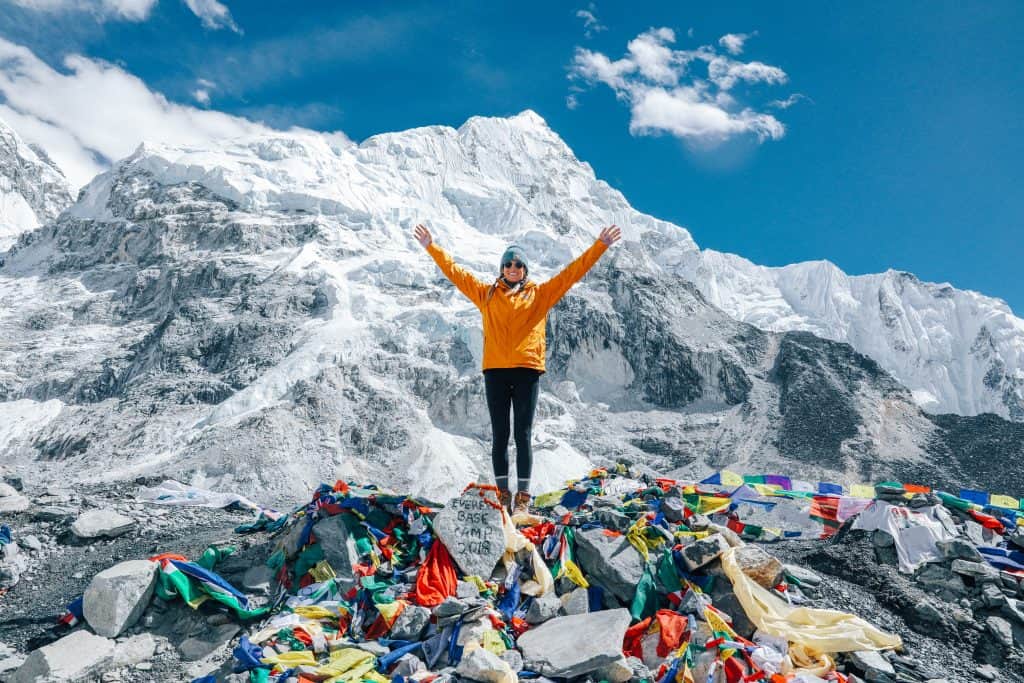
After a couple of hours of a hike, you will reach Gorak Shep and continue your journey to the Everest Base Camp at 5365m, the closest you can get to the Everest.
During spring, you will witness many expedition teams that are about to attempt the summit. The view of Khumbu icefall and glacier is spectacular from the Base camp.
Later you will walk back to Gorak Shep where you will spend the night.
Overnight at a lodge.
Day:10 Hike up to Kala Patthar and Trek Down to Pheriche
Elevation: 5555m Kala Patthar / 4200m Pheriche
Trekking duration: 7 hrs
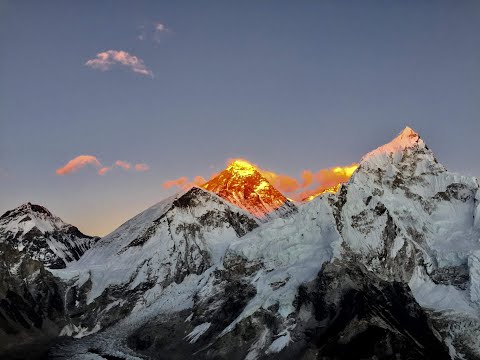
This is one of the most difficult but rewarding days of the trek. You will start your trek early in the morning and climb Kala Patthar at 5555m. The ascend is demanding but the climbers will get the best mountain views from here.
Here Everest, the highest point on the earth with 8848m, towers directly ahead. And not only this, you will get the mind-blowing views of giant mountains like Nuptse, Pumori, Chagatse, Lhotse etc looming on all sides.
You will then make a quick descent to Gorak Shep and have your breakfast. Later you will trek down to Pheriche.
Overnight at a lodge in Pheriche.
Day 11: Trek to Tengboche
Elevation: 3860m, Tengboche
Trekking duration: 3hrs
Today you will bid goodbye to Pheriche valley and trek back to Tengboche once again.
Overnight at a lodge in Tengboche.
Day 12: Trek to Namche Bazaar
Elevation: 3441m, Namche Bazaar
Trekking duration: 4hrs
From Tengboche, you will follow up and down trails and will return to Namche Bazaar. Here in the Namche Bazaar lodge, you will have a proper shower facility.
Hence you can take a hot bath and rest from the tiring days of the trek.
Day 13: Trek to Lukla
Elevation: 2804m, Lukla
Trekking duration: 6hrs
Today is the last day of your trek as you return to Lukla where the trek began. Upon reaching, you have time to reflect on the trek and rejoice on the achievement.
The afternoon is free and you can roam around. In the evening you can celebrate the successful return with drinks and dinner with the teammates.
Overnight at a lodge.
Day 14: Fly from Lukla to Kathmandu
Today you will enjoy the last close glimpse of the mountains. And take a 35 minutes scenic flight back to Kathmandu.
On arrival in Kathmandu, we will transfer you to your respective hotel. Later in the evening you can take a stroll around the bustling streets of Thamel and look around the shops.
Overnight at a three-star hotel.
Day 15: Final Departure
Today you will drive to Tribhuvan International Airport for your flight departure. We will then share our goodbyes and wish you a safe flight back home.
With this, the trip concludes and you come to an end of the 15 days Everest Base Camp trek.
FAQs
When is the Best Time to Go on an EBC trek?
The best time to go on the Everest Base Camp trek is during months of Spring (March, April, May). Spring is the peak season and the time when the region is busiest with climbers making their way to the summit.
During these months the weather is stable and dry which is perfect for trekking. The mountain views are the best with verdant fields and blooming of rhododendron flowers.
September, October, and November is another popular trekking period that tends to be busy. If you are someone who doesn’t like a crowd, you can try some of the trek variations such as the EBC Gokyo lakes trek.
Trekking in the winter months is possible, but for this, you have to prepare yourself for freezing temperature. Summer in Nepal coincides with monsoon season with sharp downpours. Hence the trails are wet and with leeches and earthworms. These months may add challenges to the trek.
How Difficult is the EBC Trek?
Everest Base Camp is a moderate trek. This trek requires no mountaineering skills of any sort.
People from all walks of life, shape, and size can take this trek. The round trip length of the trek is around 130 km. Moreover, you will cover around 15 km with 5 to 7 hours of trekking every day. The toughest part of the trek is the altitude and the effect it can have on your body.
Our itinerary, however, includes acclimatization days which aims for a gradual pace during ascents. This will allow your body to slowly adjust to the altitude.
Hence, it is wise to take physical training prior to the trek. You can undertake a gym training programme or hike for hours and climb stairs etc.
With proper packing, physical fitness, and enough acclimatization you can easily overcome the Everest Base Camp trek difficulty.
What are the Permits that I need for Everest Base Camp Trek?
To trek to Everest Base Camp, you will need a Local Area Permit which costs USD 20 per person. And Sagarmatha National Park Entry permit which costs around USD 30.
What Kind of Insurance do I Need for EBC Trek?
It is important to have travel insurance while trekking into the mountains. Make sure you get an insurance that covers up to the altitude of 6000 m, flight delays, accidents, and immediate helicopter evacuation.
Can I Trek Alone?
Yes, you can trek alone in the Everest region. But it is always a better idea to trek with licensed guide and porters for many reasons.
They take care of you and your belongings throughout the trek. Plus, they give you company on the journey and help you navigate the trails without any hassles.
Traveling alone may not be safe since during emergencies you will need support. Also, it is impossible to gather everything about the routes from a guide book.
Do I Need a Guide or Porter?
Depending on your convenience you can either hire both or anyone. But having both on your side is comforting and safe from all sides.
We cannot stress more on the importance of having a guide while trekking. A guide will not only help with navigation but also help in negotiating prices of the hotel rooms.
They obviously are familiar and know more about the place and hence they suggest the best places to eat and spend the night.
Not only that, a good guide can educate you with the history associated with the monuments and monasteries you will come across. They will help you with medical emergencies and traveling arrangements.
A porter, on the other hand, is someone who will carry the baggage for you. This enables you to walk freely allowing you to focus on your own safety.
Conclusion
15 days Everest Base Camp trek is definitely a lifetime experience that one should not miss out on. This is a safe itinerary for the Everest Base Camp trek because you will have enough acclimatization days during the trek.
This trek gives a very good opportunity to get close to both the natural attractions of the Khumbu region. And the lifestyle and culture of the Legendary Sherpas.
With a little bit of preparation and by choosing a favorable season one can successfully complete the  trek.
trek.
For further question and queries, please feel free to contact us. It is our pleasure to guide and assist you with the best of our knowledge.
Want more information? Send us your query, and our experts will get back to you within 24 hrs.
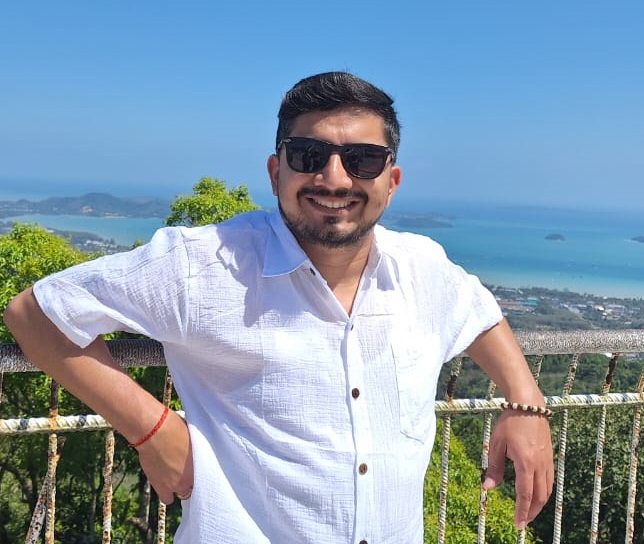
Madhav started working as a porter in 2001 and then moved on to work as a trekking guide. After working in the trekking and tourism industry for eight years, he co-founded Mosaic Adventure in 2009.
Madhav has trekked to most of the trekking destinations in Nepal, including Everest Base Camp Trek, Annapurna Base Camp, Annapurna Circuit Trek, Poon Hill Trek, Jomsom Muktinath Trek, Indigenous Peoples Trek, Langtang Valley Trek, Mardi Himal Trek, and all of the day hikes around Kathmandu.
He has also extensively traveled to other countries such as Australia, the USA, the UK, France, Hong Kong, Japan, China, the Philippines, the UAE, Saudi Arabia, Bahrain, Thailand, Turkey, and India. Madhav is the one who answers most of your questions about trekking and tours and helps to plan your trip by giving a personal touch.