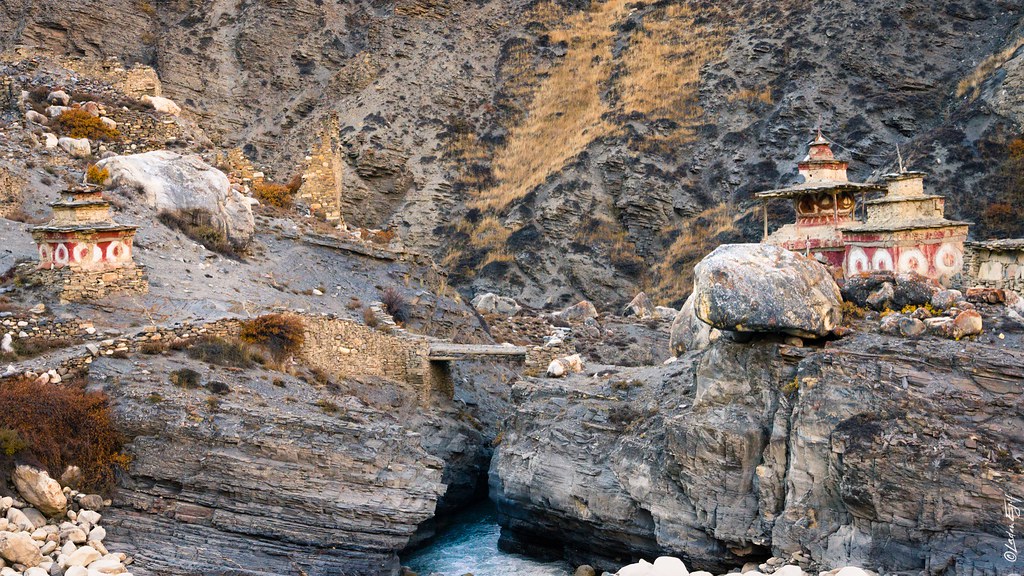
Nar Phu Valley Trekking

18 Days

Step into a hidden world where time stands still. The Nar Phu Valley Trek takes you deep into a remote corner of Nepal, tucked between the Annapurna and Manaslu regions. Here, Tibetan-influenced culture thrives, and the untouched beauty of the Himalayas surrounds you at every step.

Leaving the busy trails of the Annapurna Circuit behind for the first week, you’ll pass through narrow canyons, ancient monasteries, and traditional villages that have preserved their way of life for centuries. Rhododendron forests, alpine pastures, and soaring peaks like Kangaru Himal, Himlung Himal, and the Annapurna range create an unforgettable backdrop.

This trek is perfect for adventurers seeking solitude, cultural immersion, and the challenge of high passes such as Kang La and Thorong La. For those ready to experience one of Nepal’s best-kept secrets, the Nar Phu Valley is waiting.

Autumn 2026 update: heavy rain and snowfall in late September 2026 temporarily disrupted the Besisahar to Chame road and parts of the Annapurna Circuit trail. The road to Dharapani has since been repaired and vehicles are running again. Our team check road, trail and pass conditions before every departure.

Key Facts: 18-Day Nar Phu Valley Trek with Kang La and Thorong La Passes
Cost
USD 1,650 per person
Deposit
20% to secure your spot, balance on arrival in Kathmandu
Duration
18 days (11 days on the trail, including 2 acclimatization days)
Trek route
Dharapani, Koto, Phu, Nar, Kang La, Manang, Thorong La, Muktinath
Difficulty
Challenging to strenuous
Guided by
Licensed, experienced local guide (mandatory in this restricted area)
Maximum altitude
5,416 m / 17,769 ft at Thorong La Pass
Highest overnight stay
4,860 m / 15,945 ft at High Camp
High passes
Kang La (5,322 m / 17,461 ft) and Thorong La (5,416 m / 17,769 ft)
Group size
Minimum 2 people, maximum 8.
Best season
Spring (March to May) and Autumn (September to November)
Highly recommended time
April to early June and mid-October to November for the most stable weather on both passes
Tour availability
All year round
Meeting point
Tribhuvan International Airport, Kathmandu
Transport
Private vehicle from Kathmandu to Dharapani (about 10 hours), jeep from Muktinath to Jomsom, a 30-minute flight from Jomsom to Pokhara, and a vehicle from Pokhara to Kathmandu (about 6 hours)
Accommodation
3-star hotels in Kathmandu and Pokhara; basic tea houses and homestays during the trek
Meals
All trek meals included; breakfast only in Kathmandu and Pokhara
Fitness level
Good fitness required; previous multi-day trekking experience recommended
Permits & fees
Nar Phu Restricted Area Permit and Annapurna Conservation Area Permit included
Travel insurance
Required; must cover trekking up to 5,500 m and helicopter evacuation
Connectivity
No mobile network in Nar and Phu; limited Wi-Fi and charging elsewhere
Equipment
Gear list provided; sleeping bag, down jacket and duffel bag available for free rental
Safety
Strong safety standards with clear emergency and evacuation protocols

Use the tabs on this page to find all key information about the Nar Phu Valley Trek, including itinerary, departure dates, cost, inclusions, FAQs and more.

Overview

The Nar Phu Valley Trek is a rare journey into one of Nepal’s most remote and untouched corners. Tucked between the famous Annapurna and Manaslu regions, this trek is perfect for travelers who want to explore beyond the busy trails and experience the Himalayas in their purest form.

Opened to foreign visitors only in the early 2000s, the valley has kept much of its original charm and cultural heritage. The people of Nar and Phu are of Tibetan descent and still live a traditional lifestyle centered on farming, yak herding, and deep spiritual traditions. Along the way, you will pass ancient monasteries, prayer walls, and chortens that reflect their rich Buddhist culture.

The trail leads through dramatic landscapes: narrow canyons, forests of pine and rhododendron, and wide alpine pastures. The real challenge and highlight of the trek comes with crossing two high mountain passes, Kang La (5,322 m) and Thorung La (5,416 m), both of which reward you with sweeping views of snowcapped giants.

Throughout the journey, you will be surrounded by towering peaks such as the Annapurna range, Kangaru Himal, Amotsang Himal, and more. The scenery ranges from shimmering rivers and colorful rock formations to vast mountain deserts, making it a paradise for photographers and nature lovers alike.

The Nar Phu Valley Trek is more than just a physical adventure. It is a cultural and spiritual experience that takes you far from the crowds and into villages where life has changed little for centuries. Each day on this trek offers new discoveries, deeper connections with nature, and a unique insight into an ancient way of life.

Nar Phu Valley Trek: At a Glance

Day 1: Arrive in Kathmandu, transfer to hotel.

Day 2: Guided sightseeing tour of Kathmandu's UNESCO World Heritage Sites.

Day 3: Scenic drive from Kathmandu to Dharapani.

Day 4: Trek from Dharapani to Koto, the entry point to Nar Phu.

Day 5: Trek from Koto to Meta, entering the remote Nar Phu Valley.

Day 6: Trek to the ancient village of Phu Gaon.

Day 7: Acclimatization and exploration day in Phu Gaon.

Day 8: Trek from Phu to the beautiful village of Nar.

Day 9: Acclimatization and exploration day in Nar.

Day 10: Cross the challenging Kang La Pass (5,322m) and descend to Ngwal (8 to 10 hours).

Day 11: Trek to the main Annapurna Circuit trail at Manang.

Day 12: Trek to Yak Kharka, preparing for the next pass.

Day 13: Trek to High Camp, the final stop before Thorung La.

Day 14: Cross the epic Thorung La Pass (5,416m) to Muktinath, then drive to Jomsom.

Day 15: Fly from Jomsom to Pokhara, enjoy a rest day.

Day 16: Sightseeing and exploration in the scenic city of Pokhara.

Day 17: Drive back to Kathmandu.

Day 18: Final departure from Nepal.
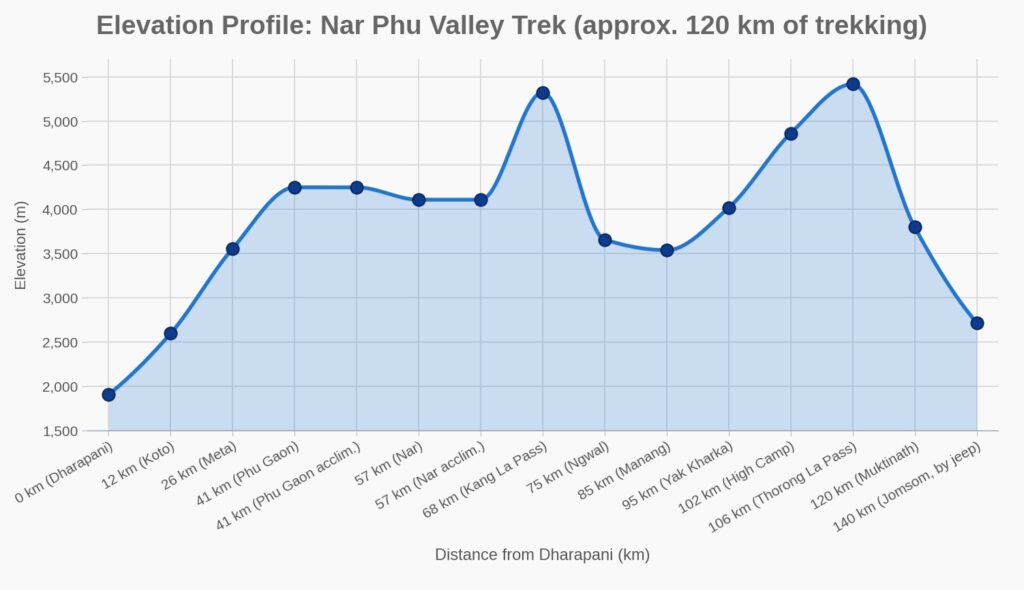
Nar Phu Valley Trek Elevation Profile - Updated October 2026

Why This Trek Stands Out

Unmatched Solitude: Unlike the busy Annapurna Circuit, the Nar Phu Valley is quiet and untouched. The trails here are far less crowded, which allows you to fully enjoy the peaceful atmosphere of the mountains and connect deeply with nature.

Trekkers regularly report meeting only a handful of other groups over several days on the Nar Phu trail.

A Cultural Time Capsule: The valley is home to people of Tibetan heritage who have preserved their traditions for centuries. As you walk through Nar and Phu villages, you’ll see ancient monasteries, prayer flags, and daily life that still reflects the old Himalayan way of living.

Scenic Grandeur: From lush rhododendron forests in spring to the dramatic landscapes of the high passes, the scenery is breathtaking at every turn. Snowcapped peaks, colorful valleys, and vast open skies make this trek feel like stepping into a living postcard.

A Truly Rewarding Challenge: The trek is not easy, with rugged terrain, long walking days, and two high-altitude passes to cross. But every step brings something meaningful - whether it’s the beauty of the landscape, the warmth of a remote village, or the spiritual calm of a mountain monastery. By the end, the sense of achievement is as rewarding as the journey itself.

Built for Safe Acclimatization: We never rush. Two rest days in Phu Gaon and Nar give your body time to adjust before Kang La, and we follow the mountain's golden rule: climb high, sleep low. On acclimatization days you hike higher during the day and return to sleep at a lower altitude.
The Cost Include(s)

  • Arrival/departure transfer
  • Hotel in Kathmandu and Pokhara with breakfast
  • Guided Kathmandu city tour with entrance fees
  • Kathmandu to Dharapani private jeep
  • Standard meals ( Breakfast /Lunch/Dinner) during the trek
  • Teahouse and homestay accommodation during the trek
  • English speaking licensed guide during the trek, porters (1 porter between 2 trekkers); along with their wages, insurance etc.
  • Required trekking entry permits.
  • Sleeping bag, jacket and duffel bag to use during the trek (on request)
  • Jomsom – Pokhara flight ticket
  • Pokhara - Kathmandu tourist bus transfer.
  • Government imposed taxes

The Cost Exclude(s)

  • Lunch and dinner in Kathmandu/Pokhara.
  • All kind of beverages.
  • Travel Insurance (Essential / should cover emergency evacuation while trekking up to 5500 meters).
  • Personal trekking gears except stated above.

Itinerary

  • Day
    1

    Welcome to Nepal!

    Activities: We will meet you at the airport and drive you to your hotel, just relax for the rest of the day to recover from your long journey.

    Highlights: Bustling Thamel, an array of restaurants, bars and shops.

    Accommodation: Kathmandu 3 star hotel.

  • Day
    2

    Meeting with trekking guide, last minute shopping for your trek and Kathmandu sightseeing.

    Highlights: Pashupatinath, Boudhanath Stupa, Swaymbunath and Patan Durbar Square, cultural and historical sights of the Kathmandu Valley.

    Accommodation: Kathmandu 3 star hotel.

  • Day
    3

    Drive to Dharapani.

    Hours of driving: 10 (approximately).

    Elevation reached: 1910m.

    Views on offer: Colorful waterfalls, crashing onto the rocks below.

    Accommodation: Basic Teahouse.

    Road update: the road to Dharapani, which was affected by the late-September 2026 floods, has been repaired and vehicles are running normally.

  • Day
    4

    Koto.

    Hours of walking: 5.

    Difficulty: Difficult.

    Elevation reached: 2600m.

    Terrain: A difficult trek up and over 2 hills.

    Views on offer: Manaslu, Himalchuli, Lamjung Himal and Annapurna II

    Highlights: Meeting the local people and tasting the local apples.

    What’s to see: Apple orchards and Manangi villages.

    Accommodation: Basic Teahouse.

  • Day
    5

    Meta.

    Hours of walking: 7.

    Difficulty: Moderate.

    Elevation reached: 3560m.

    Terrain: Gradual inclines, forest and riverbank paths.

    Views on offer: Rhododendron and pine tree forests.

    Highlights: There will be no teahouses, lodges or houses today until we reach Meta, so enjoy walking in a peaceful, untouched environment.

    What’s to see: The Naar Khola river.

    Accommodation: Basic Teahouse.

  • Day
    6

    Phu Gaon. (An extra night here for exploration and acclimatization.)

    Hours of walking: 5.

    Difficulty: Moderate.

    Elevation reached: 4250m.

    Terrain: Gradual inclines, riverbank paths.

    Views on offer: Kangaru Himal, Pokharkan and Amotsang Himal.

    Highlights: The warm welcome of the people of Phu Gaon where the first Tibetan migrants to Nepal settled nearly 200 years ago.

    What's to see: The Phu Khola River and the local monastery built by the first migrants.

    Accommodation: Basic Teahouse.

  • Day
    7

    Phu Gaon

    Acclimatization day with optional hikes. Your guide will choose a route based on how everyone feels, for example a visit to the local monastery or a longer hike toward the Pangri Glacier or the direction of Himlung Himal Base Camp. We walk high during the day and return to Phu Gaon to sleep.

  • Day
    8

    Naar. (An extra night here for exploration and acclimatization.)

    Hours of walking: 7.

    Difficulty: Moderate.

    Elevation reached: 4110m.

    Terrain: Gradual inclines, riverbank paths, rocky trails and a steep descent into Naar.

    Views on offer: Panoramic views of Pisang Peak, Kangaroo, Pokharkan and Amotsang Himal.

    Highlights: Having an extra day here to take a leisurely day hike and soak up the atmosphere and the spectacular views.

    What’s to see: Mahendra Pool where you will see a bridge over the river which the old King of Nepal financed after he paid a visit to the village.

    Accommodation: Basic Teahouse.

  • Day
    9

    Naar.

    Rest and acclimatization day. You can take a short, easy hike above the village along the Kang La trail, then rest, eat early and go to bed early, as tomorrow starts at 4am.

  • Day
    10

    Ngwal via the Kang La Pass.

    Hours of walking: 8 to 10.

    Difficulty: Strenuous.

    Elevation reached: 3660m at Ngwal, 5322m on the pass.

    Terrain: Steep, rocky climb where you will need to scramble for some time, followed by a long descent of about 1,700 m to Ngwal. We need to set off at 4am!

    Views on offer: A 360 degree, panoramic view of the majestic Himalayas.

    Highlights: Conquering the pass and enjoying the views.

    What's to see: Sunrise from 5322m amidst a mountain wonderland, simply amazing.

    Accommodation: Basic Teahouse.

    Practical tips: Trekking poles are strongly recommended for the long descent. Carry packed lunch, water, warm layers, gloves and a headlamp.

    Weather note: if snow or high winds make Kang La unsafe, your guide may delay the crossing or change the plan.

  • Day
    11

    Manang.

    Hours of walking: 4.

    Difficulty: Moderate.

    Elevation reached: 3540m.

    Terrain: Gentle ascents, forest and riverbank paths.

    Views on offer: The surrounding peaks through the pretty pine forest.

    Highlights: Enjoying an easy day of trekking to rest from the previous day’s efforts!

    What's to see: A beautiful local monastery in Manang.

    Accommodation: Basic Teahouse.

  • Day
    12

    Yak Kharka

    Hours of walking: 5.

    Difficulty: Moderate to difficult.

    Elevation reached: 4020m.

    Terrain: Dry, grassy hills, gradual inclines.

    Views on offer: Annapurna II, III and IV, Gangapurna, Lamjung Himal and Tilicho Peak.

    Highlights: The tranquility and fresh mountain air.

    What’s to see: The village of Gunsang, wild blue sheep and yaks.

    Accommodation: Basic Teahouse.

  • Day
    13

    High camp.

    Hours of walking: 5.

    Difficulty: Difficult/Strenuous.

    Elevation reached: 4860m.

    Terrain: Pebbled tracks, some steep inclines.

    Views on offer: Some pretty spectacular Himalayan peaks.

    Highlights: The views of course!

    What's to see: The village of Thorong Phedi.

    Accommodation: Basic Teahouse.

  • Day
    14

    Muktinath via the Thorong La Pass, drive to Jomsom

    Hours of Walking: 7 to 8.

    Hour of driving: about 1.

    Trek Difficulty: Moderate.

    Elevation reached: 3800m at Muktinath and 5416m on the Thorong La Pass and 2720 in Jomsom.

    Terrain: Up hill rocky paths, there maybe snow depending on the time of year and a steep descent to Muktinath.

    Views on offer: The most alluring, magnificent views from the Pass.

    Highlights: Standing in the icy wilderness of the Thorong La Pass. Congratulations on reaching this high alpine wonderland.

    What's to see: Mountains, as far as the eye can see!

    Accommodation: Basic Teahouse.

    Weather note: if snow or high winds make Thorong La unsafe, your guide may delay the crossing or change the plan.

  • Day
    15

    Fly to Pokhara

    Duration: 30 minutes.

    Accommodation: 3* hotel in Pokhara.

    Mountain flights depend on the weather. If the flight is cancelled, we will drive from Jomsom to Pokhara by road instead (about 6 to 7 hours).

  • Day
    16

    Sightseeing in Pokhara

    Highlights: Exploring Pokhara, boating on Phewa Lake and climbing to the peace pagoda.

    Accommodation: 3* hotel in Pokhara.

  • Day
    17

    Kathmandu

    Activities: Ride a bus to Kathmandu, free time to explore around.

    Duration: 6 hours.

    Accommodation: 3* hotel in Kathmandu.

  • Day
    18

    Goodbye and farewell from Nepal!

    A Mosaic Adventure representative will accompany you to the airport and bid you farewell.

Frequently Asked Questions (FAQs)

General

How difficult is the Nar Phu Valley Trek?

The trek is challenging because of its high altitude and remote location. You'll walk 5 to 8 hours a day, often on steep trails and cross two passes above 5,000 meters. The Kang La day is the toughest: expect 8 to 10 hours, a 4am start and a long descent of about 1,700 m to Ngwal, so trekking poles are strongly recommended. Good fitness, prior trekking experience and proper acclimatization are very important.

Is this trek suitable for beginners?

It’s not ideal for first-time trekkers. However, if you have completed multi-day treks before, even at lower altitudes, and are physically fit, you can manage this trek with preparation and by following your guide’s advice.

If you prefer a less remote option, see our Annapurna Base Camp Trek.

How should I prepare physically?

Start training 12 to 16 weeks before departure. Aim for 3 to 4 cardio sessions a week (brisk walking, hiking, cycling or stair climbing) of 45 to 60 minutes, building to 90 minutes. Add two strength sessions a week focused on legs and core (squats, lunges, step-ups). Once a week, do a long hike of 4 to 6 hours with a loaded daypack, building to 6 to 8 hours with a few back-to-back hiking days in the last two months. The Kang La day involves 8 to 10 hours of walking and a long descent, so practice downhill walking with trekking poles. In the final weeks, reduce intensity, break in your boots and test all your gear. If you have any medical conditions, speak with your doctor before the trek.

What should I pack for this trek?

Essential items include: moisture-wicking base layers, a warm fleece or down jacket, a waterproof jacket, trekking pants, gloves, a hat, a warm sleeping bag, sturdy trekking boots, and a headlamp.

Night temperatures near Kang La can drop to about -15°C, so bring a warm sleeping bag rated for at least that (we also provide rental sleeping bags and down jackets. Also bring trekking poles for the long descents.

A detailed list will be provided before your trek.

What is the highest point on this trek?

The highest point is Thorung La Pass at 5,416 meters (17,769 feet). Kang La Pass is slightly lower at 5,322 meters (17,460 feet).

What is the best time of year to do the Nar Phu Valley Trek?

The best seasons are Autumn (September–November) and Spring (March–May).
- Autumn offers stable weather, clear skies, and stunning mountain views.
- Spring has moderate temperatures, clear skies, and colorful rhododendron forests.
Winter brings heavy snow, making the passes impassable, and the summer monsoon brings rain and possible landslides.

In early March some villagers have not yet returned from lower altitudes, so lodges in Nar and Phu may be closed. We arrange accommodation in advance and adjust if needed.

Do I need a special permit for this trek?

Yes. Nar Phu is a restricted area, so you need a Restricted Area Permit (RAP) and an Annapurna Conservation Area Permit (ACAP). We arrange them for you and the permit fees are included in your trip price. A TIMS card is not required at the moment, although rules can change and we will let you know if they do.

Do I need a guide and porter?

Yes, having a licensed guide is mandatory. A porter is also highly recommended so you can trek comfortably with just a light daypack.

What kind of accommodations are available?

You’ll stay in simple teahouses and homestays run by local families. Rooms usually have twin beds and shared bathrooms. In Naar and Phu villages, the facilities are very basic, offering a true cultural experience.

What kind of food is available on the trek?

Most teahouses serve a mix of Nepali and basic Western meals. Dal Bhat (rice with lentil soup) is the staple and a great energy source. You’ll also find noodles, pasta, Tibetan bread, and soups. As you climb higher, food choices may be more limited.

What about altitude sickness?

Altitude sickness is a real risk. Our itinerary includes acclimatization days to help your body adjust. Walk slowly, stay hydrated, and let your guide know immediately if you feel unwell.

Is there electricity or Wi-Fi on the trek?

Electricity is available at most tea houses for a small fee, but it can be unreliable at higher altitudes. There is no mobile network in the Nar and Phu valleys and Wi-Fi is not available until you reach Ngwal or Pisang, so this is a good chance to unplug.

What kind of wildlife can I see?

The valley is home to blue sheep, Himalayan tahr, and many bird species. With some luck, you might even spot the rare snow leopard.

What makes the Nar Phu Valley unique compared to other treks?

Unlike busier trails, Nar Phu Valley offers true solitude, untouched landscapes, and a rare chance to experience an ancient Tibetan-influenced culture that has remained unchanged for centuries.

Looking for another restricted-area trek? See our Manaslu Circuit Trek.

Can I do this trek solo?

Nepal's rules since March 2026 allow a single trekker to obtain a restricted area permit through a registered agency with a licensed guide. However, this trip requires a minimum of 2 people to join. If you are travelling alone, contact us and we will help you join a group.

Is travel insurance required?

Yes. You need travel insurance that covers trekking up to 5,500 meters, emergency helicopter evacuation and medical expenses. Please send us a copy of your policy before departure.

What happens if bad weather or snow blocks a pass?

Your safety always comes first. Mountain weather can change quickly and heavy snow can make Kang La or Thorong La unsafe, especially in early spring and late autumn. Your guide checks the weather forecast and local reports every day and makes the final decision on whether to continue, wait or turn back.

If a pass is blocked, we first wait at a safe lodge for up to 2 days if conditions are likely to improve. If they do not, we use an alternative plan: if Kang La is closed, we return via Meta and Koto to Dharapani and continue by road. If Thorong La is closed, we return to Manang and continue by road. Any extra costs from these changes (accommodation, transport or helicopter) are the traveler's responsibility and are normally covered by travel insurance. We recommend keeping one or two spare days before your international flight.

What happens if someone gets altitude sickness or needs emergency evacuation?

Our guides are experienced in recognizing altitude sickness and check oxygen levels regularly at high altitude, alongside daily health checks. If symptoms are mild, the guide stops the ascent or descends immediately to a lower altitude, which is the most effective treatment. If symptoms are severe or in any emergency, we contact your travel insurance company to arrange an immediate evacuation, usually by helicopter when the weather allows. Please share your insurance details with us before departure so there are no delays.

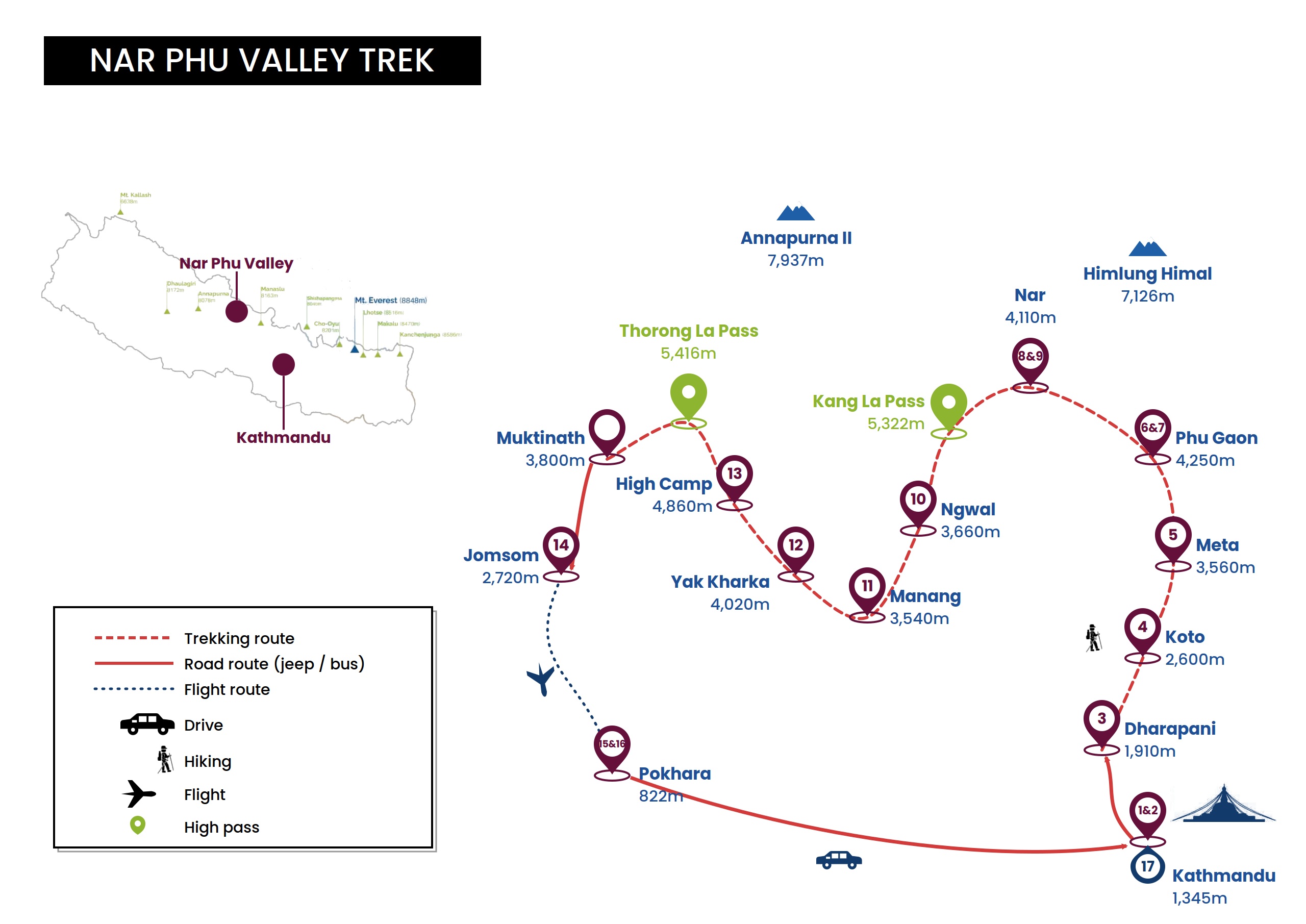
Nar Phu Valley Trek Route Map

Nar Phu Valley Trek Map - Updated October 2026