

Nepal Restricted Area Permits at a Glance
- What it is: a special trekking permit, issued by Nepal’s Department of Immigration, for 15 remote areas in 13 districts, most of them near the Tibetan border
- Who needs one: every foreign trekker entering a restricted area
- How to get it: only through a registered Nepali trekking agency. You cannot apply on your own
- Guide: a licensed trekking guide must accompany you
- Solo trekkers: allowed since 22 March 2026. The old two-person minimum has been removed
- Fees: from USD 20 per week (Kanchenjunga, Makalu) to USD 50 per day (Upper Mustang) and USD 500 for 10 days (Upper Dolpa)
- Also needed: the national park or conservation area permit for the region
Fees and rules last checked November 2026. They are set by the Government of Nepal and can change without notice.
Some of the most remarkable treks in Nepal, such as Upper Mustang, Manaslu, Nar Phu and Dolpo, pass through areas the government calls restricted. To enter them, foreign trekkers need a Restricted Area Permit (RAP) on top of the usual park or conservation fees.
This guide lists every restricted area with its current fee, explains the rules that changed in 2026, shows what a permit costs on real itineraries, and explains how the permit is arranged. We have arranged restricted area permits for treks such as Manaslu, Tsum Valley, Upper Mustang, Nar Phu and Kanchenjunga since 2009.
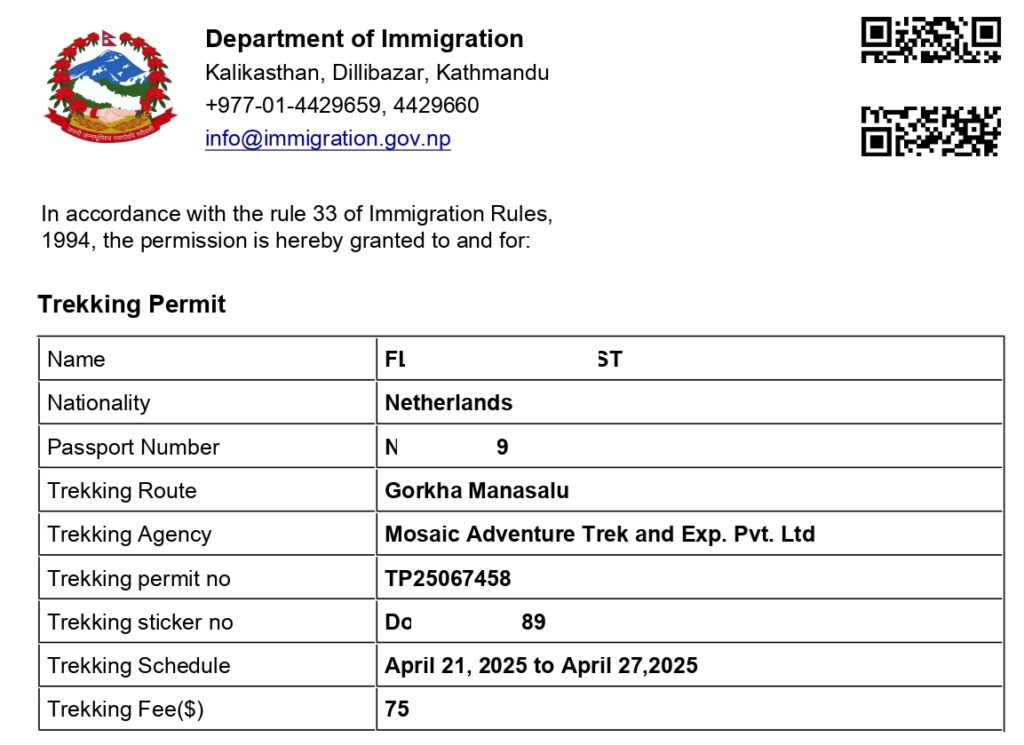
What Is a Restricted Area in Nepal?
A restricted area is a part of Nepal where the government controls and records the entry of foreign visitors. Most lie along the border with Tibet, and the rules exist to protect fragile mountain cultures and environments and for border security. Many of these areas were closed to foreigners entirely until the early 1990s, when the government began opening them through a special permit system run by the Department of Immigration.
The best-known treks in Nepal do not need a restricted area permit. These include the Everest Base Camp trek, the Annapurna Circuit, Annapurna Base Camp and the Langtang Valley trek. They only need the national park or conservation area permit and, for some, a local permit.
What Changed in 2026
1. Solo trekkers can now get a permit
Until March 2026, restricted area permits were only issued to groups of at least two foreign trekkers, which forced many solo travellers to join a group or pay for a “ghost” second trekker. On 22 March 2026, the Department of Immigration removed that rule. A single foreign trekker can now get a permit in their own name.
What has not changed: the trek must still be arranged through a registered trekking agency, and a licensed guide must go with you. The agency is responsible for emergency rescue and logistics, and one guide may lead a maximum of seven trekkers. “Solo” means without other trekkers, not without a guide.
2. Upper Mustang is now USD 50 per day
Upper Mustang used to cost a flat USD 500 for a minimum of 10 days, plus USD 50 for each extra day, even if you only stayed three days. The government has replaced this with a fee of USD 50 per person per day, so you pay only for the days you spend in the restricted area beyond Kagbeni. A 10-day trek costs the same as before, but shorter visits, such as a jeep tour, now cost much less.
Upper Dolpa has not changed and still costs USD 500 for the first 10 days.
3. Applications are now online
The permit process is now digital. Trekkers already in Nepal apply with their Nepali visa number, and trekkers abroad can pay the fee in advance with an application ID, so the permit can be ready before they arrive. In both cases, the application is still submitted by your trekking agency.
Restricted Area Permit Fees in Nepal
Fees are per person, in US dollars or the equivalent in another convertible currency. Where a fee is weekly, a part-week counts as a full week. Where there is a peak-season rate, it applies from September to November.
| Restricted area | Treks it covers | Permit fee per person |
|---|---|---|
| Upper Mustang (Mustang district, north of Kagbeni) | Upper Mustang trek, Upper Mustang jeep tour, Lo Manthang | USD 50 per day |
| Upper Dolpa (Dolpo Buddha RM wards 4 to 6, Shey Phoksundo RM wards 1 to 7, Charka Tangsong RM wards 1 to 6) | Upper Dolpo trek, Shey Gompa | USD 500 for the first 10 days, then USD 50 per day |
| Lower Dolpa (Thulibheri, Tripurasundari and parts of Dolpo Buddha, Shey Phoksundo, Jagdulla, Mudkechula and Kaike RMs) | Lower Dolpo trek, Phoksundo Lake | USD 20 per week, then USD 5 per day from the 8th day |
| Manaslu (Gorkha district) | Manaslu Circuit trek | Sep to Nov: USD 100 per week, then USD 15 per day Dec to Aug: USD 75 per week, then USD 10 per day |
| Tsum Valley (Chumnubri RM wards 3, 6 and 7, Gorkha) | Manaslu and Tsum Valley trek | Sep to Nov: USD 40 per week Dec to Aug: USD 30 per week Then USD 7 per day from the 8th day |
| Nar Phu (Narpa RM wards 1 to 5 and Nasho RM wards 6 and 7, Manang) | Nar Phu Valley trek | Sep to Nov: USD 100 per week Dec to Aug: USD 75 per week Then USD 15 per day from the 8th day |
| Kanchenjunga (Phaktanglung RM wards 6 and 7, Mikwakhola RM ward 5, Sirijunga RM ward 8, Taplejung) | Kanchenjunga Base Camp trek, Kanchenjunga North Base Camp trek | USD 20 per week for the first 4 weeks, then USD 25 per week |
| Makalu region (Bhotkhola RM wards 1 to 5 and Makalu RM ward 4, Sankhuwasabha) | Upper Arun valley routes near the border. The standard Makalu Base Camp trek may pass through part of it, depending on the route | USD 20 per week for the first 4 weeks, then USD 25 per week |
| Everest region border area (Khumbu Pasang Lhamu RM ward 5, Solukhumbu) | A small border area. The Everest Base Camp, Gokyo and Three Passes treks do not need this permit | USD 20 per week for the first 4 weeks, then USD 25 per week |
| Rolwaling area (Gauri Shankar RM ward 9 and Bigu RM ward 1, Dolakha) | Rolwaling and Tashi Lapcha routes | USD 20 per week |
| Rasuwa border area (Gosaikunda RM ward 1 and part of ward 2) | Villages near the Tibet border. The Langtang Valley and Gosaikunda Lake treks do not need this permit | USD 20 per week |
| Humla (Simkot RM wards 1, 6 and 7, Namkha RM wards 1 to 6, Chankheli RM wards 3 to 5) | Limi Valley, the route to Kailash via Hilsa | USD 50 for the first 7 days, then USD 10 per day |
| Mugu (Mugumakarmarong RM wards 1 to 9) | Upper Mugu and the Mugu Karnali valley | USD 100 for the first 7 days, then USD 15 per day |
| Bajhang (Saipal RM wards 1 to 5) | Saipal region, far west | USD 90 for the first 7 days, then USD 15 per day |
| Darchula (Vyas RM ward 1) | Byas valley, far west | USD 90 for the first 7 days, then USD 15 per day |
RM: Rural Municipality. Sources: Department of Immigration, Nepal and the Department of Tourism, with the 2026 updates announced by the Department of Immigration.

The Other Permits You Need
A restricted area permit is only one part of the paperwork. Every restricted trek also needs the permit for the national park or conservation area it passes through, and many restricted treks also cross areas that are not restricted, where only the normal permits apply.
| Trek | Restricted area permit | Also needed |
|---|---|---|
| Upper Mustang | Upper Mustang | Annapurna Conservation Area Permit (ACAP) |
| Manaslu Circuit | Manaslu | Manaslu Conservation Area Permit (MCAP) and ACAP |
| Manaslu and Tsum Valley | Manaslu and Tsum Valley | MCAP and ACAP |
| Nar Phu | Nar Phu | ACAP |
| Kanchenjunga | Kanchenjunga | Kanchenjunga Conservation Area Permit |
| Upper and Lower Dolpo | Upper or Lower Dolpa | Shey Phoksundo National Park permit |
| Makalu Base Camp | Makalu region, depending on route | Makalu Barun National Park permit |
For the full breakdown on our most popular restricted treks, see our guides to the Manaslu trek permit and the Upper Mustang permit.
What a Restricted Area Permit Costs on Real Treks
The restricted area fee is charged only for the days you spend inside the restricted zone, not for the whole trek. Here are some typical examples, per person:
- Upper Mustang trek, 10 days in the restricted area: 10 × USD 50 = USD 500
- Upper Mustang jeep tour, 4 days in the restricted area: 4 × USD 50 = USD 200 (USD 500 under the old rule)
- Manaslu Circuit in October, 8 days in the restricted area: USD 100 for the first week + USD 15 for day 8 = USD 115
- Manaslu Circuit in April, 8 days in the restricted area: USD 75 + USD 10 = USD 85
- Nar Phu in November, 6 days in the restricted area: USD 100 for the week
- Kanchenjunga, 3 weeks in the restricted area: 3 × USD 20 = USD 60
- Upper Dolpo, 14 days in the restricted area: USD 500 + 4 × USD 50 = USD 700
The exact number of restricted days depends on your itinerary. When you book a trek to a restricted area with us, we work out the permit cost from your actual route.
How to Get a Restricted Area Permit
You cannot apply for a restricted area permit yourself, and you cannot trek in a restricted area independently. Here is how the process works:
- Book your trek with a registered trekking agency in Nepal, such as Mosaic Adventure, a TAAN member.
- Send your documents: usually a copy of your passport, your Nepal visa details (or your arrival plans, if you are still abroad) and a passport photo. Your agency will tell you exactly what is needed.
- The agency applies online to the Department of Immigration, with your itinerary, your licensed guide’s details, and pays the fee in US dollars.
- The permit is issued in your name and carried by your guide. It is checked at police and immigration checkpoints on the trail, so keep your passport with you.
Indian citizens can pay the fee in Nepali rupees, at the equivalent of the US dollar rate.

Rules on the Trail
- Stay on the route and dates in your permit. Leaving the permitted area or overstaying can lead to penalties.
- Your licensed guide must be with you for the whole time in the restricted area.
- Carry your passport, as checkpoints compare it with your permit.
- Respect local customs. Many restricted areas are deeply traditional Buddhist communities, and some monasteries do not allow photographs inside.
- Make sure your travel insurance covers trekking at the altitudes on your route and helicopter evacuation, as most restricted areas are far from roads and hospitals.
Is a Restricted Area Trek Worth the Extra Cost?
For many trekkers, yes. Restricted areas see far fewer visitors than the Everest and Annapurna trails, and the permit system helps keep them that way. You walk through villages where Tibetan Buddhist culture is still part of daily life, cross passes such as Larkya La on the Manaslu Circuit, and see landscapes, like the desert canyons of Upper Mustang, found nowhere else in Nepal.
If you are choosing between them, see our Manaslu vs Annapurna Circuit comparison, the Upper Mustang jeep tour vs trekking guide, and our list of the most difficult treks in Nepal.

Restricted Area Permit FAQs
What is a restricted area permit in Nepal?
It is a special trekking permit issued by Nepal’s Department of Immigration for 15 remote areas in 13 districts, most of them near the Tibetan border, including Upper Mustang, Manaslu, Tsum Valley, Nar Phu, Dolpo and Kanchenjunga. Every foreign trekker entering these areas needs one, on top of the normal park or conservation area permit.
Can I get a restricted area permit on my own?
No. Restricted area permits are only issued through registered Nepali trekking agencies, and a licensed trekking guide must accompany you. You cannot trek in a restricted area independently.
Can solo trekkers get a restricted area permit?
Yes. Since 22 March 2026, the Department of Immigration issues restricted area permits to individual foreign trekkers. The old rule requiring at least two trekkers has been removed, but you still need a registered agency and a licensed guide.
How much is the Upper Mustang permit?
USD 50 per person per day, charged only for the days you spend in the restricted area beyond Kagbeni. It replaced the old flat fee of USD 500 for a minimum of 10 days. You also need the Annapurna Conservation Area Permit.
How much is the Manaslu restricted area permit?
From September to November it costs USD 100 per person for the first week and USD 15 per day after that. From December to August it costs USD 75 for the first week and USD 10 per day after that. You also need the Manaslu and Annapurna conservation area permits.
Which is the most expensive restricted area in Nepal?
Upper Dolpa, at USD 500 per person for the first 10 days and USD 50 per day after that. Upper Mustang costs USD 50 per day, so a 10-day visit costs the same, but shorter visits cost less.
Do I need a restricted area permit for Everest Base Camp or the Annapurna Circuit?
No. The Everest Base Camp, Annapurna Circuit, Annapurna Base Camp and Langtang Valley treks do not need a restricted area permit. They need only the national park or conservation area permit and, in some areas, a local permit.
Can I apply for a restricted area permit before arriving in Nepal?
Yes. The permit system is now online, and trekkers abroad can pay the fee in advance with an application ID, so the permit can be ready before you arrive. The application is still submitted by your trekking agency.
Is the restricted area permit charged for the whole trek?
No. The fee is charged for the days you spend inside the restricted zone. On the Manaslu Circuit, for example, only part of the route is restricted, so you pay for those days, not for the whole trek.
Can Indian citizens pay the restricted area permit fee in rupees?
Yes. Indian citizens can pay the fee in Nepali rupees at the equivalent of the US dollar rate. Other nationalities pay in US dollars or another convertible currency.
Plan a Restricted Area Trek
Restricted areas are some of the most rewarding places to trek in Nepal, and the paperwork is simpler than it looks once it is in the hands of an experienced agency. We arrange the restricted area permit, the conservation area permits, your licensed guide and the logistics as part of every trek to these regions.
If you are planning a trek to Upper Mustang, Manaslu, Tsum Valley, Nar Phu, Kanchenjunga or another restricted area, contact us with your dates and we will work out your permits and costs.
Permit rules and fees are set by the Government of Nepal and may change without notice. Last checked November 2026.
Want more information? Send us your query, and our experts will get back to you within 24 hrs.
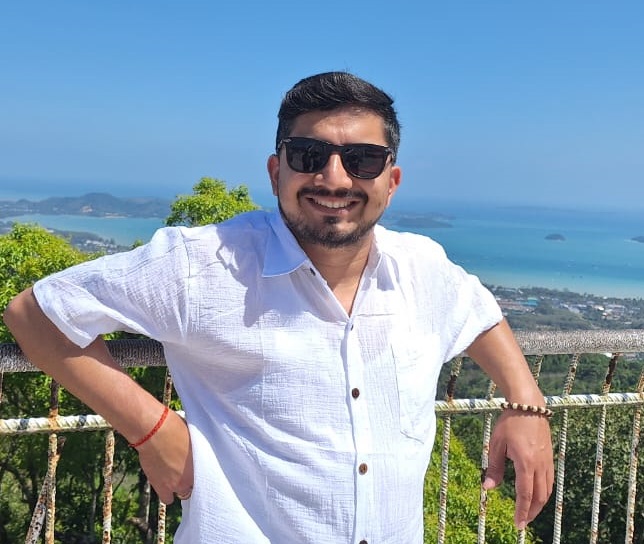
Madhav Prasad is a seasoned trekking and tourism expert with over two decades of experience in the field. Starting his career in 2001 as a porter, Madhav quickly advanced to the role of trekking guide, gaining invaluable hands-on experience in Nepal’s diverse trekking routes. In 2009, after eight years of dedication to the industry, he co-founded Mosaic Adventure, a leading trekking and tour company known for its commitment to safety, sustainability and personalized service.
Madhav has personally trekked to nearly every major trekking destination in Nepal, including Everest Base Camp, Annapurna Base Camp, the Annapurna Circuit, Poon Hill, Jomsom Muktinath, the Indigenous Peoples Trail, Langtang Valley and Mardi Himal, among others. His experience extends beyond Nepal, as he has also successfully summited Mount Kilimanjaro, Africa’s highest peak.
In addition to his extensive trekking credentials, Madhav is well traveled globally, having explored countries such as Australia, the USA, the UK, France, Japan, China, and many others. His global exposure enhances his ability to understand and cater to the diverse needs of international trekkers.
Madhav is the primary point of contact for many clients at Mosaic Adventure, personally addressing inquiries and helping plan treks with a meticulous and personalized approach. His deep knowledge of Nepal’s trekking routes, combined with his global travel experience, ensures that every trek is well planned, safe and unforgettable.


