
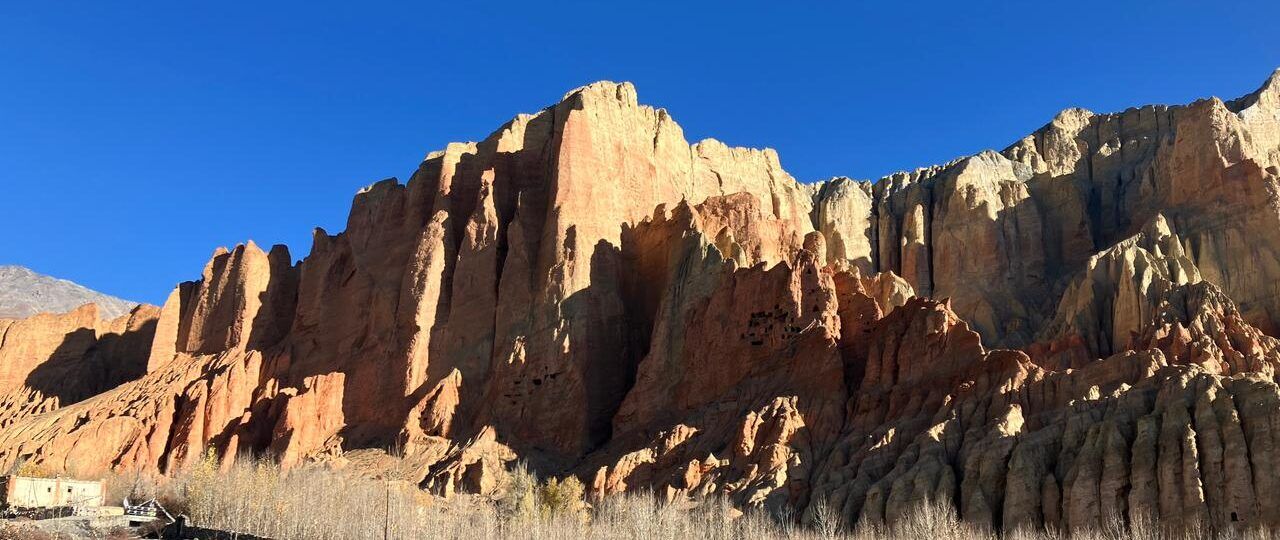
Upper Mustang is a restricted region of Nepal, and the permit rules trip up a lot of travelers. Below is a straightforward breakdown of exactly what you need, what it costs, how the days are counted, and what actually matters when planning a jeep tour.
Important: The Upper Mustang permit system changed recently. The old USD 500 flat fee is gone. The Restricted Area Permit is now USD 50 per person per day for the days you are physically inside Upper Mustang.
Quick Answer: Upper Mustang Permits
To visit Upper Mustang, you must have:
- Restricted Area Permit (RAP)
- Annapurna Conservation Area Permit (ACAP)
- A licensed guide and a registered agency
Independent travel is not allowed. Permits must be arranged through a Nepal-registered agency. You cannot apply yourself.
Current permit cost: USD 50 per person per day inside the restricted zone.
This replaced the old flat USD 500 fee, which in our opinion was actually a better deal for shorter trips. Now you pay per day, so trip length matters more than before.
Source: The Kathmandu Post
If you just want the easiest path, book a guided tour where permits, guide, and vehicle are handled together. See: Upper Mustang 4WD Jeep Tour

Why Upper Mustang Permits Are Different
Upper Mustang borders Tibet. Nepal government controls access for a mix of reasons: cultural preservation, border security, and keeping tourism at a level that does not destroy what makes the place worth visiting. In practice, this means strict checkpoints and no room for improvisation.
If you arrive at Kagbeni without the correct permits, you will be turned back. There is no talking your way through.
Want ideas for what to do once you are there? See Things to Do in Mustang.
What Permits Are Required for Upper Mustang?
1) Restricted Area Permit (RAP)
This is the main one. Without it, you do not get past Kagbeni.
- Mandatory for all foreign travelers
- Can only be issued through registered agencies
- Checked at multiple checkpoints along the route
- Requires a licensed guide to be on the permit
2) Annapurna Conservation Area Permit (ACAP)
Upper Mustang falls inside the Annapurna Conservation Area boundary, so ACAP is also required. It is a one-time fee and fairly minor compared to the RAP. Both trekkers and jeep travelers need it.
Who Needs Upper Mustang Permits?
- All foreign passport holders, including Indian citizens: RAP + ACAP are required
- Nepali citizens: no permits required
Indian travelers are regularly caught off guard by this. The assumption is that because India and Nepal have an open border arrangement, Upper Mustang follows the same rules. It does not. The restricted zone applies to everyone who is not a Nepali citizen.
Permit Cost Overview
On mobile: you can scroll the table left and right.
| Permit | What it Covers | Current Cost | Important Notes |
|---|---|---|---|
| Restricted Area Permit (RAP) | Entry into the Upper Mustang restricted zone (beyond Kagbeni) | USD 50 per person per day | Charged only for days inside Upper Mustang. Replaced old USD 500 flat fee system. |
| Annapurna Conservation Area Permit (ACAP) | Access to the Annapurna Conservation Area | NPR 3,000 per person | One-time fee. Required for both jeep tours and trekking. |
| Licensed Guide | Legal escort inside restricted region | Included in tour cost | Mandatory. Independent travel is not allowed. |
Deciding between jeep and trekking? This comparison is useful: Upper Mustang Jeep Tour vs Trekking.
For a fuller picture of what Upper Mustang actually costs including food, accommodation, and transport, see: Mustang Trek Cost.
Can You Travel Upper Mustang Without a Guide?
No. A licensed guide is not optional. This applies regardless of how you travel.
- Jeep tour: guide required
- Trek: guide required
- Mixed jeep and walking: guide still required
Most people find it easier to book a jeep tour where the permits, guide, and vehicle are all handled by one agency. That way the permit days align with the itinerary, and there is someone responsible if something goes sideways. See the route here: Upper Mustang 4WD Jeep Tour.
Prefer going on foot? See the full trek itinerary: Upper Mustang Trek 10 Days.
Where Are Upper Mustang Permits Checked?
Permits are checked at several points, not just at the entry.
Checkpoints along the route include:
- Kagbeni (main entry point)
- Chele
- Ghami
- Charang
- Lo Manthang
Each checkpoint compares your permit against your passport and travel dates. If something does not match, you can be stopped. This is not a formality.
Do You Need Two People for the Upper Mustang Permit?
This question comes up constantly, especially from solo travelers. The minimum of two foreign travelers is still the standard requirement for RAP applications.
- Minimum 2 foreign travelers are required to apply for the Restricted Area Permit
- A solo foreign traveler cannot normally obtain the permit alone
- Some agencies can match solo travelers with others from their roster, but this depends on whether groups happen to overlap on dates
- Confirm group size with the agency before booking flights. Sorting this out afterward causes real problems.
Who Can Issue Upper Mustang Permits?
Only a Nepal-registered trekking agency can apply for the RAP on your behalf.
You cannot:
- apply yourself
- apply through any online portal
- sort it out on arrival in Kagbeni
- use any “permit service” found through a general Google search
The agency files the application using your passport details, Nepal visa, confirmed travel dates, and guide license information. Getting this wrong means problems at checkpoints, and at that point there is no easy fix.
When Should You Apply for Permits?
- Comfortable lead time: 2 to 4 weeks before travel
- April, May, September, October: apply earlier, these months fill up
- Last-minute applications: technically possible but not worth the risk if your flights are already booked
Planning around weather and season? This guide is worth reading first: Best Time to Visit Upper Mustang by Jeep
What Documents Do You Need?
- Passport copy (clear photo page)
- Nepal visa (standard tourist visa works)
- Passport-size digital photos (agencies often request these)
- Confirmed travel dates
Worth noting: travel insurance that covers high altitude and emergency evacuation is strongly recommended. Not just for safety reasons but because having that coverage tends to sharpen how seriously people plan the trip.
How the Permit Days Are Counted
This is where most of the confusion sits. The RAP is calculated based on the days you are actually inside the restricted zone, meaning beyond Kagbeni. Your time in Kathmandu, Pokhara, or even Jomsom does not count toward the permit days.
Example: Two nights in Kathmandu and a night in Pokhara before flying to Jomsom. None of those count. The clock starts once you cross into the restricted zone past Kagbeni and stops when you come back out.
What counts: travel days to and through Ghami, Charang, Lo Manthang, Chhoser, and anywhere else beyond Kagbeni.
What If My Travel Plans Change?
Weather delays happen. Roads get blocked. Jomsom flights are notoriously unreliable.
- Permit dates are fixed once issued
- Extending your stay inside the zone usually means paying for additional permit days
- Leaving early does not get you a refund
This is exactly why we always build buffer days into itineraries. A tight schedule in Mustang is a stressful schedule.
Real-World Example Costs
Mobile tip: Swipe left/right if the table does not fit.
| Example Plan | Days in Restricted Zone | RAP Cost (USD) | ACAP | Notes |
|---|---|---|---|---|
| Short Jeep Tour | 4 to 5 days | USD 200 to 250 | NPR 3,000 | Fast highlights, long driving days. Not ideal if you want to actually absorb the place. |
| Balanced Jeep Tour | 7 days | USD 350 | NPR 3,000 | Best pace for most travelers. Enough time to visit the key sites without rushing. |
| Longer Immersive Trip | 10+ days | USD 500+ | NPR 3,000 | More villages, slower pace. Worth it if you have the time. |
Still deciding between jeep and trekking? See: Upper Mustang Jeep Tour vs Trekking
The Simple Way to Plan This Legally
Upper Mustang is not somewhere you figure out once you arrive. The combination of permits, fixed dates, checkpoint scrutiny, weather unpredictability, and road conditions means that things you could improvise elsewhere simply do not work here.
The cleanest approach is booking a tour where the permits and logistics are already taken care of. That typically includes:
- RAP and ACAP permit processing
- Licensed guide assigned to your group
- 4WD jeep and experienced driver
- Itinerary that aligns with the permitted days
- Support if flights delay or roads become impassable
Explore the full itinerary here: Upper Mustang 4WD Jeep Tour
Common Upper Mustang Permit Mistakes
These come up every season. Most are avoidable with basic planning.
- Assuming it works like Everest or Annapurna: Upper Mustang has its own rules. You cannot do it independently, full stop.
- Booking flights before permits are confirmed: If permits are delayed or denied, those flights become useless and non-refundable.
- Trusting online “permit services”: Only Nepal-registered agencies can legally issue the RAP. Anyone else is either lying or acting as a middle layer that will cause problems.
- Getting the permit day count wrong: Underestimating days leads to either a rushed trip or extra fees paid on the spot.
- No buffer for flight delays: Jomsom flights delay constantly because of wind. Plan around it, not against it.
Jeep Tour vs Trekking (Permit Reality)
The permit requirements are identical for both. Whether you travel by jeep or on foot, you still need:
- Restricted Area Permit (RAP)
- Annapurna Conservation Area Permit (ACAP)
- Licensed guide
- Registered agency
The only thing that changes is how many days you spend inside the zone. Trekkers typically spend more days, which means higher total permit cost. If you want a direct comparison: Upper Mustang Jeep Tour vs Trekking
Best Time to Go
Permits are issued year-round. The logistics, however, are not equal across all months.
The most reliable months for smooth travel are April, May, September, and October. Roads are in better condition, flights are more predictable, and weather is manageable.
Summer monsoon is less of a problem in Upper Mustang than in most of Nepal because the region sits in a rain shadow behind the Himalayas. It still rains, but not the same way it does further south. This guide covers it in more detail: Best Time to Visit Upper Mustang by Jeep
Winter travel is possible. It is cold, some roads become difficult, and you need flexible plans. Some travelers prefer it specifically because the region is even quieter than usual.
Is Upper Mustang Worth the Permit Cost?
For the right kind of traveler, it’s definitely a good fit.
The permit system is what keeps Upper Mustang from becoming another overrun trekking route. You are not just paying for access. You are paying for the fact that it is still genuinely remote, still culturally intact, still largely empty of tourist crowds.
What you get for the cost:
- Lo Manthang and the ancient cave monasteries
- Tibetan Buddhist culture that has changed very little over centuries
- Desert landscape sitting at high altitude, which is visually unlike anywhere else in Nepal
- Villages that still function the way they always have, not as museum displays
- A trip that does not feel like the same Himalayan trail everyone else has done
Upper Mustang feels much closer to Tibet than to the Nepal most visitors see. That is not an accident. It is exactly why the permits exist in the first place.
Final Decision Check
Upper Mustang is not casual travel. It is remote, the altitude is real, the roads are rough in places, and cultural sensitivity matters.
If you want a rare Himalayan region that still has genuine character, actual isolation, working monasteries, and landscapes that do not look like anything else you have seen, Upper Mustang is one of the few places in Nepal that still delivers that without compromise.
The most practical way to visit is a guided jeep tour with permits included. No paperwork to manage, no checkpoint risk, no surprises at Kagbeni.
See the full trip: Upper Mustang 4WD Jeep Tour

Upper Mustang Permit FAQ
These are the questions travelers ask most often before committing to a trip. The answers reflect how the system actually works, not the ideal version.
Do I need a permit for Upper Mustang?
Yes. All foreign travelers must have both a Restricted Area Permit (RAP) and an Annapurna Conservation Area Permit (ACAP). No exceptions.
Can I travel Upper Mustang without a guide?
No. A licensed guide and a registered Nepal agency are legally required. This applies to jeep tours, trekking, and any combination of the two.
How much does the Upper Mustang permit cost?
The RAP costs USD 50 per person per day for the days you are inside the restricted zone beyond Kagbeni. The ACAP is a flat NPR 3,000 per person.
Is there a minimum group size for Upper Mustang?
Yes. A minimum of two foreign travelers is required to apply for the RAP. Solo travelers cannot normally get the permit on their own.
Can I get the Upper Mustang permit myself?
No. Only Nepal-registered trekking agencies can submit the application. There is no online portal, and you cannot apply at the checkpoint.
Is Upper Mustang open all year?
Yes. Permits are available year-round. Realistically, April to May and September to October are the most straightforward months because weather and road conditions are more stable.
In a Nutshell
Upper Mustang requires special permits and cannot be visited independently. Once you understand the rules, the process is not complicated.
- Permits required: Restricted Area Permit (RAP) + Annapurna Conservation Area Permit (ACAP)
- Guide required: Yes, licensed guide and registered Nepal agency are mandatory
- Minimum travelers: 2 foreign travelers per permit application
- Permit cost: USD 50 per person per day inside the restricted zone
- Independent travel: Not allowed
Upper Mustang is not a DIY destination. A guided jeep tour is the easiest way to visit legally and without unnecessary stress.
Still not sure which option fits your situation? Our team can suggest a plan based on your dates, group size, and travel style: Contact Mosaic Adventure

Madhav Prasad is a seasoned trekking and tourism expert with over two decades of experience in the field. Starting his career in 2001 as a porter, Madhav quickly advanced to the role of trekking guide, gaining invaluable hands-on experience in Nepal’s diverse trekking routes. In 2009, after eight years of dedication to the industry, he co-founded Mosaic Adventure, a leading trekking and tour company known for its commitment to safety, sustainability and personalized service.
Madhav has personally trekked to nearly every major trekking destination in Nepal, including Everest Base Camp, Annapurna Base Camp, the Annapurna Circuit, Poon Hill, Jomsom Muktinath, the Indigenous Peoples Trail, Langtang Valley and Mardi Himal, among others. His experience extends beyond Nepal, as he has also successfully summited Mount Kilimanjaro, Africa’s highest peak.
In addition to his extensive trekking credentials, Madhav is well traveled globally, having explored countries such as Australia, the USA, the UK, France, Japan, China, and many others. His global exposure enhances his ability to understand and cater to the diverse needs of international trekkers.
Madhav is the primary point of contact for many clients at Mosaic Adventure, personally addressing inquiries and helping plan treks with a meticulous and personalized approach. His deep knowledge of Nepal’s trekking routes, combined with his global travel experience, ensures that every trek is well planned, safe and unforgettable.
