
Many trekkers get stuck on the same question: Should I do the Annapurna Circuit or Annapurna Base Camp? If you have enough time, you can do both in one trip and see the best of what the region has.
This page covers how the two routes connect, how many days you actually need, where altitude becomes a real issue, what permits are required, what different seasons feel like on the ground and how to avoid the most common mistakes people make out there.

Quick Summary
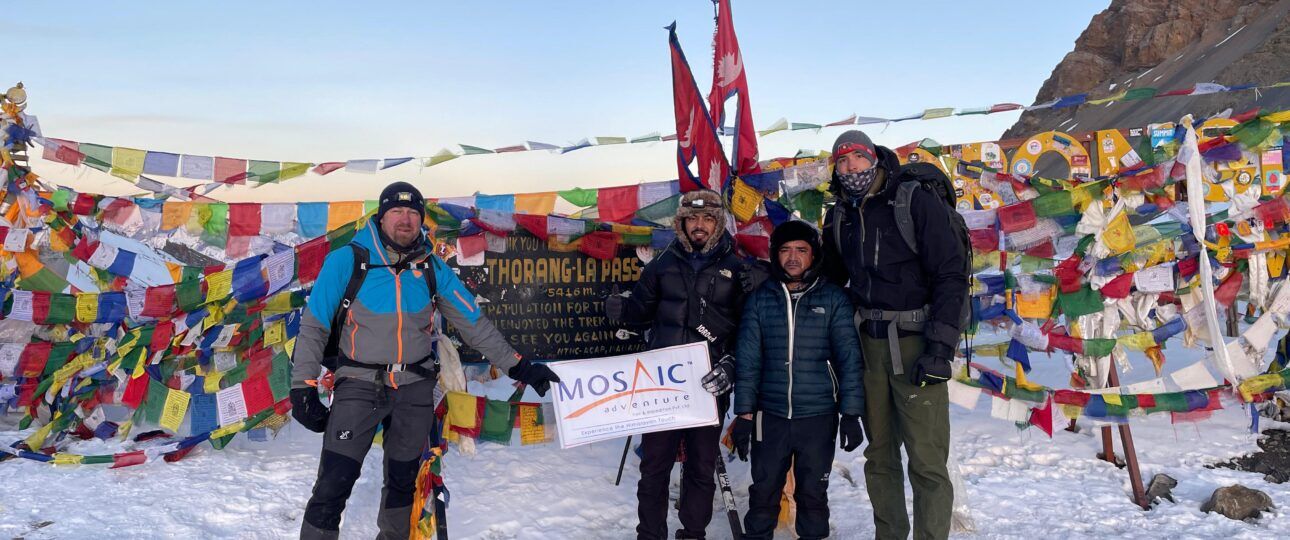
- Trip style: Teahouse trek combining Thorong La Pass (5,416m) and Annapurna Base Camp (4,110m)
- Typical duration: 18 to 22 days (this page uses a steady 20-day plan)
- Difficulty: Challenging but no technical skills needed. Expect long days and serious altitude, especially around Thorong La
- Best seasons: March to May and September to November
- Permits: ACAP and TIMS (details below). Plan to trek with a licensed guide on Annapurna routes
- Who it suits: Trekkers who want one trip covering both the Circuit landscapes and the ABC mountain basin views
Trek at a Glance
| Highest point | Thorong La Pass: 5,416m (17,769ft) |
|---|---|
| ABC altitude | Annapurna Base Camp: 4,110m (13,481ft) |
| Typical walking day | 5 to 7 hours (longer on the pass day) |
| Longest day | Thorong La crossing day (roughly 8 to 10 hours depending on pace and conditions) |
| Accommodation | Teahouses (simple rooms; shared toilets are more common the higher you go) |
| Connectivity | Charging and Wi-Fi often available for a fee, but reliability drops with altitude |
| Start / finish | Kathmandu to Circuit to ABC to Pokhara to Kathmandu |
Who This Trek Is For
- You have 18 to 22 days and want one trip that covers both Thorong La and Annapurna Base Camp.
- You can walk 5 to 7 hours most days on uneven terrain, including long stair sections on the ABC approach.
- You are okay with basic teahouse conditions and shared bathrooms at higher elevations.
- You want a route that builds up slowly so your body can actually adjust.
In my opinion, the people who do best on this combined trek are not necessarily the most athletic. They are the ones who are patient, don’t push too hard on the early days and take altitude symptoms seriously. Fitness helps, but attitude matters more once you get above 4,000m.
Who should pick a different plan
- If you only have 7 to 12 days, stick to the Annapurna Base Camp Trek on its own.
- If you mainly want the Circuit and time is tight, a shorter Circuit itinerary like the Annapurna Circuit Trek without the ABC add-on makes more sense.
- If you have serious heart or lung conditions, or you have had severe altitude illness before, talk to a doctor before planning any high altitude travel.
You do not need technical climbing experience, but you do need a steady pace, proper layering and some discipline around altitude habits.
Short on time but still want both routes? The 20-day plan on this page is the steady, well-paced version, but it is not the only way to combine the Circuit and ABC. Compressed versions are possible depending on your dates and how much risk you are comfortable with on acclimatization days. If that is your situation, contact us and we will tell you honestly whether a shorter combined itinerary makes sense for your timeframe, rather than talking you into a plan that is too rushed to be safe.
Route Options: How to Connect the Circuit with ABC
Most combined plans link the two routes after Thorong La, which is the highest point on the Circuit. The main decision is how you approach the ABC section afterward.
Option A (most common and probably the best paced): Circuit then Muktinath/Jomsom then Tatopani then Ghorepani/Poon Hill then ABC
- Why people pick it: Good variety, hot springs at Tatopani and a natural transition into the ABC section without a big jump.
- Trade-off: Takes a few extra days over a direct ABC approach, but the pacing is usually more manageable.
Option B (shorter overall): Circuit then transfer to Pokhara then direct ABC approach
- Why people pick it: Useful if you are pressed for time after finishing the pass.
- Trade-off: More transport logistics and it feels more choppy than one continuous route.
Option C (adds a major detour): Tilicho Lake plus Circuit plus ABC
- Why people pick it: Tilicho Lake is a highlight and worth it for those who have the days.
- Trade-off: More fatigue and more time. Not a great idea if you already feel iffy about the pass day.
This page follows Option A because it connects naturally and keeps the pacing reasonable for most trekkers.
20-Day Annapurna Circuit + ABC Itinerary (Sleep Altitude)

This itinerary is built around steady acclimatization and realistic walking days. Times will vary depending on weather, trail conditions and your group’s pace.
Tip: On mobile, swipe left or right on the table to see all columns.
| Day | From to To | Sleep altitude | Est. time | Notes |
|---|---|---|---|---|
| 1 | Arrive Kathmandu | 1,350m | – | Rest, sort gear |
| 2 | Drive Kathmandu to Dharapani | 1,960m | ~10 hrs | Road conditions vary a lot |
| 3 | Dharapani to Chame | 2,710m | ~5 hrs | Gradual valley gain, easy pace |
| 4 | Chame to Pisang | 3,300m | ~5 hrs | Nights start getting cold here |
| 5 | Pisang to Manang | 3,540m | ~6 hrs | One of the main acclimatization stops |
| 6 | Acclimatization day (Manang) | 3,540m | – | Short hike above village, climb high and sleep low |
| 7 | Manang to Yak Kharka / Letdar | 4,230m | ~4 hrs | Keep it slow, drink plenty of water |
| 8 | Yak Kharka / Letdar to Thorong Phedi | 4,600m | ~4 hrs | Early dinner, get to bed early |
| 9 | Thorong Phedi to Thorong La to Muktinath | 3,760m | ~7 to 10 hrs | High point 5,416m. Start before sunrise |
| 10 | Muktinath/Jomsom area to Tatopani (drive) | ~1,200m | ~6 hrs | Big descent, legs will feel this |
| 11 | Tatopani to Sikha (or similar) | 1,840m | ~5 hrs | Forest and village trails |
| 12 | Sikha to Ghorepani | 2,860m | ~6 hrs | Stone steps, keep a steady pace |
| 13 | Poon Hill sunrise then Tadapani | ~2,630m | ~6 hrs | Optional sunrise hike at 3,210m |
| 14 | Tadapani to Sinuwa | 2,310m | ~6 hrs | Start of the ABC approach |
| 15 | Sinuwa to Deurali | 3,230m | ~6 to 7 hrs | Nights get noticeably colder |
| 16 | Deurali to Machhapuchhre BC to ABC | 4,110m | ~4 to 6 hrs | ABC is a basin, weather shifts fast here |
| 17 | ABC to Bamboo | 2,340m | ~6 to 7 hrs | Long descent, knees will know it |
| 18 | Bamboo to Jhinu (hot springs) then Pokhara (drive) | 1,780m | ~4 to 5 hrs | Hot springs are worth a stop |
| 19 | Pokhara to Kathmandu (fly or drive) | 1,350m | – | Flights depend on weather |
| 20 | Departure | – | – | Build in an extra day if you can |
Important: The safest plan has a spare day in it. Weather can close the pass and sometimes you just need an extra rest day to stay well and keep moving.
Not sure if this itinerary fits your schedule or fitness?
If you want an honest opinion based on your time, experience and travel window, you can email us or message us on WhatsApp. We will help you figure out whether the combined route makes sense for you.

Seasons and Temperatures (What It Actually Feels Like)
On this route, altitude affects temperature more than the time of year does. The numbers below are a planning starting point. Wind and sudden weather changes near the pass can make actual conditions feel much worse than the numbers suggest.
| Altitude band | Typical daytime | Typical night | Notes |
|---|---|---|---|
| 1,000 to 2,000m | 12 to 28 degrees C | 5 to 18 degrees C | Warmer, heavier rain during monsoon |
| 2,000 to 3,500m | 5 to 20 degrees C | -2 to 10 degrees C | Comfortable in spring and autumn |
| 3,500 to 4,500m | 0 to 12 degrees C | -8 to 2 degrees C | Dry air, cold mornings |
| 4,500 to 5,500m | -10 to 5 degrees C | -20 to -5 degrees C | Pass conditions depend on wind and fresh snow |
Tip: On mobile, swipe left or right to see the full table.
Best time to go and when to think twice
- Spring (March to May): More stable weather, warmer days, rhododendrons blooming in the lower sections. March can still be cold at the pass.
- Autumn (September to November): Clearest skies, driest trails and the busiest season. October in particular gets very crowded on the ABC approach.
- Monsoon (June to August): Rain, heavy cloud cover, leeches in forest zones and poor visibility for most of it. Some trekkers still go, but it is harder work for fewer views.
- Winter (December to February): Snow and cold can close Thorong La for days or longer. Only realistic if you have a lot of flexibility and cold weather gear sorted properly.
Altitude and Acclimatization
This combined trek goes up to 5,416m. Most altitude problems happen when people gain height too fast, brush off early symptoms, or keep pushing when they should stop. It is not complicated, but people mess it up regularly.

Basic rules that actually matter on high altitude days
- Go slowly on purpose, especially above 3,500m. Rushing gains you nothing useful.
- Take the rest day in Manang. On a safe itinerary this is not optional, even if you feel fine.
- Climb high and sleep low on acclimatization hikes.
- Do not go higher if symptoms are getting worse.
- Descend early if symptoms become severe or do not improve after rest.
Early symptoms to watch for
- Headache that stays even after resting and drinking enough water
- Nausea or no appetite
- Dizziness, unusual tiredness, bad sleep
Worth knowing: The Thorong La crossing is a hard day even for fit trekkers. You start early in cold air and spend several hours above 4,500m. The goal is a steady pace and smart decisions, not finishing fast. I have seen people who looked very fit struggle on this day because they pushed too hard on the way up.
For more detail on altitude safety, see: Acute Mountain Sickness: Safe High Altitude Trekking Guide and the Himalayan Rescue Association (Nepal).
Accommodation and Facilities
The whole route is covered by teahouses. Basic is the right word. It works fine if you go in knowing what you are getting: cold rooms above Manang, limited power and shared bathrooms the higher you go.
- Rooms: Usually two single beds with a thin mattress and blanket. Bring a sleeping bag liner.
- Heating: Dining rooms sometimes have a stove. Bedrooms above Manang are usually not heated. Dress for it.
- Toilets: Shared toilets are common above lower altitudes. Western-style toilets become rarer.
- Charging: Often available for a fee using solar or generator power. Bring a power bank regardless.
- Wi-Fi and mobile data: Works in some villages but often slow and unreliable. Do not count on it for anything important.
- Cash: Carry enough for the full trek. ATMs are not something you can rely on once you are on the trail.
Water safety
Plan to treat your drinking water. A refillable bottle with purification tablets or a filter is easier and cheaper than buying bottled water at altitude. Prices for bottled water go up the higher you go and the plastic waste is already a problem on these routes.

Permits and Trekking Rules
Permits you will need
- ACAP (Annapurna Conservation Area Permit)
- TIMS (Trekker Information Management System)
Guide requirement
Nepal Tourism Board’s official TIMS guidance lists major Annapurna routes, including the Annapurna Circuit and Poon Hill and ABC, as routes requiring a licensed guide and an agency-issued TIMS card. Enforcement on the ground is inconsistent, but for planning and safety purposes it is best to assume you will trek with a guide. Honestly, on a combined itinerary this long, having a guide is just sensible anyway.
Typical permit costs (for international trekkers)
- ACAP: NPR 3,000 for foreigners. Children under 10 do not need the permit.
- TIMS: Cost and process depend on category and the current system used by agencies. Confirm when you book.
Where to arrange them: Most trekkers sort permits through a registered trekking agency, or through official offices in Kathmandu or Pokhara. Requirements can change, so check close to your start date.
Guide and Porter Support
On a long combined trek, small problems can get serious if you catch them too late. Stomach illness, a storm coming in, getting turned around in fog, or a headache that keeps getting worse after a day of altitude gain are not abstract concerns. They happen.
- A licensed guide helps with pacing, reading acclimatization signs and adjusting the route when weather or conditions shift.
- A porter takes load off your back so you can move at a safer pace and actually recover each night.
- Logistics support matters more on a combined plan because there are more transport steps and more places where things can go sideways.
Booking in advance vs. arranging in Kathmandu
Both options work, but they trade off differently.
- Booking through an agency in advance: You get a guide and porter confirmed before you land, permits sorted ahead of time and one less thing to manage in your first days in Kathmandu. The price is the same whether you book in advance or shop around, but booking in advance gives you peace of mind and removes much of the uncertainty.
- Arranging in Kathmandu (Thamel) on arrival: With us, the price is the same either way, so the appeal here isn’t cost, it’s flexibility. This option suits travelers who prefer to finalize plans after arriving, have flexible schedules and aren’t in a rush to start the trek. It also lets you meet your guide in person before committing. The drawback is timing: during peak trekking seasons, the best guides are often booked well in advance, leaving you with fewer options or a last-minute match just a day or two before your planned departure.
Our take: since the price doesn’t change either way, book in advance if you’re trekking in peak season (October in particular). There’s no cost trade-off to weigh and on a long combined itinerary like this one, losing even a day to chasing down a guide matters more than it would on a shorter trek.
If you are weighing your options, be honest about your priorities: safety margin, comfort, budget and how confident you are making calls in remote areas on your own.
How This Combined Trek Compares to Other Classic Routes
- Versus Everest Base Camp: Less dependence on mountain flights, more landscape variety across climate zones and the hardest single day is the Thorong La crossing rather than a gradual slog.
- Versus ABC only: More altitude exposure and more time, but you get the full Circuit transition and still reach the base camp.
- Versus the Circuit only: ABC adds the glacial basin and the close-range views that a lot of people want as an actual destination point, not just a pass crossing.
For broader context: Trekking in Nepal and Ultimate Guide to Trekking in Nepal.
Costs, Insurance and Buffer Days
What changes your total cost
- Group size: Smaller groups usually cost more per person.
- Guide and porter support: Affects both comfort and how much you carry each day.
- Season: Peak autumn dates can put pressure on accommodation and transport.
- Trail extras: Hot showers, charging fees, Wi-Fi and snacks add up over 2 to 3 weeks more than most people expect.
Travel insurance
Get insurance that specifically covers high altitude trekking and emergency evacuation. Read the altitude limit and exclusions carefully before buying and carry proof of it on the trek.
Buffer days
Add 1 to 2 spare days if your schedule allows it. They exist to protect your trip if weather closes the pass, flights are delayed, or you just need an extra rest day to recover properly.
Pay extra attention to your last two days. The Pokhara to Kathmandu leg (Day 19 on this itinerary) is often a short flight and it is one of the more weather-affected domestic routes in Nepal. Fog and low cloud regularly delay or cancel it, especially in the mornings. If your international flight home is on a tight schedule after that, a single bad-weather day can be enough to miss it. Where possible, leave at least one full buffer day between your Pokhara-to-Kathmandu transfer and your international departure or plan to drive that leg instead of fly if your dates cannot move.
For a broader cost breakdown: Trekking in Nepal Cost Guide.

Frequently Asked Questions: Annapurna Circuit with Annapurna Base Camp (ABC)
These are the questions we hear most from trekkers planning the combined route. Answers are kept short and aimed at decisions.
How long is the Annapurna Circuit and Annapurna Base Camp trek combined?
Most combined itineraries take 18 to 22 days. A steady plan usually works out to around 20 days, depending on your start and end points, rest days and whether you include Poon Hill.
What is the highest point on the combined trek?
Thorong La Pass at 5,416m (17,769ft). It is the most demanding day for both altitude and weather. Starting time and pacing on this day really matter.
What is the highest sleeping altitude on this itinerary?
Most itineraries sleep around 4,500 to 4,600m at Thorong Phedi or nearby. You go higher during the pass crossing but sleep lower on the other side.
Is Annapurna Base Camp higher than Thorong La Pass?
No. Annapurna Base Camp is around 4,110m. Thorong La is much higher at 5,416m.
How do you connect the Annapurna Circuit to Annapurna Base Camp?
The most common link is after the pass: continue to the Kali Gandaki side (Muktinath or Jomsom), transfer toward Tatopani, then walk via Ghorepani/Poon Hill into the ABC approach through Tadapani, Chhomrong, Bamboo, Deurali and up to ABC.
What permits do I need for the combined trek?
You will need ACAP and TIMS. Most trekkers sort both through a registered trekking agency before starting.
Do I need a guide for Annapurna Circuit and ABC?
Official guidance requires a licensed guide and agency-issued TIMS for major Annapurna routes. Enforcement varies on the ground, but planning with a guide from the start is the safest approach.
When is the best time to do the combined trek?
The most reliable windows are spring (March to May) and autumn (September to November).
Can weather close Thorong La Pass?
Yes and it does. Snow and wind can make the pass unsafe, especially in winter or after a storm comes through. A buffer day helps. Sometimes the right call is to wait, or change the plan.
Is this combined trek suitable for first-time trekkers?
It can be, if you train before going, follow a slow acclimatization plan including a full rest day in Manang and accept that the pass day is long and cold. If you want a simpler first high altitude trek, start with ABC only and come back for the Circuit.
Final Thoughts
The combined Annapurna Circuit and Annapurna Base Camp trek is a serious undertaking. It is not technical climbing, but it does ask for real preparation, patience and respect for altitude. People who rush this one tend to have a harder time.
If you want one trip that includes a high Himalayan pass and a proper base camp destination, the combined route is a good option. If you are unsure, choose based on time and how comfortable you are with altitude:
- Pick ABC only if your time is limited or you want a shorter first high altitude experience.
- Pick the Circuit only if you mainly want the long landscape transition and cultural exposure without adding more days.
- Pick the combined trek if you have enough days and genuinely want both in one trip.
Related pages worth reading next:
Still comparing options?
If you are deciding between ABC only, the Circuit only, or the combined trek, contact us for a straightforward comparison based on your travel dates and goals.
📧 [email protected] | 💬 WhatsApp

Hi, my name is Santosh Dharel and I work as an experienced guide with Mosaic Adventure, a renowned trekking and adventure tour company in Nepal. With years of experience in this field, I have developed a deep understanding of the Nepalese Himalayas and its culture. I am highly regarded for my excellent communication skills, which enable me to make guests feel comfortable and safe during their adventure trips. My passion for adventure and love for nature are the driving forces behind my work, making me a reliable guide and a valuable asset to the Mosaic Adventure team.
