
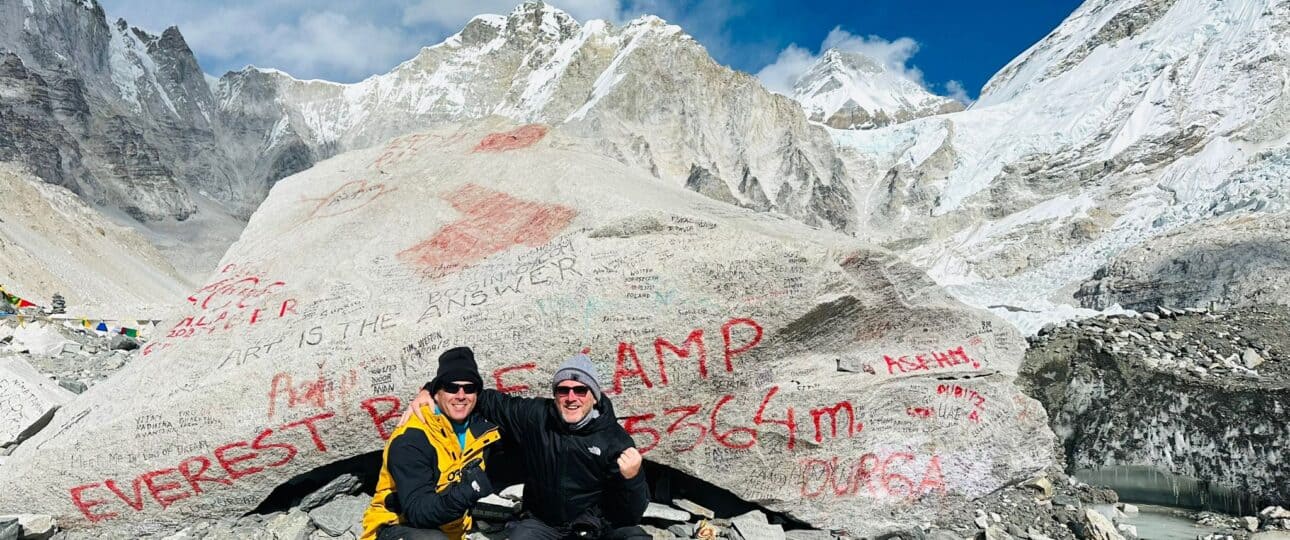
Is Everest Base Camp worth it? For most healthy people who can give it about two weeks, train for a couple of months beforehand and accept basic mountain comfort, the answer is yes. It is one of the great walks of the world, and about 9 in 10 of the trekkers we guide reach Base Camp. But it is not the right trip for everyone, and it is better to find that out now than at 5,000 meters.
This is a practical guide, not a motivational one. It sets out what the trek asks of you and what it gives back, helps you check honestly whether you are ready, and shows the best alternatives if you are not. If you want to understand why the trek means so much to people, read why people do the Everest Base Camp trek.

Everest Base Camp in Brief: What It Asks of You
- Time: about 14 days from Kathmandu, plus 1 to 2 spare days for Lukla flight delays
- Money: USD 1,445 for our 14-day package; about USD 3,000 to 5,000 for the whole trip including international flights
- Fitness: no climbing skills, but 8 to 12 weeks of training to walk 5 to 7 hours a day
- Altitude: nights up to 5,164 m; about 9 in 10 of our trekkers reach Base Camp
- Comfort: simple teahouses, shared bathrooms, cold nights
- Flexibility: weather can delay flights, and your body decides the pace
Is Everest Base Camp Worth It?
It depends on what you want from it. Here is the honest trade-off.
| What you give | What you get |
|---|---|
| Two weeks or more of holiday time | Close views of Everest, Lhotse, Nuptse and Ama Dablam, and a sunrise over Everest from Kala Patthar |
| Months of training before you go | The achievement of walking to 5,364 m, and fitness that lasts |
| Cold nights and basic rooms | Life in Sherpa villages and monasteries such as Tengboche |
| Hard days at altitude | Two weeks without traffic, screens or deadlines |
| The cost of the trip | One of the most famous walks in the world, at a fixed package price you can plan for |
One thing people do not expect: you cannot actually see the summit of Everest from Base Camp itself, because nearby peaks block the view. You see the Khumbu Icefall and the glacier. The classic view of Everest comes from Kala Patthar (5,545 m) the next morning, and from points along the trail. If seeing Everest is your main goal, plan to climb Kala Patthar.
For the full cost breakdown, see our Everest Base Camp trek cost guide.
Is Everest Base Camp What You Think It Is?
Some people picture ropes, ice axes and a summit push. The Everest Base Camp trek is different. It is a high-altitude walk, not a climb.
- It is not a summit climb, and you need no mountaineering skills.
- You walk 5 to 7 hours a day for 11 days, on established trails through villages.
- You sleep in simple teahouses, with shared bathrooms and cold bedrooms.
- Altitude, not the terrain, is what makes it hard.
- Weather, Lukla flights and your body’s pace all need flexibility.
For how hard it really is, day by day, read our guide to Everest Base Camp trek difficulty.
A Quick Self-Check: Are You Ready?
Answer these honestly:
- Can I give the trip about 14 days, plus 1 or 2 spare days?
- Can I train consistently for 8 to 12 weeks before I go?
- Am I comfortable walking uphill and downhill for several hours, several days in a row?
- Can I accept shared bathrooms, cold rooms and simple food for two weeks?
- Am I willing to walk slowly, take rest days, and turn back if my body says so?
- Has my doctor said I am fit for high altitude, if I have any heart, lung or other health condition?
- Can I live with a delayed flight or a changed plan without it ruining the trip?
| Your answers | What it means |
|---|---|
| Yes to all seven | You are a good fit. Choose your season and start training. |
| Unsure about 1 to 3 | Probably a yes, with conditions: train longer, add an extra rest day, or return by helicopter. Our guide for beginners helps here. |
| No to question 5 or 6 | Not yet. Speak to your doctor, or choose a lower trek first. |
| No to several | Everest Base Camp is not the right trip right now. See the alternatives below. |
Who Tends to Love It
In our experience, the people who enjoy Everest Base Camp most are:
- Steady walkers who are happy to keep a slow, even pace for hours.
- People who want a challenge more than comfort, and enjoy earning the view.
- Trekkers curious about mountain culture, who enjoy the Sherpa villages, monasteries and teahouse evenings as much as the peaks.
- Photographers and landscape lovers, as the scenery changes from forest to high alpine valleys.
- People marking a milestone, who value a goal that builds slowly over many days.
The trail runs through Sagarmatha National Park, and sightings of wildlife such as Himalayan thar are a reminder that this is a protected mountain landscape, not just a trekking route.
When to Wait, or Choose Something Else
- A heart, lung or other serious health condition: speak to your doctor before booking. Lower oxygen and long days put extra strain on the body. See Everest Base Camp trek safety.
- Severe altitude sickness on a previous trip: it can happen again. Choose a slower itinerary with an extra rest day, and talk to your doctor.
- No time to train: without preparation the trek is much harder and less enjoyable. Give yourself 8 to 12 weeks.
- A strong fear of flying: the Lukla flight is short but dramatic. You can avoid it by driving in and walking, on the Everest Base Camp trek without a Lukla flight or the Jiri to Everest Base Camp route, which take longer.
- Fear of heights: the trail crosses long, high suspension bridges. Most people manage them with a guide beside them, but it is worth knowing.
- Children: children may struggle to describe altitude symptoms, so we only take younger trekkers on request, after talking with the family. Most of our trekkers are in their 20s to 70s.
- You want comfort: rooms are basic and unheated above Namche. If comfort matters most, choose a lower trek or a helicopter tour.

If Not Everest Base Camp, Then What?
If the answer is “not yet” or “not for me”, you can still see Everest, or build up to Base Camp later.
| If you… | Consider |
|---|---|
| want Everest views with less altitude | Everest Panorama trek: Namche and Tengboche, graded moderate |
| have only a day | Everest scenic flight or Everest helicopter tour |
| have less time but still want Base Camp | Everest Base Camp short trek options, or the 11-day trek with helicopter return |
| want a first trek before going higher | Poon Hill trek or Annapurna Base Camp trek |
| want something gentler overall | The best treks in Nepal for beginners and seniors |
Not sure which grade suits you? See trekking grades in Nepal.
What Could Stop You on the Trail
Most people who follow a gradual itinerary reach Base Camp. With our groups, about 9 in 10 make it. When someone turns back, the reason is almost always altitude sickness, usually around Dingboche, and sometimes a stomach illness and the tiredness that comes with it. Turning back is the responsible decision when your body is not adapting, not a failure.
The other thing that can change your plans is the weather at Lukla, which can delay flights by a day or more. That is why we recommend keeping spare days. See our Lukla flight guide.

Choosing When to Go
If you decide to go, timing makes a big difference. Spring (March to May) and autumn (late September to November) have the most stable weather and are best for a first trek. Winter is quieter but very cold, and the monsoon brings rain and more flight delays. See the best time to trek Everest Base Camp.
Everest Base Camp Decision FAQs
Is Everest Base Camp worth it?
For most healthy people who can give it about two weeks, train for 8 to 12 weeks and accept basic teahouse comfort, yes. You get close views of the world’s highest mountains, life in Sherpa villages and a real sense of achievement. It is less worth it if you have little time, cannot train, or mainly want comfort.
How do I know if Everest Base Camp is right for me?
It is a good fit if you can give the trip about 14 days, train consistently before you go, walk several hours a day for many days, accept simple rooms, and are willing to walk slowly and turn back if your body tells you to. If you have a health condition, check with your doctor first.
Can you see Everest from Everest Base Camp?
Not the summit. Nearby peaks block the view from Base Camp itself, where you see the Khumbu Icefall and glacier instead. The classic view of Everest comes from Kala Patthar (5,545 m), which most itineraries climb at sunrise the day after Base Camp, and from points along the trail.
Is Everest Base Camp worth the cost?
Our 14-day package costs USD 1,445, and most trekkers spend USD 3,000 to 5,000 on the whole trip including international flights. For two weeks in the Himalayas with flights to Lukla, permits, guide, porter, rooms and meals included, most of our trekkers feel it is good value.
What if I am afraid of flying to Lukla?
You can avoid the Lukla flight by driving in and walking up from Salleri, Surke or Jiri. These routes take several days longer, but they also give your body more time to adjust to the altitude.
What are the best alternatives to the Everest Base Camp trek?
For Everest views with less altitude, try the Everest Panorama trek to Namche and Tengboche. With only a day, take an Everest scenic flight or helicopter tour. For a first trek before going higher, Poon Hill or Annapurna Base Camp are good choices.
Is Everest Base Camp too crowded?
It can be busy in the peak weeks of spring and autumn, especially in lodges. Early spring, late autumn and winter are much quieter, though colder. Many trekkers who go in quieter months say having the trail almost to themselves was a highlight.
Making Your Decision
If you can give the trip two weeks, train beforehand, accept basic comfort and respect the altitude, Everest Base Camp is very likely worth it for you. If you are unsure about your health, your fitness or your time, start with a shorter or lower trek, or take a scenic flight, and come back to Base Camp when you are ready.
For everything you need to plan the trek, see our complete Everest Base Camp guide. If you are ready, see the 14-day Everest Base Camp trek, or tell us about yourself and we will give you an honest opinion.
Want more information? Send us your query, and our experts will get back to you within 24 hrs.

Madhav Prasad is a seasoned trekking and tourism expert with over two decades of experience in the field. Starting his career in 2001 as a porter, Madhav quickly advanced to the role of trekking guide, gaining invaluable hands-on experience in Nepal’s diverse trekking routes. In 2009, after eight years of dedication to the industry, he co-founded Mosaic Adventure, a leading trekking and tour company known for its commitment to safety, sustainability and personalized service.
Madhav has personally trekked to nearly every major trekking destination in Nepal, including Everest Base Camp, Annapurna Base Camp, the Annapurna Circuit, Poon Hill, Jomsom Muktinath, the Indigenous Peoples Trail, Langtang Valley and Mardi Himal, among others. His experience extends beyond Nepal, as he has also successfully summited Mount Kilimanjaro, Africa’s highest peak.
In addition to his extensive trekking credentials, Madhav is well traveled globally, having explored countries such as Australia, the USA, the UK, France, Japan, China, and many others. His global exposure enhances his ability to understand and cater to the diverse needs of international trekkers.
Madhav is the primary point of contact for many clients at Mosaic Adventure, personally addressing inquiries and helping plan treks with a meticulous and personalized approach. His deep knowledge of Nepal’s trekking routes, combined with his global travel experience, ensures that every trek is well planned, safe and unforgettable.
