

Take all the short-duration treks in Nepal; no one comes quite close to the 5-day Mardi Himal Trek. Yes, Mardi Himal Trek 5 Days is a phenomenal short trek leading to the panoramic Mardi Himal base camp. If you are looking for the best 5-day trek, look this way.
As said at the start, 5 Days Mardi Himal Trek is a beautiful trip to cuddle and experience the Annapurna Region. This trek, opened in 2012, is a breathtaking journey of exploring lush greenery, diverse flora and fauna, heterogeneous terrain, enticing peaks, special culture, and more.
Mardi Himal Trek will begin from Pokhara with an escape to Kande, the beginning point of the trek. Later, you will trek from Kade via villages and vegetation to arrive at Forest Camp, a hill camp amidst a forest. The next day, the trek will progress to Badal Danda, a panoramic viewpoint.
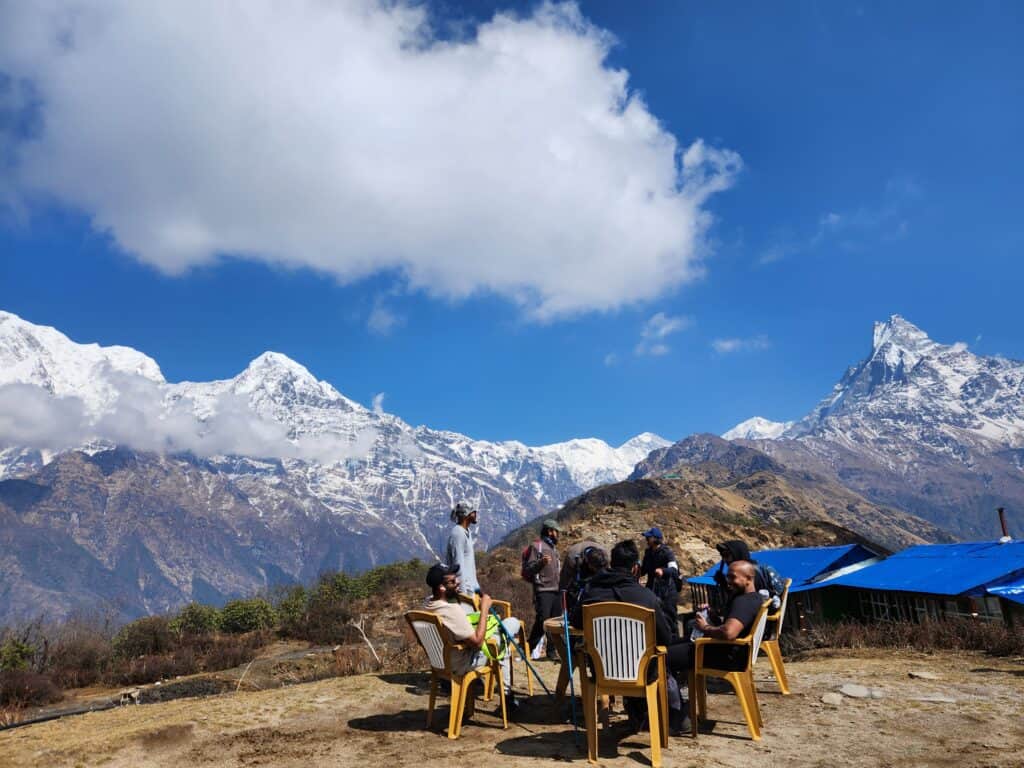
After this, you will trek to Mardi Base Camp (4,500m), the trek’s highest point and best part. It will be a good climb from Badal Danda to the base camp. As a reward, you will view fabulous and crystal-clear views of Mt Annapurna, Mt Machhapuchhre and others. Not only mountains, you will forgive yourself in horizons of peaks, hills, and the earth.
In just 5 days, tons of special memories will be etched in your mind. Memories of Pokhara’s magic, the drive to Kande, the uphill walk to Mardi Base Camp, the vigilant mornings, the snow-clad peaks, the greener woods, the comfy teahouse nights, and never-ending downhills, and many more will wander in your head for a while after this trek.
If you are in, Spring and Autumn are great times to feed yourself these special experiences. Rated as a moderate trek, a person with standard fitness can do this trek. Trekking experience is not mandatory. All you need is a good company to share this incredible journey with.
Read further to find out more information about 5 Days Mardi Himal Trek.
Table of Contents
- Major Highlights of 5 Days Mardi Himal Trek
- Detailed Itinerary of 5 Days Mardi Himal Trek
- Day 1: Drive from Pokhara to Kade and Trek to Forest Camp(2,550m)
- Day 2: Trek from Forest camp to Badal Danda(2,970m)
- Day 3: Trek from Badal Dada to Base Camp(4,500m) and Return to Badal Danda
- Day 4: Trek from Badal Danda to Australian Camp(2060m)
- Day 5: Trek from Australian Camp to Kande and Drive to Pokhara(822m)
- 5 Reasons to Do 5 Days Mardi Himal Trek
- Best Time for Mardi Himal Trek 5 Days
- Difficulty Level Of Mardi Himal Trek 5 Days
- Fitness, Training, and Experience
- Food and Accommodation
- Permits necessary for 5 Days Mardi Himal Trek
- Packing List for 5 Days Mardi Himal Trek
- At Last
Major Highlights of 5 Days Mardi Himal Trek
- One of the shortest yet exciting treks in Nepal.
- Trek across the lush greenery of Annapurna Conservation Area.
- View iconic peaks like Annapurna, Machhapuchhre, and Dhaulagiri from close range.
- Immerse in the traditional and unique culture and lifestyle of Gurungs.
- Reach Mardi Himal Base Camp, an unparalleled place for mountains.
- Collect an off-the-beaten trekking experience.
- Treat your eyes to diverse landscapes.
- Experience the nights in the Nepalese basic trekking houses eating Nepal’s famous Dal Bhat.
Detailed Itinerary of 5 Days Mardi Himal Trek
Day 1: Drive from Pokhara to Kade and Trek to Forest Camp(2,550m)
Drive Duration: 1 hour
Trek Duration: 6-7 hours
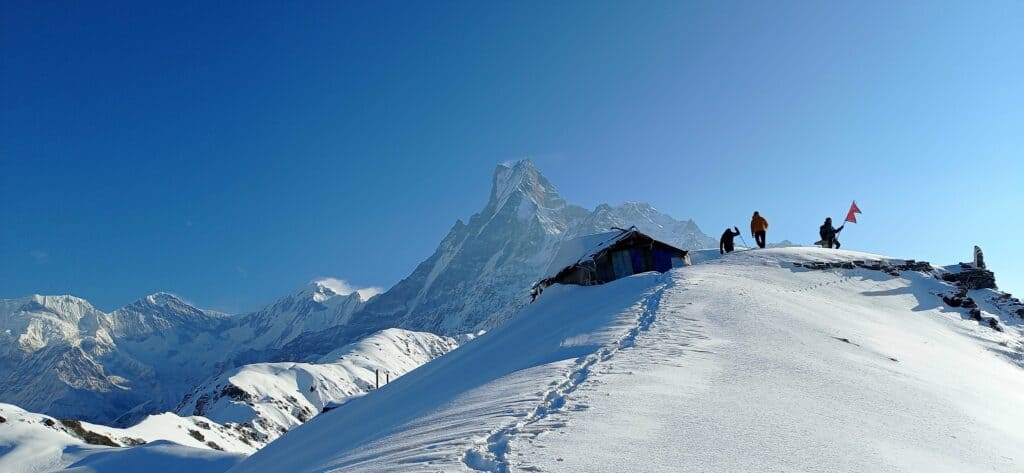
The 5 days Mardi Himal Trek will begin from Pokhara, with an hour’s drive to Kade. It will be a decent drive, watching the city, scenic peaks, hills, etc. Arriving in Kade, we will prepare to walk the trail.
The trek beginning from Kade(1,700m) is about reaching the Forest Camp, which sits at 2,550m. We will reach Samjay Deurali first from Kade. The path has nice stone-paved stairs. We will hike up gradually and reach the Australian Base Camp, a scenic place to catch our breath.
From Australian Camp, we will trek towards Deurali by climbing upwards. To go above Deurali, we will join a serene trail by leaving the famous Annapurna Sanctuary, which will end in Forest Camp. Hiking via the lush and lovely forest, we will reach Forest Camp, located in the heart of a forest.
Day 2: Trek from Forest camp to Badal Danda(2,970m)
Trek Duration: 5-6 hours
In the morning, we will leave Forest Camp and join the trail to Mardi Himal. The walk is steep and through lush vegetation. Pushing ourselves, we will reach the Rest Camp, where the peaks look majestic. We will stop for a bit.
The walk ahead will only go upwards. Most of the time, we will be climbing via the forest. If it is spring, we will see a lot of rhododendron flowers on this forested trail. Like this, we will reach Low Camp, where we will have glorious views again.
Ahead, we will leave the forest areas below to join open views. If the weather is clear, we will have amazing displays of Mt Machhapuchhre, Annapurna, and others. The walk will continue, enjoying the views until. We will soon reach Badal Danda, a panoramic hill with the best mountain views, where we will stay for the night.
Day 3: Trek from Badal Dada to Base Camp(4,500m) and Return to Badal Danda
Trek Duration: 7-8 hours
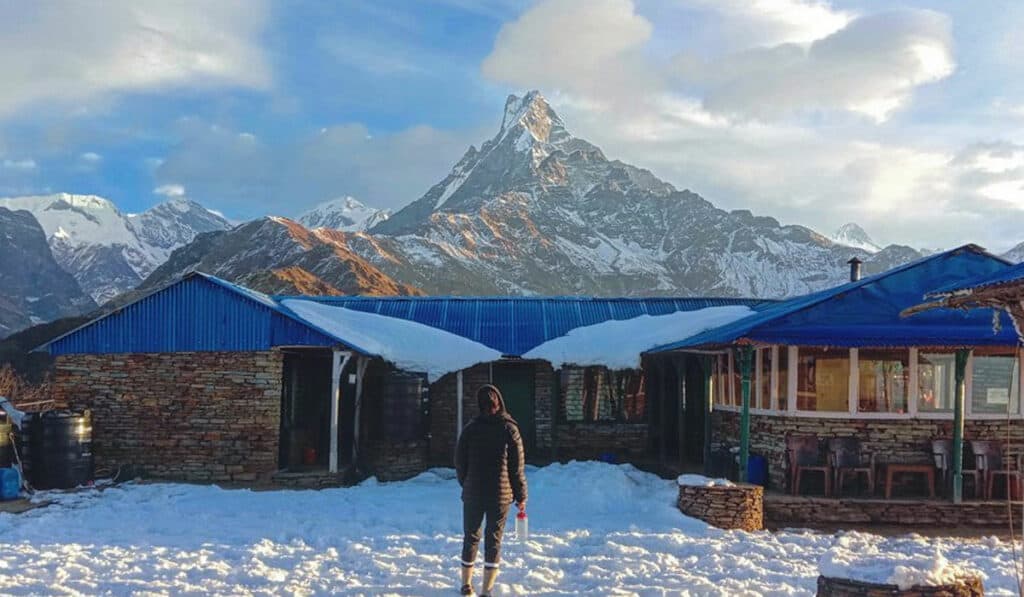
The day to explore Mardi Himal Base Camp is here. Excitedly, we will leave our teahouse and join the magical trail with Mt Machhapuchhre and Annapurna views.
As you can guess, the trek will be all sloping, not flat. With altitude in consideration, we will take the trail gradually. The trail is rocky, too. But we will defend all the obstacles as something extraordinary awaits us in Mardi Base Camp(4,500m).
The unworldly view of Mardi Peak, Mt Machapuchare, Hiunchuli, etc., welcomes us at the base camp. We will sit or stand and stare at the panoramic and clear view by completely immersing in it.
When we finish the watch, we will descend through the same trail up to Badal Danda. It will now get a bit easier due to the downhill. Upon arriving at Bada Danda, we will have a relaxed and fulfilled sleep there.
Day 4: Trek from Badal Danda to Australian Camp(2060m)
Trek Duration: 5-6 hours
Now, the path should turn towards our home. We will have breakfast and join the trail. Like the earlier mornings, we will trek by enjoying breathtaking mountain vistas on the trail.
Off from Badal Danda, we will retrace the trail that goes via lush forest. We will reach Low Camp and Rest Camp as we keep on descending. The trek is downhill, and the trek will feel quicker and easier.
Cascading slowly on the trail, we will reach the Australian Camp in the evening. As the last time, the place will have a great panorama of peaks to enjoy. We will take a rest after a great evening and dinner.
Day 5: Trek from Australian Camp to Kande and Drive to Pokhara(822m)
Trek Duration: 2-3 hours
Drive Duration: 1 hour
Waking up to a great morning in the camp, we will have breakfast and leave for Kande. As it is the last day of the 5 Days Mardi Himal Trek, we want to make it memorable. This short walk will offer amazing peaks, forests, and countryside views. We will get down gradually and reach Kande. From there, we will drive to Pokhara, which will complete the trek.
5 Reasons to Do 5 Days Mardi Himal Trek
Spectacular Mountain Views
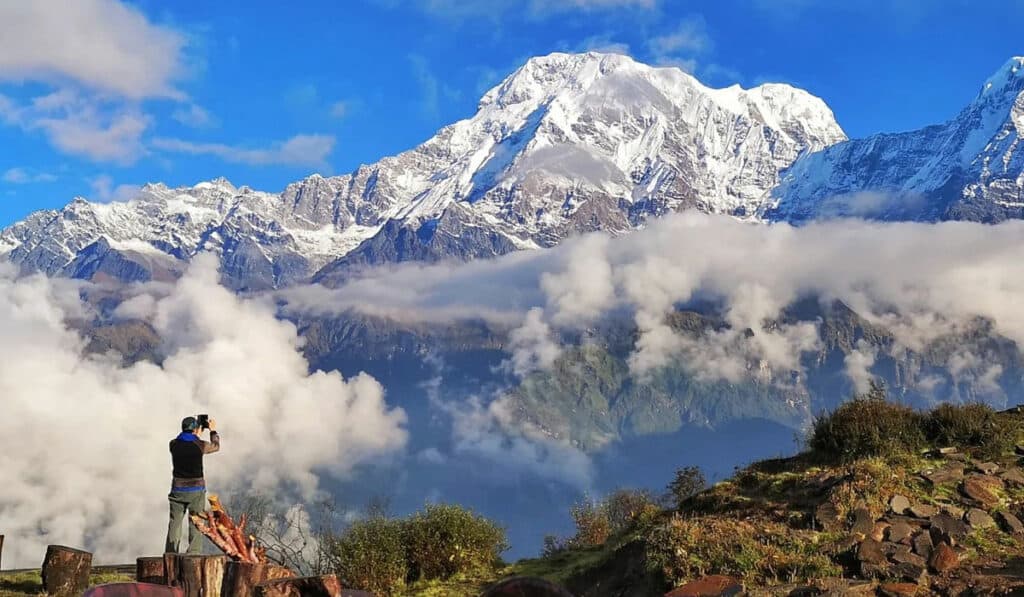
5-Day Mardi Himal Trek is one of the best panoramic treks in Nepal. This trek will have alluring views of popular peaks like Annapurna, Mardi Himal, Hiunchuli, Machapuchare, and more. Happening via varied landscapes, you will enjoy mesmerizing views from various angles on this walk. Badal Danda and Mardi Himal Base Camp are the best points to watch these magnificent peaks.
Varied Terrain and Biodiversity
You will begin the trip from Pokhara, a city of lakes. Then, you will leave it to join the trail of the Mardi Himal Trek, which is varied and lush. On the go, you will walk on the uphills and downhills of the trek. Around you, there will be views of flat lands, hills, and mountains. You cannot miss the lush biodiversity of the trail. It is a treat for your nose and lungs.
Quieter Trail
Mardi Himal Trek’s route is quiter one. The other trails like Poonhill Trek, Annapurna Circuit Trek, or ABC Trek are ever busy. This is the best option for seeking a peaceful alternative in the Annapurna Region. Compared to the other trails, the trail to Mardi Base Camp is serene.
Unique Cultural Experience
You’ll hear so much praise about Mardi Himal Trek’s mountain views. But, the unique culture that this trek serves is also worthwhile. We will trek via the villages of Magar and Gurung communities. That will allow us to see the people’s uniqueness and lifestyle. Thus, the trek is worthwhile for this experience, too.
Doable and Well-defined trail
Trekking in Nepal’s off-the-beaten trail is confusing due to the lack of marks. But Mardi Himal escapes that list. The trail is well-navigated and stone-paved. No one will get lost due to the marks. Likewise, it is a moderate trek that a wide range of trekkers can do. You can do this trek without preparing hard if you have a moderate fitness level.
Best Time for Mardi Himal Trek 5 Days
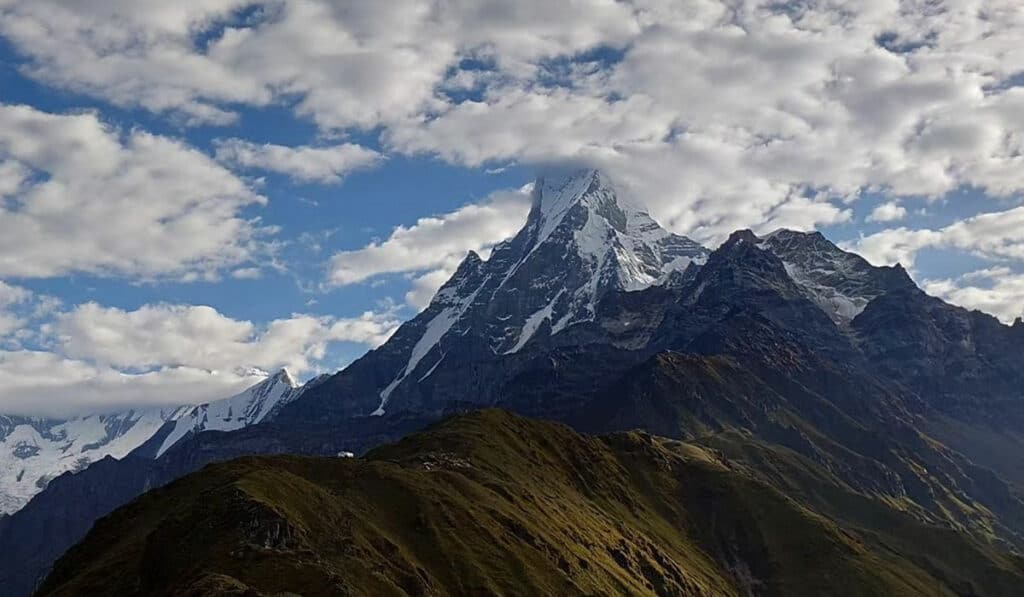
The right time for Mardi Himal Trek relies on the weather and trail conditions in the region. Generally, the best time for the walk is around Autumn and Spring. The weather is ideal and stable for Mardi Himal Trek during those times. However, you can do this trip any time of the year.
Spring(March to May) is good for Mardi Himal Trek and all treks in Nepal. Mild weather, clear skies, blooming woods, and vibrant landscapes are the perks of Spring. You could see all the peaks that one can in this season. With no clouds, the mountains are always visible. Thus, Spring is known as one good time for a Mardi walk.
Likewise, the Mardi Himal Trek is also exciting in Autumn(September to November). The skies are crystal clear, the temperatures are pleasing, and the weather is firm. If you are a greenery lover, this season has much lush vegetation. And Mt Annapurna and Machapuchare are watchful in the meantime. Therefore, you will meet a lot of people on the trails.
Conversely, trekking to Mardi Himal is accomplishable in Winter and Monsoon. People trek in these two seasons, which are also off time for the trek. But the conditions might be a bit tricky. Monsoon(June to August) is a rainy time on the trail.
At the same time, the monsoon can be cold and snowy, and it is time to trek in Mardi.
Remember, if you are okay with such faces of the weather, you can also schedule the trek in these windows.
Difficulty Level Of Mardi Himal Trek 5 Days
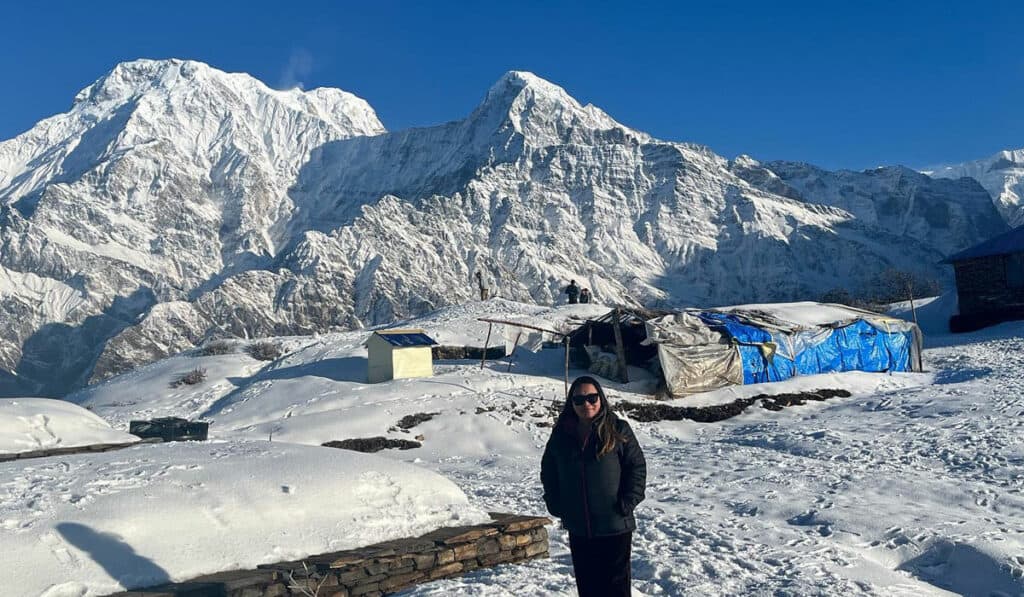
Mardi Himal Trek 5 Days is a moderate trek on which a wide range of walkers can embark. However, we must understand its challenges. The beautiful journey has some challenges that you must deal with.
First, you will have varied terrain and altitudes. You must walk trails, from lush woods, steep sections, and rocky trails to high-elevation areas. Ultimately, you must touch 4,500m, a high altitude. For those not used to such heights, it can be a demanding work.
Second, on the 5-day Mardi Himal Trek, you will trek for four days. Each day, you will walk for around 6-9 hours. The walk is on flat, rough, and tough trails at times. Trekking daily for that much time is a challenging piece of cake.
Third, the weather can be another challenge. If you wish to do the trek in Monsoon or Winter, the rain or snow will add adversities. It can be slippery to walk in the rainy season. In the same manner, it can be daunting to walk in snow.
Overall, Mardi Himal Trek is a relatively easy trek. You will have some challenges, like in every beautiful trek.
Fitness, Training, and Experience
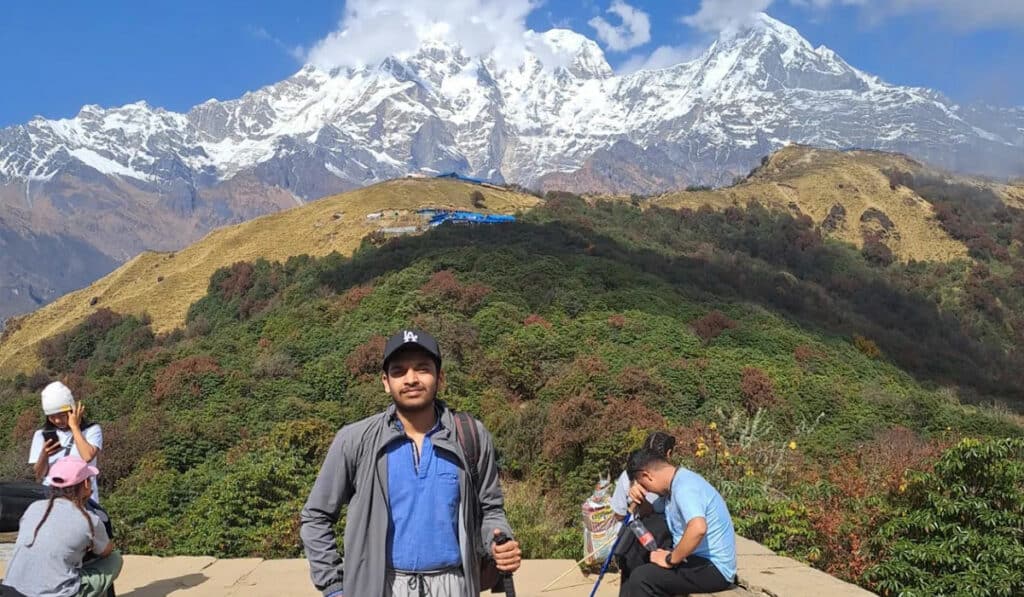
The reasonable fitness level is enough for Mardi Himal Trek. You can do cardiovascular, endurance, and strength training if you do not have one. Cycling, brisk walking, running, and stair climbing can improve cardio. Likewise, you can do squats, lunges, calf raises, and step-ups to strengthen the leg muscles.
You are good for the trek if you can do these exercises regularly before the trek. You must have an exercise routine around 1-2 months before the walk. You can also do some day hiking and long walks for better preparation.
The experience for Mardi Himal Trek is not mandatory. However, if you have already trekked, that experience will help you here. The walks in the high elevation will be more helpful. You can easily understand and acclimatize to the heights.
Mardi Himal Trek is not the hardest trek, for which you need good fitness, strict training, and long experience. But if you have them, it is okay. These will help you to complete the walk effortlessly.
Food and Accommodation
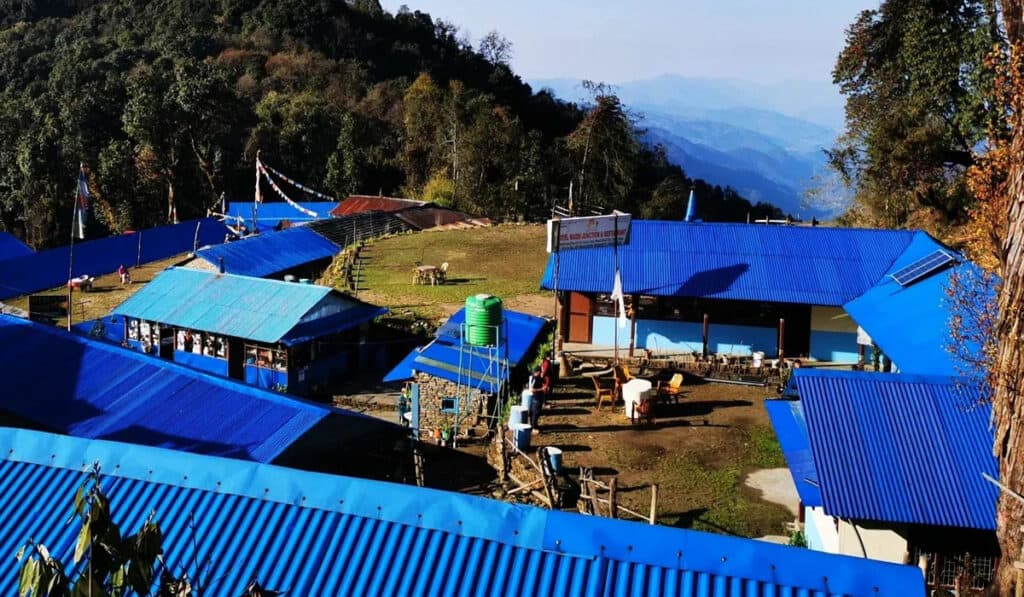
Mardi Himal Trek is a tea house trekking trail, which means there are teahouses. These teahouses provide food and accommodation services to visitors. You will find a lot of basic teahouses on the trail. If you are a luxury seeker, no such lodges exist in the remote region. You have to adjust to that.
The normal food items on the trek are available for the teahouses. You will have food cooked by the locals who operate these houses. The food menu in these teahouses includes Tibetan, Indian, Nepali, and a few Western dishes.
For breakfast, you can expect eggs, bread, porridge, muesli, pancakes, tea, and coffee. For Lunch and Dinner, you will be served a Dal Bhat set, which is a set of lentil soup, steamed rice, vegetables, and pickles. Alternatively, you can devour noodles, dumplings, burgers, chapati, potatoes, pasta, etc. The teahouses maintain good hygiene, and the food is well-cooked.
Regarding accommodation, there are basic and simple rooms with basic amenities. Typically, there are twin beds with pillows and blankets. You may get attached bathrooms in some places. You must visit the communal dining area for heating, as room heaters are not always available. And for a hot shower, you have to pay an extra charge.
Overall, food and accommodation on the Mardi Himal Trek offer a balance of basic comfort and fulfillment.
Permits necessary for 5 Days Mardi Himal Trek
If you are a foreign trekker, you need two permits to attend this trek. With these, you will get permission. The first permit is the TIMS( Trekkers’ Information Management System) Card. This card is to ensure the safety and security of trekkers.
The second permit is the Annapurna Conservation Area Permit(ACAP) for entering the protected area. Both of these permits can be obtainable from Kathmandu and Pokhara.
Packing List for 5 Days Mardi Himal Trek
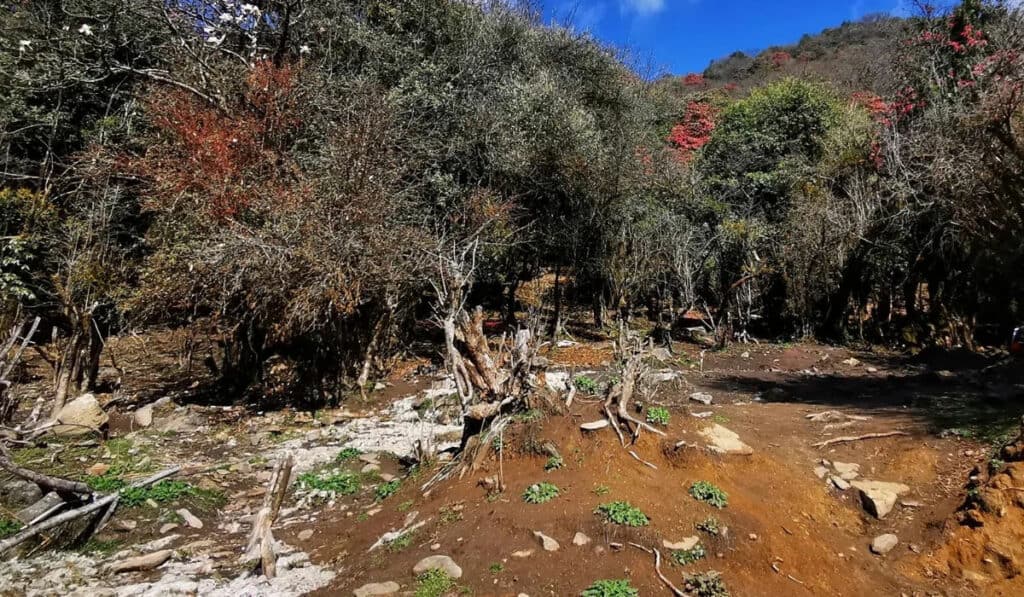
The packing list for Mardi Himal Trek can take time to decide. However, an efficiently packed backpack is essential for a comfortable and relaxed experience. Hence, here is the list that is appropriate for the trek:
Clothing
- Trekking pants
- Trekking t-shirts
- Long-sleeve shirts
- Fleece or insulated jacket
- Waterproof and windproof jacket
- Warm hat
- Sun hat
- Hiking socks
- Down jacket.
- Rain cover and set(Rainy Time)
Equipment
- Backpack
- Sleeping bag
- Trekking poles
Accessories
- Sunglasses
- Sunscreen
- Headlamp
- Water bottles
- Water purification tablets
- Personal first aid kit
- Toiletries
- Quick drying towel
- Camera and charger
- Travel wallet
Other Items
- Cash
- Permits and Documentation
- Maps and Guidebooks.
Weave this packing list as per the season and needs of your trek. The weather forecast is the main thing to see while packing. Consult with your guide and team and pack accordingly.
You may also like:
At Last
5 Days Mardi Himal Trek is a quick escape to one of the scenic places in Nepal. The trek is for all. If you come with excitement and preparation, you can have a wonderful experience on the trail. From happening and beautiful Pokhara city to the majestic peaks, this is a great trekking adventure that you must add in your bucket list.
We hope this blog on 5 Days Mardi Himal Trek imparted much information about the journey. Thank you for reading! See you when you are here.

Madhav started working as a porter in 2001 and then moved on to work as a trekking guide. After working in the trekking and tourism industry for eight years, he co-founded Mosaic Adventure in 2009.
Madhav has trekked to most of the trekking destinations in Nepal, including Everest Base Camp Trek, Annapurna Base Camp, Annapurna Circuit Trek, Poon Hill Trek, Jomsom Muktinath Trek, Indigenous Peoples Trek, Langtang Valley Trek, Mardi Himal Trek, and all of the day hikes around Kathmandu.
He has also extensively traveled to other countries such as Australia, the USA, the UK, France, Hong Kong, Japan, China, the Philippines, the UAE, Saudi Arabia, Bahrain, Thailand, Turkey, and India. Madhav is the one who answers most of your questions about trekking and tours and helps to plan your trip by giving a personal touch.


I currently carried out the 5-day Mardi Himal trek with Mosaic Adventure, and it used to be an actually magnificent experience! The group at Mosaic Adventure did a super job of organizing each issue of the trip, from transportation to lodging and guided tours. The trek itself supplied breathtaking views, and our information used to be educated and very friendly. I can not endorse Mosaic Adventure sufficient for all and sundry searching to discover the splendor of the Mardi Himal region. Thank you for an unforgettable adventure!