
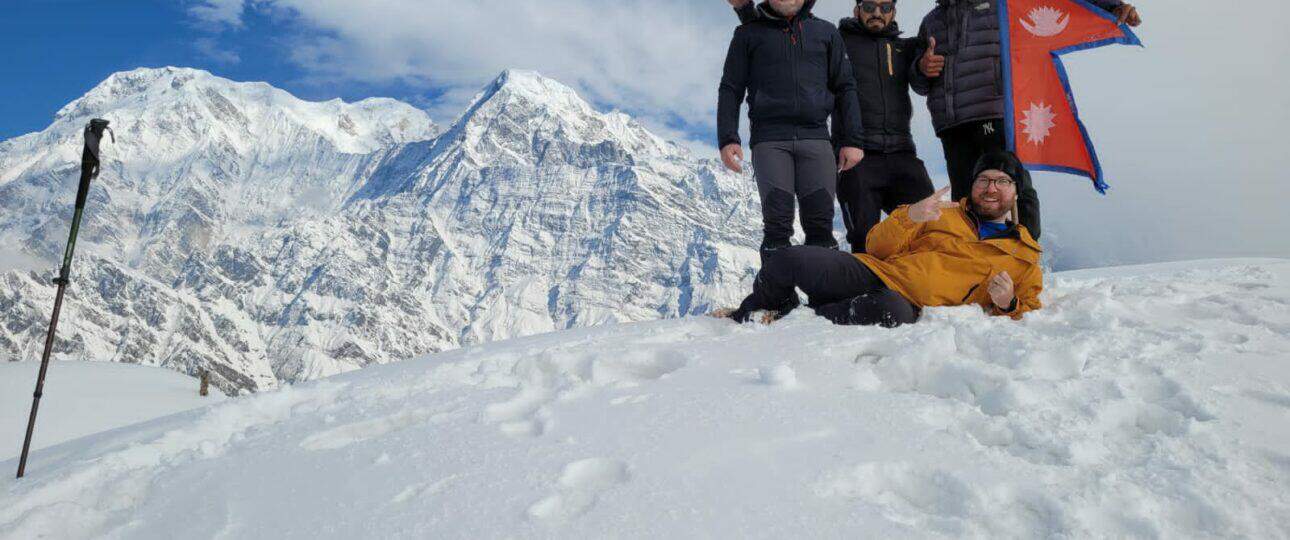
Planning a winter trek in Nepal? For the months of December, January and February, trekking offers crystal-clear mountain views and quieter trails. We have highlighted five trekking routes in Nepal that are commonly chosen during winter due to lower altitude, manageable snow conditions, and accessibility.
As winter has approached Nepal, many trekking enthusiasts and lovers inquire about suitable treks for the winter season.

Below, we focus on trekking routes in Nepal that are commonly chosen during the winter months (December to February), along with practical information on temperatures, route accessibility, itineraries, and the advantages and limitations of winter trekking.
Understanding Nepal’s Winter Trekking Conditions (Dec to Feb)
Winter in Nepal spans from December to February. While high-altitude base camps (above 5,000m) can drop to -20°C to -30°C, the popular lower-altitude winter trails (1,500m to 3,500m) offer daytime temperatures around 5°C to 15°C. Nights, however, are very cold, often dropping below freezing at higher villages like Ghorepani 0°C to -5°C.
Most classic teahouses do not have room heaters; only the communal dining hall, warmed by a central stove, will be heated. Therefore, it’s crucial to carry a high-quality, four-season sleeping bag (rated -10°C or lower) for comfortable nights.
How Winter Conditions Change from December to February
Although December, January and February are all considered winter trekking months in Nepal, conditions vary slightly throughout the season. Understanding these differences can help you choose the most suitable time for your trek.
| Month | Typical Conditions | Best For |
|---|---|---|
| December | Stable weather, excellent mountain visibility, cold nights and generally dry trails. | First time winter trekkers looking for clear Himalayan views. |
| January | The coldest month with the highest chance of snow and icy sections at higher elevations. | Travelers prepared for colder temperatures and quieter trails. |
| February | Temperatures gradually become milder, days become slightly longer and lower hills begin showing early signs of spring. | Those seeking a balance between winter scenery and more comfortable trekking conditions. |
Regardless of the month, mountain weather can change quickly. Checking the latest local forecast before your trek and remaining flexible with your itinerary is always recommended.
Winter-Suitable Trekking Routes in Nepal (Dec to Feb)
While high passes are often blocked by heavy snowfall, the snowline typically remains above 3,000m to 3,500m in early winter (Dec/Jan), making mid-hill treks ideal. We prioritize routes with low-risk of avalanches and manageable altitudes.
Below are five trekking routes that are commonly considered suitable for winter conditions, balancing mountain scenery with safety and accessibility.
Compare Nepal’s Best Winter Treks at a Glance
If you’re unsure which winter trek is right for you, this quick comparison highlights the main differences between the recommended routes.
| Trek | Duration | Maximum Altitude | Difficulty | Best For |
|---|---|---|---|---|
| Chisapani Nagarkot Trek | 3 Days | 2,215 m | Easy | Families, beginners and short holidays |
| Poon Hill Trek | 4 Days | 3,210 m | Easy to Moderate | Classic Himalayan sunrise views |
| Mardi Himal Trek | 4 Days | 3,580 m (High Camp) | Moderate | Close mountain scenery with fewer crowds |
| Langtang Valley Trek | 7 Days | 3,870 m | Moderate | Valley landscapes and Tamang culture |
| Everest Panorama Trek | 8 Days | 3,880 m | Moderate | Everest views without trekking to Base Camp |
Each of these routes remains a popular winter option thanks to established teahouses, manageable snow conditions and rewarding Himalayan scenery.
1. Chisapani Nagarkot Trek (2 Nights)
The 2 nights and 3 days trek from Kathmandu to Nagarkot and Chisapani is a suitable short trek option during the winter season.
It is a suitable option for travelers visiting Nepal between December and February who want a short escape from the city into a quieter natural setting.
Begin with a short drive to Nagarkot for stunning sunrise panoramas of the Langtang Himalayas.
Trek through local villages and the Shivapuri National Park to reach Chisapani, where you will experience a fantastic sunset and warm hospitality.
Kid-friendly and easy-going, it’s a great introduction to hiking for children.
On the second day, enjoy a downhill journey through forests, villages, and terraced fields. As you reach Sundarijal, a short drive brings you back to Kathmandu.
The Nagarkot Chisapani Trek is available every day throughout the year, allowing you to sign up for this trek on a date that works for you.
2. Poon Hill Trek (3 Nights):
Famous for its sunrise views over the Annapurna and Dhaulagiri Massifs, this 4-day Poon Hill Trek is a classic low-altitude trek that remains accessible during winter. Its maximum altitude of 3,210 meters at the Poon Hill viewpoint is safely below the heavy snowfall zone, though expect potential snow and ice around Ghorepani in January/February, for which microspikes are advised. The trail offers wide panoramic mountain views and a deep immersion into Gurung culture in picturesque villages like Ghandruk.
It starts and ends in Nayapul, going around Ghorepani and Ghandruk, showing off Himalayan views, especially during the sunrise climb up Poon Hill. Feel the peace at 3,210 meters and get a peek into traditional Nepali life.
During this 4-day trek, stay in local teahouses run by friendly folks.
Tackle a tough 3,300 steps climb to Ulleri and follow the Bhurungdi river past rice fields and jungles where monkeys play and birds chill in the trees.
See Mount Annapurna South, Barasikha, Nilgiri, Hiunchuli, Machhapuchre, the Dhaulagiri range and Tukuche Peak.
The Poon Hill Trek is available every day from December to February. Book on a date that suits you best.

3. Mardi Himal Trek (3 Nights)
The Mardi Himal Trek is a short and scenic trekking route that remains accessible in winter, offering close-up views of the Annapurna range within a limited timeframe.
While its official Base Camp is 4,500 meters (a challenging day-hike), most winter trekkers reach the High Camp (3,580m) or the Upper Viewpoint (4,200m), making it a spectacular high-altitude experience with manageable cold. This route is often chosen in winter due to fewer crowds and clearer mountain conditions.
The trek passes through lush forests, open spaces and diverse landscapes, offering glimpses of Himalayan wildlife and stunning peaks. This route is often chosen in winter due to fewer crowds and clear mountain views.
You can book the Mardi Himal Trek from December to February, available every day during the winter season.
4. Langtang Valley Trek (6 Nights):
The Langtang Valley Trek offers a winter-friendly adventure in Nepal. Explore the remote Langtang Valley with its high mountain lakes and the picturesque Kyanjin Gompa.
Langtang Valley remains one of the winter-accessible regions due to its road connectivity and established lodges.
Langtang is a manageable short trek, moderate in difficulty, and well suited for a rewarding trekking experience within a short timeframe. Conveniently located near Kathmandu, just 165 km to the north, Langtang Valley Trek is easy to plan and complete in just 7 days.
5. Everest Panorama Trek (7 Nights):
Short on time during your winter visit to Nepal? This shorter Everest region trek offers mountain views without reaching the higher altitudes of the full base camp route.
This shorter Everest region trek is ideal for winter, reaching a maximum altitude of 3,880 meters (at the Everest View Hotel viewpoint). This makes it significantly safer from heavy snow and altitude sickness than the full EBC route. The trail leads to the sacred Tyangboche Monastery (3,867m) and passes through Namche Bazaar, the Sherpa capital, offering spectacular vistas of Everest, Lhotse, and the iconic Ama Dablam.
This scenic spot offers breathtaking panoramic vistas of Everest, Lhotse, Ama Dablam, and Thamserku.
Follow the fast-flowing Dudh Kosi river, crossing impressive suspension bridges adorned with Buddhist prayer flags and passing through thick rhododendron forests.
Experience Sherpa culture in traditional villages, passing through Namche Bazaar, the Sherpa capital.
The 8-day Everest Panorama Trek is suitable for all age groups and those with limited holiday time. Enjoy Himalayan views on this shorter trek with manageable altitude.
It is a scenic route with views of several of the world’s highest peaks and ancient monasteries, offering a rewarding winter trekking experience into the Khumbu region’s natural wonders.
Book this 8-day Everest Panorama Trek for a winter trek that balances mountain views with manageable altitude.
Why Choose Winter Trekking in Nepal? (Benefits & Rewards)
Peace and Quiet
Enjoy the calm of the mountains with fewer people on the trails during winter. It is a chance for a quiet and personal connection with the beautiful Himalayan surroundings.
Clear Views
Winter air gives super clear views of the snow covered peaks. You can see the majestic mountains without cloud/fog blocking your sight, making the scenery even more breathtaking.
Winter Wonderland
The Himalayan landscape changes into a magical winter scene. Lakes freeze and forests get covered in snow, creating a unique and beautiful setting.
Walking on snowy paths and seeing nature’s winter makeover makes the trek extra special.
Winter treks offer a different experience compared to peak trekking seasons with the mountains dressed in white.
Great for Photography
As you get to see the best views, winter offers a chance to capture unique and beautiful photos for those who are interested in photography.
Challenges and Expert Tips for Winter Treks
Cold Temperatures
The main drawback is the cold weather. Trekking in winter means dealing with chilly temperatures, so it’s crucial to have the right gear and be well-prepared to stay warm and comfortable.
Preparation & Gear Costs
The main challenge is the night cold. You must invest in high-quality, layered winter gear, including waterproof boots and a warm sleeping bag. Additionally, you must be prepared for potential icy patches, especially around passes and in the mornings, making trekking poles and optional microspikes necessary equipment.
Summary
Winter trekking in Nepal (December to February) is best suited to lower-altitude routes with established infrastructure and manageable snow conditions. The routes listed above are commonly chosen during winter because they balance accessibility, safety, and mountain scenery.
While winter trekking presents challenges such as cold temperatures and limited daylight, it also offers quieter trails and clearer views for those who are well prepared.
Final route selection should depend on weather conditions, fitness level, and available time rather than popularity or ranking.
If you have questions about winter conditions, gear, or route suitability, you can contact our team for general information.

Madhav Prasad is a seasoned trekking and tourism expert with over two decades of experience in the field. Starting his career in 2001 as a porter, Madhav quickly advanced to the role of trekking guide, gaining invaluable hands-on experience in Nepal’s diverse trekking routes. In 2009, after eight years of dedication to the industry, he co-founded Mosaic Adventure, a leading trekking and tour company known for its commitment to safety, sustainability and personalized service.
Madhav has personally trekked to nearly every major trekking destination in Nepal, including Everest Base Camp, Annapurna Base Camp, the Annapurna Circuit, Poon Hill, Jomsom Muktinath, the Indigenous Peoples Trail, Langtang Valley and Mardi Himal, among others. His experience extends beyond Nepal, as he has also successfully summited Mount Kilimanjaro, Africa’s highest peak.
In addition to his extensive trekking credentials, Madhav is well traveled globally, having explored countries such as Australia, the USA, the UK, France, Japan, China, and many others. His global exposure enhances his ability to understand and cater to the diverse needs of international trekkers.
Madhav is the primary point of contact for many clients at Mosaic Adventure, personally addressing inquiries and helping plan treks with a meticulous and personalized approach. His deep knowledge of Nepal’s trekking routes, combined with his global travel experience, ensures that every trek is well planned, safe and unforgettable.
