
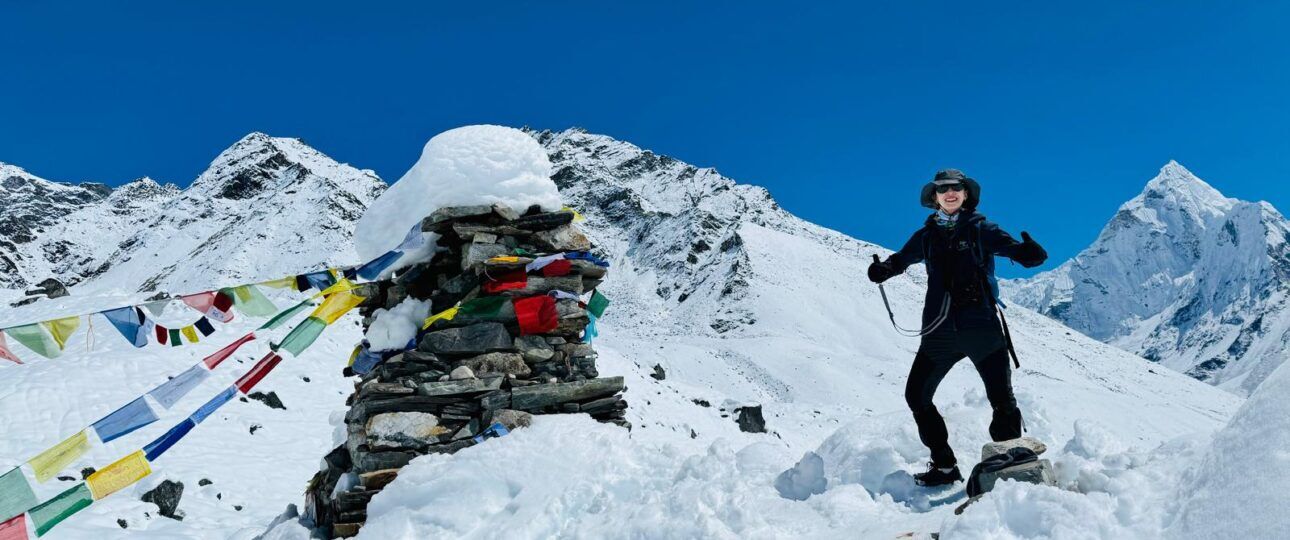
Winter at Everest Base Camp is quieter, colder, and far less crowded than the spring and autumn seasons. In the Khumbu, winter runs from December to February, and during this period the region feels noticeably different from peak months.
Night temperatures at Gorak Shep average around -18°C in December and -22°C in January, and the coldest nights can drop below -25°C. Snow or ice may affect sections of trail above 4,000 meters. The scenery is stark and clear, but the season demands preparation.
We have guided winter EBC treks for many years. With proper planning, winter works well. Without it, the cold exposes poor decisions quickly. This guide explains what conditions are really like, how December, January and February differ, and who should consider another season.
Winter EBC in brief
- Open? Yes. The Classic route stays open all winter. High passes such as Cho La are often blocked by snow.
- Cold: sunny days are walkable, but nights from Lobuche upward average -17°C to -22°C.
- Flights: in our records, Lukla flights ran normally on 89% of December days, 85% of January days and 68% of February days.
- Best for: fit, cold-tolerant trekkers who want quiet trails and clear views, with at least two spare days.

Cold and logistics are real factors, but winter has advantages that peak season does not.
Why Trek to Everest Base Camp in Winter?
Choosing to trek to Everest Base Camp in winter means experiencing the Khumbu at its quietest. With fewer trekkers on the trail, the mountains feel more personal and the pace more deliberate. Clear winter air often delivers some of the sharpest visibility of the year.
Fewer trekkers
Winter brings far fewer trekkers to the EBC trail. In spring (March to May) and autumn (September to November), sections of the route can feel busy. From December through February, the trail is noticeably quieter, and lodges are less crowded. For many trekkers, that alone is reason enough to choose winter.
Crisp, clear mountain views
Winter air in the Khumbu is typically dry, which often results in clearer skies. Visibility can be excellent, especially in the mornings, with sharp views of Mount Everest, Lhotse, and Ama Dablam. The cold is noticeable, but the clarity is one of the practical advantages of trekking in this season.
Snow-covered landscapes
Fresh snowfall changes the landscape completely. Trails, ridgelines, and villages look different from the brown and dusty autumn months. For many trekkers, that contrast is part of the appeal.
Better service and time with locals
With fewer trekkers on the trail, lodge owners and staff have more time to talk. Evenings are quieter, and conversations tend to last longer. This also creates more space to learn about the Sherpa people, their daily life, and their experience in the region.
At Snowland Inn in Gorak Shep, Pasang, an Everest summiter, often sits by the stove with trekkers during the winter months. On one evening, he described winds high on the mountain strong enough to shift a climber off balance. Exchanges like this are more common when the trail is quiet.
Rooms are easy to find
During the peak season, teahouses can get fully booked. In winter, there is usually plenty of space in the lodges that stay open, and you can often choose the better rooms. Fewer lodges open in the highest villages, which we cover below.
Flights to Lukla from Kathmandu
In the busy spring and autumn seasons, most Lukla flights operate from Ramechhap. In winter, with fewer people flying, flights usually operate from Kathmandu. That means you avoid the 4 to 5 hour drive to Ramechhap.
Winter Months Compared: December, January and February
Each winter month has a different feel. The table below is a quick comparison. For the detail behind each month, including temperatures by village and our full flight records, use the month guides linked below the table.
| Month | Namche Bazaar (day / night) | Gorak Shep nights (average) | Lukla flights ran normally (our records) | Lodges higher up | Best for |
|---|---|---|---|---|---|
| December | 6°C / -7°C | About -18°C | 89% of days (2023 to 2025) | Most open, some close late in the month | The gentlest winter month, and holiday treks |
| January | 3°C / -10°C | About -22°C, below -25°C on the coldest nights | 85% of days (2023 to 2026) | Fewest open, usually 1 to 3 at Gorak Shep | The quietest trail and the clearest skies |
| February | 4°C / -9°C | About -20°C | 68% of days (2023 to 2026) | More reopen toward March | Longer days and the end of deep winter |
Temperatures are typical averages, based on our guides’ December records and long-term weather averages for the Khumbu. Individual days and nights can be colder, and wind makes it feel colder still.
December: the gentlest winter month
December is when winter settles into the Khumbu. Days are usually clear, flights are the most reliable of the winter, and the trail is quiet until the Christmas and New Year week. Nights get steadily colder through the month. Read our full guide to the Everest Base Camp trek in December, or, if you want to reach Base Camp on 1 January, our New Year Everest Base Camp trek.
January: the coldest and quietest
January is the deep winter month. It brings the coldest nights at Lobuche and Gorak Shep, the fewest trekkers, and very clear skies. Mornings feel harsh until the sun reaches the valley, so walking days start a little later. Read our full guide to the Everest Base Camp trek in January.
February: longer days, less predictable weather
February is still very cold at night, but the days get longer and slightly kinder, especially toward the end of the month. It is also the least predictable winter month for snowfall and Lukla flights. Read our full guide to the Everest Base Camp trek in February.
Which winter month should you choose? December is the most balanced, with milder temperatures and the most reliable flights. January offers the deepest winter atmosphere and the quietest trail, with the coldest nights. February brings longer days but the highest chance of flight disruption. The best month depends on your tolerance for cold and how flexible your dates are.
What Are the Challenges of Trekking to Everest Base Camp in Winter?
Winter trekking is quieter, but it demands more awareness and discipline. Cold, icy sections, and shorter daylight hours require careful pacing and realistic expectations.
Cold temperatures
Cold is the main challenge in winter. Sunny days are comfortable for walking in the lower villages, but from Lobuche upward daytime temperatures often stay below freezing, and nights average -17°C to -22°C, colder in January. Even in Namche Bazaar, nights regularly fall below -7°C.
Low temperatures affect sleep, hydration, and recovery. Bedrooms in teahouses are unheated, so room temperatures are close to the outside temperature. Managing energy, layering properly, and drinking enough become more important than in spring or autumn.
Snow and ice
Depending on snowfall, sections of the trail can turn icy above Namche. Fresh snow may obscure the path between Dingboche and Lobuche, where footprints disappear quickly after wind. Without a guide or clear tracks to follow, route finding can take longer. Deep snow also slows pace and increases fatigue.
Short daylight hours
Winter days in the Khumbu have roughly 10 to 11 hours of daylight, and deep valleys lose the sun earlier than the clock suggests. Plan your walking days so you reach your lodge before temperatures drop in the late afternoon.
Altitude sickness
Altitude sickness is a concern on the high-altitude EBC route in any season. Cold does not cause it, but winter makes it harder to spot: dry air and freezing water bottles mean many trekkers drink less, and poor sleep in cold rooms makes headaches and tiredness feel normal. Keep both acclimatization days, drink steadily, and tell your guide early about any symptoms.
Is the Everest Base Camp trail closed in winter?
No, the Everest Base Camp trail does not close in winter. Unlike high passes such as Cho La, the main EBC route remains open throughout December, January, and February.
Temporary disruption can happen after heavy snowfall, especially between Dingboche, Lobuche, and Gorak Shep. In most cases, local guides and porters break the trail within a day or two. Long closures are extremely rare.
The bigger concern in winter is not closure, but icy sections and strong winds at higher altitude. Proper footwear, microspikes, and realistic pacing matter more than worrying about the trail being closed.
Are teahouses open during the winter EBC trek?
Yes. You will always find somewhere to sleep on the Classic route in winter. Lodges in Lukla, Phakding and Namche Bazaar stay open, and Tengboche and Dingboche have a good number open. In Lobuche and Gorak Shep, many owners close for the coldest weeks, especially in January, and usually only one to three lodges stay open, coordinating among themselves so trekkers are never left without a bed.
Heating is limited to the dining room stove, and bedrooms are unheated. Water pipes may freeze in higher villages, so bucket washing is common. If you trek independently, check locally each morning about the next stop. When trekking with an experienced company, accommodation is confirmed ahead even in the quieter months.
Because winter conditions affect both trail safety and overnight comfort, your gear choices matter more than in any other season.
What to Pack for the Winter
Winter on the Everest Base Camp trail is not the time to “make do” with shoulder-season gear. Most trekkers feel fine while walking in the sun, then get shocked at night in unheated rooms above 4,000 meters. The goal is simple: stay warm when you stop, stay dry if snow falls, and keep fingers and toes protected.
For a complete, all-season checklist (including documents, toiletries, and general trekking items), use our main guide: ultimate packing list for Everest Base Camp trek. Below are the winter essentials that matter most from December to February. Each month guide adds the extras that matter most for that month.
Winter gear that matters most
- Proper base layers (2 sets): Warm thermal top and bottom that dries fast. Rotate sets so you always have one dry.
- A serious insulated down jacket: This is your “stop layer” for evenings, rest breaks, and cold mornings. Do not rely on a light puffer.
- Warm mid layer: Fleece or light down for walking in cold shade and early starts.
- Windproof and waterproof outer shell: Winter wind in the Khumbu can cut through clothing fast. A shell blocks wind and protects you if snow starts.
- Insulated gloves plus a thin inner glove: One pair is never enough in winter. If gloves get damp, your hands suffer.
- Warm hat and buff: Cover ears and protect your face in wind, especially around Lobuche and Gorak Shep.
- Winter-ready trekking boots: Waterproof, good tread, and enough space for thick socks. Tight boots reduce circulation and make feet colder.
- Microspikes: Small, lightweight traction that makes icy mornings far safer. This is one of the most useful winter items.
- Sleeping bag rated for real cold: Aim for around -20°C comfort, or better in January. Teahouse blankets help, but they are not reliable in deep winter.
- Thermos or insulated bottle: Water freezes quickly above Namche in winter. Hot water in a thermos also helps you warm up from the inside.
- Sunglasses with UV protection: Sun glare on snow is harsh and can damage your eyes quickly.
- Headlamp: Winter days are shorter and power is limited in higher villages.
Small winter items that make a big difference
- Hot water bladder or rubber bottle: Filling a durable bladder or rubber bottle with hot water at night and placing it inside your sleeping bag can make a huge difference above 4,000 meters. Always check the cap seal carefully and test it upright before putting it inside your bag. A leak in freezing conditions is not just uncomfortable, it can soak insulation and become a serious problem.
- Hand warmers: Useful for early mornings, especially if you get cold fingers.
- Lip balm and moisturizer: Winter air is dry and windburn is common.
- Extra socks: Wet feet in winter are not just uncomfortable, they can become dangerous.
If you are unsure whether your gear is warm enough, test it before you fly to Lukla. In winter, the margin for error is smaller, especially at night in Gorak Shep.
Planning Your Winter Itinerary
The route and acclimatization plan for a winter trek are the same as in any season. Our standard 14-day Everest Base Camp itinerary, with rest days in Namche Bazaar and Dingboche, works well. Cold adds physical stress, so we never shorten acclimatization days in winter.
Two things change in practice. Walking days start once the sun reaches the trail, usually around 8am, and finish by mid-afternoon before the wind picks up. And we add at least two buffer days after the trek for Lukla flights, as the records below show.
Lukla Flights in Winter: Our Records from Three Winters
Every winter trek to Everest Base Camp begins with a flight to Lukla. Tenzing-Hillary Airport operates in narrow weather windows, and winter conditions can affect visibility, wind, and flight timing.
The figures below combine our daily records for December, January and February across the last three winters. Each day was recorded by our operations team as one of three types:
- Full operations: flights ran normally through the day.
- Partial or delayed: flights ran, but late, or for only part of the day.
- Closed: no flights operated.
| Winter | Days | Full operations | Partial or delayed | Closed | Full operations (%) |
|---|---|---|---|---|---|
| 2023-24 (Dec 2023 to Feb 2024) | 91 | 68 | 12 | 11 | 75% |
| 2024-25 (Dec 2024 to Feb 2025) | 90 | 68 | 8 | 14 | 76% |
| 2025-26 (Dec 2025 to Feb 2026) | 90 | 84 | 4 | 2 | 93% |
What the records show
- December was the most reliable month, or level with January, in every winter we recorded, with at most one full closure a year.
- February caused most of the closures. In 2023-24 and 2024-25, February alone accounted for 19 of the 25 closed days.
- The last winter was the smoothest. 2025-26 had only 2 closed days across all three months.
These figures show that winter flights are generally reliable, but no season in the Himalayas is risk-free. Even a small weather system can ground flights for a day or two. Use this data as a planning reference, not a guarantee, and allow flexibility in your schedule. Each month guide has the full day-by-day records for that month.
Staying Safe on a Winter Trek
Many trekkers ask whether the Everest Base Camp trek is safe in winter. The answer is yes, provided you are properly prepared. The route remains open, but winter adds extra stress in the form of extreme cold, icy sections, and possible flight delays. With correct gear, realistic pacing, and proper acclimatization, winter remains a manageable season for well-prepared trekkers.
Keep the following in mind:
Acclimatize properly
Do not rush the trek. Keep both acclimatization days, drink steadily, and avoid alcohol. You feel less thirsty in cold air, so hydration takes discipline in winter. Read more in our guide to preventing altitude sickness on the Everest Base Camp trek.
Trek with an experienced guide
While it is possible to trek independently, an experienced guide is highly recommended in winter. A guide will help navigate snowy or icy sections, confirm which lodges are open, and decide whether to proceed or wait in bad weather.
Stay informed about the weather
Check the forecast the evening before each walking day, and be prepared to adjust your schedule if bad weather is predicted. Mountain forecasts change quickly, so treat them as a guide, not a guarantee.
Know the signs of frostbite and hypothermia
Frostbite and hypothermia are possible in deep winter, especially during early morning starts, the Kala Patthar sunrise hike, or long stops in the wind. Watch for numbness, white or waxy skin on fingers, toes, nose or ears, and for shivering that will not stop, slurred speech or clumsiness. Act immediately and tell your guide.
Be prepared for delays
Flights to and from Lukla can be delayed by weather in any winter month, most often in February. Keep at least two spare days, and consider travel insurance that covers trip delays as well as high-altitude evacuation.
Cost of the Everest Base Camp Trek in Winter
The overall cost of the trek in winter is similar to other seasons. Permit fees, Lukla flights and guide and porter rates do not change between December and February. Rooms can be easier to negotiate in the quieter months, but hot showers, charging and heating often cost more in the higher villages, where fuel is scarce in winter. If you need to rent a winter sleeping bag or down jacket in Kathmandu, budget for that too.
For current permit fees, flight prices and daily budgets, see our Everest Base Camp trek cost guide.
Who Should Choose a Winter Everest Base Camp Trek and Who Should Avoid It?
Winter EBC is ideal for:
- Trekkers who prefer solitude over social atmosphere
- Photographers who want clear skies and snow-covered peaks
- Experienced hikers comfortable in sub-zero temperatures
- Repeat Nepal visitors looking for a different seasonal experience
Winter EBC is not ideal for:
- First-time high-altitude trekkers unsure about extreme cold
- People sensitive to freezing temperatures
- Trekkers with tight international flight schedules and no buffer days
- Anyone hoping to cross the high passes
Winter is not harder in terms of walking distance. It is harder because of the cold, which you manage every hour of every day. If you accept that and plan carefully, winter can be a very good season to trek.
Everest Base Camp in Winter: FAQs
Is the Everest Base Camp trek open in winter?
Yes. The Classic route via Namche Bazaar and Dingboche stays open in December, January and February. Heavy snow can cause short disruptions above Dingboche, usually cleared within a day or two. High passes such as Cho La are often blocked by snow.
Which winter month is best for the Everest Base Camp trek?
December is the most balanced, with milder temperatures and the most reliable Lukla flights in our records. January is the coldest and quietest. February has longer days but was the least reliable month for flights.
How cold does Everest Base Camp get in winter?
Average nights at Gorak Shep are around -18°C in December, -22°C in January and -20°C in February, and the coldest January nights can drop below -25°C. Sunny days are walkable, but from Lobuche upward daytime temperatures often stay below freezing.
Are Lukla flights reliable in winter?
Mostly. In our records, flights ran normally on 89% of December days, 85% of January days and 68% of February days. Most disruption is short, but plan at least two buffer days after the trek.
Are teahouses open on the Everest Base Camp trek in winter?
Yes. Lodges in Lukla, Phakding and Namche Bazaar stay open, and there are good options in Tengboche and Dingboche. In Lobuche and Gorak Shep, usually only one to three lodges stay open in the coldest weeks, but you will always find a bed.
Can a beginner trek to Everest Base Camp in winter?
It is possible with an experienced guide and full winter gear, but it is not our first suggestion. If this is your first trek at high altitude, spring or autumn is easier.
Final Thoughts
The Everest Base Camp trek in winter is not for everyone, but for the right trekker, it offers clarity and solitude that are harder to find in peak season. If you understand the cold and allow flexibility, winter feels very different from the busy spring and autumn seasons.
If you want to understand the full standard itinerary and inclusions, see our detailed Everest Base Camp trek program.
Want more information? Send us your query, and our experts will get back to you within 24 hrs.

Madhav Prasad is a seasoned trekking and tourism expert with over two decades of experience in the field. Starting his career in 2001 as a porter, Madhav quickly advanced to the role of trekking guide, gaining invaluable hands-on experience in Nepal’s diverse trekking routes. In 2009, after eight years of dedication to the industry, he co-founded Mosaic Adventure, a leading trekking and tour company known for its commitment to safety, sustainability and personalized service.
Madhav has personally trekked to nearly every major trekking destination in Nepal, including Everest Base Camp, Annapurna Base Camp, the Annapurna Circuit, Poon Hill, Jomsom Muktinath, the Indigenous Peoples Trail, Langtang Valley and Mardi Himal, among others. His experience extends beyond Nepal, as he has also successfully summited Mount Kilimanjaro, Africa’s highest peak.
In addition to his extensive trekking credentials, Madhav is well traveled globally, having explored countries such as Australia, the USA, the UK, France, Japan, China, and many others. His global exposure enhances his ability to understand and cater to the diverse needs of international trekkers.
Madhav is the primary point of contact for many clients at Mosaic Adventure, personally addressing inquiries and helping plan treks with a meticulous and personalized approach. His deep knowledge of Nepal’s trekking routes, combined with his global travel experience, ensures that every trek is well planned, safe and unforgettable.
