
Before you plan: what this guide covers and what it does not
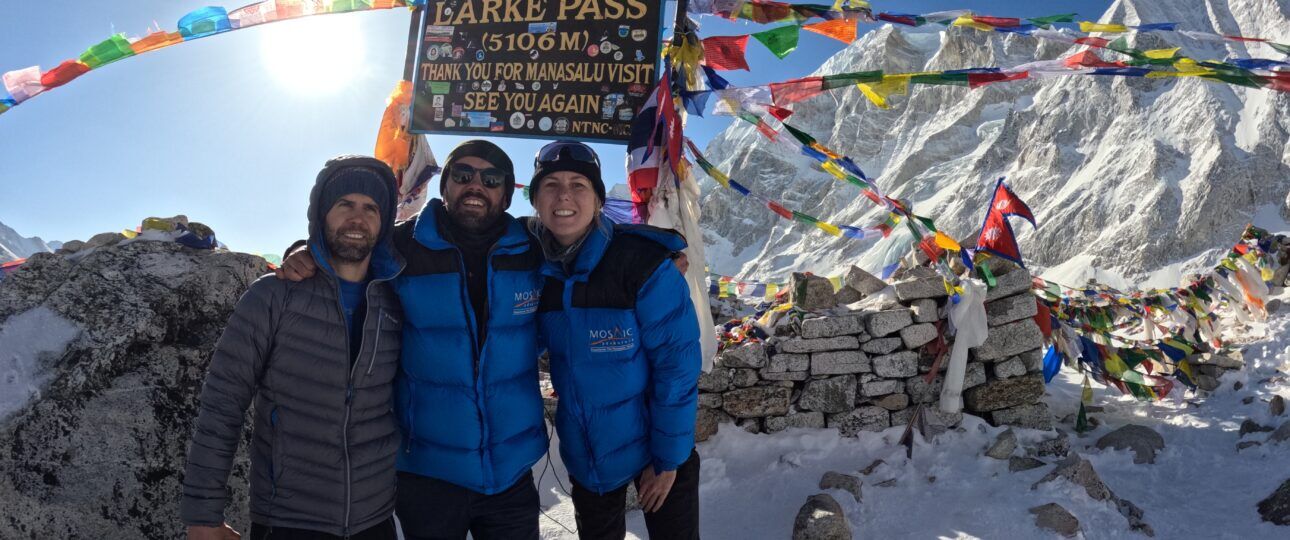
The Manaslu Circuit is quieter than Everest or Annapurna, but that quietness comes at a cost. There is no rescue post around the corner. The teahouses get simpler. The road in is rough, and the pass at 5,106 m has turned back people who trained hard but moved too fast.
This guide focuses on preparation only: fitness, altitude strategy, and the pre-departure checklist. Permits, packing details, and cost breakdowns are covered in their own dedicated guides, and we link to each one where it matters.

How fit do I need to be for the Manaslu trek?
People ask us this almost every week. Our honest answer: if you can walk for six or seven hours on uneven ground and feel tired but not broken at the end, you can probably do this trek. The question is not really about fitness. It is about pace, patience, and willingness to listen to your body at altitude.

Manaslu is not technical. You are not using ropes or crampons. But it is remote in a way that Everest Base Camp and Annapurna Circuit are not. If something goes wrong above Samagaon, help takes time. That context changes how you should prepare.
The benchmark we use with our trekkers: hike six hours, sleep, hike again. If you can repeat that for several days without falling apart, you are a reasonable candidate for this route. The pass day will be harder than that, but it is one day.
Important: Manaslu is often quieter than Everest, but it can feel more “far away from help.” That is why good planning matters even more.

Why trekkers struggle or turn back
In our experience, the trekkers who turn back are not the ones who were unfit. They are usually the ones who moved too fast on day three or four, ignored a headache because they did not want to slow the group down, or arrived at the trailhead already tired from the road.
The drive from Kathmandu to Soti Khola or Machha Khola is genuinely rough, sometimes eight or more hours on a dirt road. If you land in Kathmandu and leave for the trailhead two days later without resting, you start the trek with a deficit.
The other common problem is pace comparison. When you see a group moving faster than you, the instinct is to keep up. At 3,500 meters and above, that instinct is dangerous. Your guide’s job is to stop you from doing it. Let them.
Altitude sickness does not care how fit you are. It responds to how fast you ascend. A slow itinerary with an acclimatization day near Samagaon is not a luxury option. For most people it is the difference between completing the trek and turning back.
The crucial role of the itinerary
The itinerary question comes up before almost any other. Most trekkers want to know: can I do it in 11 days? The answer is yes, but the more useful question is whether you should.
The standard route crosses Larkya La at 5,106 m. To cross it safely, most people need at least one proper acclimatization day near Samagaon, ideally with a short hike to higher ground and back. That night matters more than almost any other night on the trek. If your itinerary skips it or treats it as optional, reconsider the plan.
A 14 or 15 day itinerary gives you buffer for weather, for a slow day, for the unexpected. The difference in cost is small. The difference in safety margin is significant.
For the full day-by-day breakdown, see our Manaslu Circuit Trek itinerary guide and our slow-pace 15-day plan.
Permits and rules (guide, group, documents)
Manaslu is a restricted area, which means you cannot simply show up and walk in. A licensed guide and registration through a trekking agency are required. That rule also means solo trekking is not permitted in the restricted section.
The permits themselves are arranged by your agency. You do not go to government offices in person. What you need to bring: a valid passport with adequate remaining validity, and enough lead time before your trek for the paperwork.
For the full permit list, current costs, and step-by-step process, see our dedicated Manaslu Trek permit guide.
Acclimatization and altitude safety
Altitude is not about fitness. We have guided very fit people who struggled above 4,000 m, and we have guided people in their fifties with no trekking background who crossed Larkya La without a problem. The difference is almost always pace.
The simple rule: if you cannot hold a conversation while walking, you are moving too fast. This sounds obvious at sea level and genuinely hard to accept at 4,200 m when you feel fine. You feel fine right up until you do not.
Pay attention to headache. A mild headache after arriving at a higher camp is common and usually passes with rest and water. A headache that gets worse overnight, or that shows up alongside nausea or dizziness, is not something to sleep through. Tell your guide that evening, not the next morning.
The acclimatization day at Samagaon typically involves a short walk to higher ground and back, followed by a rest afternoon. It feels like a wasted day. It is not. Guides on this route watch oxygen saturation and walking pace closely. A good guide will often notice a problem before you do.
For a detailed explanation of altitude sickness stages, symptoms, and treatment, see our AMS guide for high altitude trekking.
Physical and mental preparation plan (12 to 24 weeks)
The training question we hear most is: ‘I go to the gym three times a week, is that enough?’ The answer is: probably not on its own. Gym fitness is not the same as hiking fitness. The trail asks your body to move forward for six or seven hours, often on uneven ground, sometimes in thin air. Squats help. But nothing trains you for a long hiking day like a long hiking day.
If you have 12 to 24 weeks before your trek, the most useful thing you can do is build up your long hike on Saturdays. Start at two hours with a light daypack. Work toward five hours with a loaded pack over uneven terrain. Add elevation where you can.
Downhill is where people get hurt, and it is what most people skip in training. Your quads take the load on descent. If they are not prepared, your knees pay for it by day four.
Simple weekly plan
| Day | Workout | Time | What it builds |
|---|---|---|---|
| Mon | Easy cardio (walk, jog, cycle) | 30 to 45 min | Base fitness |
| Tue | Strength (squats, step-ups, lunges, calves, core) | 30 to 45 min | Leg power + stability |
| Wed | Cardio intervals (hills or faster pace) | 30 to 40 min | Climb ability |
| Thu | Rest or mobility (stretching, easy walk) | 20 to 40 min | Recovery |
| Fri | Strength + core (lighter than Tue) | 25 to 40 min | Injury resistance |
| Sat | Long hike with a loaded daypack | 2 to 5 hrs | Trek-specific stamina |
| Sun | Easy walk + gentle stretching | 45 to 90 min | Active recovery |
The weekly structure we suggest: two or three shorter cardio sessions, one strength session focused on legs and core, and one long hike. Keep one rest day. One week before you fly, cut volume by half and let your body arrive fresh.
On the mental side, the hardest part of the trek is not the pass. It is the slow days when you feel impatient and other trekkers are moving faster. Training your brain to stay at its own pace matters as much as training your legs.
If you want extra training ideas tailored to Nepal trekking, this Mosaic guide helps: Training for trekking in Nepal.
Weather reality and best seasons
Weather on Manaslu is not unpredictable in the big seasonal sense. Spring and autumn are the most reliable windows, and most trekkers go in October or November. The trail is clearer, the pass is more likely to be in good condition, and you are less likely to lose a day to a surprise snowstorm.
What catches people off guard is the daily range. It can be warm enough for a t-shirt at midday in a river valley and cold enough for a down jacket two hours later when clouds move in. This is not a reason to avoid the trek; it is a reason to carry both layers and not pack them deep in your bag.
For a season-by-season breakdown including what each month looks like on the trail, see our Manaslu Circuit Trek weather and seasons guide.
Packing for Manaslu
Packing is covered in detail in our Manaslu packing list. What matters here, from a preparation standpoint, is timing: do not leave gear decisions to the last week.
Two things that catch people out. First, boots. New boots on a two-week trek is a bad idea. Wear your trek boots for your long training hikes, on your commute, anywhere you can. By the time you fly, they should feel like old friends. Second, sleeping bag temperature ratings are optimistic. If the bag is rated to -5C, plan for it to feel comfortable at around 0C. For Manaslu, a bag rated to -10C or colder is a sensible choice for the high section.
For the complete gear checklist including what you can rent in Kathmandu versus what to bring from home, see our Manaslu Circuit Trek packing list.
Life on the trail (food, water, sleep, money, Wi-Fi)
A few things that affect how you feel each day, beyond fitness and altitude:
Eat even when you are not hungry. Appetite often drops above 3,500 m, but your body is working harder than usual. The teahouse menu gets simpler as you gain elevation, so eat well in the lower villages where the food is more varied. Dal bhat is genuinely one of the better trekking meals you can eat: filling, warm, and usually refillable.
Cash is important because ATMs disappear once you leave the main towns. Carry more than you think you need. Small denominations matter because change is scarce in higher villages. A buffer for two or three extra nights is not excessive given how often weather causes delays.
Sleep at altitude feels different. It is lighter, sometimes interrupted, and you may wake up with a mild headache even if your acclimatization has been fine. Eating dinner early and going to bed warm helps. So does going to sleep before the dining room gets cold.
For a full cost breakdown including permit fees, guide and porter costs, and daily teahouse expenses, see our Manaslu Circuit Trek cost guide.
Insurance, rescue planning, and smart risk control
Insurance is one of those things that feels optional until it is not. Helicopter evacuation from the Manaslu region is expensive, and it only happens when weather allows. Getting a policy that covers altitude trekking and emergency evacuation is not difficult, but read the altitude ceiling carefully. Some policies cap at 4,500 m, which puts Larkya La outside your coverage.
Before you book, confirm your policy covers trekking to at least 5,200 m and includes helicopter evacuation. Write the emergency number somewhere that is not just your phone.
Pre-departure checklist
This is not a packing list. That is covered separately. This is the checklist for everything that needs to happen before you leave home, so nothing gets sorted in a panic the week before you fly.
3 to 6 months before
- Book through a registered trekking agency and confirm your guide is licensed. Restricted area permits require agency registration and take time to process. This cannot be left to the last minute.
- Get your itinerary length confirmed in writing with your agency, including at least one acclimatization day near Samagaon.
- Start your training base. Long hikes with a loaded pack matter more than gym sessions.
- Check your passport expiry. Nepal requires at least 6 months validity beyond your travel dates.
- If you have any history of heart, lung, or blood pressure issues, get a medical check before committing to the route. Altitude makes all of these harder to manage.
4 to 8 weeks before
- Buy travel insurance and check three things specifically: altitude ceiling is at least 5,200 m, helicopter evacuation is included, and there is a 24-hour emergency line. Write that number on paper, not just in your phone.
- Start hiking in your trek boots. Not a short walk around the block. Long training hikes, the same hikes you are doing for fitness. By the time you fly, those boots should feel worn in.
- Check your sleeping bag temperature rating honestly. A bag rated to -5C will feel comfortable at around 0C in practice. For the high section of Manaslu, you want -10C or lower.
- Visit a travel health clinic if you have not already. Hepatitis A, typhoid, and tetanus are the most commonly recommended for Nepal.
2 weeks before
- Confirm your Nepal visa situation. Most nationalities can get one on arrival, but verify yours in advance.
- Sort your cash. Nepal rupees, small denominations. ATMs work in Kathmandu but become unreliable once you leave the main towns. Carry enough for your daily trail expenses plus a buffer for two or three unplanned nights.
- Test your headlamp, power bank, and camera. Cold drains batteries fast at altitude. Better to find out your power bank has a fault now than at 4,500 m.
- Begin your taper. Cut training volume by roughly half. Let your body arrive at the trailhead fresh, not already worn down.
In Kathmandu (plan at least 2 nights)
- Do not go straight to the trailhead after a long-haul flight. The drive to Soti Khola or Machha Khola is eight or more hours on a rough road. Starting that drive already jet-lagged puts you behind before the trek begins.
- Pick up any gear you planned to rent in Thamel: trekking poles, sleeping bag, down jacket. Do this on your first full day, not the morning you leave.
- Confirm with your agency that all permits are arranged and in hand. You should not be handling paperwork yourself, but confirm it is done.
- Leave your full itinerary, your agency’s contact number, and your insurance emergency line with someone at home.
- Eat well, sleep well, drink water. Kathmandu sits at around 1,400 m. It is mild, but it is where the altitude adjustment begins.
The night before the drive to the trailhead
- Pack your daypack separately from your main duffel. Your porter carries the duffel. Your daypack is what you hike with each day: water, snacks, a warm layer, headlamp, basic first aid, and your documents.
- Put your insurance emergency number somewhere you can find it without unlocking your phone.
- Read through the early symptoms of altitude sickness once. Not to worry yourself, but so you recognise them if they show up and do not talk yourself out of mentioning them to your guide.
Frequently asked questions about preparing for the Manaslu Circuit Trek
These are the preparation questions we get most often. For topics like permits, cost, and packing, see the dedicated guides linked throughout this page.
How many days should I plan?
11 days is possible. 14 to 15 days is safer and more comfortable. The extra days allow for a proper acclimatization day near Samagaon and a buffer if weather affects the pass crossing.
Is altitude sickness likely?
It can happen to anyone regardless of fitness. Moving slowly and taking acclimatization seriously reduces the risk significantly. A fast itinerary is the most common cause of problems above 3,500 m.
Do I need a guide?
Yes. The route passes through a restricted area and a licensed guide is required by regulation. Solo trekking in the restricted section is not permitted.
When is the best time to go?
October and November are the most popular months. March and April are also good. Each season has trade-offs covered in detail in our seasons guide.

Final word from our Manaslu team
Good preparation does not mean preparing for the worst. It means arriving at the trailhead with legs that are used to long days, a pace that gives altitude time to catch up, and a plan that has some room in it.
If you have questions about whether your fitness level or timeframe is realistic, send us a message. Our guides work this route regularly and can give you a straight answer based on your specific situation, not a sales pitch.
Want more information? Send us your query, and our experts will get back to you within 24 hrs.

Rajendra Sapkota is the co-founder of Mosaic Adventure and a veteran in the trekking industry with over three decades of experience guiding adventurers through Nepal’s stunning landscapes. . His unparalleled knowledge of every trail, from the popular Everest Base Camp to the remote Upper Mustang, has earned him a reputation as a trusted authority on Nepal’s geography and culture. Raj’s passion for the Himalayas is matched only by his dedication to ensuring a safe and memorable journey for every traveler.
If you have any questions or need personalized advice to plan your trip to Nepal, you can reach out to him directly at [email protected].
