
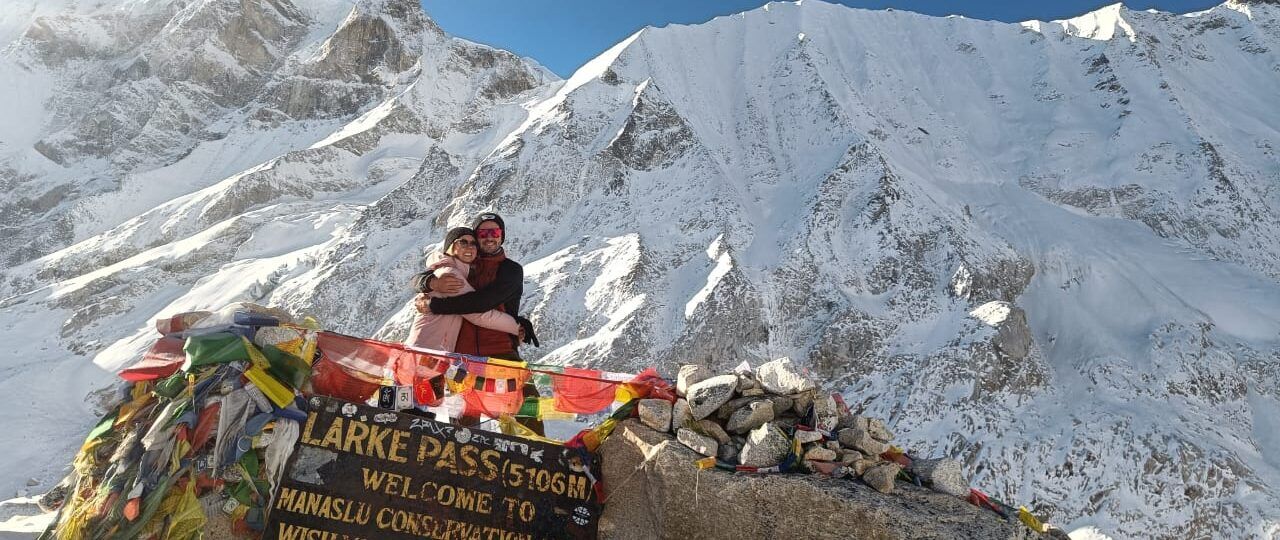
Trekking the Manaslu Circuit in March is one of the most rewarding ways to experience this region. Expect clear skies, early spring color on the hillsides, and quiet trails that let you enjoy the mountains at your own pace.
As winter fades, villages reopen and the route feels calm and personal. If you want big Himalayan views, culture, and fewer crowds than the classic routes, March is a strong choice.
Quick Facts: Manaslu Circuit Trek in March
- Best Time for: Clear views, rhododendron blooms, moderate weather
- Weather: Mild in lower zones, cold at pass (snow possible above 4000m)
- Difficulty: Moderate to Challenging (Altitude + Daily Hours)
- Permits: Restricted Area Permit + MCAP + ACAP
- Guide Required: Yes (Government Rule)
- Typical Days: 11 to 14 depending on itinerary
- Best For: Experienced walkers, culture lovers, solo group travel
Overview of March for Manaslu Circuit Trek and Why It’s Ideal Month
March marks the start of spring in the Himalayas. Days are often clear, and the weather is usually stable for trekking.
In the lower parts of the trail, rhododendron flowers begin to bloom, adding bright splashes of red and pink to the green hills. The days are generally clear, and temperatures are comfortable: mild in the lower regions and cooler as you gain altitude.
One of the best parts about March on the Manaslu Circuit Trek is the relaxed pace on the trail. If you are still deciding the best season, see our best time to trek Manaslu guide. With fewer trekkers around, you can take your time at popular viewpoints, stop for photos without feeling rushed, and enjoy village life without the busy-season noise.
Larkya La Pass (5,106m) is the toughest and most dramatic day on the trek. In March, visibility is often excellent, and conditions are usually more predictable than in deep winter. Snow is still possible near the pass, so timing, layers, and a steady pace matter.
Overall, March works well because it combines clear views, manageable daytime temperatures, and a quieter trail. You get more time at viewpoints and villages, without the peak-season rush.
Highlights of Trekking to Manaslu in March

- Clear views of the snow-capped Himalayas, including Mt. Manaslu (8,163m / 26,781ft)
- Rhododendron blooms from Deng up to Shyala
- Comfortable daytime walking temperatures in most sections
- Traditional villages and strong Tibetan-influenced culture in the upper valley
- Crossing Larkya La Pass (5,106m / 16,752ft)
- Waterfalls, hot springs, and the Marsyangdi River valley on the later section
Weather info for doing Manaslu Circuit Trek in March
March usually brings clear mornings, mild days on the lower trail, and colder temperatures as you gain altitude. For a month-by-month breakdown, read our Manaslu temperature and weather guide. You may walk in light layers during the day, but mornings and evenings can be chilly, especially above Samagaon.
Higher up, snow can still appear around Larkya La. Compared to monsoon months, the risk of weather-related disruption is much lower, but mountain weather can change quickly, so checking forecasts is still important.
| Region | Low (°C) | High (°C) | Notes |
|---|---|---|---|
| Lower Trail (Machha Khola to Namrung) | 8 to 12 | 18 to 22 | Clear & warm days |
| Mid Terrain (Samagaon to Samdo) | 2 to 6 | 12 to 15 | Cooler, sunrise views |
| High Pass Zone (Larkya La) | -12 to 0 | 5 to 8 | Snow possible, winds |
Manaslu Circuit Trek Difficulty
March is a good month for the Manaslu Circuit because the weather often supports steady walking days. Still, this trek is not easy. Long distances, steep ups and downs, and high altitude make it challenging.
The route climbs from about 890m at Machha Khola to 5,106m at Larkya La Pass. As altitude increases, the air gets thinner and walking feels harder, even for fit hikers.
Most days involve 6 to 8 hours of walking. Good preparation helps a lot, especially cardio fitness and leg strength. If you want a simple checklist, use our Manaslu Circuit preparation guide.
Training ideas: regular walking, stair climbing, jogging, and day hikes with a small backpack.
Check detailed article on Manaslu Circuit Trek difficulty. For altitude safety, also read our altitude sickness (AMS) guide.
What a Typical Trekking Day Looks Like in March
Most days start clear and cold. You wake early for mountain views and begin walking around 7 to 8 AM.
Mornings are crisp, then the sun warms the trail. By midday, you can often walk in light layers. Afternoons usually stay dry with good visibility.
After sunset it gets cold again, especially above Samdo, so warm clothes matter inside tea houses.
Food and Accommodation
March is the start of spring and the end of winter in the Manaslu region. Many locals return to their villages after spending winter in warmer areas.
Most lodges that close in winter start reopening in March, so food and rooms are generally available along the route.
Accommodation is usually twin sharing. Single rooms may be possible on request, but you usually need to pay for the full room. In busier weeks, single rooms can be harder to get.
Tea houses provide simple rooms with a bed, pillow, and blanket. Bathrooms are usually shared. Meals are served in the dining area, and dal bhat is the most common and reliable option.
You will also find noodles, fried rice, pasta, soups, and simple “continental-style” items. Options are basic, but filling, and warm meals feel especially good at higher altitude.
For cold nights you can try the local hot soup noodle which will be available both in veg and non-veg.
Solo Trek
Trekking Manaslu without a guide is not allowed. The Manaslu region is a restricted area, and permits must be arranged through a registered trekking agency. You also need at least two trekkers (or a group) and a licensed guide.
The trail can be confusing in places, and help is limited in remote sections. A guide improves safety, handles logistics, and supports you if the weather changes or someone feels unwell.
Guide cost is often around USD 35 to 40 per day. If you are comparing operators, this Manaslu trekking agency guide can help you know what to look for.
Do you offer group joining options for the Manaslu Circuit Trek in March?
Mosaic Adventure organizes regular group departures for the Manaslu Circuit Trek every spring season, including March. Group joining is a great option for solo travelers who need a partner for the restricted area permit while also sharing the experience with like-minded trekkers.
Photography Opportunities in March
March offers crystal clear skies, fresh snow on the high peaks, blooming forests at mid elevations, and soft dramatic morning light. Since the trail is still quiet, you get more time at popular viewpoints without crowds blocking your shots. You can stop longer in places like Shyala, Samagaon, and Larkya La to wait for the perfect light and capture the mountains in peace. The mix of winter landscapes and early spring colors makes March one of the best months for photography in the Manaslu region.

Recommended Itinerary for the Manaslu Circuit Trek in March
If you are in the planning phase and are not sure which itinerary is best for you, look no further, as we have put together the following 11-day itinerary that is suitable for the Manaslu Circuit Trek in March.
Day 1: Trek to Machha Khola (890m / 2,920ft)
Trekking to Machha Khola, an elevation of approximately 890 meters, will take around 10 hours on local bus.
Day 2: Trek to Jagat (1350m / 4,429ft)
Trekking to Jagat, situated at an altitude of about 1350 meters, is estimated to take 6 hours.
Day 3: Trek to Deng (1860m / 6,102ft)
Trekking to Deng, reaching an altitude of approximately 1860 meters, will take around 7.5 hours.
Day 4: Trek to Namrung (2660m / 8,727ft)
Trekking to Namrung, at an elevation of approximately 2660 meters, is estimated to take 6 hours.
Day 5: Trek to Samagaon (3525m / 11,565ft)
Trekking to Samagaon, located at an altitude of approximately 3525 meters, will take about 7 hours.
Day 6: Acclimatization Day
Day 7: Trek to Samdo (3860m / 12,664ft)
Trekking to Samdo, situated at an altitude of approximately 3860 meters, is estimated to take 4 hours.
Day 8: Trek to Larka La Phedi (4460m / 14,632ft)
Trekking to Larka La Phedi, reaching an altitude of about 4460 meters, will take approximately 4 hours.
Day 9: Trek to Bimthang (3610m / 11,844ft), Crossing Larkya La (5106m / 16,752ft)
Trekking to Bimthang, at an elevation of approximately 3610 meters, involves crossing Larkya La, which stands at 5106 meters. This challenging day will require around 8 hours.
Day 10: Trek to Dharapani (1920m / 6,299ft)
Trekking to Dharapani, situated at an altitude of approximately 1920 meters, is estimated to take 7 hours.
Day 11: Return to Kathmandu via Besi Sahar
Depart for Kathmandu with a local vehicle, an approximate 9-hour ride. Private jeep rental is available for an additional fee.
We operate this tour with the exact 11-day itinerary mentioned above. To learn more about our 11-day Manaslu Circuit trek, please visit the trip page.
You will find a detailed overview, a comprehensive daily itinerary, frequently asked questions and additional general information.
Trekking Permits
Manaslu being the special zone, you need to get the restricted permit to trek in this region. Hence there are several permits you need and they are
- Restricted Area Permit
- Manaslu Conservation Area Project (MCAP)
- Annapurna Conservation Area Project (ACAP)
During March the cost of the restricted area permit is lower than peak autumn months. You will get the permit for USD 100 per person for the first week. While you pay extra USD 7 per person per day after the first seven days. This means that you save USD 20 compared to other months mentioned above.
For MCAP the cost is Nepali currency 1000 for SAARC nationals and Rs 3000 or USD 30 for other nationals.
And ACAP costs Nrs 1000 for SAARC nationals and NRs 3000 or USD 30 for other nationals.
You can get these permits through a registered trekking agent or you can get it yourself from the Nepal Tourism Board Office in Kathmandu.
You can read our detailed breakdown of Manaslu permit rules and fees here: Manaslu Permit Cost Guide. If budget is a deciding factor, this complete Manaslu Circuit trek cost guide breaks down permits, transport, guide, porter, and daily expenses.

Packing Checklist (March Trek)
If you want the full gear list (layers, sleeping bag ratings, microspikes, and extras), see our detailed Manaslu packing list.
- Layered Clothing (Base + Mid + Outer)
- Insulated Jacket (Down/ Synthetic)
- Sturdy Trekking Boots + Camp Shoes
- Sun Hat, Gloves, Sunglasses, SPF 50+
- Water Bottle + Purification Tablets
- Trekking Poles
- High-Altitude Sleeping Bag (Rated -10°C)
- First Aid + Altitude Medicine (Consult doctor)
- Headlamp + Spare Batteries
Some useful tips for Manaslu Circuit Trek in March

- Always check the weather condition before the trek and pack accordingly.
- Since March is a peak season, it is important to pre-book your trek.
- A little bit of preparation such as physical training prior to the trek will always come in handy.
- Hire a guide and porter for a better and comfortable trekking experience.
- Walk on your own pace and do not rush.
- Drink plenty of water to stay hydrated and to reduce the risk of altitude sickness.
- Avoid drinking alcohol while trekking. This will cause dehydration.
- During the daytime in March, the sun can be scorching hot. Take and apply high SPF sunscreen along with sunglasses to protect your skin and eyes.
- In case of emergencies or Acute Mountain Sickness, always reach out for help from the guide or the team leader.
- Keep buffer days in case of any delays or unplanned situation.
February vs March vs April for Manaslu Circuit Trek
| Month | Trail Conditions | Temperature | Crowd Level | Who It Suits Best |
|---|---|---|---|---|
| February | Heavy snow at higher elevations, some lodges closed | Very cold | Very low | Experienced winter trekkers only |
| March | Stable trails, light snow only near pass, clear skies | Cold mornings, mild days | Low | Best balance of weather and solitude |
| April | Dry trails, full rhododendron bloom | Warmer | Moderate | Trekkers who want color and comfort |
Who is the Manaslu Circuit Trek in March Best For?
- Trekkers who want clear mountain views without peak-season crowds
- People who prefer cool walking weather and bright days
- Photographers who want snow peaks plus early spring colors
- Fit hikers who can handle 6 to 8 hours of walking most days
- Travelers who enjoy quiet villages and cultural encounters
March may not be ideal if you want warm nights at higher altitude, or if you are not comfortable with basic tea house facilities.
Frequently Asked Questions
Below are the most common questions trekkers ask when planning the Manaslu Circuit Trek in March. These quick answers will help you understand weather, safety, logistics, and whether March is the right month for your adventure.
Is March a safe time for Manaslu Circuit Trek?
Yes. March is considered one of the safest months for Manaslu trekking. The weather becomes stable after winter, skies stay clear, and storm risk is very low. Some snow can still remain near Larkya La Pass, so warm clothing and proper acclimatization are still essential.
Is Manaslu crowded in March?
No. Even though March is the start of the spring trekking season, Manaslu remains far less crowded than Everest or Annapurna. You will see other trekkers, but trails, villages, and tea houses feel calm and peaceful.
Can I trek Manaslu solo in March?
No. Independent solo trekking is not allowed in the Manaslu region. Nepal government rules require at least two trekkers and a licensed guide arranged through a registered agency to obtain the restricted area permit.
How cold is Larkya La Pass in March?
The pass can be very cold in the early morning, often below freezing. Wind chill makes it feel colder, and patches of snow are common. Wearing proper layers, warm gloves, and a down jacket is necessary for a safe crossing.
What is the biggest challenge in March?
The altitude is still the main challenge. While the weather is favorable, the trek climbs above 5000 meters. Good fitness, slow pacing, and acclimatization days are key to completing the trek comfortably.
Are tea houses open in March?
Yes. Most lodges reopen as winter ends and local families return to their villages. Food and accommodation are widely available throughout the route.
Is travel to the starting point reliable in March?
Yes. Roads to Soti Khola and Machha Khola are generally clear and safer compared to monsoon months. Minor delays can happen due to rough mountain roads, but travel is mostly reliable.
Is March better than April for Manaslu?
March offers quieter trails and cooler walking temperatures. April brings warmer weather and peak rhododendron blooms, but also slightly more trekkers. Both months are excellent, depending on your preference.
Do I need crampons in March?
Full crampons are usually not required. However, microspikes can be useful if snow or ice remains near Larkya La Pass.
Why choose Manaslu over Everest in March?
Manaslu provides a quieter and more authentic Himalayan experience. The trails are peaceful, cultural interaction is deeper, and you avoid the heavy traffic seen on Everest routes during spring.
Conclusion
Manaslu in March is a great fit for trekkers who want clear views, a quieter trail, and a strong mix of culture and mountain scenery. For many years our team has guided trekkers across Larkya La every spring, and March remains one of the months we trust most for reliable trekking conditions.
If you have questions about planning, permits, or group joining, feel free to contact us. We are happy to help you make the right decision for your trip.
Want more information? Send us your query, and our experts will get back to you within 24 hrs.

Madhav Prasad is a seasoned trekking and tourism expert with over two decades of experience in the field. Starting his career in 2001 as a porter, Madhav quickly advanced to the role of trekking guide, gaining invaluable hands-on experience in Nepal’s diverse trekking routes. In 2009, after eight years of dedication to the industry, he co-founded Mosaic Adventure, a leading trekking and tour company known for its commitment to safety, sustainability and personalized service.
Madhav has personally trekked to nearly every major trekking destination in Nepal, including Everest Base Camp, Annapurna Base Camp, the Annapurna Circuit, Poon Hill, Jomsom Muktinath, the Indigenous Peoples Trail, Langtang Valley and Mardi Himal, among others. His experience extends beyond Nepal, as he has also successfully summited Mount Kilimanjaro, Africa’s highest peak.
In addition to his extensive trekking credentials, Madhav is well traveled globally, having explored countries such as Australia, the USA, the UK, France, Japan, China, and many others. His global exposure enhances his ability to understand and cater to the diverse needs of international trekkers.
Madhav is the primary point of contact for many clients at Mosaic Adventure, personally addressing inquiries and helping plan treks with a meticulous and personalized approach. His deep knowledge of Nepal’s trekking routes, combined with his global travel experience, ensures that every trek is well planned, safe and unforgettable.
