
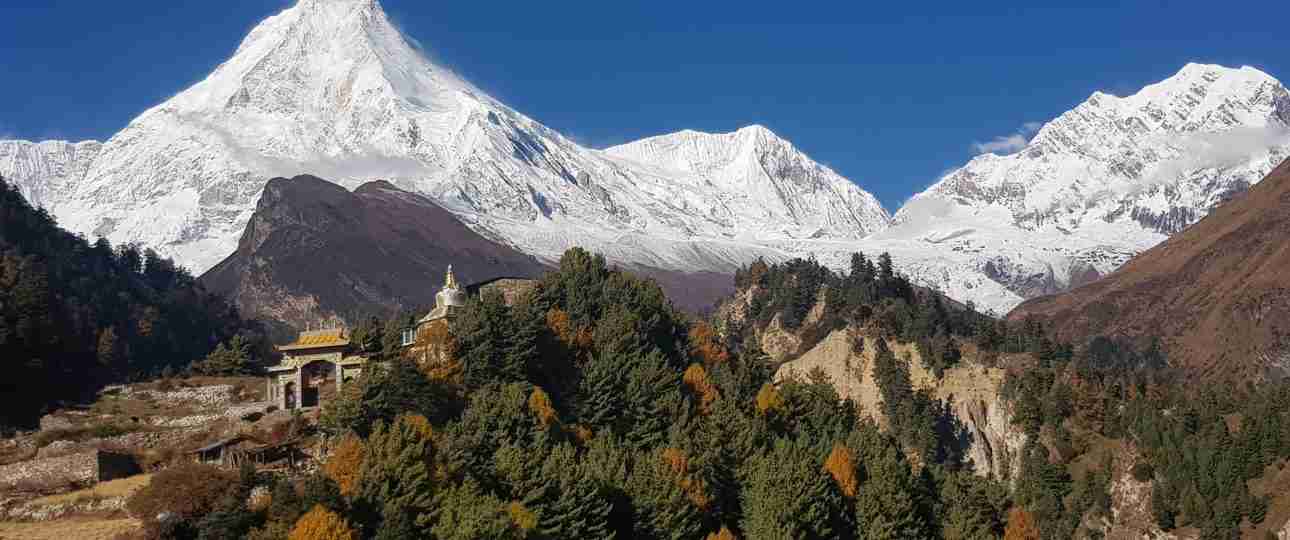
Do you think the Manaslu Circuit Trek is too difficult for you? Wondering how hard is the Manaslu Circuit Trek? While it requires no technical climbing, you must be prepared to walk 15 to 20km daily for 11 days and cross the Larkya La Pass at 5,106m. With proper training, fitness, and an experienced guide from Mosaic Adventure, both beginners and experienced trekkers can enjoy a safe, rewarding journey.
It is harder than the Everest Base Camp trek due to its remoteness, but achievable for beginners with 3 months of cardio training.
Manaslu Circuit Trek Difficulty at a Glance
- Difficulty level: Moderate to challenging
- Highest point: Larkya La Pass (5,106 m)
- Daily walking time: 6 to 8 hours
- Main challenges: High altitude, long days, remote terrain
- Suitable for beginners: Yes, with proper training and acclimatization
- Best seasons: Spring (Mar to May) and autumn (Sep to Nov)
Based on long-term guiding experience in the Manaslu region through the Budhi Gandaki Gorge, our lead guides emphasize that Manaslu is a test of endurance and acclimatization, not technical mountaineering. In 2025 alone, we saw a 98% success rate for trekkers who followed a 12-week preparation plan.
Manaslu Circuit Trek is suitable for fit beginners who have experience with multi-day hiking.
Manaslu Circuit Trek Overview and Key Facts
If you’re planning on booking a guided Manaslu Circuit Trek itinerary, you are in for an unforgettable adventure. This guide outlines everything you need to know about the trek’s difficulty, fitness requirements, weather conditions and training tips to help you prepare for a safe and successful journey.
Manaslu Circuit is considered harder than the Annapurna Circuit for some trekkers due to its remoteness and higher altitude. But, in recent years, the Manaslu Circuit Trek has become a popular alternative to the Annapurna Circuit Trek and Everest Base Camp trek.
The Manaslu Circuit Trek is one of the best off-the-beaten-path treks in Nepal, taking you through remote villages, deep gorges, forests, rivers, and high Himalayan landscapes. This trek lets you cross rivers and waterfalls and enjoy snow-capped Himalayan views.

The Manaslu region is full of abundant natural beauty and a notion of complete peace. Manaslu Circuit Trek is a great choice for those who want to explore the isolated region. Geographically, it lies in the isolated foothills of the Himalayas in the border of Tibet.
This trekking region is one of the preserved and controlled areas of Nepal. Thus, you’ll explore the well-preserved natural wonders as well as the cultural aspect of the local tribes.
To preserve the natural and cultural beauty of the region also for the safety cause of trekkers no one is allowed to do trek individually. Thus, you’re compelled to hire an authorized guide or porter for Manaslu Circuit Trek from TAAN Registered Member Agency.
You might be wondering about the Manaslu Circuit trek difficulty and what level of fitness is required to complete the trek successfully. Difficulty on this trek builds gradually, and understanding where it becomes demanding helps trekkers prepare both physically and mentally.

Understanding the Difficulty of the Manaslu Circuit Trek
The Manaslu Circuit Trek is rated moderate to strenuous, making it a challenge for beginners but achievable with preparation. How hard is it? No technical climbing skills are needed, and with advanced training, even first-time trekkers can succeed. With proper planning and our expert guides at Mosaic Adventure, you’ll reach your destination safely and confidently.
Anyone with a basic fitness level, determination, and support from an experienced licensed guide can complete the trek successfully.
After the devastating 2015 earthquake, many places on Manaslu trails have been destroyed. The trail has improved over the years and is now clearer and easier to follow in many sections. Moreover, new trekking trails have been developed in the area so comparatively the trek is less difficult than it was before the earthquake. It is also fully safe for trekking or to explore the hidden natural beauty of the Manaslu region.
Now, teahouse at high camp at Dharamsala is also opened, so you can complete this trek more conveniently. But it would be wise to prepare with proper gears as the teahouses on Manaslu trail are pretty basic; this trail is not yet commercialized as Everest or Annapurna trail.
Before judging the Manaslu circuit trek difficulty level you should consider the facts like the distance, altitude and weather conditions.
Manaslu Circuit vs Annapurna Circuit: Difficulty Comparison
Yes, the Manaslu Circuit Trek is generally considered more challenging than the Annapurna Circuit. The trails are more remote, daily climbs and descents are steeper, and there are fewer facilities along the way. Crossing the Larkya La Pass (5,106 meters) can be especially demanding due to the high altitude and unpredictable weather. Despite these challenges, the trek’s untouched landscapes, peaceful trails, and less-crowded experience make it a rewarding adventure for avid trekkers.
Manaslu Circuit Trek Difficulty for Beginners
Yes, beginners can do the Manaslu Circuit Trek with proper preparation and guidance. While it is more challenging than treks like Langtang Valley or Annapurna Circuit, prior high-altitude experience is not mandatory. Trekkers should be physically fit, ready for long walking days, and committed to a gradual pace. With a well-planned itinerary, acclimatization days, and an experienced guide, beginners can complete the trek safely and confidently.
Larkya La Pass: The Most Challenging Section of the Trek
The most challenging and iconic part of the Manaslu Circuit Trek is undoubtedly the crossing of Larkya La Pass, at 5,106 meters (16,752 ft). This high mountain pass is both the physical and mental climax of the trek.
The journey to the pass starts from Dharamsala (Larkya La Phedi) and involves a long, steady climb in a cold, high-altitude environment. Trekkers may encounter snow and icy paths, requiring stamina, careful pacing, and mental focus. The thin air makes every step a conscious effort, testing endurance rather than technical climbing skills.
After reaching the summit, a long and steep descent to Bimthang village challenges the knees and leg muscles. Despite the physical demands, the panoramic views of Himalayan peaks and untouched landscapes from the top make the effort worthwhile.
At Mosaic Adventure, our expert guides ensure a safe and comfortable crossing of Larkya La Pass. They set a steady pace, provide encouragement, and offer their local knowledge to make this highlight of the trek both achievable and unforgettable.
Who Is This Trek Best For?
- Trekkers comfortable walking 6 to 8 hours a day
- People who enjoy remote trails and simple lodges
- Beginners who train properly and trek with a guide
Who Should Think Twice
- Those expecting luxury lodges
- People with no time for preparation
- Anyone unwilling to walk slowly at altitude
The Nepal Trekking Difficulty Matrix
While the Manaslu Circuit is often compared to the Everest Base Camp (EBC) or Annapurna Circuit (ACT), the challenges differ significantly. Use this matrix to understand where Manaslu stands in terms of raw physical demand and remoteness.
| Trek Name | Peak Altitude | Remoteness | Avg. Daily Walk | Infrastructure | Difficulty |
| Manaslu Circuit | 5,106m | High | 15 to 20km | Basic Teahouses | Strenuous |
| Everest Base Camp | 5,545m* | Medium | 10 to 12km | Developed/WiFi | Moderate+ |
| Annapurna Circuit | 5,416m | Low | 12 to 15km | Highly Developed | Moderate |
*Altitude at Kala Patthar
Why is Manaslu considered “Strenuous” compared to EBC?
-
Daily Distance: While the EBC trek is shorter (approx. 130km round trip), the Manaslu Circuit covers nearly 177km to 180km. You will walk 6 to 8 hours daily, often covering up to 20km in the lower regions.
-
Infrastructure Gap: Annapurna and Everest have luxury lodges and constant WiFi. Manaslu is a restricted area with basic teahouses, less reliable electricity, and limited medical evacuation options compared to the Khumbu region.
-
The “Larkya La” Descent: Most treks have steep climbs, but Manaslu is famous for its 1,400m+ sustained descent from the pass to Bhimthang, which is significantly more taxing on the knees than the descents on the Annapurna route.
Distance During Manaslu Circuit Trek
Manaslu Circuit trek lies in the northern Himalayan range, the west-central part of Gorkha districts. The trek ranges from low river valleys below 1,000 meters to high alpine terrain, with Mount Manaslu (8,163 m) towering above the route.
Manaslu Circuit trek is about 177 kilometers in total distance. On a standard tour itinerary, you’ll be walking for 11 days with an average distance each day of approximately 15-20 km.
The trek can be made longer or shorter depending on the length of your walking days and starting point.
Manaslu Circuit trek is easily accessible from Kathmandu city. Basically, it starts in the town of Arughat or Gorkha or after completion of road construction you may start either Soti Khola or Machhakhola.
The first few days on the trail become difficult as the Budhi Gandaki Gorge is harrowing steep. Also, you have to walk via lots of uphill and downhill. Sometimes you’ve to walk via breezy trails and cross suspension bridges above the Budhi Gandaki river.
You need to be physically and mentally prepared for the uneven terrain, rocky trails that might add fatigue especially for those who are not physically fit. So, it’s important to train yourself and get used to walking on uneven surfaces.
Crossing the Larkya La Pass at altitude 5,106 m is the most challenging day during this entire trek. But it is mainly a test of your endurance.
You’ve to walk on snow but you don’t need any technical skills to cross this high alpine pass.
It is 100 % sure that you’ll experience more wilderness, remote, and adventure during Manaslu Circuit trek.

Want more information? Send us your query, and our experts will get back to you within 24 hrs.
Coping with Altitude on the Manaslu Circuit
Manaslu Circuit trek altitude has a great variation. During this trek, you’ll travel via different landscape, climate, and altitude.
This adventurous trek starts at around 700 m and reaches 5,106 m at Larkya La Pass. Thus, the major Manaslu Circuit trek difficulty like on many high altitude treks is your ability to adjust to high altitude.
The biggest challenge of the Manaslu Circuit trail is crossing the Larkya La Pass. As the trail gets higher, there are fewer trees and you become more exposed to the elements like snow, sun, and cold wind.
No matter if you’re a novice, experienced, or even you’ve done this trek many times, you might suffer from the altitude sickness if you don’t trek properly.
Many trekkers start feeling the effect of the altitude above 2,500 meters. This feeling will only increase as you hike upwards.
So, to get adjusted to the high altitude, the long itinerary is important. It will help your body acclimatize to the altitude.
It is difficult to know how your body will react to the altitude as age, gender, and fitness level. If you’re not well prepared, then everyone is at risk.
As you move towards higher altitude, you’ll certainly notice a shortness of breath, which will make the relatively easy trek harder. You may experience symptoms like mild headaches, insomnia, some breathlessness, and occasionally nausea.
Altitude sickness or AMS is a serious condition that has serious outcomes. Thus, you’re highly recommended consulting your doctor before the trek. Walking slowly, taking regular rest, and drinking plenty of water are the keys to stay away from altitude sickness.
As a general rule, we never recommend gaining more than 500 meters in sleeping altitude per day once you are above 3,000 meters. Our itineraries are designed around this principle to reduce altitude risks.

Weather During the Trek
The weather can make a big difference to your Manaslu Circuit trek difficulty. Heavy rainfall, freezing nights, blazing sun, and chill wind are all possible on your 12 days hiking period.
The days are generally warm and dry and the nights mostly above freezing. So, make sure to pack warm clothes for evening and night and a decent sleeping bag. While clothing, layering is essential.
| Season | Daytime Conditions | Night Temperatures | Difficulty Impact |
|---|---|---|---|
| Spring (Mar to May) | Clear, stable | Cold at altitude | Best balance |
| Autumn (Sep to Nov) | Dry, clear skies | Cold nights | Easiest overall |
| Winter (Dec to Feb) | Snow, very cold | Below freezing | Very difficult |
| Monsoon (Jun to Aug) | Rain, clouds | Mild to cool | Slippery trails |
Spring (March to May)
Spring is one of the best seasons for the Manaslu Circuit Trek. Days are generally stable with clear mountain views, and temperatures are comfortable for long walking days. Rhododendron forests bloom along the trail, making the scenery especially beautiful. Larkya La Pass is usually accessible, though early spring may still have snow.
Autumn (September to November)
Autumn is the most popular time to trek the Manaslu Circuit. Weather is stable, skies are clear, and mountain views are at their best. Daytime temperatures are pleasant, while nights can be cold at higher altitudes. Trail conditions are generally dry and safe, making this the easiest season overall.
Winter (December to February)
Winter trekking in the Manaslu region can be very challenging. Heavy snowfall often closes Larkya La Pass, and many teahouses shut down. Temperatures drop well below freezing at night. This season is only suitable for highly experienced trekkers with flexible plans.
Summer / Monsoon (June to August)
Summer coincides with the monsoon season. Trails can be slippery and muddy, leeches are common in lower sections, and landslides may occur. Cloud cover often blocks mountain views. Larkya La Pass can be risky due to rain and poor visibility.
Training for Manaslu Trek
We have already mentioned that trek is moderately strenuous and challenging. So, even if you consider yourself physically fit we still recommend you to train yourself for such long-distance walk especially at the higher elevation with basic facilities.
You should walk for 6-8 hours per day at a higher altitude with a light backpack. The terrain profile varies from subtropical forests at 700m to high-alpine scree slopes near the pass. You will navigate exposed cliff-side trails, cross multiple high-suspension bridges, and manage a 1,400m steep descent from Larkya La to Bhimthang, which is high-impact on the knees.
Since we’ve designed an itinerary that allows enough time for acclimatization but still ensures to physically prepare yourself for the trek.
Thus, preparation is key to make Manaslu Circuit trek enjoyable and memorable. You have to consider many things like preparing your body and mind.
Walking at a higher altitude makes a greater demand on the body than walking in the lower altitude. So, it’s important to build your strength before you leave. Your training plan must include the following: Prepare yourself for mix terrain
During Manaslu Circuit trek you won’t be hiking on the same level of terrain. Most of the time you’ll walk on the steep and rocky terrain.
So you need to prepare your leg, feet, knees, and ankles for the type of stress they’ll experience on the trek. Stair climbing is a good option to prepare yourself walking on the mixed terrain.
Simple Training Checklist for Manaslu Circuit Trek
- Walk or hike 3 to 4 times a week
- Practice walking 6 to 8 hours with breaks
- Stair climbing with a light backpack
- Cardio activities like walking, cycling, or jogging
- Strength training for legs and core
- Practice on uneven or rocky terrain if possible
1. Strength and Endurance Training
Strength and Endurance training are the key factors while working on your fitness level. This challenging trek is like an exam where your endurance level is tested.
Since you’ve to walk for hours with a backpack so aim to build strength in your back, shoulders, and arms.
Leg strength will be a key for your trek. So, your training must include the exercise which strengthens your leg muscles. The gym exercise includes leg presses, weight squats, or lunges, and bodyweight squats.
2. Cardiovascular Fitness
For Manaslu Circuit trek you need to have good cardiovascular fitness. It boosts your ability of the heart and lungs to supply oxygen-rich blood to the muscles during sustained physical activity.
As you gain higher altitude, the air becomes thinner. To cope with the less oxygen, you need to build cardiovascular fitness. Cycling, swimming, running, jogging, and walking are great options to the cardiovascular program.
3. Mental Preparation
Mental preparation for the Manaslu Circuit trek is important as physical training. You need to prepare yourself mentally for the proper challenge. Trek to Manaslu Circuit is not really tough. In fact, many people of various age group and fitness level has completed.
Mental health includes your emotions, psychology, and social well-being. It affects the way how you think, feel, and act. It’ll also help you to determine how to handle the stress. You should have the mental ability to push yourself upwards and complete the trek.

Frequently Asked Questions about the Manaslu Circuit Trek
Before you set out on the Manaslu Circuit Trek, it’s natural to have some questions in mind. Here are answers to some of the most commonly asked questions to help you prepare better.
Difficulty, Fitness & Comparison
Is Manaslu Circuit harder than Annapurna Circuit?
Yes, the Manaslu Circuit Trek is generally considered harder than the Annapurna Circuit. The trails are more remote, the daily ascents and descents are steeper and there are fewer facilities along the way. The crossing of Larkya La Pass (5,106 meters / 16,752 feet) can be particularly challenging due to the altitude and weather conditions.
Is Manaslu harder than Everest Base Camp Trek?
Yes, the Manaslu Circuit Trek is generally considered harder than the Everest Base Camp Trek. Manaslu is more remote, has fewer facilities, longer daily walking distances, and includes crossing a high mountain pass. Everest Base Camp has better infrastructure and easier access, making it slightly more comfortable for first-time trekkers.
Can beginners do the Manaslu Circuit Trek?
Yes, beginners can do the Manaslu Circuit Trek with proper preparation and guidance. While it is more challenging than treks like Langtang Valley or Annapurna Circuit, prior high-altitude experience is not mandatory. Trekkers should be physically fit, ready for long walking days, and committed to a gradual pace. With a well-planned itinerary, acclimatization days, and an experienced guide, beginners can complete the trek safely and confidently.
How fit do you need to be for the Manaslu Circuit?
You need to be in good physical condition for the Manaslu Circuit Trek. You should be able to walk for 6 to 8 hours a day, sometimes longer, over uneven terrain. Cardiovascular fitness, strong legs, and good endurance are important. Regular training such as hiking, running, cycling or strength exercises at least 2 to 3 months before your trek is highly recommended.
What is the hardest part of the Manaslu Circuit Trek?
The hardest part of the Manaslu Circuit Trek is crossing the Larkya La Pass. The pass sits at over 5,100 meters and involves a long, steady climb at high altitude, often in cold and windy conditions. The long descent after crossing the pass can also be tough on the knees.
Weather, Altitude & Trail Conditions
When is the best time to trek the Manaslu Circuit for easier conditions?
The best times to trek the Manaslu Circuit are during the spring (March to May) and autumn (September to November). These months offer clear skies, stable weather and good trail conditions. Autumn is particularly popular for its clear views and comfortable temperatures, while spring brings beautiful rhododendron blooms along the trail.
How cold does it get at Larkya La Pass?
Temperatures at Larkya La Pass can drop to minus 10°C or lower, especially in early morning or during windy conditions. Wind chill can make it feel colder. Proper layering, a warm jacket, gloves, and a good sleeping bag are essential for this section of the trek.
How many days does it take to cross Larkya La Pass safely?
Crossing Larkya La Pass is usually done in one long day, starting early from Dharamsala and descending to Bimthang. However, reaching the pass safely depends on proper acclimatization in the days leading up to it. Most itineraries allow at least 7 to 8 days before the crossing to help the body adjust to altitude.
Do I need crampons or technical gear?
No technical climbing gear is required for the Manaslu Circuit Trek. In some seasons, especially early spring or after snowfall, your guide may recommend microspikes for icy sections near Larkya La Pass. These are simple traction devices and not technical mountaineering equipment.
Accommodation and Facilities
What kind of accommodation is available on the Manaslu Circuit?
Teahouse accommodation is available along the Manaslu Circuit. These are basic lodges providing meals and a bed. Facilities are simpler compared to other popular trekking regions, so it is best to be prepared for basic conditions, especially at higher altitudes.

Permits and Guide Requirements
Do you need a guide for the Manaslu Circuit Trek?
Yes, having a licensed guide is mandatory for the Manaslu Circuit Trek. The region is a restricted area and you must trek with an authorized guide and obtain the required permits through a registered trekking agency.
What permits are required for the Manaslu Circuit Trek?
You will need the Manaslu Restricted Area Permit (MRAP), the Manaslu Conservation Area Permit (MCAP) and the Annapurna Conservation Area Permit (ACAP). If you plan to add the Tsum Valley extension to your Manaslu circuit trek, you will need an additional Tsum Valley Restricted Area Permit.
Final Insight: Is Manaslu Right for You?
The Manaslu Circuit Trek is an 11-day adventure through remote Himalayan villages, lush forests, rivers, and breathtaking mountain vistas. Crossing the Larkya La Pass (5,106 m) is the most challenging part, but no technical climbing is required. With proper training, fitness, and an authorized guide, both beginners and experienced trekkers can enjoy a safe and memorable journey.
Mosaic Adventure’s local expertise ensures you experience the natural beauty, cultural richness, and off-the-beaten-path adventure of the Manaslu region with full support. Spring and autumn offer the best trekking conditions, while teahouse accommodations and updated trails make the trek more accessible than ever. Prepare your body and mind, follow our expert guidance, and explore Manaslu with confidence!
Lastly, enjoy the journey. There is much to see and learn along the way about the Manaslu trail. We hope this summary gives you a clear idea of the trek’s difficulty and how to prepare for it.
If you are unsure whether this trek suits your fitness or experience, we are always happy to give honest advice based on your background. Our goal is not just to book a trek, but to make sure Manaslu is the right trek for you. For more information or personalized guidance, contact Mosaic Adventure for booking, expert advice, and your tailored difficulty level assessment.
Want more information? Send us your query, and our experts will get back to you within 24 hrs.

Madhav Prasad is a seasoned trekking and tourism expert with over two decades of experience in the field. Starting his career in 2001 as a porter, Madhav quickly advanced to the role of trekking guide, gaining invaluable hands-on experience in Nepal’s diverse trekking routes. In 2009, after eight years of dedication to the industry, he co-founded Mosaic Adventure, a leading trekking and tour company known for its commitment to safety, sustainability and personalized service.
Madhav has personally trekked to nearly every major trekking destination in Nepal, including Everest Base Camp, Annapurna Base Camp, the Annapurna Circuit, Poon Hill, Jomsom Muktinath, the Indigenous Peoples Trail, Langtang Valley and Mardi Himal, among others. His experience extends beyond Nepal, as he has also successfully summited Mount Kilimanjaro, Africa’s highest peak.
In addition to his extensive trekking credentials, Madhav is well traveled globally, having explored countries such as Australia, the USA, the UK, France, Japan, China, and many others. His global exposure enhances his ability to understand and cater to the diverse needs of international trekkers.
Madhav is the primary point of contact for many clients at Mosaic Adventure, personally addressing inquiries and helping plan treks with a meticulous and personalized approach. His deep knowledge of Nepal’s trekking routes, combined with his global travel experience, ensures that every trek is well planned, safe and unforgettable.
