
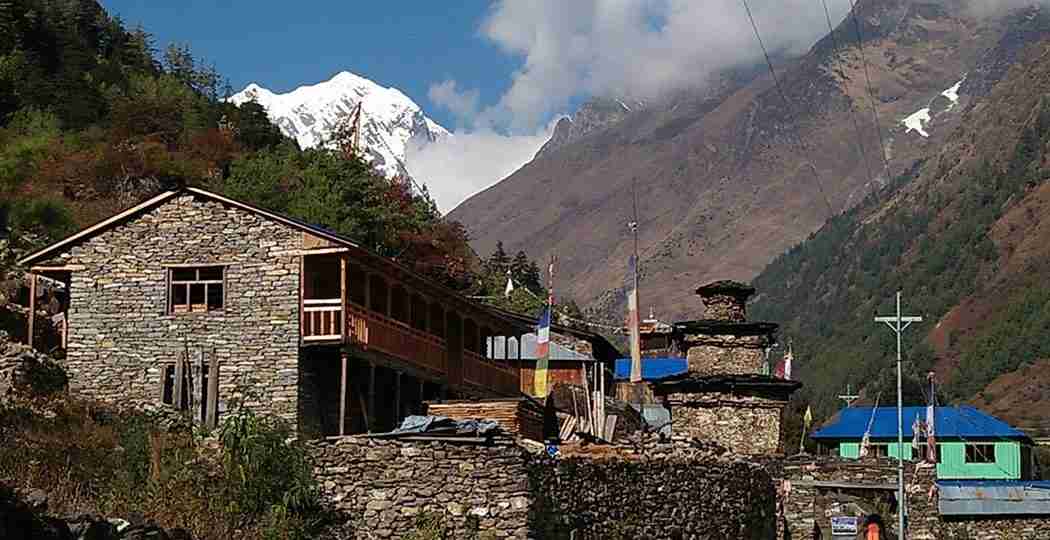
I am Rajendra Sapkota, co-founder of Mosaic Adventure. I have trekked and guided in the Himalaya for most of my working life, including many crossings of Larkya La. This page covers what I tell clients before they choose a month for the Manaslu Circuit: what the weather is really like at each stage, when the pass is reliable, and what the trade-offs are.
Updated November 2026. Weather, temperature and pass information from our former Manaslu weather guide has been merged into this page.
Planning a Manaslu Circuit trek? The best time to trek the Manaslu Circuit is spring (March to May) and autumn (late September to November). These months bring the most stable weather, the clearest mountain views and the safest conditions for crossing Larkya La at 5,106 m (16,752 ft).
But “best” is not the same for everyone. Best weather, best pass conditions and fewest crowds do not always fall in the same month, and the right choice depends on what matters most to you. This guide gives you the weather and temperatures month by month and village by village, the pass conditions, and the trade-offs, so you can pick your month with confidence.
The Manaslu Circuit trek climbs from subtropical valleys below 1,000 m to the high Himalayan terrain around Larkya La. Because of that altitude range, the season you choose shapes almost every part of the trek.

Quick Decision Guide
If you want the shortest answer:
- Most stable months: April and October, with November close behind
- Generally stable: March, May and late September
- Weather-dependent: December and February
- Highest risk: January (snow on the pass) and July to August (landslides and road closures)
- Cheapest permit: December to August, when the Restricted Area Permit costs less (see permit details)
In every season: build at least one spare day into your itinerary for Larkya La. There is no airport on this route, so if the pass is closed you wait or walk back.
The Manaslu Circuit depends on a safe crossing of Larkya La. In winter, heavy snowfall can close the pass for days, especially in January. During the monsoon the pass itself is rarely the problem; landslides, road blockages, swollen rivers and slippery trails lower down cause the delays.
What Makes a Good Time to Trek Manaslu Circuit?
“Best time” is several things at once, and they do not all peak in the same month:
- Rain and trail conditions: dry trails are safer and faster
- Temperature and wind: especially at Larkya La, where wind chill matters more than the thermometer
- Snow at altitude: the biggest factor in whether the pass is open
- Cloud and visibility: clear lower valleys do not guarantee a clear pass
- Crowds and lodge space: peak months mean busier teahouses
- Your experience: the best month for a first-timer is not always the best month for someone chasing quiet trails
Manaslu Weather by Month
The table gives typical conditions for each month. Each temperature column names the place it describes, because on this trek the difference between the lower valley and the high camp can be 25°C or more on the same day.
| Month | Day, lower valley (Machha Khola to Jagat) | Day high, Samagaun (3,530 m) | Night low, Dharamsala (4,460 m) | Rain | Snow on Larkya La | Larkya La | Crowds | Verdict |
|---|---|---|---|---|---|---|---|---|
| March | 12 to 20°C (54 to 68°F) | 8 to 12°C (46 to 54°F) | -6 to -9°C (21 to 16°F) | Low | Common early in the month | Usually open | Moderate | Recommended |
| April | 15 to 25°C (59 to 77°F) | 12 to 15°C (54 to 59°F) | -3 to -5°C (27 to 23°F) | Low | Occasional | Open | High | Highly recommended |
| May | 18 to 30°C (64 to 86°F) | 14 to 18°C (57 to 64°F) | Around 0°C (32°F) | Some, late in the month | Occasional | Open | Moderate | Recommended |
| June | 20 to 30°C (68 to 86°F) | 16 to 19°C (61 to 66°F) | 1 to 3°C (34 to 37°F) | Frequent from mid-June | Wet snow possible | Usually open | Low | Possible with preparation |
| July | 20 to 28°C (68 to 82°F) | 17 to 19°C (63 to 66°F) | 1 to 3°C (34 to 37°F) | Frequent and heavy | Wet snow possible | Usually open | Very low | Not recommended |
| August | 20 to 28°C (68 to 82°F) | 16 to 19°C (61 to 66°F) | 1 to 3°C (34 to 37°F) | Frequent and heavy | Wet snow possible | Usually open | Very low | Not recommended |
| September | 18 to 28°C (64 to 82°F) | 13 to 17°C (55 to 63°F) | Around 0°C (32°F) | High early, low late | Rare | Open | Moderate | Recommended (second half) |
| October | 15 to 25°C (59 to 77°F) | 10 to 14°C (50 to 57°F) | -3 to -5°C (27 to 23°F) | Low | Rare, but storms possible | Open | High | Highly recommended |
| November | 10 to 20°C (50 to 68°F) | 6 to 12°C (43 to 54°F) | -5 to -10°C (23 to 14°F) | Low | Low; ice late in the month | Open | High early, easing late | Highly recommended |
| December | 8 to 18°C (46 to 64°F) | 4 to 8°C (39 to 46°F) | -10 to -14°C (14 to 7°F) | Low | High after storms | Weather-dependent | Very low | Experienced trekkers |
| January | 5 to 15°C (41 to 59°F) | 2 to 6°C (36 to 43°F) | -12 to -15°C (10 to 5°F) | Low | High | Often closed after snow | Very low | Not recommended |
| February | 8 to 18°C (46 to 64°F) | 4 to 8°C (39 to 46°F) | -9 to -12°C (16 to 10°F) | Low | High early, easing late | Weather-dependent | Very low | Possible with preparation |
| Typical values. Lower valley figures are daytime ranges. Night lows are for Dharamsala (Larkya Phedi), the last stop before the pass; Larkya La itself at dawn is about 3°C colder. A storm or cold snap can push nights 5°C or more below these figures. | ||||||||
On a phone, swipe the table sideways to see all columns.
Visibility is best in the mornings in every season, because cloud tends to build through the day. April and October have the clearest skies and driest trails of the year.
Want more information? Send us your query, and our experts will get back to you within 24 hrs.
Manaslu Temperature by Village and Season
What you really need to know is how warm or cold it will be where you walk and sleep. This table gives typical daytime highs and night lows at each common overnight stop, from the subtropical gorge to the high camp below the pass.
| Place | Spring (Mar to May) day high / night low | Monsoon (Jun to Sep) day high / night low | Autumn (Oct to Nov) day high / night low | Winter (Dec to Feb) day high / night low |
|---|---|---|---|---|
| Machha Khola 930 m (3,051 ft) | 24°C (75°F) / 13°C (55°F) | 30°C (86°F) / 19°C (66°F) | 23°C (73°F) / 12°C (54°F) | 17°C (63°F) / 5°C (41°F) |
| Jagat 1,410 m (4,626 ft) | 22°C (72°F) / 11°C (52°F) | 28°C (82°F) / 17°C (63°F) | 21°C (70°F) / 10°C (50°F) | 15°C (59°F) / 3°C (37°F) |
| Deng 1,860 m (6,102 ft) | 20°C (68°F) / 8°C (46°F) | 26°C (79°F) / 14°C (57°F) | 19°C (66°F) / 7°C (45°F) | 13°C (55°F) / 0°C (32°F) |
| Namrung 2,630 m (8,629 ft) | 16°C (61°F) / 5°C (41°F) | 22°C (72°F) / 11°C (52°F) | 15°C (59°F) / 4°C (39°F) | 9°C (48°F) / -3°C (27°F) |
| Lho 3,180 m (10,433 ft) | 14°C (57°F) / 2°C (36°F) | 20°C (68°F) / 8°C (46°F) | 13°C (55°F) / 1°C (34°F) | 7°C (45°F) / -6°C (21°F) |
| Samagaun 3,530 m (11,581 ft) | 12°C (54°F) / 0°C (32°F) | 18°C (64°F) / 6°C (43°F) | 11°C (52°F) / -1°C (30°F) | 5°C (41°F) / -8°C (18°F) |
| Samdo 3,875 m (12,713 ft) | 10°C (50°F) / -1°C (30°F) | 16°C (61°F) / 5°C (41°F) | 9°C (48°F) / -2°C (28°F) | 3°C (37°F) / -9°C (16°F) |
| Dharamsala (Larkya Phedi) 4,460 m (14,633 ft) | 8°C (46°F) / -4°C (25°F) | 14°C (57°F) / 2°C (36°F) | 7°C (45°F) / -5°C (23°F) | 1°C (34°F) / -12°C (10°F) |
| Larkya La (dawn crossing) 5,106 m (16,752 ft) | Dawn -7°C (19°F) | Dawn -1°C (30°F) | Dawn -8°C (18°F) | Dawn -15°C (5°F) |
| Bimthang 3,720 m (12,205 ft) | 11°C (52°F) / 0°C (32°F) | 17°C (63°F) / 6°C (43°F) | 10°C (50°F) / -1°C (30°F) | 4°C (39°F) / -8°C (18°F) |
| Dharapani 1,960 m (6,430 ft) | 20°C (68°F) / 8°C (46°F) | 26°C (79°F) / 14°C (57°F) | 19°C (66°F) / 7°C (45°F) | 13°C (55°F) / 0°C (32°F) |
| Typical values, rounded. They are based on our guides’ experience and adjusted for altitude at about 4.8°C per 1,000 m, the rate measured by high-altitude weather stations in the Nepal Himalaya. Exact lodge altitudes vary slightly between maps. | ||||
On a phone, swipe the table sideways to see all columns.
Wind Chill: What It Feels Like on the Pass
Wind is what makes Larkya La hard. This table shows the “feels like” temperature for common combinations above Samdo, using the standard wind chill formula.
| Air temperature | Wind 10 km/h (6 mph) | Wind 20 km/h (12 mph) | Wind 30 km/h (19 mph) | Wind 40 km/h (25 mph) |
|---|---|---|---|---|
| 5°C (41°F) | 3°C (37°F) | 1°C (34°F) | 0°C (32°F) | -1°C (30°F) |
| 0°C (32°F) | -3°C (27°F) | -5°C (23°F) | -6°C (21°F) | -7°C (19°F) |
| -5°C (23°F) | -9°C (16°F) | -12°C (10°F) | -13°C (9°F) | -14°C (7°F) |
| -10°C (14°F) | -15°C (5°F) | -18°C (0°F) | -20°C (-4°F) | -21°C (-6°F) |
| -15°C (5°F) | -21°C (-6°F) | -24°C (-11°F) | -26°C (-15°F) | -27°C (-17°F) |
| -20°C (-4°F) | -27°C (-17°F) | -30°C (-22°F) | -33°C (-27°F) | -34°C (-29°F) |
A -10°C (14°F) start from Dharamsala with a 30 km/h wind on the pass feels like -20°C (-4°F). A windproof shell, a buff over your face and proper gloves matter more on crossing day than an extra fleece.
Snow, Trail and Larkya La Conditions by Month
| Months | Lower valley trail | Snow on Larkya La | Microspikes? | Pass status |
|---|---|---|---|---|
| December to February | Dry and cold; frost in the mornings | High after any storm, and it stays for days | Recommended | Weather-dependent; often closed in January. Some lodges at Samdo and Dharamsala close in deep winter |
| March | Dry; warming | Common early in the month, melting | Useful in early March | Usually open |
| April to May | Dry; hot at midday low down | Occasional fresh snow | Rarely needed | Open |
| June to mid-September | Wet, muddy and slippery; leeches; landslides and road closures | Wet snow possible | No | Usually open, often in cloud |
| Mid-September to November | Dry and firm | Rare, but an autumn storm can bring heavy snow | Carry them from late November | Open |
On a phone, swipe the table sideways to see all columns.
Sleeping Bag and Layers by Season
Lodges above Samagaun are unheated, and the coldest night of the trek is usually at Dharamsala before the crossing. Choose your bag by its comfort rating, not its limit or extreme rating. A bag sold as “-10°C” is often rated to its limit, which means a cold night for most people at that temperature.
| When you trek | Typical night low at Dharamsala | Sleeping bag (comfort rating) | Warm layer |
|---|---|---|---|
| March to May | 1°C (34°F) to -9°C (16°F) | -10°C (14°F) | Mid-weight down jacket |
| June to mid-September | 1°C (34°F) to 3°C (37°F) | -5°C (23°F) | Light down or synthetic jacket, plus full rain gear |
| Mid-September to mid-November | 0°C (32°F) to -8°C (18°F) | -10°C (14°F) | Mid-weight down jacket |
| Late November to December | -8°C (18°F) to -14°C (7°F) | -15°C (5°F) | Warm down jacket with hood |
| January to February | -12°C (10°F) to -20°C (-4°F) | -20°C (-4°F) or warmer | Expedition-weight down jacket |
A liner adds a few degrees. Lodges usually give you a blanket to put over your bag. For the full kit list, see our Manaslu Circuit packing list.

Larkya La Crossing Day: What the Weather Means
Crossing Larkya La (5,106 m) is the longest and hardest day of the Manaslu Circuit, and the day the weather matters most.
- The plan: leave Dharamsala at around 3 to 4 am, reach the pass in the morning, then descend to Bimthang. Expect 8 to 10 hours of walking, with about 650 m of ascent and 1,400 m of descent.
- Why so early: wind on the pass usually picks up from late morning, and the snow on the descent softens and gets slippery in the afternoon.
- How cold at the start: around -7°C (19°F) in spring, -8°C (18°F) in autumn and -15°C (5°F) or colder in winter, before wind chill.
- What closes the pass: fresh heavy snow, whiteout or a storm forecast. Your guide will wait a day at Dharamsala or Samdo rather than cross in bad conditions, or turn back if the forecast does not improve.
- Why buffer days matter more here than on Everest: there is no airport or easy exit near the pass. A closed pass means waiting, or walking back down the valley.
Picking the right month improves your odds, but it does not guarantee a crossing on its own. Pass success also comes down to:
- Acclimatisation: a proper altitude gain schedule matters more than the calendar
- Itinerary length: a rushed 12-day plan leaves less margin than a 14-day one. See our slow-pace itinerary if you want extra buffer days
- Fitness and your response to altitude: this varies more between people than between months
- Guide decisions on the day: a good guide delays a crossing rather than push through worsening conditions
Sunrise, Sunset and Daylight by Month
Daylight shapes crossing day more than most people expect. You leave Dharamsala in the dark, so the time of sunrise decides how long you walk by headtorch, and sunset decides how much margin you have to reach Bimthang. The times below are for Samagaun, mid-month, in Nepal time.
| Month | Sunrise | Sunset | Daylight | Headtorch walking on a 4 am start |
|---|---|---|---|---|
| January | 7:00 am | 5:31 pm | 10.5 hours | About 3 hours |
| February | 6:45 am | 5:56 pm | 11.2 hours | About 2¾ hours |
| March | 6:16 am | 6:14 pm | 12.0 hours | About 2¼ hours |
| April | 5:41 am | 6:32 pm | 12.8 hours | About 1¾ hours |
| May | 5:16 am | 6:49 pm | 13.6 hours | About 1¼ hours |
| June | 5:08 am | 7:05 pm | 14.0 hours | About 1 hour |
| July | 5:18 am | 7:06 pm | 13.8 hours | About 1¼ hours |
| August | 5:35 am | 6:46 pm | 13.2 hours | About 1½ hours |
| September | 5:51 am | 6:12 pm | 12.3 hours | About 2 hours |
| October | 6:06 am | 5:37 pm | 11.5 hours | About 2 hours |
| November | 6:28 am | 5:13 pm | 10.7 hours | About 2½ hours |
| December | 6:51 am | 5:11 pm | 10.3 hours | About 3 hours |
| Times are for a flat horizon. In the deep valleys and below the pass, direct sun arrives later and leaves earlier than these times. Dawn light starts about 25 minutes before sunrise. | ||||
On a phone, swipe the table sideways to see all columns.
In November and December, a 4 am start means two and a half to three hours of walking by headtorch in the coldest part of the night, and sunset comes soon after 5 pm. Carry a good headtorch with spare batteries (cold drains them fast), keep them in an inside pocket, and aim to be at Bimthang by mid-afternoon.
Full Moon Dates for a Moonlit Crossing
A full moon makes the pre-dawn climb from Dharamsala much easier: the trail, the snow and the surrounding peaks are lit up, and many trekkers find the dark start less daunting. If you have some flexibility, plan to cross within two days either side of a full moon. The moon is bright for several nights around each date.
| Full moon (Nepal time) | Season | Good for a moonlit crossing? |
|---|---|---|
| 24 November 2026 | Late autumn | Yes, clear and cold |
| 24 December 2026 | Winter | Possible if the pass is clear of snow |
| 22 January 2027 | Winter | Risky; pass often snowbound |
| 21 February 2027 | Late winter | Possible late in the month |
| 22 March 2027 | Spring | Yes |
| 21 April 2027 | Spring | Yes, one of the best |
| 20 May 2027 | Late spring | Yes, but cloud is more likely |
| 19 June 2027 | Monsoon | Usually hidden by cloud |
| 18 July 2027 | Monsoon | Usually hidden by cloud |
| 17 August 2027 | Monsoon | Usually hidden by cloud |
| 16 September 2027 | Early autumn | Good if the monsoon has cleared |
| 15 October 2027 | Autumn | Yes, one of the best |
| 14 November 2027 | Autumn | Yes, clear and cold |
| 13 December 2027 | Winter | Possible if the pass is clear of snow |
To plan around a full moon, count back from the date: on a standard itinerary you reach Dharamsala about 8 to 9 days after leaving Kathmandu, so start the trek about 9 days before the full moon. Weather and the pass always come first; your guide will not cross in bad conditions just to catch the moon. Bright moonlight also washes out the stars, so if night-sky photography matters more to you than an easy pre-dawn walk, aim for the dates around a new moon instead.
Manaslu Circuit Trek in Spring (March to May)
Spring is dry, mild and one of the two main trekking seasons. Rhododendron forests bloom on the lower and middle trail, lodges are fully open, and the pass is usually in good condition. Nights at Samdo and Dharamsala are still below freezing, so pack for cold evenings even in May.
Manaslu Circuit Trek in March
Temperature: Lower valley 12 to 20°C (54 to 68°F) | Samagaun day 8 to 12°C (46 to 54°F) | Dharamsala night -6 to -9°C (21 to 16°F)
Rain: Low | Snow on the pass: Common early in the month
March is the start of the spring season and one of the quieter good months. Days are comfortable and the weather is usually stable, but winter snow can still sit on Larkya La in the first half of the month, so carry microspikes. Lodges that closed for winter reopen through March, and the trail fills up toward the end of the month. It is a good choice if you want spring conditions without April crowds.
Manaslu Circuit Trek in April
Temperature: Lower valley 15 to 25°C (59 to 77°F) | Samagaun day 12 to 15°C (54 to 59°F) | Dharamsala night -3 to -5°C (27 to 23°F)
Rain: Low | Snow on the pass: Occasional
April is peak spring and one of the two most reliable months for the whole circuit. Rhododendrons are in full bloom, skies are usually clear, and the pass is open. It is also one of the busiest months, so book lodges and your guide early. Mid-April brings the Nepali New Year, which adds a festive feel if you start from Kathmandu around then.
Manaslu Circuit Trek in May
Temperature: Lower valley 18 to 30°C (64 to 86°F) | Samagaun day 14 to 18°C (57 to 64°F) | Dharamsala night around 0°C (32°F)
Rain: Some, late in the month | Snow on the pass: Occasional
May is the warmest trekking month. The lower gorge can be hot at midday, so start early and wear light, quick-drying layers rather than cotton, which stays wet. Crowds thin after April, and the pass is open. Toward the end of the month, pre-monsoon cloud builds in the afternoons and short showers become more common.
Manaslu Circuit Trek in Monsoon (June to Mid-September)
The monsoon brings most of the year’s rain. The lower Budhi Gandaki gorge gets the heaviest rain; the upper valley around Samagaun and Samdo gets noticeably less, but cloud often hides the mountains. The pass itself is usually crossable. The real monsoon risks are landslides, road closures, swollen rivers and slippery trails lower down.
Manaslu Circuit Trek in June
Temperature: Lower valley 20 to 30°C (68 to 86°F) | Samagaun day 16 to 19°C (61 to 66°F) | Dharamsala night 1 to 3°C (34 to 37°F)
Rain: Frequent from mid-June | Snow on the pass: Wet snow possible
Early June can still be reasonable, with warm days and long daylight. Once the monsoon arrives, usually around mid-month, rain becomes frequent and landslides start to affect the road and lower trail. Lodges along the route mostly stay open. Bring full rain gear, insect repellent and a flexible itinerary.
Manaslu Circuit Trek in July
Temperature: Lower valley 20 to 28°C (68 to 82°F) | Samagaun day 17 to 19°C (63 to 66°F) | Dharamsala night 1 to 3°C (34 to 37°F)
Rain: Frequent and heavy | Snow on the pass: Wet snow possible
July is the heart of the monsoon. The valleys are lush and the rivers run high, but cloud often hides the peaks and landslides can block the road and trail for days. The trail is almost empty. If you go in July, plan extra days, travel with a guide who can reroute, and expect mud, leeches and slippery sections in the lower gorge.
Manaslu Circuit Trek in August
Temperature: Lower valley 20 to 28°C (68 to 82°F) | Samagaun day 16 to 19°C (61 to 66°F) | Dharamsala night 1 to 3°C (34 to 37°F)
Rain: Frequent and heavy | Snow on the pass: Wet snow possible
August is similar to July and often the wettest month, with the highest chance of road blockages. Some lodges near the pass close for the season. We do not recommend August for most trekkers. If you do go, plan thoroughly, add buffer days and weigh the risks carefully. Read more about how weather affects Manaslu trek difficulty.
Roads and Access in the Monsoon
Jeeps now reach Machha Khola on the south side of the circuit, and on the north side the road from Besisahar reaches Dharapani and beyond. These roads shorten the trek, but they are also what monsoon landslides close most often, especially in July and August. Road heads move a little each season, so check the current situation with your trekking company before you book transport.

Manaslu Circuit Trek in Autumn (Late September to November)
Autumn is the most popular season. After the monsoon clears, the air is sharp, the trails are dry, and the pass is open. It is also Nepal’s festival season, with Dashain and Tihar usually falling between late September and early November.
Manaslu Circuit Trek in September
Temperature: Lower valley 18 to 28°C (64 to 82°F) | Samagaun day 13 to 17°C (55 to 63°F) | Dharamsala night around 0°C (32°F)
Rain: High early, low late | Snow on the pass: Rare
September is a transition month. In recent years the monsoon has often lasted into the middle of September, so the first half can still be wet, with some landslide risk lower down. The second half is usually excellent: clearing skies, drying trails and fewer trekkers than October. Aim for the second half if you can.
Manaslu Circuit Trek in October
Temperature: Lower valley 15 to 25°C (59 to 77°F) | Samagaun day 10 to 14°C (50 to 57°F) | Dharamsala night -3 to -5°C (27 to 23°F)
Rain: Low | Snow on the pass: Rare, but storms possible
October is the most reliable month for the Manaslu Circuit. Skies are clear, trails are dry, and temperatures are comfortable for long days. It is also the busiest month, so book lodges, transport and your guide well in advance. Dashain and Tihar usually fall around October, which gives you a chance to see Nepali festivals before or after the trek.
October is not completely risk-free. Rare autumn storms from the Bay of Bengal can bring heavy snow to the pass; see the section on recent autumn storms below.
Manaslu Circuit Trek in November
Temperature: Lower valley 10 to 20°C (50 to 68°F) | Samagaun day 6 to 12°C (43 to 54°F) | Dharamsala night -5 to -10°C (23 to 14°F)
Rain: Low | Snow on the pass: Low; ice late in the month
November gives you autumn’s clear skies with colder nights and shorter days. The first half of the month is still busy; from mid-November the trail gets noticeably quieter, which makes late November one of the best options for good weather with fewer people. Plan to finish each day’s walk by mid-afternoon, and bring a warm sleeping bag for Samdo and Dharamsala. The annual Manaslu Trail Race also takes place in November.
Recent Autumn Storms: Why October Is Not Risk-Free
Autumn is the most stable season, but it is not storm-proof. In early November 2025, heavy snow from the remnants of a Bay of Bengal cyclone hit the Manaslu region, blocking Larkya La and stranding trekkers on both sides. Nepali media reported 128 people rescued by helicopter from the region over two days.
Storms like this are rare, and forecasts usually give a few days’ warning. The practical lesson is simple: keep a spare day for the pass, trek with a guide who watches the forecast, and do not try to cross when a storm is coming.

Manaslu Circuit Trek in Winter (December to February)
Winter is cold and mostly dry, with clear skies on stable days and very few trekkers. The challenge is snow on Larkya La: once a storm comes through, the snow stays, and the pass can be closed for days. Some lodges at Samdo and Dharamsala close in deep winter. Winter suits experienced trekkers with a flexible itinerary and a guide who knows when to turn back.
Manaslu Circuit Trek in December
Temperature: Lower valley 8 to 18°C (46 to 64°F) | Samagaun day 4 to 8°C (39 to 46°F) | Dharamsala night -10 to -14°C (14 to 7°F)
Rain: Low | Snow on the pass: High after storms
Early December can be excellent, with clear, crisp air and quiet trails. As the month goes on, nights get much colder and the chance of snow on the pass rises. Trails above Samdo can be icy, so carry microspikes and a sleeping bag rated to at least -15°C (5°F). Check lodge openings at Dharamsala before you start.
Manaslu Circuit Trek in January
Temperature: Lower valley 5 to 15°C (41 to 59°F) | Samagaun day 2 to 6°C (36 to 43°F) | Dharamsala night -12 to -15°C (10 to 5°F)
Rain: Low | Snow on the pass: High
January is the coldest month. Snowfall above 3,000 m and occasional storms can close Larkya La, sometimes for days, and some lodges near the pass close. The trail is almost empty. We only recommend January to experienced high-altitude trekkers with extra days in hand, warm gear rated to around -20°C (-4°F), and a guide who will turn back if the pass is not safe.
Manaslu Circuit Trek in February
Temperature: Lower valley 8 to 18°C (46 to 64°F) | Samagaun day 4 to 8°C (39 to 46°F) | Dharamsala night -9 to -12°C (16 to 10°F)
Rain: Low | Snow on the pass: High early, easing late
February is a month of two halves. Early February is still wintry, with snow on the pass and some lodges closed. By late February the days lengthen, snow on the lower trail melts, and conditions start to look like early spring. It is possible with good planning, and you will have the trail almost to yourself.
Best Time Depending on Your Priority
| Your priority | Best time |
|---|---|
| Best overall weather | April or October |
| Fewest crowds with good weather | Early March, late September or late November |
| Lowest cost | June, or December to February with proper preparation (cheaper permit, quieter lodges) |
| Best photography (blooms and clear skies) | Mid to late April |
| Best photography (post-monsoon clarity) | Late September to October |
| First high-altitude trek | April or October, with a longer itinerary |
| Nepali festivals (Dashain and Tihar) | Usually October |
| Adding Chitwan, Pokhara or Lumbini after the trek | March or May |
| Solitude, and happy to trade comfort for it | December to February with an experienced guide |
Manaslu sees far fewer trekkers than Everest or Annapurna, so even its busy months feel quieter than those routes. If you are choosing between the two circuits, see our Manaslu vs Annapurna Circuit comparison. For first-timers unsure about this trek, read whether Manaslu is right for you.
Worst Time to Trek Manaslu, and Can You Trek It Year-Round?
July and August (peak monsoon) and January (peak winter) are the least favourable months. In July and August, landslides and swollen rivers on the lower trail cause more disruption than the pass. In January, heavy snow can close Larkya La and some lodges near the pass close for the season.
The region is open to permitted trekkers all year, so the trek is possible in any month. “Worst” means least comfortable and least predictable, not automatically unsafe. Experienced trekkers with the right gear and a flexible itinerary do complete the circuit in these months; they accept a higher chance of delay, poor views or a turned-back pass attempt in exchange for near-empty trails.
Permit Cost by Season and When to Book
The Manaslu Circuit is a restricted area, so you need a Restricted Area Permit (RAP) issued through a registered trekking company, and you must trek with a licensed guide. The RAP costs less outside the autumn season:
| Period | Manaslu Restricted Area Permit (per person) |
|---|---|
| September to November | USD 100 for the first 7 days, then USD 15 per extra day |
| December to August | USD 75 for the first 7 days, then USD 10 per extra day |
You also need the Manaslu Conservation Area Permit and the Annapurna Conservation Area Permit, which cost the same all year. Rates can change, so check the latest figures on our Manaslu permit guide and our Manaslu trek cost guide.
When to book: for April and October, book 3 to 6 months ahead if you can; lodges and guides get tight around Nepali New Year and Dashain and Tihar. For March, May, September and November, 1 to 2 months is usually enough. In the monsoon and winter you rarely need to book far ahead, but secure your international flights early in any season.
Start training and sorting your gear 2 to 3 months before you go. Our Manaslu Circuit preparation guide covers training, gear and acclimatisation in detail.
How to Check the Forecast Before and During Your Trek
No forecast is exact in the mountains, but the right tools still tell you a lot:
- Mountain-Forecast: forecasts at summit and mid-mountain heights in six-hour blocks. Useful for wind and freezing level around Larkya La.
- Meteoblue: village-level forecasts that compare several weather models. When the models disagree, expect uncertainty.
- Windy: maps of cloud, wind and snowfall. Useful for spotting a storm coming from the Bay of Bengal in autumn or a western disturbance in winter and spring.
Trust the trend over the exact number, look at wind at pass height rather than in the valley, and treat anything beyond three days as a rough guide. Phone signal is patchy above Samagaun, so check the forecast before you leave the village.
Live Forecast: Manaslu Circuit
Below is the live forecast for the upper Manaslu valley. The forecast panel is set near Samdo, the last village before Dharamsala and the pass. Click any point on the map to see its forecast, and use the timeline to move through the coming days. Forecast models smooth out the mountains, so treat the numbers as a trend and expect real nights at Dharamsala to be a few degrees colder.
Forecast map and data by Windy.com.
Frequently Asked Questions
What is the best time to trek the Manaslu Circuit?
Spring (March to May) and autumn (late September to November). April and October are the most reliable months. For good weather with fewer people, choose early March, late September or late November.
How cold is it on the Manaslu Circuit at night?
It depends on altitude and season. In the lower valley, nights stay mild most of the year. At Samdo and Dharamsala, typical lows are about -3°C (27°F) to -5°C (23°F) in April and October, -5°C (23°F) to -10°C (14°F) in November, and -12°C (10°F) to -15°C (5°F) in January, with colder nights in cold snaps. In the monsoon, nights at Dharamsala sit just above freezing. Wind on the pass can make it feel 5 to 10°C colder.
Is Larkya La open in December and January?
Often, but not reliably. The pass is usually crossable in early December. From late December to February, any storm can leave snow that closes it for days, and January is the riskiest month. Some lodges near the pass close in deep winter. Plan spare days and check conditions before you start.
Does it snow on the Manaslu Circuit in October and November?
Not often. Autumn is the driest and most stable season. Short snowfalls on the pass are possible, and occasionally a storm from the Bay of Bengal brings heavy snow, as happened in early November 2025. Ice forms in shaded sections near the pass by late November.
What sleeping bag do I need for the Manaslu Circuit?
Choose by the comfort rating. Around -10°C (14°F) works for spring and autumn up to mid-November, -15°C (5°F) for late November and December, and -20°C (-4°F) for January and February. The coldest night is usually at Dharamsala before the crossing.
Is the Manaslu permit cheaper in the off-season?
Yes. The Restricted Area Permit costs USD 75 for the first week from December to August, compared with USD 100 from September to November, and the daily rate after the first week is lower too. Check current rates before you book, as they can change.
What time do you start the Larkya La crossing?
Usually between 3 and 4 am from Dharamsala. The early start gets you over the pass before the wind picks up in late morning, and down the steep descent to Bimthang before the snow softens. The whole day takes 8 to 10 hours.
Can you trek the Manaslu Circuit in the monsoon?
Yes, but expect rain, cloud, leeches and a real chance of landslides and road closures, especially in July and August. The upper valley gets less rain and the pass is usually crossable. Add buffer days and trek with a guide who can adjust the route.
Final Recommendation
If you want clear mountain views, a safer Larkya La crossing and stable weather, plan your trek for April or October. If you want fewer crowds without giving up much weather, aim for early March, late September or late November. Avoid July, August and January unless you are an experienced trekker ready for landslides, snow or a possible pass closure.
Choosing your month is the biggest decision in planning this trek. Once it is fixed, the itinerary, gear and bookings are much easier to plan around.
Ready to plan? See our Manaslu Circuit trek itinerary, or combine it with the Manaslu and Tsum Valley trek for a longer, quieter journey.
Note: even in the best months, unusual storms happen in the Himalaya. Build flexibility into your plan and follow your guide’s advice if conditions change on the trail.
Want more information? Send us your query, and our experts will get back to you within 24 hrs.

Rajendra Sapkota is the co-founder of Mosaic Adventure and a veteran in the trekking industry with over three decades of experience guiding adventurers through Nepal’s stunning landscapes. . His unparalleled knowledge of every trail, from the popular Everest Base Camp to the remote Upper Mustang, has earned him a reputation as a trusted authority on Nepal’s geography and culture. Raj’s passion for the Himalayas is matched only by his dedication to ensuring a safe and memorable journey for every traveler.
If you have any questions or need personalized advice to plan your trip to Nepal, you can reach out to him directly at [email protected].
