
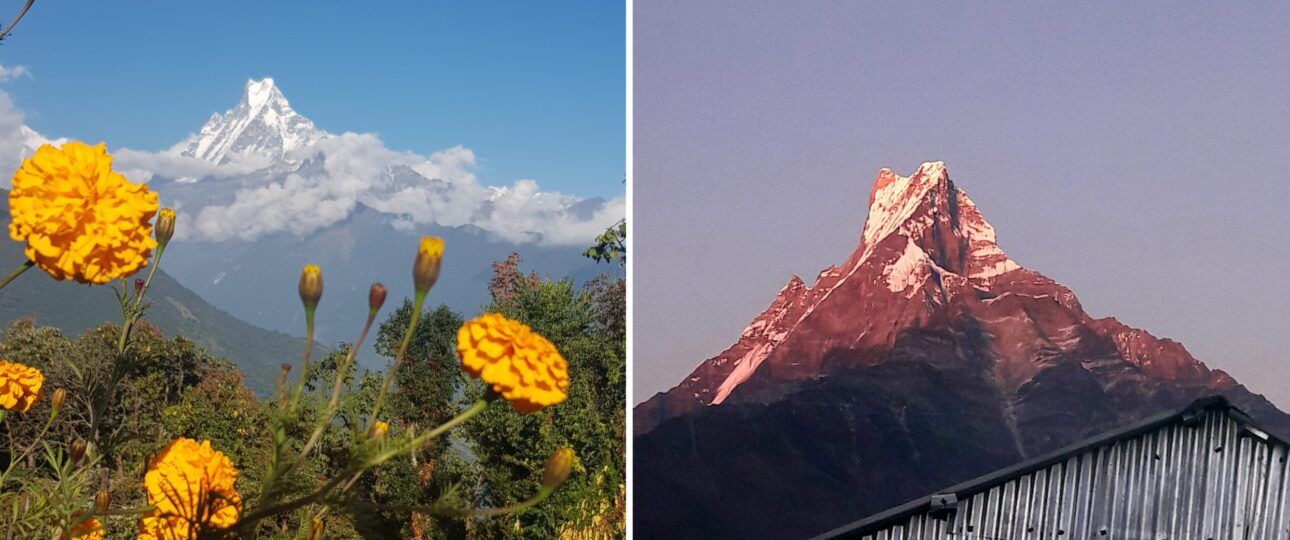
The Ghorepani Poon Hill with Mardi Himal trek is one of the most rewarding short treks in the Annapurna region. It combines the famous Poon Hill sunrise with a quieter high-ridge walk on the Mardi Himal side. This guide covers the full 8-day itinerary, best season, difficulty, distance, costs, and permits. We also share honest notes from the trail itself, because knowing what a day actually feels like is often more useful than a list of elevations.
Planning the Poon Hill and Mardi Himal trek
| If you want two great viewpoints in one trip, this is one of the best routes near Pokhara.We break down the full 8 days including which days hit hardest, what teahouse food and costs actually look like, and when views are most reliable. If your schedule is shorter or you want a slower pace, we cover that too. |
What makes the Poon Hill and Mardi Himal trek special

Many trekkers pick Poon Hill because it is friendly for first-time visitors to Nepal. The trail passes through villages, stone steps, and forest paths, and the teahouse system makes it comfortable. Mardi Himal adds a second layer to the experience. You still sleep in teahouses, but the route feels quieter and more alpine as you climb higher. The views from the Mardi ridge and viewpoint can feel closer and more personal compared to the wide sunrise panorama at Poon Hill.
Village culture, forest walking, ridge views, two strong sunrise spots. It covers a lot of ground without pushing into serious expedition territory, which is part of why we keep recommending it to people who want a proper trek but not a two-week commitment.
Who this combined trek is best for
This trek suits many kinds of travelers. It works well for first-time Nepal trekkers because the trails are well marked and the teahouse system is easy to follow. It also suits people who enjoy a steady daily rhythm of walking, eating, resting, and sleeping in simple mountain lodges.
Poon Hill gets busy in peak season. The Mardi side is noticeably quieter once you climb past the lower camps. If you are not used to walking regularly, the uphill days will feel harder than expected but most people manage fine with a slow pace and short breaks. If altitude hits you hard, take the viewpoint day slowly. We have guided people with no trekking background through this route and most finish stronger than they expected.
Best season to complete Ghorepani Poon Hill and Mardi Himal trek
Most people get the best experience in autumn and spring. These seasons usually bring the clearest mountain views and the most comfortable walking temperatures. Spring also brings rhododendron blooms in the forests. Winter can be excellent for quiet trails and clear skies, but nights are colder and snow can affect the higher Mardi sections. The monsoon season makes the landscape very green, but clouds and rain often reduce mountain views and trails can be slippery.
For clear views, stick to autumn or spring. If you want quiet trails and do not mind cold nights and the chance of snow on the Mardi section, winter works well but pack seriously for it.
| Season | What it feels like | Best for | Things to watch |
|---|---|---|---|
| Autumn | Cool mornings, crisp air | Clear views, stable trekking | More crowds around Poon Hill |
| Spring | Mild days, colorful forests | Blooms and pleasant weather | Some busy sections, occasional haze |
| Winter | Cold nights, quiet trails | Fewer trekkers, often clear skies | Snow and ice possible near Mardi high areas |
| Monsoon | Wet, warm, very green | Lush scenery and fewer visitors | Leeches, rain, clouds, slippery paths |
If you want fewer people at sunrise, try to reach Ghorepani on a day that lets you hike Poon Hill on a weekday morning. Starting early also helps you enjoy the viewpoint before it gets busy.
For a broader Nepal planning view, see Best time to visit Nepal.
Poon Hill and Mardi Himal trek distance and time
Distance varies because road access and exit villages change over time. Most trekkers find it more useful to think in walking hours rather than kilometers. On this route you usually walk about 4 to 7 hours per day, depending on pace and trail conditions.
Steps and steep sections can feel harder than the distance suggests. If you want the smoothest experience, aim for a pace where you can talk while walking. That is usually the right speed for altitude and endurance.
Poon Hill and Mardi Himal trek difficulty
This is not technical trekking. You do not need ropes or climbing skills. The challenge comes from repeated uphill walking, long stair sections on the Poon Hill side, and higher altitude on the Mardi side.
Many people say the hardest parts are the long stone steps up to Ghorepani and the cold early morning climb to the Mardi viewpoint. If you can manage stairs for 60 to 90 minutes at a time and keep a steady pace, you can handle this trek.
The stone steps on the Poon Hill side are the kind that make your legs remember the next morning. The Mardi section is less about steps and more about altitude. Mornings near the viewpoint can be cold and windy even in good seasons. Most people who are reasonably fit can get through this route fine. The one thing our guides repeat on every trip is to not rush day 7. That is the day people tend to overdo it.

| What people ask | Real answer | What helps |
|---|---|---|
| Is it hard? | Moderate for most people, tough if you are not used to walking | Slow pace, early starts, regular breaks |
| Is altitude a big issue? | Altitude matters more on Mardi than on Poon Hill | Hydration, sleep lower after the viewpoint, do not push through symptoms |
| Do I need training? | Training helps a lot, but is not required for fit beginners | Walk stairs and hills at home, carry a daypack on practice walks |
If you have a recent knee injury or have struggled significantly with altitude below 3,500m before, talk to us before booking. This route is manageable for most people but it is not the right fit for everyone.
Poon Hill first or Mardi Himal first
Both directions work but we always run it Poon Hill first. The trail naturally flows from Tadapani or Landruk into the Mardi side, so the route feels continuous rather than two separate trips stitched together.
It also lets your body adjust before the higher Mardi days. Groups that have done it the other way around usually say the same thing afterward: they wish they had gone Poon Hill first. There is nothing wrong with starting on Mardi, it just tends to feel less settled.
Which version fits you: Poon Hill, Mardi Himal or both
Not sure you need all 8 days? This is how the three options differ at a glance. Full day-by-day details for the shorter treks are on their own pages.
| Option | Days | Highest point | Best for |
|---|---|---|---|
| Poon Hill Trek | 4 | 3,210m (Poon Hill) | First-timers and short schedules who want the famous sunrise |
| Mardi Himal Trek | 4 | 4,200m viewpoint or High Camp 3,580m | Quieter ridge walking and closer views of Machapuchare |
| Poon Hill + Mardi Himal (this trek) | 8 | 4,200m (Mardi Viewpoint) | Trekkers who want both sunrise viewpoints, Gurung villages and a gradual build-up in one trip |
What the 8-day trek adds: the Tadapani to Landruk village section, a full acclimatization build-up before the Mardi viewpoint, and two sunrise viewpoints in one trip. If you are unsure, email us your dates and fitness and we will tell you which option makes sense.
Ghorepani Poon Hill with Mardi Himal trek itinerary (8 days)

We start with Poon Hill because it eases you in. Villages, forests, a gradual climb. By the time you reach the Mardi side you have your trail legs and you know your pace. The days are not short but they are not punishing either if you do not race them.
Day 1: Pokhara to Hile, trek to Ulleri (2,070m)
Your trek begins with hotel pickup in Pokhara. After a scenic drive of about 2.5 hours, you arrive at Hile where the walking starts. The first day is a gentle introduction to trekking in Nepal. You pass villages, terraced fields, and small teahouses. As you approach Ulleri, the path becomes steeper and you start to notice the famous stone stair sections that make this region a great leg workout.
Ulleri is quiet in the evenings. Eat well, drink water, and sleep early. The first morning sets the tone for everything after.
Day 2: Ulleri to Ghorepani (2,810m)
Today is a classic Annapurna forest day. You walk under oak and rhododendron trees, crossing small streams and passing through quiet settlements. The climb is steady, not rushed. Over time the air feels cooler and the forest becomes thicker. In spring, the colors can be beautiful. In autumn, the forest feels crisp and clean.
Ghorepani sits on a ridge and is known as the gateway to the Poon Hill sunrise hike. It has a lively feel in peak season because many trekkers stop here.
Before you sleep, lay out your headlamp, gloves, and a water bottle. At 4am you will not want to be searching through your bag.

Day 3: Poon Hill sunrise (3,210m), then trek to Tadapani (2,700m)
You start before dawn with a headlamp and warm layers. The hike to Poon Hill is short but steady, and the viewpoint is designed for sunrise. On a clear morning the light hits Dhaulagiri and the Annapurna range in a way that catches most people off guard even if they have seen the photos before. The view is wide and the mountains are close enough to feel real.
After sunrise, you return to Ghorepani for breakfast. Then you continue onward toward Tadapani. The trail moves through forest and ridge sections with changing views. The day feels full, but it is rewarding. Tadapani is quieter than Ghorepani and sits in a cooler, forested setting. It is a good place to rest after a big morning.
Day 4: Tadapani to Landruk
This day shifts the mood from ridge villages to warmer valleys. You descend through forest trails and cross small streams as you move toward the Gurung villages of the lower valley. Many trekkers love this part of the trek because it feels cultural, not just scenic. You see farms, stone houses, and the gentle pace of village life.
For travelers who enjoy local culture and photography, it is also possible to pass through Ghandruk on the way. Ghandruk is one of the best preserved Gurung villages in the Annapurna region. It has a small local museum that explains village life, history, and traditions, and several family-run shops rent traditional Gurung clothing. Many trekkers enjoy wearing these outfits for photos and short videos before continuing the walk.
You then continue to Landruk, another traditional Gurung village built with stone paths and terraces. Landruk is a good place to recharge because the next days climb again toward Mardi Himal. You will sleep better here than at higher camps because the altitude is lower.
Day 5: Landruk to Mardi Himal Low Camp (2,990m)
Today you begin the transition away from the busiest parts of the Poon Hill route. The trail climbs gradually through forest and feels quieter as you move toward the Mardi Himal side. The trail gets quieter here. Mossy paths, birds you do not see lower down, and a steady temperature drop as you climb. Most groups barely talk on this section, which is not a bad thing.
Low Camp is a simple stop that prepares you for higher terrain. Nights can feel noticeably colder here, so keeping warm layers close is important. Drink plenty of water and do not skip dinner even if you feel tired. Food helps your body adjust to the altitude.
Day 6: Low Camp to High Camp (3,580m)
You start in forest and for a while it feels like the previous days. Then the trees thin out and the views open up faster than you expect. Machapuchare appears first, then the rest of the Annapurna range fills in. By the time you reach High Camp you are above most of it and the trail feels completely different from where you started the morning.
High Camp sits on a ridge with dramatic mountain scenery. The air is thinner and evenings are colder.
Get in, eat, rest. Keep the evening simple. Pack your headlamp, gloves, and warm hat somewhere you can grab them fast in the dark.
Day 7: High Camp to Mardi Viewpoint (4,200m), back to Low Camp (2,990m)
You start early because mornings are usually clearer and calmer. The trail follows a ridge with strong views in both directions. When you reach the viewpoint on a clear morning, even trekkers who have done this before go quiet for a bit. The Annapurna range and Machapuchare sit right in front of you at that height. It does not feel like a photo opportunity. It feels bigger than that.
After photos and time to sit with it, you head back down to High Camp for a break then continue to Low Camp. Most people feel noticeably better once they drop below High Camp. Sleeping at Low Camp that night makes the final day easier on your legs and your head.
Day 8: Low Camp to Siding (1,890m), drive back to Pokhara
The last day is a satisfying descent. You return to greener forest and warmer air as you walk down toward Siding Village. This village feels traditional and calm, and it is a nice ending after the high ridge scenery. From Siding, a drive brings you back to Pokhara in about 1.5 hours. Most people head straight for a hot shower and a meal that is not dal bhat.
If you want a shorter version for either section, you can compare these pages: Poon Hill Trek (4 days) and Mardi Himal Trek (4 days).
Trail conditions to check before you go
Conditions change by month and by year. These are the points we check with our guides before every departure.
- Snow and ice: Possible near Mardi High Camp and the viewpoint in winter and early spring. We confirm conditions before the Day 6 and Day 7 climb and adjust the plan if needed.
- Road access: The Pokhara to Hile and Siding to Pokhara drives can be slow after heavy rain. Allow a spare day if you have a tight flight.
- Tea house availability: All year round
- Crowds: Ghorepani and Poon Hill are busiest in October and April. The Mardi side stays much quieter.
For the latest on the trail, message us on WhatsApp.
Poon Hill Mardi Himal trek cost (what to budget, what changes the price)
Costs on this trek change based on how you travel. The biggest price drivers are whether you hire a guide or porter, whether you use private transport, how many days you trek, and the season. Prices also rise higher on the trail because supplies are carried up.
As a rough guide, independent trekkers often spend around USD 30 to 50 per day on the trail for food and lodging, while guided trips cost more depending on services, group size, and transport. Higher camps like High Camp and Low Camp are more expensive because food and fuel are carried up by porters and mules.
| Travel style | What you pay for | Best for |
|---|---|---|
| Self-managed | Pay as you go for rooms, meals, drinks, hot showers, charging | Experienced planners who want full flexibility |
| Guided value trek | Guide support, logistics help, local knowledge, smoother days | Most first-timers and people who want fewer mistakes |
| Private guided trek | Private transport, custom pacing, strong support | Couples, families, and travelers who want comfort and control |
What usually increases cost: private jeeps instead of shared transport, more days on trail, single rooms when available, porter service, and peak-season demand.
For a clear comparison point, see: Poon Hill trek cost.
Permits and rules
Most Annapurna-area treks require conservation area entry. Rules can change and enforcement can vary by route and season, so confirm close to your travel dates. A reliable starting point is the Nepal Tourism Board guidance and the conservation area project information.
If you want the easiest path with fewer permit headaches, trekking with an experienced local operator can reduce risk and confusion.
If rules change or enforcement increases, a local trekking agency can arrange the correct permits and guide support for you.
Teahouses, food, water, and cash (what it really feels like)
Teahouse trekking settles into a rhythm fast. You wake up, eat, walk, arrive, drink tea, sleep. Rooms are simple. Shared bathrooms are common. Higher up, the heating is minimal and nights get cold. Most people find they stop noticing after the first day or two. The routine does something good to your head after a while.
Food is filling and made for trekkers. Dal bhat is popular because it is warm and reliable. Charging and Wi-Fi often cost extra. Bring a power bank. Also bring enough cash because there are no trail ATMs in the high sections.
For a practical checklist, use: Recommended packing list for Nepal treks.
Common mistakes and how to avoid them
One thing that catches people out is the pace on day one and two. The excitement of being on trail makes you walk faster than you should. Slow down earlier than feels necessary.
Warm gear matters more than most people expect. Even in good seasons, the morning climb to the Mardi viewpoint can be cold and windy. Gloves and a hat are not optional up there.
Drink more water than you think you need. The altitude and dry air dehydrate you faster than a normal day of walking.
The night before the viewpoint push, eat early and rest properly. People who stay up late or skip dinner always feel it the next morning at 4am.
Short FAQs
How many days do I need for Poon Hill and Mardi Himal?
Many people complete the combined trek in about 8 to 10 trekking days, depending on route design and pace. If you want a more relaxed experience, add one buffer day.
Is Poon Hill and Mardi Himal hard for beginners?
Beginners can do it if they walk at a steady pace and choose a sensible itinerary. The hardest parts are steep steps on the Poon Hill side and the higher altitude day on Mardi.
What is the best season for Poon Hill and Mardi Himal?
Autumn and spring are the most popular for clear views and comfortable trekking weather.
Do I need permits?
Yes, you usually need Annapurna region permits. Always confirm current rules close to your travel date through official sources or a trusted local operator.
Do I need a guide or porter for the Poon Hill and Mardi Himal trek?
A guide is strongly recommended, especially on the Mardi side where the trail is higher and quieter. A porter is optional but makes the long stair sections easier.
Can I do the Poon Hill and Mardi Himal trek in winter?
Yes, with good cold-weather gear. Poon Hill is usually fine, but snow and ice are possible near High Camp and the Mardi viewpoint, so the plan may change on the day. See the season table above for what each month feels like.
Do we reach Mardi Himal Base Camp on this trek?
This itinerary goes to the Mardi Viewpoint at 4,200 m. We can go further towards Mardi Himal Base Camp, at approximately 4,500 m, depending on the trekkers’ preferences, trail conditions, walking pace, etc.
How cold does it get at High Camp?
Nights at Mardi High Camp (3,580m) are cold in every season. Typical night temperatures are:
- Autumn (October to November): about -5 to 3°C
- Winter (December to February): about -12 to -5°C, with snow and ice possible
- Spring (March to May): about -4 to 5°C
- Monsoon (June to August): about 3 to 9°C, damp and cloudy
Low Camp and Ghorepani are about 4°C warmer. The Mardi viewpoint at 4,200m is colder again, and wind on the early Day 7 climb makes it feel colder still. Pack a sleeping bag rated to about -10°C comfort (about -15°C in winter), a down jacket, warm hat, gloves and thermal layers. Our packing list for Nepal treks covers the full kit. Temperatures are typical, not guaranteed, and vary by year.
Where does the trek start and end?
It starts and ends in Pokhara. We pick you up from your hotel in a private vehicle, and the drive to Hile takes about 2.5 hours. On the last day, a private vehicle takes you from Siding back to Pokhara in about 1.5 hours.
Is there Wi-Fi or phone signal on the trail?
Most villages up to Ghorepani have some signal, and Wi-Fi is often available for a fee. Signal is weak or absent at High Camp. Download maps and music before you start.
What if I only have 4 or 5 days?
Choose one side instead. The Poon Hill Trek and the Mardi Himal Trek each take 4 days.
What should I do if I feel altitude sickness at High Camp?
Stop going up, rest and tell your guide straight away. Descending to Low Camp usually helps within hours. See our guide on acute mountain sickness for symptoms and what to do.
This itinerary is designed and reviewed by Mosaic Adventure guides who regularly lead both the Poon Hill and Mardi Himal routes.
Want more information? Send us your query, and our experts will get back to you within 24 hrs.

Rajendra Sapkota is the co-founder of Mosaic Adventure and a veteran in the trekking industry with over three decades of experience guiding adventurers through Nepal’s stunning landscapes. . His unparalleled knowledge of every trail, from the popular Everest Base Camp to the remote Upper Mustang, has earned him a reputation as a trusted authority on Nepal’s geography and culture. Raj’s passion for the Himalayas is matched only by his dedication to ensuring a safe and memorable journey for every traveler.
If you have any questions or need personalized advice to plan your trip to Nepal, you can reach out to him directly at [email protected].
