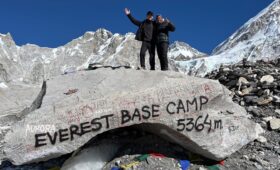
Nepal is one of the most rewarding places to travel, known for its mountains, culture, and warm people. Every year, thousands of visitors come here for trekking, cultural tours, and adventure.
Like most popular destinations, Nepal has its share of tourist scams, particularly in busy areas like Kathmandu, Thamel, and Pokhara. The good news is that most are non-violent and easy to avoid once you know what to look for.
This guide is based on years of experience running tours and treks across Nepal, plus feedback from the many travelers we have worked with. We put it together so you can have a smooth trip without any nasty surprises.
Common Tourist Scams in Nepal (And How to Avoid Them)
1. When someone tries to help carry your luggage.
The moment you walk out of Tribhuvan International Airport, you will be looking for whoever is waiting to pick you up. While you are doing that, a stranger may come over and start helping with your bags. It looks like they are part of your group or tour company, but they are not.
Once your bags are in the car, they will ask for a tip. A polite “No, thank you” is all you need. Even if they do manage to grab a bag before you stop them, just say thank you and leave it at that. They will move on.
2. When someone says the hotel you want doesn’t exist, or they don’t know where it is.
You hop in a prepaid airport taxi and tell the driver your hotel. Suddenly, he has never heard of it. He has no idea where it could be. What he does know is another hotel, which he is happy to take you to instead, because he gets a cut for bringing guests there.
Keep your hotel’s phone number on you before you land. If the driver plays dumb, ask him to call the hotel directly for directions. The prepaid taxi counter can also help with this. Do not get in the taxi until you are sure the driver knows exactly where you are going.
3. When a taxi driver’s accomplice tries to sell you tours on the way from the airport to your hotel.
On the ride from the airport, someone may try to jump into your taxi. This person is not a random passenger. They are working with the driver and are there to sell you tours or services you did not ask for.
You are well within your rights to refuse. A taxi has one driver and that is it. Politely but clearly tell the person the ride is not for them.
4. Hashish sellers in Thamel
Walk through Thamel long enough and someone will approach you quietly trying to sell hashish. Buying is illegal in Nepal, full stop, and getting caught can mean serious legal trouble for you as a visitor.
Do not engage. Say no, stay calm, and keep walking. Getting into a conversation or an argument only makes things messier, and in some cases it can draw police attention to you rather than the seller.
5. Touts at attractions promising they’ll give you a guided tour for free but asking for money at the end.
Whether you are at Patan Durbar Square or another heritage site, someone may fall into step beside you and offer to show you around as a friend. No charge, they insist.
By the end of the visit, the charge appears. They will not call it a fee, but they will make it very clear they want a tip, and the pressure can feel uncomfortable in the moment.
The “English practice” friendship approach
A version of this plays out differently in Thamel. Someone walks up, says they want to practice their English, and seems genuinely friendly. The conversation flows, they point out a few things nearby, and before long they are steering you toward a specific shop or tea house where they get a commission.
Some travelers only realize what happened when the bill at that shop turns out to be well above what anything nearby costs. There is nothing wrong with chatting with locals, but if the conversation keeps nudging you in one direction, trust that instinct and go your own way.
6. Massage
Coming back to Kathmandu or Pokhara after a trek, you will often be approached on the street with offers to visit a massage parlor nearby.
Skip unsolicited street offers and look up well-reviewed massage centers on your own. Plenty of good ones exist, but they are not the ones pitching to you on the pavement.
7. Beggars asking money to buy milk for their children
In Thamel and around Lakeside in Pokhara, you may come across women with young children asking for money to buy milk for the baby.
If you agree, they take you to a shop, pick up an expensive tin of milk powder, and then return it after you part ways to collect cash back from the shopkeeper. It is a well-worn routine. Decline politely and move on.
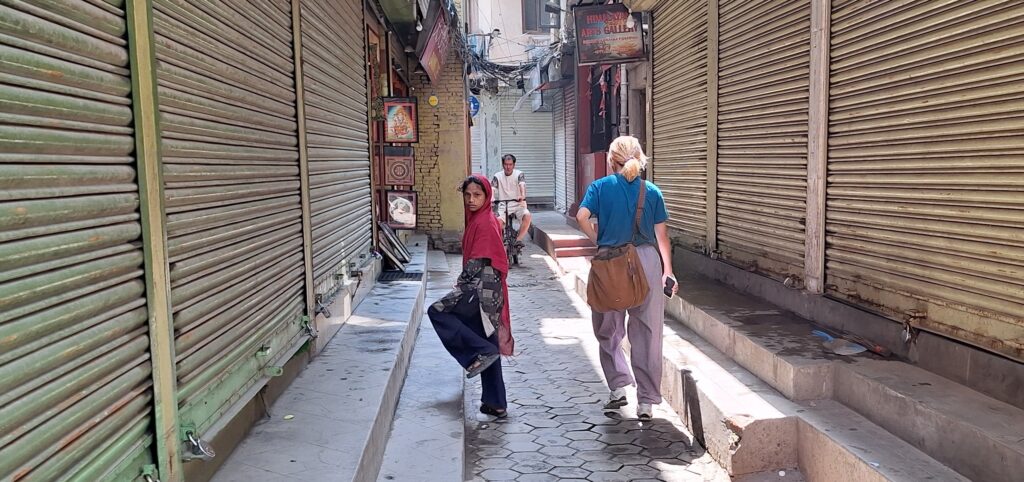
8. Extra charges at an immigration office
If you need to extend your visa, you will need to visit an immigration office. People hang around outside these offices offering to speed up the process for a fee.
They cannot actually do anything faster than you can on your own. The process takes the same amount of time either way. Go in, handle it yourself, and save the money.

9. Overcharging for goods and services
Vendors, drivers, and some tour operators quote higher prices to tourists than they would to locals. It happens in a lot of countries and Nepal is no different.
Before you pay for anything, get a rough idea of what things cost. Ask around, check a couple of places, and do not be afraid to negotiate. Walking away is often the fastest way to get a fair price.
10. Counterfeit goods
The markets in Nepal are full of gear carrying familiar brand names: The North Face, Nike, Adidas, Oakley. A lot of it is fake. The stitching and logos can look convincing at first glance, but the quality often falls apart quickly.
If you need reliable gear for a trek, buy from a shop you can verify, or bring what you need from home.
11. Trekking scams
Choosing the right trekking agency matters more than most people realize before they arrive. On the streets of Thamel and around Lakeside in Pokhara, you will find people offering trek packages at prices that seem too good to pass up. Many travelers who book through these street-side operations end up paying hidden costs, getting guides with little experience, or receiving far less than what was promised.
We hear about these situations regularly from trekkers who locked in a trip without checking who they were actually booking with.
Fake reviews and review-boosted agencies
High ratings on travel platforms do not always tell the full story. Some operators have learned to game review systems with fake or paid-for feedback. Before you commit to any agency, look for reviews that mention specific dates, real names, and honest pros and cons. A page full of short five-star comments posted within a few weeks of each other is a warning sign. Cross-check across more than one platform before you hand over any deposit.
Helicopter evacuation pressure
This one catches trekkers off guard. Some guides or agencies push for helicopter evacuations when the situation does not actually call for one, partly because there is money in the referral. If you feel unwell on a trek, rest and see how things go. Get a second opinion if you can. A real evacuation should come down to medical need, not someone else’s financial incentive. Keep notes on any symptoms, conversations, and decisions in case your insurer asks later.
Fake flight ticket inclusion in tour packages
Some tour operators advertise packages that appear to include domestic or international flights. After payment comes through, the tourist is told there was a misunderstanding and that flights were never part of the deal. More money is then requested to cover them.
Before paying anything, ask for a written breakdown listing everything that is included. If flights are mentioned, ask for the booking reference on the spot. A legitimate agency will have no problem showing you. Be extra careful with heavily discounted all-inclusive packages sold through social media or by people approaching you on the street.
12. Fake charity or orphanage scams
This one is hard to spot because it plays on genuine goodwill. Some individuals and organizations in tourist areas solicit donations for orphanages or charities that either do not exist or are not what they claim to be. Real charitable organizations do not typically need someone standing outside Thamel asking passing tourists for cash.
If you want to contribute to something meaningful in Nepal, take the time to research the organization first. Verified charities with a track record are easy enough to find online, and your money will actually reach the people it is meant for.
13. Fake travel permits
Certain trekking routes and restricted areas require permits, and some operators have been found selling counterfeit versions. A fake permit will get you turned back at a checkpoint and can create real headaches with authorities.
Always get permits from official government offices or through a registered agency you have vetted. Do not buy them from someone on the street or from an agency that cannot show you where the permit is actually coming from.

14. Don’t accept help at ATMs
Strangers offering to help you at an ATM are almost always after your card details or PIN. It happens at machines in tourist areas more than anywhere else. Use ATMs inside banks, hotels, or shopping malls where possible, cover your PIN when entering it, and be aware of anyone standing too close.
Card payment extra charges and double charges
When paying by card somewhere, ask to see the amount on the terminal before you tap or swipe, and keep the receipt. If a payment is said to have failed and you are asked to try again, check your bank before you do. The first attempt may have gone through just fine. For anything expensive, cash is safer, and keeping a note of your transactions helps if something needs to be disputed later.
15. Verify entrance fees at tourist sites
Entrance fees at popular sites in Nepal are fixed. Some people hanging around the gates will quote you a different number, usually higher, and pocket the difference.
Look for the official fee board at the entrance, or check online before you visit. If what you are being asked to pay does not match, go to the official ticket counter and buy there directly.
16. Unofficial trekking agencies
Nepal has a registration system for trekking agencies and guides for good reason. Unregistered operators may know the trails but cut corners on safety, insurance, and permits. If something goes wrong in a remote area, being with a registered agency makes a significant difference in how quickly help arrives and what support you can access.
Check that any agency you book with is registered with the Nepal Tourism Board or the Trekking Agencies Association of Nepal (TAAN) before you commit.
17. Fake monks and sadhus
In Kathmandu and Pokhara, you will likely come across people dressed as monks or Hindu holy men. They approach tourists offering blessings, tying bracelets on wrists, or handing out small items. Once the interaction is over, they ask to be paid, and the amount they have in mind is usually far from small.
A simple, calm “no thank you” is enough. Real monks and sadhus do not approach tourists for money. If someone puts something in your hand before you can stop them, you are under no obligation to pay for it.
18. Overpriced souvenirs
In tourist spots, the price you are first quoted for a souvenir is rarely the price anyone actually pays. Vendors know that foreign visitors often do not know local rates, so the opening number is high.
Compare prices at a few different stalls before buying anything. Bargaining is completely normal here and most sellers expect it. Start lower than what you are willing to pay and work from there. It does not need to be awkward; most of these negotiations are friendly.
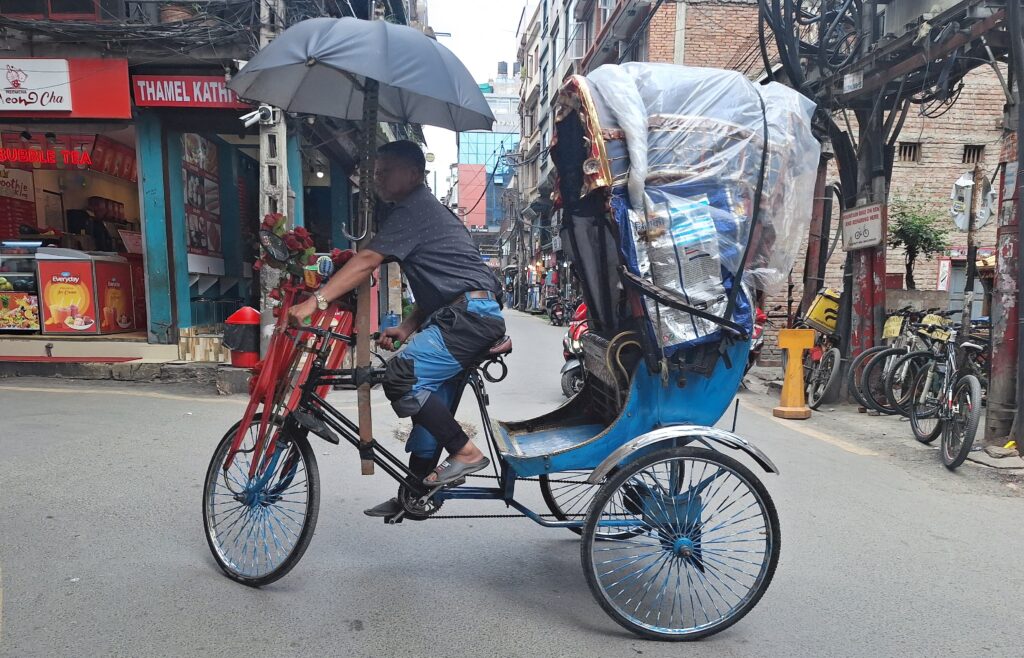
19. Rickshaw ride scams in Thamel
Rickshaws are a fun way to get around, but some drivers in Thamel use them as an opportunity to squeeze more money out of tourists. A common trick is to agree on a price and then claim at the end that it was per person, per minute, or only for part of the route. Others will insist they cannot change a large note, hoping you will just pay more than what was agreed.
Settle the exact total before you get in, carry smaller notes, and if a driver keeps shifting the terms, walk away. Apps like Pathao and InDrive are widely used in Kathmandu and Pokhara and take the guesswork out of pricing entirely.
20. Donation requests for schools or villages
People approach tourists in busy areas with stories about schools, orphanages, or villages that urgently need help. The stories are often detailed and the people telling them are convincing. Some of these requests are genuine, but a lot are not.
If you want to help communities in Nepal, the most reliable way is through organizations with a verifiable history and transparent reporting. Handing cash to someone you just met on the street rarely gets to where it is meant to go.
21. Tourist bus ticket and seat swaps
On popular routes like Kathmandu to Pokhara, some travelers get on the bus and are then asked to move to a different seat, sometimes to one that is worse than what they paid for. It may be pushed as a mix-up, but it does not always happen by accident.
Book through a known counter, keep your ticket handy with the seat number visible, and board early. If someone asks you to move, ask the conductor to confirm the new seat clearly in front of you before you agree.
22. Inflated bills at bars and clubs
In nightlife areas, it is worth checking menu prices before you order rather than after. Some venues add items to your bill that you did not order, or charge amounts that do not match what was listed. Keep a rough tab in your head as the night goes on. If the total looks off, stay calm, ask to see the itemized bill, and if there is a serious problem, Tourist Police are reachable on 1144.
23. The mad honey scam
Mad honey is real. It comes from wild bees in the Himalayan foothills and has been part of local tradition for centuries. It is also genuinely hallucinogenic and carries real health risks in larger amounts, including dizziness, nausea, and worse.
The scam is straightforward: vendors in tourist areas sell jars labeled as mad honey at high prices, and what is inside is ordinary honey with nothing unusual about it. You pay a premium for a novelty and get nothing close to what was advertised.
If a street vendor is pushing it on you as a quirky souvenir or experience, the jar is almost certainly not what they say it is. Give it a miss.
24. Hotel booking cancellations and surprise charges
You have a confirmed booking. You show up and are told the reservation was lost, cancelled due to a system error, or overbooked. Conveniently, there is another room available at a higher rate.
This has been reported more in recent years, particularly at smaller guesthouses. The other version of it is that your original booking is honored, but checkout comes with added fees for things like city taxes, Wi-Fi, or breakfast that were listed as included when you booked.
Take a screenshot of your booking confirmation and the listed price before you travel. On arrival, ask directly whether there are any charges on top of what your booking shows. If something does not add up, contact your booking platform rather than just accepting what you are being told at the desk.
25. Spiked food or drinks
This one is less common than the others on this list, but it does come up in traveler reports often enough to be worth knowing about. The usual setup involves someone you have recently met, sometimes connected to the friendship scam above, inviting you for tea, food, or a drink. After consuming something, the traveler feels disoriented and later finds that money, cards, or other valuables are gone.
Solo travelers are more likely to be targeted. The simplest precaution is to be cautious about accepting food or drinks from people you have only just met, particularly in settings that feel informal or off the usual path. If you do go somewhere with new acquaintances, choose a busy public place and order for yourself directly from the staff.
Summary
None of these scams are unique to Nepal. They show up in popular tourist destinations all over the world. Most of the time, being aware of them is enough to avoid them entirely.
Travel here with a bit of caution, do your research before booking anything significant, and trust your gut when something feels wrong. Nepal has a huge amount to offer and the vast majority of people you meet will be genuinely helpful and kind. A little preparation goes a long way toward making sure that is what you remember.
If you have come across a scam not covered here, share it in the comments. It helps other travelers heading to Nepal know what to watch for.
Contact us to find out more or to book a trip with Mosaic Adventure.
About this guide:
This article draws on firsthand experience from the Mosaic Adventure team and feedback from travelers who have visited Nepal through our guided tours and trekking programs.
Want more information? Send us your query, and our experts will get back to you within 24 hrs.
Madhav Prasad is a seasoned trekking and tourism expert with over two decades of experience in the field. Starting his career in 2001 as a porter, Madhav quickly advanced to the role of trekking guide, gaining invaluable hands-on experience in Nepal’s diverse trekking routes. In 2009, after eight years of dedication to the industry, he co-founded Mosaic Adventure, a leading trekking and tour company known for its commitment to safety, sustainability and personalized service.
Madhav has personally trekked to nearly every major trekking destination in Nepal, including Everest Base Camp, Annapurna Base Camp, the Annapurna Circuit, Poon Hill, Jomsom Muktinath, the Indigenous Peoples Trail, Langtang Valley and Mardi Himal, among others. His experience extends beyond Nepal, as he has also successfully summited Mount Kilimanjaro, Africa’s highest peak.
In addition to his extensive trekking credentials, Madhav is well traveled globally, having explored countries such as Australia, the USA, the UK, France, Japan, China, and many others. His global exposure enhances his ability to understand and cater to the diverse needs of international trekkers.
Madhav is the primary point of contact for many clients at Mosaic Adventure, personally addressing inquiries and helping plan treks with a meticulous and personalized approach. His deep knowledge of Nepal’s trekking routes, combined with his global travel experience, ensures that every trek is well planned, safe and unforgettable.