
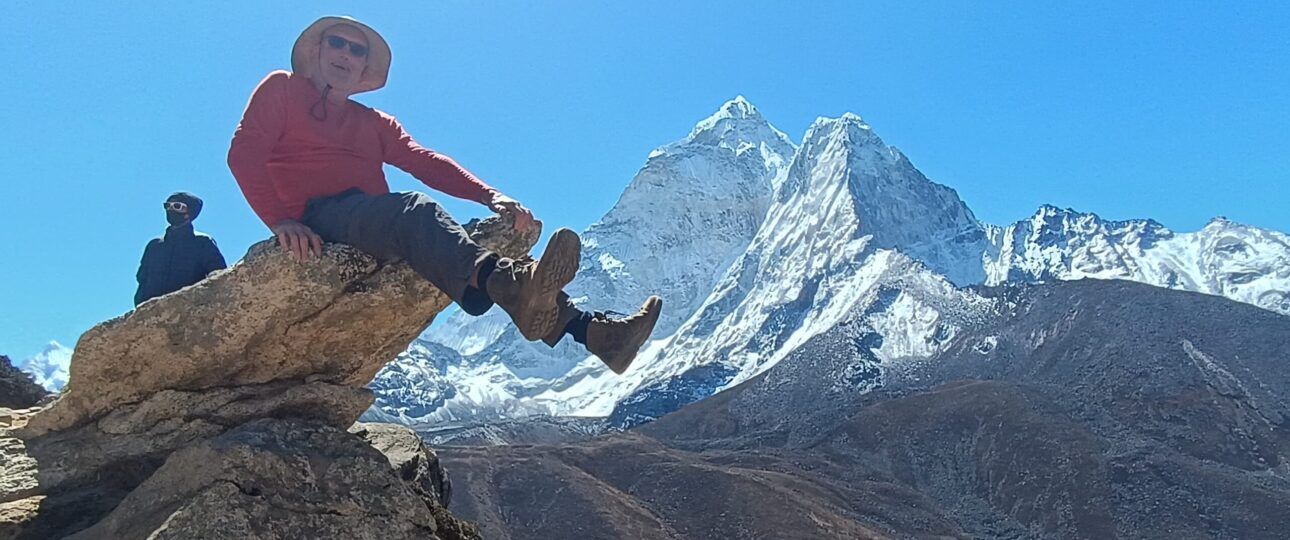
Most Everest Base Camp itineraries run 12 to 16 days. The walking route from Lukla to base camp is the same in all of them. What changes is how many days you spend in Kathmandu, how much buffer you have for Lukla flights, and whether there are extra acclimatization or side-trip days. Below is our standard 14-day itinerary day by day, followed by how the 12, 15 and 16-day versions differ.
In this Everest Base Camp trek itinerary, you will learn:
- Day-by-day altitude and walking hours for the standard 14-day itinerary
- How the 12, 15 and 16-day versions differ, and which one suits you
- What the hardest days feel like (base camp day and Kala Patthar sunrise) and how to pace them
- Common mistakes people make when choosing an itinerary
Best for: anyone comparing itinerary lengths before booking the Lukla to Everest Base Camp trek.

Why 14 Days Is the Most Balanced Option
The main reason 14 days works is simple: it allows controlled altitude gain and proper acclimatization.
A 14-day itinerary for EBC trek allows:
- Gradual altitude gain with no extreme jumps
- Two structured acclimatization days in Namche and Dingboche
- Enough recovery time after Everest Base Camp and Kalapatthar
- Flexibility in case of Lukla flight delays
Shorter 10 or 11-day itineraries often reduce acclimatization or increase daily altitude gain beyond recommended limits. This increases fatigue and altitude risk. If you only have a week or so, see our short Everest Base Camp trek options.
From guiding experience in the Khumbu region, 14 days remains the most practical balance between safety and time efficiency.
Here is what makes this schedule work in practical terms:
How to Complete EBC Trek in 14 Days Safely
- Do not skip the two acclimatization days in Namche and Dingboche
- Walk at a steady conversational pace above 3,000 meters
- Drink at least 3 to 4 liters of fluids daily
- Avoid alcohol after Namche Bazaar
- Sleep lower than your highest hiking altitude whenever possible
- Keep one buffer day after returning to Kathmandu before your international flight
With this structure, most trekkers can reach Everest Base Camp without rushing the ascent.
Now that the pacing logic is clear, here is how the route unfolds on the ground.
The Standard 14-Day Route
This itinerary follows the classic Lukla to Everest Base Camp route through the Khumbu region. The trail passes through Sherpa villages, Sagarmatha National Park, and high-altitude glacial terrain before reaching Everest Base Camp at 5,364 meters.
The trail begins in forested river valleys and gradually becomes open, rocky, and glacial as you move toward Lobuche and Gorakshep above 5,000 meters.
Our teams follow a conservative acclimatization plan with two key rest days in Namche and Dingboche. Guides brief trekkers daily on hydration, pacing, and altitude symptoms, and adjustments are made when needed.
To see the full structure clearly, here is the itinerary at a glance:
14-Day Itinerary at a Glance
| Day | Destination | Max Altitude | Walking Hours |
|---|---|---|---|
| 1 | Arrive Kathmandu | 1,345 m | – |
| 2 | Fly to Lukla – Trek to Phakding | 2,840 m | 3-4 hrs |
| 3 | Phakding – Namche Bazaar | 3,440 m | 5-6 hrs |
| 4 | Namche acclimatization (Everest View / Khumjung option) | 3,880-3,962 m | 2-4 hrs (optional) |
| 5 | Namche – Tengboche | 3,860 m | 5-6 hrs |
| 6 | Tengboche – Dingboche | 4,410 m | 5-6 hrs |
| 7 | Dingboche acclimatization (Nangkartshang option) | 4,800-5,000 m | 2-4 hrs (optional) |
| 8 | Dingboche – Lobuche | 4,940 m | 5-6 hrs |
| 9 | Lobuche – Gorakshep – Everest Base Camp – Gorakshep | 5,364 m | 6-8 hrs |
| 10 | Kalapatthar – Pheriche | 5,545 m | 6-7 hrs |
| 11 | Pheriche – Namche | 3,440 m | 6-7 hrs |
| 12 | Namche – Lukla | 2,840 m | 6-7 hrs |
| 13 | Fly Lukla – Kathmandu | 1,345 m | – |
| 14 | Departure | – | – |
Tip: Walking hours vary by pace, weather, and flight delays. Keep at least one buffer day in Kathmandu if your international flight schedule is tight.
The numbers above matter because altitude gain is the single biggest factor in how your body reacts during the trek.
Altitude Progression Summary for the 14-Day EBC Trek
The key to completing the 14-day EBC trek itinerary safely is controlled altitude gain.
- Kathmandu to Namche: gradual rise to 3,440 m
- First acclimatization at Namche with active hiking above sleeping altitude
- Second acclimatization at Dingboche before crossing 4,800 m
- Maximum sleeping altitude at Gorakshep
- Highest point reached at Kalapatthar 5,545 m before steady descent
After Namche, daily sleeping elevation gain stays within generally accepted high-altitude guidelines.
If you prefer a more detailed explanation of what each day involves, the full breakdown is below.
Detailed 14-Day Itinerary (Day by Day)
This day-by-day breakdown explains how this itinerary progresses in altitude, walking hours, and acclimatization. The schedule is structured to allow gradual ascent and proper recovery before crossing 5,000 meters.
Day 1: Arrival in Kathmandu
Altitude: 1,345 m / 4,412 ft
Accommodation: Hotel in Kathmandu
Meals: Welcome dinner
Arrival day is kept flexible to account for international flight timing. After airport pickup and hotel check-in, there is a short briefing about the 14-day Everest Base Camp trek itinerary, permits, weather, and flight logistics to Lukla. This day is mainly for rest and preparation.
Day 2: Flight to Lukla and Trek to Phakding
Altitude: Lukla 2,840 m / Phakding 2,610 m
Walking time: 3 to 4 hours
Accommodation: Teahouse
The flight to Lukla takes about 30 to 35 minutes. After landing, the trail gradually descends toward Phakding. This first walking day is intentionally short to allow the body to begin adjusting to altitude without strain.
In spring and autumn, Lukla flights often leave from Ramechhap (Manthali) instead of Kathmandu, which means a very early drive from Kathmandu before the flight. Your guide will confirm the departure point the day before.
Day 3: Trek to Namche Bazaar
Altitude: 3,440 m
Walking time: 5 to 6 hours
Elevation gain: Approx. 830 m from Phakding
Accommodation: Teahouse
This is the first sustained ascent of the trek. The trail follows the Dudh Koshi River and crosses several suspension bridges before entering Sagarmatha National Park. The final climb to Namche is steady and requires slow pacing. Namche is the main acclimatization hub of the trek.
Day 4: Acclimatization Day in Namche
Sleeping altitude: 3,440 m
Hiking altitude: Up to 3,800 to 3,962 m
Accommodation: Teahouse
This is the first acclimatization day. The principle followed is hike high and sleep low. A short hike above Namche allows the body to adapt to reduced oxygen levels before continuing higher. Proper hydration and rest are important on this day.
The most popular hike goes up to Syangboche and the Everest View Hotel for your first clear view of Everest, Lhotse and Ama Dablam. Back in Namche, the Sherpa Culture Museum is worth an hour, and if it is a Saturday, the weekly market brings in traders from surrounding villages.
Day 5: Trek to Tengboche
Altitude: 3,860 m
Walking time: 5-6 hours
Accommodation: Teahouse
The trail climbs gradually and then descends before a final ascent to Tengboche. The altitude gain is controlled, keeping the itinerary within safe limits. Tengboche is known for its monastery and mountain views.
Day 6: Trek to Dingboche
Altitude: 4,360 m
Walking time: 5 to 6 hours
Elevation gain: Approx. 500 m
Accommodation: Teahouse
Tree line begins to disappear and the landscape becomes more open. The pace is kept slow as the trek crosses 4,000 meters. Dingboche is the second acclimatization stop in the 14-day itinerary.
Day 7: Acclimatization Day in Dingboche
Sleeping altitude: 4,360 m
Hiking altitude: Up to 4,800 to 5,000 m
Accommodation: Teahouse
A short uphill hike above Dingboche helps prepare for higher elevation days ahead. This second acclimatization day is essential before reaching Lobuche and Gorakshep.
Day 8: Trek to Lobuche
Altitude: 4,940 m
Walking time: 5 to 6 hours
Accommodation: Teahouse
The trail follows glacial moraine with gradual ascent. Walking pace becomes slower due to thinner air. Overnight at Lobuche prepares for the highest section of the itinerary.
The steep climb above Thukla brings you onto a ridge lined with stone memorials to climbers who died on Everest and nearby peaks. Most people slow down here without being asked to.
Day 9: Trek to Everest Base Camp and Return to Gorakshep
Altitude: Gorakshep 5,164 m / Everest Base Camp 5,364 m
Walking time: 6 to 8 hours
Accommodation: Teahouse at Gorakshep
This is one of the longer days of the trek. The trail moves across rocky terrain toward Gorakshep. After a short rest, the hike continues to Everest Base Camp. The return to Gorakshep for overnight sleep is important because sleeping higher than necessary increases fatigue.
One thing worth knowing: you cannot see the summit of Everest from Base Camp itself. What you see is the Khumbu Icefall directly above. In April and May the camp is full of expedition tents. Outside climbing season it is quiet. The full Everest view comes the next morning from Kala Patthar.
Day 10: Hike to Kalapatthar and Descend to Pheriche
Highest point: 5,545 m at Kalapatthar
Sleeping altitude: 4,270 m at Pheriche
Walking time: 6 to 7 hours
Accommodation: Teahouse
An early climb to Kalapatthar provides the clearest view of Mount Everest. After descending to Gorakshep, the itinerary continues downward to Pheriche. This significant descent helps recovery after two high-altitude days.
In trekking season, the Himalayan Rescue Association runs an altitude clinic in Pheriche. If you have a persistent headache, nausea or trouble sleeping, it is a good place to get checked.
Day 11: Trek to Namche Bazaar
Altitude: 3,440 m
Walking time: 6 to 7 hours
Accommodation: Teahouse
The trail descends steadily. Oxygen levels improve noticeably, and walking becomes easier compared to previous days.
Day 12: Trek to Lukla
Altitude: 2,840 m
Walking time: 6 to 7 hours
Accommodation: Teahouse
The final trekking day retraces the route along the Dudh Koshi valley back to Lukla. This completes the walking portion of the 14-day Everest Base Camp trek itinerary.
Day 13: Flight Back to Kathmandu
Altitude: 1,345 m
Accommodation: Hotel in Kathmandu
Morning flight from Lukla to Kathmandu. This day acts as a buffer in case of weather delays and allows rest before international departure.
If your Lukla flight is cancelled, there are two fallbacks. A helicopter needs less visibility than a plane, so it often flies when planes cannot. If both are grounded, you can drive back to Kathmandu via Surke and Salleri, which is a long day but reliable. Your guide will know which option works on the day. For more, see our Lukla flight guide.
Day 14: Departure
Transfer to the international airport according to flight schedule. Most trekkers prefer keeping an additional buffer day after this itinerary if international flights are tight.
Want this itinerary with permits, flights, guide and teahouses arranged? See our Everest Base Camp Trek for dates and prices.

Now that you have seen the full 14-day structure, it becomes easier to compare it with shorter versions.
Other Itinerary Lengths: 12, 15 and 16 Days
The trail between Lukla and Everest Base Camp is the same in every version. What changes is the time in Kathmandu, the buffer for Lukla flight delays, and the number of acclimatization days.
| Feature | 12 Days | 14 Days | 15 Days | 16 Days |
|---|---|---|---|---|
| Kathmandu arrival & departure days | Not included | Included | Included | Included |
| Ascent route | Standard trail via Tengboche | Standard trail via Tengboche | Standard trail via Tengboche | Via Khumjung and Phortse |
| Acclimatization days | 2 (Namche, Dingboche) | 2 (Namche, Dingboche) | 2 (Namche, Dingboche) | 2 (Namche, Dingboche) |
| Night at Gorak Shep before Base Camp | No | No | No | Yes |
| Free day in Kathmandu after the trek | No | No | Yes | No |
| Lukla flight buffer | None | Departure day only | 1 full day | Departure day only |
| Best for | Trekkers already in Kathmandu and short on time | Most trekkers | Trekkers who want a real flight buffer and time to see Kathmandu | First-timers who want a gentler ascent and quieter Sherpa villages |
12-Day Itinerary
The 12-day version covers only the trekking part of the plan above, from the flight to Lukla to the flight back to Kathmandu (Days 2 to 13 of the 14-day itinerary). Kathmandu arrival and departure days are not included, so it suits trekkers who are already in Nepal or who book their Kathmandu nights separately.
You still get both acclimatization days. The trade-off is that there is no buffer if Lukla flights are delayed, so leave room before any onward travel.
15-Day Itinerary
The 15-day version follows the 14-day itinerary until the flight back to Kathmandu, then adds a free day before you fly home.
- Days 1 to 13: Same as the 14-day itinerary above, ending with the flight from Lukla to Kathmandu
- Day 14: Free day in Kathmandu. Rest, shop for souvenirs, or join our guided Kathmandu heritage tour
- Day 15: Departure
The free day also works as a buffer. If weather delays your Lukla flight by a day, you still make your international flight.
16-Day Itinerary via Khumjung and Phortse
The 16-day version takes a quieter line on the way up. Instead of going straight from Namche to Tengboche, it passes through Khumjung and Phortse, two Sherpa villages that sit just off the main trail and see far fewer trekkers. It also adds a night at Gorak Shep before the Base Camp day, so you reach Base Camp on fresher legs.
- Days 1 to 4: Same as the 14-day itinerary: arrive in Kathmandu, fly to Lukla and trek to Phakding, trek to Namche Bazaar, acclimatization day in Namche
- Day 5: Namche to Khumjung (3,790 m), about 2 hours
- Day 6: Khumjung to Phortse (3,840 m) via Kyanjuma, 3 to 4 hours
- Day 7: Phortse to Dingboche via Pangboche, about 5 hours
- Day 8: Acclimatization day in Dingboche
- Day 9: Dingboche to Lobuche, about 5 hours
- Day 10: Lobuche to Gorak Shep, about 4 hours
- Day 11: Gorak Shep to Everest Base Camp and back, about 7 hours
- Day 12: Kala Patthar sunrise hike, then descend to Tengboche, about 8 hours
- Day 13: Tengboche to Monjo, about 6 hours
- Day 14: Monjo to Lukla, about 6 hours
- Day 15: Fly Lukla to Kathmandu
- Day 16: Departure
Why this route is different: Khumjung is home to the Hillary School, which has been running for more than sixty years, and still feels like a working village rather than a trekking stop. Day 5 is deliberately short so you can rest after the Namche acclimatization hike. Phortse sits above the main trail, so few trekkers reach it. Its family-run teahouses look across the valley to Thamserku and Ama Dablam, and a second night just under 3,900 m does real acclimatization work before Dingboche. On the way down, Pangboche’s old monastery is worth a short detour.
Choose this version if it is your first time above 4,000 meters, if you have had trouble with altitude before, or if you want quieter villages and a slower build-up to the hardest days.
Shorter Than 12 Days?
Shorter trips exist, including versions with a helicopter return, but they cut acclimatization time. See our short Everest Base Camp trek options.
Whichever version you consider, there are a few common planning errors worth avoiding.
Common Mistakes When Choosing an Everest Base Camp Itinerary
- Choosing a rushed 8-10 day plan: shorter itineraries often reduce acclimatization time and increase fatigue. If you want safer pacing, choose a 12–14 day route with Namche and Dingboche acclimatization. If time is the problem, compare our short trek options instead of compressing a standard route.
- Not understanding what “14 days” means: a “14-day” itinerary usually includes Kathmandu days. The trekking itself is often the same as a 12-day plan, so compare walking days, not total days.
- Underestimating the hardest back-to-back days: the EBC day and Kalapatthar sunrise day are long and cold. Pick an itinerary that allows a steady pace and early nights.
- Booking flights too tightly: Lukla flights can be delayed. Avoid scheduling an international flight immediately after Day 13.
- Picking a plan without clear permits + safety process: your itinerary should clearly explain permits, acclimatization strategy, and emergency protocols.
Even with good planning, this itinerary is not the right fit for everyone.
Who These Itineraries May Not Suit
- Travelers with under 10 days who aren’t open to a helicopter return.
- Those uncomfortable with basic teahouse accommodation and shared facilities
- People unable to walk 5-7 hours a day on uneven mountain terrain
- Anyone unwilling to build flexibility around Lukla flight delays
Everest Base Camp Itinerary FAQs
How many days do you need for Everest Base Camp?
Most trekkers need 12 to 14 days: about 12 days of walking from Lukla and back, plus Kathmandu days and a flight buffer. Anything much shorter usually cuts acclimatization or depends on a helicopter return.
Which Everest Base Camp itinerary length is best?
For most people, 14 days. It includes both acclimatization days and a flight buffer. Choose 12 days if you are already in Kathmandu, and 15 or 16 days if you want extra rest or a side trip.
Is 12 days enough for Everest Base Camp?
Yes, if the 12 days are all trekking days, from Lukla back to Lukla, with acclimatization days in Namche and Dingboche. That is the same walking schedule as our 14-day itinerary without the Kathmandu days. What a 12-day plan lacks is a buffer for Lukla flight delays.
What is different about the 16-day Everest Base Camp itinerary?
It goes up through Khumjung and Phortse instead of the standard Namche to Tengboche section, and adds a night at Gorak Shep before the Base Camp day. Both acclimatization days are the same as in the 14-day plan. See the 16-day itinerary above for the full day list.
Is a longer Everest Base Camp itinerary safer?
Generally, yes. More days mean more time to adjust to altitude before the hardest days and more room if weather or your body slows you down. Most regrets on this trek are about feeling rushed, not about having too many days.
Is 14 days enough for Everest Base Camp?
Yes. When two acclimatization days are included and altitude gain is gradual, 14 days is sufficient for most trekkers.
What is the highest altitude reached in the 14-day itinerary?
The highest point is Kalapatthar at 5,545 meters. Everest Base Camp itself sits at 5,364 meters. The itinerary ensures you hike high and sleep lower whenever possible.
Why are two acclimatization days included?
The acclimatization days in Namche Bazaar and Dingboche allow your body to adjust gradually to reduced oxygen levels. These rest and hike days significantly reduce the risk of altitude sickness during the ascent above 4,000 meters.
What are the hardest days in the 14-day EBC trek?
Day 9 to Everest Base Camp and Day 10 to Kalapatthar are the longest and highest altitude days. These back-to-back days require slow pacing, early starts, and proper hydration.
Can the 14-day Everest Base Camp itinerary be shortened?
It can be shortened, but doing so usually reduces acclimatization time and increases daily altitude gain. The 14-day schedule remains the most balanced option for safety and recovery. See short Everest Base Camp trek options.
How many hours do you walk per day in the 14-day itinerary?
Most trekking days involve 5 to 7 hours of walking, depending on pace, weather, and trail conditions. Acclimatization days include shorter hikes above the sleeping altitude.
If you are still deciding, consider the following.
Which Itinerary Is Right for You?
If you want a realistic pace, two acclimatization days and a flight buffer, the 14-day itinerary is the one we recommend to most trekkers. Choose 12 days if you are already in Kathmandu, or 15 to 16 days if you want more margin or a side trip.
These schedules come from years of leading treks in the Khumbu. When you are ready, see the Everest Base Camp Trek for departure dates and what’s included.
Want more information? Send us your query, and our experts will get back to you within 24 hrs.

Madhav Prasad is a seasoned trekking and tourism expert with over two decades of experience in the field. Starting his career in 2001 as a porter, Madhav quickly advanced to the role of trekking guide, gaining invaluable hands-on experience in Nepal’s diverse trekking routes. In 2009, after eight years of dedication to the industry, he co-founded Mosaic Adventure, a leading trekking and tour company known for its commitment to safety, sustainability and personalized service.
Madhav has personally trekked to nearly every major trekking destination in Nepal, including Everest Base Camp, Annapurna Base Camp, the Annapurna Circuit, Poon Hill, Jomsom Muktinath, the Indigenous Peoples Trail, Langtang Valley and Mardi Himal, among others. His experience extends beyond Nepal, as he has also successfully summited Mount Kilimanjaro, Africa’s highest peak.
In addition to his extensive trekking credentials, Madhav is well traveled globally, having explored countries such as Australia, the USA, the UK, France, Japan, China, and many others. His global exposure enhances his ability to understand and cater to the diverse needs of international trekkers.
Madhav is the primary point of contact for many clients at Mosaic Adventure, personally addressing inquiries and helping plan treks with a meticulous and personalized approach. His deep knowledge of Nepal’s trekking routes, combined with his global travel experience, ensures that every trek is well planned, safe and unforgettable.
