
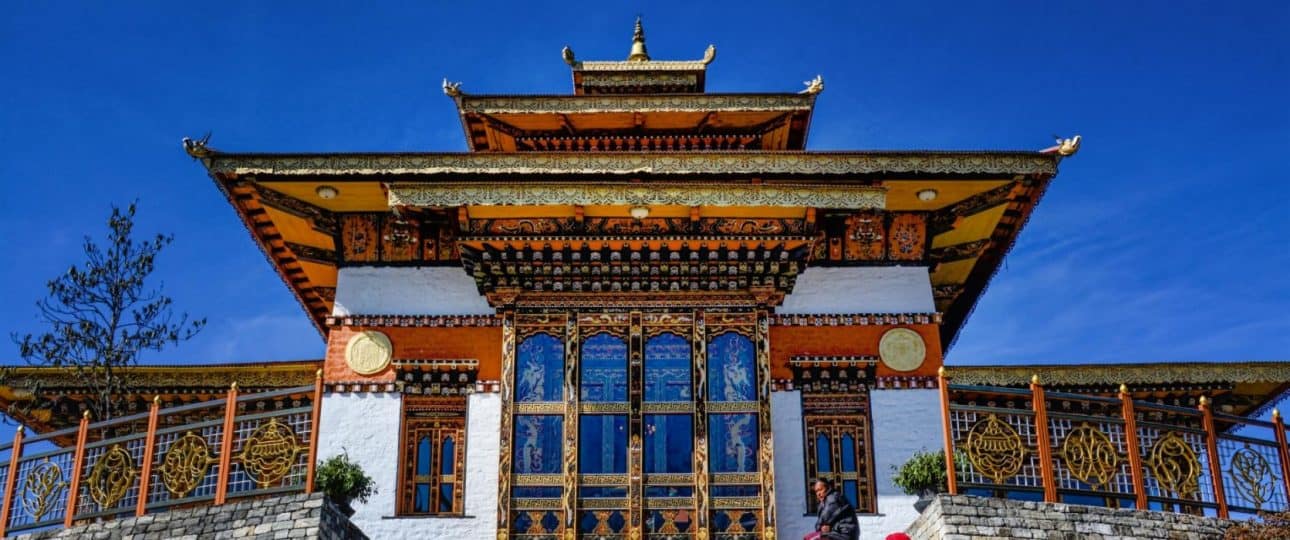
Bhutan in April is a popular time to travel because spring begins to show in the valleys, days are often comfortable for sightseeing, and the air feels clear after winter.
Bhutan is known for monasteries, everyday Buddhist culture, and mountain scenery. If you are planning April in Bhutan or comparing options for a Bhutan tour in April, this page explains April conditions by elevation, what to pack, how crowded it can get, and how to plan day by day.
Bhutan in April at a glance
- Weather: mild days in many valleys; cooler mornings and cold nights in higher areas.
- Visibility: often clear early in spring; more cloud later in the month is possible.
- Rain: short showers can happen; April is usually before peak monsoon conditions.
- Crowds: a busy month, especially if festival dates fall in your travel week.
- Best for: cultural sightseeing, photography, day hikes, and some treks (route and altitude matter).
Bhutan’s conditions change quickly with elevation. A warm afternoon in Punakha can be followed by a cold evening in Paro or Thimphu. For many travellers, that simply means packing layers and planning realistic drive times.
April is also considered a peak spring month. Flights and hotels can fill earlier than many people expect, and trip costs are often higher than in the quieter seasons. If you are still deciding, compare seasons in our guide to the best time to travel to Bhutan, and see nearby months: Bhutan in March and Bhutan in May.
Bhutan Weather and Climate in April

Bhutan weather in April is usually comfortable for touring, but altitude makes a big difference. Lower valleys can feel mild to warm in the afternoon, while higher towns and mountain passes can turn cold after sunset.
April often sits before the main monsoon pattern. Light rain is possible, but it is usually in short spells rather than all-day rain. Many travellers like Bhutan in April for clear mornings, spring colour in the valleys, and good conditions for walking.
If your route includes Paro/Thimphu and Punakha, pack so you can switch quickly between warm afternoons and cold evenings: a base layer, a warm mid-layer, and a shell jacket.
Here is what April usually feels like in the main stops. Use it as a guide, each year is a little different.
| Thimphu (valley, higher elevation) | Typical feel: cool to mild days, cold nights Notes: layer for evenings and early mornings |
|---|---|
| Paro (valley, higher elevation) | Typical feel: cool to mild days, cold nights Notes: good base for cultural touring and day hikes |
| Punakha (lower valley) | Typical feel: mild to warm days, cool nights Notes: usually warmer than Paro and Thimphu |
| Phuentsholing (southern belt) | Typical feel: warm and more humid Notes: lighter layers in daytime, still carry a rain shell |
| High passes and trekking camps | Typical feel: cool days, cold nights Notes: warm layers matter most after sunset |
Tip: in April, packing decisions are easier when you think in terms of elevation and time of day, not a single national average.
April planning notes (crowds, timing, and comfort)
April is busy. Flights and preferred hotels can sell out earlier, and the main valleys can feel noticeably more crowded if festival days fall in your travel week. A calm plan usually means confirming early and keeping daily drive times sensible.
Bhutan trips are organised through licensed tourism service partners, so your tour operator typically coordinates permits, guide support, transport, and hotel logistics as one plan.
Want more information? Send us your query, and our experts will get back to you within 24 hrs.
Accommodation in Bhutan in April
A wide variety of accommodation is available in Bhutan. In April, because it is a peak spring month, it helps to confirm hotels early so you get the style and location you prefer.
Accommodation ranges from higher-end hotels to simple, comfortable lodges, and in some areas, homestays. Many travellers choose mid-range hotels for consistent warmth, clean rooms, and reliable services in the evenings.
Most Bhutan itineraries include comfortable hotel standards as a baseline. If you are considering a homestay, keep expectations realistic: some homes have modern bathrooms and heating, and others are simpler. Your operator can advise what is suitable for your route and comfort needs.
April comfort tip: evenings can be cold in Paro and Thimphu. If you feel the cold easily, request a warm room and ask what heating options are available.
Food and Drinks in Bhutan in April
One typical thing about Bhutanese food is that many dishes use chillies generously. In Bhutan, chillies are not only a seasoning; they are treated as an important ingredient in daily cooking.
While in Bhutan in April, many visitors try the national dish Ema Datshi (chillies with cheese). If you prefer mild food, you can usually ask the kitchen to reduce the spice level when ordering.
Red rice is a staple in many meals. It is nutritious and often served with one or two side dishes of vegetables or meat. Another common favourite is momo (dumplings), usually filled with meat or vegetables and cheese.
Many hotels also offer buffet meals with familiar options alongside Bhutanese dishes, which helps travellers adjust gradually.
Drinks: butter tea (often called Suja or Po Cha) is traditional and may be served after meals. Ara is a traditional alcoholic drink made from fermented grains.
Things to Do in Bhutan in April
April works well for a mix of culture and walking: dzongs and monasteries, scenic drives, spring walks, and day hikes. If you are building your route, our list of must-see places in Bhutan can help you prioritise stops without overpacking your itinerary.

Explore the Majestic Architecture of Punakha Dzong
Punakha Dzong is arguably the most beautiful dzong in the country. Esp in Spring, when the lilac-colored Jacaranda trees bring a lush sensuality to the Dzongs towering whitewashed walls.
Punakha Dzong is a famous 17h century fortress that resides beside the Pho and Mo Chhu rivers. This Dzong also serves as the capital and seat of government until the mid-1950s.
Coronation of the king of Bhutan happens here. And the Dzong is still the winter residence of the Dratshang (official monk body).
Hence with its grand splendor and majestic architecture, Punakha Dzong makes for a breathtaking sight in April.
Relax at Wangdue Phodrang
Wangdue Phodrang is one of the largest dzongkhags(district) in Bhutan. As the district covers 4,308 square kilometer and ranges from 800 to 5800 meter in altitude. It has extremely varied climatic conditions ranging from subtropical forests in the south to cool and snowy regions in the north.
The Beautiful and calm town that it is, visiting Wangdue Phodrang is one of the best things to do in Bhutan in April. It is famous for its slate and stone carvings and bamboo products.
Its serene backdrop and mesmerizing views in April with clear blue sky will simply leave you enthralled
Rediscover Yourself, Take the Middle Path
Bhutan is just perfect if you want to get away from the daily drill of everyday life and reconnect with yourself. Buddhism is not a religion in Bhutan. It is a way of life.
You will realize this the minute you step into the country and interact with its people. In fact, if you notice Bhutanese architecture, you will realize that most homes in Bhutan are three-storey. Where the third floor would always have a shrine or prayer room.
If you want to feel the spiritual high as well, you could go for a session of meditation at one of the many monasteries or at your hotel itself. Or you could also soak in a mineral spring bath or Tshachu for its medical properties.
This is one of the most recommended things to do while in Bhutan. Yet, if you don’t feel like indulging in any of this, just walking by the river would prove to be therapeutic.
Get High on Adventure
The geographical location of Bhutan makes it a sweet spot for adventure activities. Such as hiking, biking, trekking, kayaking, and rafting. And what better time to do this than in April.
The rugged mountains, the magnificent lakes, and glaciers make it a very exciting and stunning venue to tap your adventurous side.
There is a number of treks you can plan during your trip to Bhutan depending on the difficulty level that you are looking for.
Trekking in Bhutan in April can be deeply rewarding, especially if you prefer clear mornings and comfortable walking temperatures. The best route depends on altitude, how many days you have, and how comfortable you are with cold nights in camps.
Some popular options include the Druk Path Trek, plus longer high-altitude routes such as Jomolhari and Snowman (which require more time, preparation, and stronger fitness). If you have limited time, day hikes such as Chele La or short monastery hikes can still give you a real sense of Bhutan’s landscapes.
Attend Festivals
Festival dates in Bhutan can change year to year because many follow the Bhutanese lunar calendar. If festivals are part of your reason to plan a Bhutan tour in April, confirm dates early and expect larger crowds on key days.
Rhododendron Festival: This festival is often held in April in the Dochula / Lamperi area near Thimphu, celebrating rhododendron blooms, local culture, and food. Dates can vary by year.
During the festival, the gorgeous garden walk and elaborately prepared exhibition attract a great number of visitor. With constant words of praise, the festival also provides Bhutan cuisines to taste and traditional games to attend.
Domkhar Tshechu: Domkhar Tshechu is one of the biggest festivals in the Bumthang area. During this festival, the locals put on handmade masks on their faces and dress in colorful traditional gowns. The festival marks the birthday of Guru Rinpoche, the saint who visited Bhutan in the 8th century.

Ura Yakchoe: Ura Yakchoe is a three-day festival commemorating the presence of the future Buddha Maitreya and the unforgettable journey into the center of Bhutan. Ura Yakchoe is actually kind of famous dance in Bhutan.
So during the festival, the locals perform folk dances. And they put sacred relic on display from which people can receive the blessings.
Things to Know About Bhutan in April
The following information serves as a guide and provides some useful information for you as you plan your traveling in April:
Language
The official language of Bhutan is Dzongkha, but most Bhutanese are fluent in English as that is the medium of education. So, communication shouldn’t be a problem.
Money
The currency of Bhutan is the Ngultrum (Nu.) It is at par with the Indian rupee which is widely accepted in the country.
ATM
There are ATM’s in Bhutan, but only in the main towns. A word of caution, the ATM’s do not always work and if they do, one is usually only able to withdraw small amounts.
Travel / Medical Insurance
Travel insurance is a sensible safety net, especially if your April plan includes hiking days, altitude changes, or tight flight connections. Choose a policy that covers medical care, trip delay, and emergency support.
Electricity
All major towns connect with electricity that runs on 220/240 volts with round hole two-pin and three-pin power outlets.
Taking a flat to round pin converters for your electronics can come in handy. However, most hotels offer multi-plug sockets.
Photography
Bhutan offers plenty of opportunities for photography esp during outdoor sightseeing trips.
Yet, it is best to check with your guide before taking pictures at temples, monasteries and religious institutions. As in some area photograph/filming is not permitted.
However, you are free to click pictures of the landscape, rural life, flora and fauna, distinctive Bhutanese architecture, the exterior of Dzongs and Chortens.
Gratuities
Tipping is a completely personal choice. It is up to you as to whether you want to tip your guides or drivers. However, if doing so, we recommend that you place the gratuity in an envelope.
Communications
Bhutan has a good network of telecommunication facilities. Most hotels and cafes offer Wi-Fi and internet access. But if you need more connectivity you can get a local SIM card from Tashi Cell or B-Mobile and top up with prepaid cards.
Clothes & Other Paraphernalia

While in Bhutan, the country expects visitors to dress modestly and respectfully. Esp if you plan to visit the monasteries, Dzongs and other religious institutions.
We recommend you wear long pants and long-sleeved tops while visiting such places. Also as a sign of respect, be kind enough to remove your hats, caps etc as you enter religious premises.
Health inoculations
Before planning on a trip to Bhutan, it is important that you seek advice from a doctor. With regard to vaccinations and appropriate medication, you should have prior to your travels.
Precautions
Bhutan is one of the safest countries in the world. However, you should still ensure that you secure your belongings, esp your passports, cameras, wallets.
Avoid drinking water from the tap as they are not filtered. You can easily afford treated and bottled water.
Also, Bhutan has a duty to protect its citizens from drugs and tobacco products. Hence please do not carry tobacco good in excess of the set limit. Moreover, Bhutan is the only country in the world that has banned the consumption and sale of tobacco. Hence they do not allow smoking in public.
However, if you want to smoke, bring your own cigarettes that is just enough for you for the trip and ask the guide where you can light up.
Public Holidays
Bhutan has many Public holidays. However, each Dzong has its own list of regional holidays that they observe esp during the annual Tsechus( Religious festivals). For such list please contact your service provider or travel agent.
Packing for April
Depending on where you are heading, you will need to pack both cool and warm clothes. As the south of the country rarely gets cold at all. However, in the north you will need warmer clothing to beat the colder weather at night, esp in some high altitude places.
If you are trekking, then you should include trekking boots and plenty of layers to keep you warm or cool as you trek. For those not trekking, a decent pair of shoes is essential, as the roads in Bhutan are not all paved, and ground can be rough in some places.
In April, during the sunny day, you will need sunglasses and hat since the sun can get a little stronger than you might expect. Also, it is important to carry sunscreen. And since the northwest is quite windy too, so moisturizer and lip balm for the chaffing winds is a good idea.
Besides, you can carry normal clothes that you would wear anywhere else, such as t-shirts, pants etc.
Packing checklist for Bhutan in April (quick view)
| Layers | Base layer + warm mid-layer + wind/rain shell (for changing temperatures by elevation) |
|---|---|
| Footwear | Comfortable walking shoes; hiking shoes if you plan Tiger’s Nest or trail days |
| Cold evenings | Warm socks, hat/beanie; light gloves if you get cold easily |
| Sun & wind | Sunscreen, sunglasses, lip balm, moisturiser |
| Small essentials | Universal adapter, personal medicines, reusable water bottle |
Bhutan in April: Sample Day-by-Day Itineraries
April itineraries feel best when they stay realistic about mountain road times and altitude changes. The outlines below show what a comfortable April schedule can look like, with enough time for stops without rushing.
5-Day Bhutan in April Itinerary (Western Highlights)
This suits travellers who want Paro – Thimphu – Punakha at a steady pace with one major hike day.
- Day 1: Arrive Paro, short valley walk, visit a nearby monastery.
- Day 2: Paro sightseeing, drive to Thimphu, evening viewpoint stop.
- Day 3: Thimphu cultural day (monasteries, craft and museum stops).
- Day 4: Drive to Punakha via Dochula Pass, visit Punakha Dzong, riverside walk.
- Day 5: Return to Paro, last-minute shopping or a short stop before departure.
7-Day Bhutan in April Itinerary (More Time, Less Rush)
Best if you want the same core route but with more time for walks, photography, and an extra hike day.
- Day 1: Arrive Paro, rest and short walk to adjust.
- Day 2: Paro sightseeing and a village walk.
- Day 3: Drive to Thimphu, afternoon cultural stops.
- Day 4: Thimphu full day (monasteries, museums, local market if open).
- Day 5: Drive to Punakha via Dochula Pass, Punakha Dzong visit.
- Day 6: Punakha hike day (choose a trail based on comfort and weather).
- Day 7: Drive back to Paro, depart.
10-Day Bhutan in April Itinerary (Depth + Optional Festival Planning)
Ideal if you want more nature time, quieter valleys, and flexibility to include a festival day if dates align (festival dates vary by year).
- Day 1: Arrive Paro, rest, short walk.
- Day 2: Paro cultural sightseeing in the valley.
- Day 3: Paro hike day (route depends on fitness and conditions).
- Day 4: Drive to Thimphu, stops along the way.
- Day 5: Thimphu full day for culture and crafts.
- Day 6: Drive to Punakha via Dochula Pass, dzong visit and short walk.
- Day 7: Drive toward Gangtey/Phobjikha (if it fits your route), valley walk.
- Day 8: Easy walking day in the valley, return toward Punakha/Thimphu.
- Day 9: Flexible day for a festival (if dates match) or extra sightseeing, return to Paro.
- Day 10: Depart Paro.
Bhutan in April FAQs
These April-specific answers come up often when travellers are deciding whether Bhutan in April suits their comfort, pace, and interests.
Is April a good month to visit Bhutan?
April is one of the most popular spring months because days are often comfortable for sightseeing and short hikes, while landscapes look fresh after winter. Nights can still be cold in higher valleys.
How cold is Bhutan in April (day vs night)?
In many valleys, afternoons can feel mild, but mornings and evenings are noticeably cooler. Higher places (and mountain passes) can feel cold, so layers matter more than a single temperature number.
Does it rain in Bhutan in April?
Showers are possible, especially later in April. It is usually not all-day rain, but a light shell jacket is useful for short bursts of weather and windy mountain passes.
What should I pack for a Bhutan tour in April?
Pack layers: a base layer, a warm mid-layer for evenings, and a wind/rain shell. Add comfortable walking shoes, sunscreen, sunglasses, and lip balm (spring air can feel dry and breezy).
Are there festivals in Bhutan in April?
Some major festivals can fall in late March or April depending on the lunar calendar. If festivals are important to you, confirm dates early and plan for larger crowds on key days.
Is April crowded in Bhutan?
It can be, especially in Paro, Thimphu, and Punakha, and around festival periods. A well-paced itinerary with early hotel confirmations usually feels much calmer.
Is April good for trekking and hiking in Bhutan?
April often works well for day hikes and some treks because days are comfortable for walking. Conditions still depend on altitude and route, and camping nights can be cold at higher elevations.
Conclusion
If April fits your schedule, it can be a comfortable and practical time to travel, especially if you want spring landscapes and active days without peak monsoon conditions.
If you would like help shaping a realistic route and pace for a Bhutan tour in April, please contact us. Share your dates, trip length, and priorities (culture, hiking, festivals, photography, or quiet time), and we will suggest a plan that matches your comfort and time.
Want more information? Send us your query, and our experts will get back to you within 24 hrs.

Madhav Prasad is a seasoned trekking and tourism expert with over two decades of experience in the field. Starting his career in 2001 as a porter, Madhav quickly advanced to the role of trekking guide, gaining invaluable hands-on experience in Nepal’s diverse trekking routes. In 2009, after eight years of dedication to the industry, he co-founded Mosaic Adventure, a leading trekking and tour company known for its commitment to safety, sustainability and personalized service.
Madhav has personally trekked to nearly every major trekking destination in Nepal, including Everest Base Camp, Annapurna Base Camp, the Annapurna Circuit, Poon Hill, Jomsom Muktinath, the Indigenous Peoples Trail, Langtang Valley and Mardi Himal, among others. His experience extends beyond Nepal, as he has also successfully summited Mount Kilimanjaro, Africa’s highest peak.
In addition to his extensive trekking credentials, Madhav is well traveled globally, having explored countries such as Australia, the USA, the UK, France, Japan, China, and many others. His global exposure enhances his ability to understand and cater to the diverse needs of international trekkers.
Madhav is the primary point of contact for many clients at Mosaic Adventure, personally addressing inquiries and helping plan treks with a meticulous and personalized approach. His deep knowledge of Nepal’s trekking routes, combined with his global travel experience, ensures that every trek is well planned, safe and unforgettable.
