
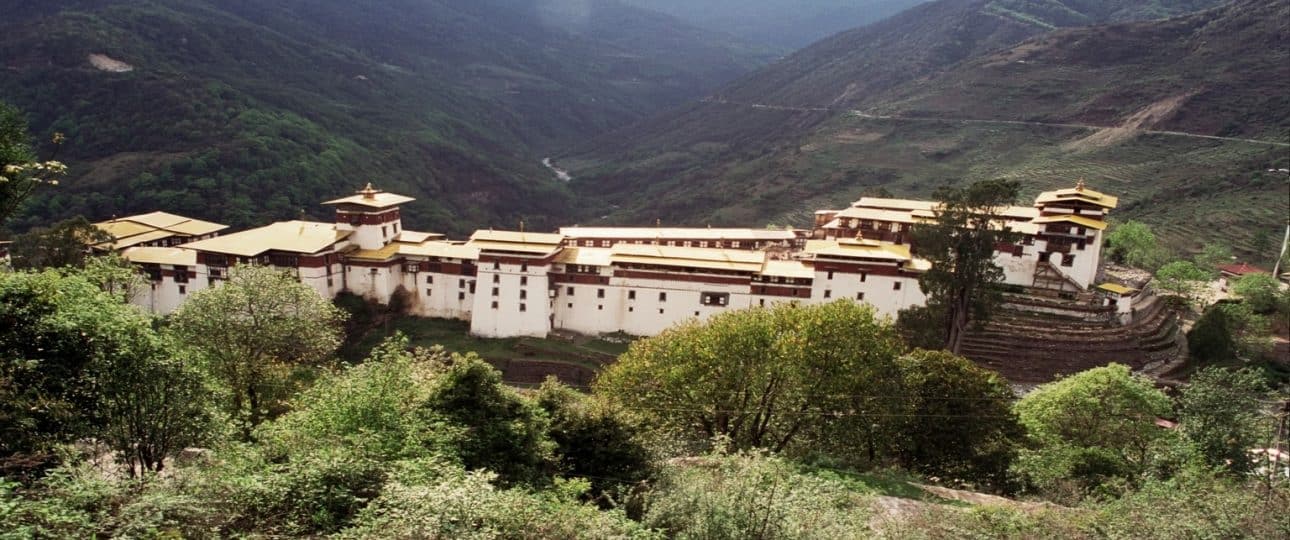
Planning Bhutan in May? May sits at the end of spring and just before the summer rains build up. It can be a very good month for first-time visitors who want green valleys, spring flowers, comfortable daytime temperatures in the west, and a quieter feel than peak festival weeks.
This guide focuses on the questions travellers usually need answered before booking: what the weather feels like (early vs late May), where May works best by region, visa and daily fee basics, what to pack, and a realistic 6-day itinerary.
Quick take: If you want clear mountain views every day, April or autumn is usually easier. If you want spring colour, fewer crowds, and flexible sightseeing days with occasional showers, May can be a smart choice.
Also helpful: if you are comparing months, see our seasonal overview here: best time to travel to Bhutan. For nearby months, compare Bhutan in April vs Bhutan in June.
Bhutan in May: Who It’s Best For
- Great fit: first-time visitors, photographers who like spring greens and flowers, families who prefer moderate days, culture-focused travellers, and short-hike travellers.
- Think twice: travellers who need long, guaranteed clear horizons daily, or those planning very high and remote treks where weather buffers matter.
- Good to know: late May can feel more humid, and short afternoon showers become more common as the season moves toward summer.
Top Highlights of Visiting Bhutan in May
- Spring colour: rhododendrons and wildflowers in forested slopes and passes (best in cooler mid-altitudes).
- Tiger’s Nest (Paro Taktsang): comfortable hiking weather for most visitors.
- Capital sightseeing: Thimphu’s main cultural stops (Memorial Chorten, Buddha Dordenma, local craft areas).
- Valley drives: Dochula Pass and the 108 chortens when skies open up.
- Quiet nature time: Phobjikha / Gangtey for open valley walks and forest edges.
- Pre-monsoon trekking window: select routes can still work well with planning and flexibility (example: Druk Path Trek for strong hikers).
- Culture + local life: markets, dzongs, monastery visits, and village walks without peak-season pressure.
If you want help matching May weather to the right route and pace, share your dates and travel style below. We’ll reply with a practical plan (no pressure).
Want more information? Send us your query, and our experts will get back to you within 24 hrs.
What’s the Weather Like in Bhutan in May?

Bhutan’s May weather depends mainly on altitude and how far south you travel. Western valleys such as Paro and Thimphu often feel mild in the daytime, while lower southern areas near the border can be much warmer and more humid. May is also a transition month: late May usually brings more cloud build-up and a higher chance of short showers.
What changes from early May to late May?
- Early May: more stable mornings, clearer mountain views on good days, comfortable walking temperatures in western valleys.
- Late May: humidity increases, clouds form faster in the afternoon, and short showers become more common.
Typical May climate snapshot (simple + useful)
The table below is designed for quick planning. It focuses on what travellers feel: daytime warmth, night chill, and rain likelihood. (Exact conditions vary year to year.)
| Area | What it feels like in May | Rain pattern | Planning note |
|---|---|---|---|
| Paro / Thimphu (west, higher valleys) | Mild days, cooler evenings; good for sightseeing and hikes | Showers often arrive later in the day | Start outdoor plans early; keep a light rain layer |
| Punakha / Wangdue (lower valleys) | Warmer days; nights usually comfortable | More humidity than Thimphu/Paro | Choose breathable clothing; plan shade breaks |
| Southern belt (border-side towns) | Hotter and more humid | Higher rainfall chance | May is better for short transit stops than long walks |
| High passes / trekking routes | Cool to cold at night; weather can change quickly | Clouds can reduce views | Add buffer days; bring warm layers for camp |
Reference point: Past weather averages for Thimphu suggest May is warmer, with cooler nights and a higher chance of rain as summer gets closer. Source: WMO World Weather Information Service (Thimphu).
If you want to align your dates with the most stable weather, compare April and June as well.
Visa, Daily Fees (SDF) & Entry Rules (What to Check Before Booking)
Bhutan’s entry rules and fees can change, so confirm close to booking. As a baseline, Bhutan’s official tourism site states that most international visitors pay a Sustainable Development Fee (SDF) of US$100 per day (per adult) as part of the visa process, plus a non-refundable visa application fee of US$40. See: Bhutan Tourism (official): Visa & SDF.
Note: some visitor categories (for example, regional visitors and children) can have different rates or concessions, so check the official page for your passport type and age group before you commit to flights.
- Apply online: you can apply directly or through a tour operator/hotel depending on how you travel.
- Guiding requirement: rules vary by area and itinerary; if you plan to go beyond the main hubs, a guide is often needed for logistics and access.
- Documents: keep your passport valid well beyond your travel dates and carry travel insurance details.
Practical May tip: because late May can bring weather delays, it’s wise to build in 1 flexible day if you have fixed international flights.
Where to Stay in Bhutan in May
In May, most travellers stay in western and central Bhutan (Paro, Thimphu, Punakha, Gangtey/Phobjikha) and choose a mix of comfortable hotels and occasional local-style stays.
What most visitors choose
- Standard hotels (often 3-star range): reliable basics, private bathrooms, and easier logistics in Paro/Thimphu/Punakha.
- Higher-end hotels (4 to 5 star): most options are concentrated in the west and central valleys.
- Farm stays / homestays: best for travellers who value local life and simple routines over hotel comforts. Hot water may be limited in some rural homes, so ask in advance.
May-specific note: if you are sensitive to humidity, choose accommodations with good ventilation, especially in lower valleys.
What to Eat in Bhutan in May
Bhutanese food is usually simple, warming, and chilli-forward. Most meals include rice with vegetable or meat dishes, often made with local ingredients.
Common dishes to try (mild-to-hot varies)
- Ema Datshi: chilli and cheese (often the first dish visitors hear about).
- Momos: steamed dumplings (popular across the Himalaya region).
- Red rice + seasonal vegetables: a typical everyday meal base.
If you don’t handle spice well
- Ask for less chilli early (before cooking starts).
- Keep simple backup foods in mind (eggs, soups, rice, vegetables).
- If you have allergies or dietary restrictions, tell your guide/hotel clearly in writing.
Traditional drinks include suja (butter tea) and local spirits such as ara (availability varies by place and setting).
Best Places to Explore in Bhutan in May

Thimphu
Thimphu is Bhutan’s capital and a practical May base because days are often comfortable for walking and short drives, while evenings can still feel cool. It mixes cultural sites with everyday city life, so it works well if you want temples, museums, and local markets in one place.
For a focused list of the country’s core highlights, see: top must-see places in Bhutan.
The top sightseeing places in Thimphu are Buddha Dordenma, Memorial Chorten. Dechencholing Palace, Clock tower square, etc. Other tourist spots include Dzongs such as Tashichho and Simtokha. Monasteries such as Dechen Phodrang, Tango and Cheri.
Thimphu also has cafes, small bars, and restaurants if you want a relaxed evening after sightseeing.
Paro
Paro is the main entry point for most visitors and one of the best May locations for a balanced trip: valley walks, heritage sites, and the Tiger’s Nest hike. Because weather can shift in the afternoon, starting hikes early in the day often improves comfort and views.
Paro is also a historic town and is easy to explore on foot. A slow walk through the town and nearby villages gives you a feel for daily life between sightseeing stops.
Punakha
Punakha sits lower than Thimphu and often feels warmer in May. It’s a strong choice if you want a different climate zone, riverside scenery, and a relaxed pace between cultural stops. May can still work for rafting when conditions are suitable, but plans should stay flexible.
The Himalayan town hosts masked dances with traditional music during Punakha Tsechu, a religious festival of Bhutan.
Bumthang

Bumthang is a set of high valleys with a slower feel and strong spiritual history. In May, it can be cooler than the lower valleys and is a good add-on if you want quieter monasteries and countryside time. Travel time is longer, so it suits travellers with more than a week.
Jakar is the main town of Bumthang and is famous for honey, cheese, apples, and apricots.
Bumthang valley has a spiritual significance. It is strongly associated with myths and legends. There are the oldest Buddhist temples and monasteries here.
Wangdue Phodrang
Wangduephodrang is often used as a gateway to Punakha and Gangtey/Phobjikha. It’s useful in May if you want to break up drives and add valley walks, short forest trails, and local markets without rushing.
Another worthy attraction here is the Wangdue Phodrang Dzong. Here, you can enjoy Radak Neykhang, Archery ground, vegetable market, Army training center, Dzong gate, and 8 Chortens.
Things to Do in Bhutan in May
May is best for a mix of culture and nature with a flexible daily rhythm: clear mornings for viewpoints and hikes, and indoor cultural stops later if clouds or showers arrive.
Bird Watching
In May, warmer days can make birds more active, especially in the mornings. You may see colourful species, but sightings depend on the place, time of day, and luck.
Bhutan has a wide range of habitats, from subtropical valleys to high forests, and it is known for strong bird diversity. On a good day you may spot cuckoos, swifts, bee-eaters, flycatchers, and other seasonal visitors.
Good birding areas include Phobjikha Valley, Bomdeling, Bumthang, Punakha, and forest edges around Thimphu. What you see changes by season, weather, and elevation.
Note: bring binoculars if you have them, and keep expectations realistic.
Visit Jigme Dorji National Park
Jigme Dorji National Park is one of Bhutan’s largest protected areas. May can work well for nature-focused travel, especially if you keep plans flexible and understand that wildlife sightings are never guaranteed.
The park covers a large area across districts including Gasa, Thimphu, Paro, Punakha, and Wangdue Phodrang.
What makes Jigme Dorji interesting is the mix of protected landscapes and cultural sites within the wider area.
The park is recorded as habitat for many mammals, including some rare species, though sightings are not guaranteed. Records include species such as Himalayan black bear, black musk deer, red panda, and dhole.
The area is also known for species such as sambar, serow, barking deer, marmot, goral, pika, and a wide range of birdlife.
Bhutan’s national symbols include the takin, blue poppy, raven, and cypress. You won’t necessarily see them all in one place, but the park’s landscapes are a good example of the country’s range.
If you have extra time and want quieter nature, this area can be a good add-on to a west–central itinerary in May.
Trekking

May can be a good trekking month for many routes, especially earlier in the month, but it rewards travellers who stay flexible. Plan early starts, expect occasional afternoon cloud, and add buffer time if your route involves high passes.
If you want a proven option for strong hikers, see our Druk Path Trek page for route style and pacing.
Mountain Biking
If you enjoy bike rides, then you can take a tour on bikes to some places in May. The favorable temperature allows touring to various places in cycles or bikes.
Mountain biking is an adventurous eco-friendly sport. And Bhutan has outstanding trails with vivid landscapes for every biking lovers.
Being a culturally and naturally rich place, you can paddle through the rugged terrain. Also, climb and descent through many villages while taking a peek into the local lifestyle.
You can enjoy thrilling activities at Paro, Phobjikha Valley, Punakha, Tongsa, Wangthang La and so on.
However, it is not just the uneven roads you can embark on traversing the beautiful backdrops of Bhutan. In fact, through this expedition, one can also witness the Buddhist culture and visit the monasteries that pass the tracks.
Mountain biking is a good option if you want active travel and don’t mind rough sections of road, especially outside the main towns.
Natural Hot Spring
Locally known as tshachu, hot springs are part of Bhutan’s traditional wellness culture. Some locals visit them for rest and comfort, especially after long work weeks or travel days.
Hot springs contain naturally warm mineral water. Many visitors simply enjoy them as a relaxing experience, but it’s best to treat any health-related benefits as personal belief rather than a guarantee.
You can find these hot springs in places such as Dur Tshachu located in Bumthang, Gelephu located in Tshachu of southern Bhutan and Duenmang Tshachu located on the riverside of Mangde Chu.
Amongst them all, Gasa Tshachu is a popular hot spring in Bhutan where one needs to do a ten-hour trek from Punakha.
Visiting a hot spring is a calm, local-style experience if you have extra time and don’t mind simple facilities.
Packing for Bhutan in May
Pack for layers. In May you can have warm sun in the day and cooler air at night, especially in higher valleys. Late May also increases the chance of short showers.
Clothing (simple, workable set)
- 2 to 3 breathable tops for daytime
- 1 warm mid-layer (fleece or light sweater)
- 1 light rain jacket or shell (more useful than an umbrella on walks)
- Long trousers for temples/monasteries (and sun/insects in the countryside)
- Sleepwear that feels warm enough for cool nights
Footwear
- Comfortable walking shoes with grip (important on stone steps and forest trails)
- Optional: a light sandal for hotel use
Small essentials
- Sunscreen + sunglasses (high-altitude sun can feel strong)
- Reusable water bottle
- Basic first-aid and personal medications
- Insect repellent (more relevant later in May and in warmer valleys)
Some Useful Tips for Bhutan Tour in May
- Keep your passport valid well beyond your travel dates, and store digital copies separately.
- Dress respectfully in monasteries and dzongs (shoulders and knees covered is a safe default).
- Plan outdoor viewpoints and longer walks for the morning; afternoons are more likely to cloud over in May.
- Ask before photographing people, religious spaces, or ceremonies.
- Carry some cash for small purchases; card use varies by town and business.
- If you are sensitive to motion or altitude changes, pace your first two days gently and hydrate well.
- Keep 1 flexible day if your schedule is tight, especially late May.
Sample 6-Day Itinerary for Bhutan in May
- Day 1: Arrive in Paro, visit Paro Dzong and explore the town.
- Day 2: Hike to Tiger’s Nest Monastery, enjoy the springtime views.
- Day 3: Drive to Thimphu, visit Buddha Dordenma and Memorial Chorten.
- Day 4: Travel to Punakha, explore Punakha Dzong and river rafting.
- Day 5: Return to Paro via Dochula Pass.
- Day 6: Depart Paro.
This itinerary balances culture, nature, and adventure, perfect for Bhutan travel in May!
Easy May add-ons (choose based on interests)
- More nature without hard trekking: add Gangtey/Phobjikha for valley walks and forest edges.
- More culture: add an extra Thimphu day for museums, crafts, and markets.
- Shorter trip: if you have limited leave, a compact plan like our 5 days Bhutan tour style route can work well in May.
If you are comparing Bhutan-only vs Nepal + Bhutan, this itinerary style can help with planning time and border logistics: Nepal and Bhutan tour overview.
Festivals to Watch for (Late April to Early May)
Festival dates follow the Bhutanese calendar and can shift year to year, so use them as a planning guide and confirm closer to travel. A good reference is the Association of Bhutanese Tour Operators (ABTO) tentative calendar: ABTO tentative festival dates (PDF).
- Ura Yakchoe (Bumthang): often falls across late April into early May (the ABTO calendar lists it from 28 April to 2 May in 2026 as a planning reference).
- Other spring events: some events may be marked “TBC” in early schedules, so confirmation matters.
If festivals are a main goal, it can be worth choosing dates around them and booking earlier, since accommodation in smaller valleys is limited.
Bhutan in May: Practical Questions Travellers Ask
Here are the questions we hear most often from travellers when they are deciding whether May is the right month for their trip.
Is May a good time to visit Bhutan for first-time travellers?
Yes, for many people. May works well if you want green landscapes, spring flowers, and a quieter feel than peak seasons. You just need to accept that weather is more changeable than in April or autumn.
Does it rain a lot in Bhutan in May?
Rain usually comes as short showers, often later in the day. Early May is generally drier than late May. It is rare for rain to last all day, but cloud cover becomes more common toward the end of the month.
Will I still get good mountain views in May?
Some days yes, some days no. Clear views are more likely in the mornings and in early May. Late May has more cloud, especially in the afternoons.
Is May suitable for trekking in Bhutan?
Yes for shorter and moderate treks, especially earlier in the month. High and remote treks need more flexibility because weather can change quickly.
Is Bhutan crowded in May?
No. May is quieter than festival-heavy months and autumn. You will see other travellers in Paro and Thimphu, but most places still feel calm.
Do I need to book far in advance for May?
Not usually. Unless you are travelling around a specific festival or want luxury hotels, May does not require very early booking.
Conclusion
Bhutan in May works best for travellers who want spring colour, comfortable sightseeing days in the western valleys, and a calmer feel before the wetter summer period. The key is to plan with May’s rhythm: use mornings for viewpoints and hikes, keep afternoons flexible, and pack light layers plus a rain shell.
If you want help choosing a route that matches May conditions and your pace, you can contact us with your dates, group size, and comfort level. We’ll suggest a realistic plan and the right month comparison if May is not ideal for your priorities.
Have you visited Bhutan in May? Share your favorite experience in the comments below!
Want more information? Send us your query, and our experts will get back to you within 24 hrs.

Madhav Prasad is a seasoned trekking and tourism expert with over two decades of experience in the field. Starting his career in 2001 as a porter, Madhav quickly advanced to the role of trekking guide, gaining invaluable hands-on experience in Nepal’s diverse trekking routes. In 2009, after eight years of dedication to the industry, he co-founded Mosaic Adventure, a leading trekking and tour company known for its commitment to safety, sustainability and personalized service.
Madhav has personally trekked to nearly every major trekking destination in Nepal, including Everest Base Camp, Annapurna Base Camp, the Annapurna Circuit, Poon Hill, Jomsom Muktinath, the Indigenous Peoples Trail, Langtang Valley and Mardi Himal, among others. His experience extends beyond Nepal, as he has also successfully summited Mount Kilimanjaro, Africa’s highest peak.
In addition to his extensive trekking credentials, Madhav is well traveled globally, having explored countries such as Australia, the USA, the UK, France, Japan, China, and many others. His global exposure enhances his ability to understand and cater to the diverse needs of international trekkers.
Madhav is the primary point of contact for many clients at Mosaic Adventure, personally addressing inquiries and helping plan treks with a meticulous and personalized approach. His deep knowledge of Nepal’s trekking routes, combined with his global travel experience, ensures that every trek is well planned, safe and unforgettable.
