
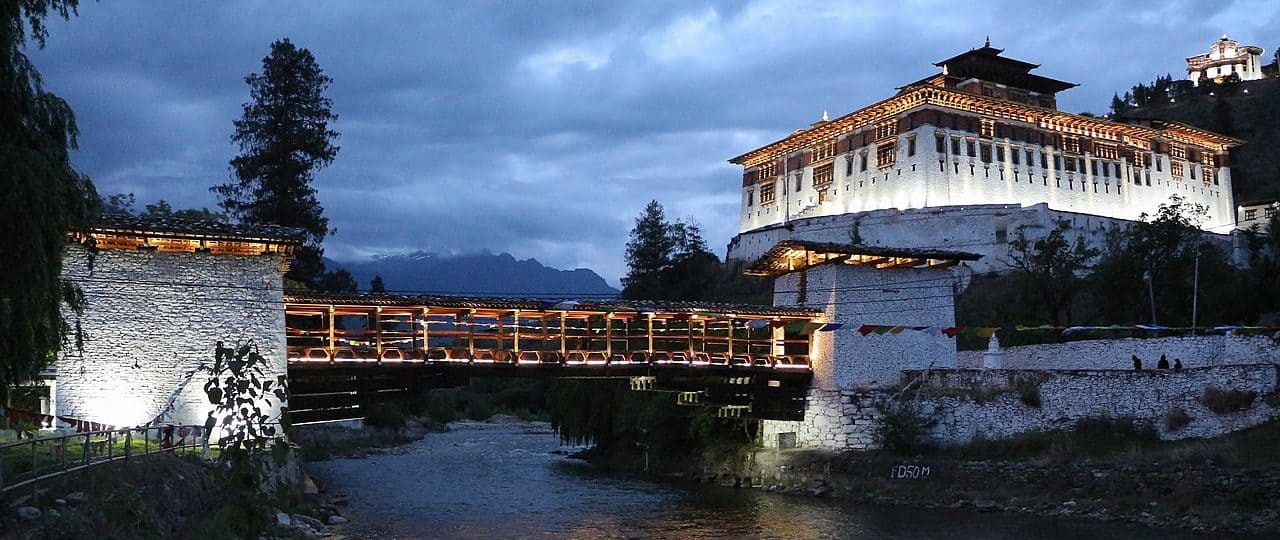
September is when Bhutan begins to shift from the summer monsoon toward autumn. Days are generally warmer, nights are cooler, and mountain views start to improve, especially later in the month. Conditions vary by region. Southern areas remain warmer and wetter, and short, heavy showers can still occur in early September.
This guide explains what visiting Bhutan in September is like, including how the weather affects travel, suitable activities, festival timing, packing considerations, and current mandatory fees.
September sits between the monsoon months and the main autumn peak, often offering a balance of green landscapes and improving visibility. If you are comparing seasons, you can also see our month-by-month overview of the best time to travel to Bhutan.
Summary: September is well suited to cultural sightseeing, photography, day hikes like Tiger’s Nest, and shorter treks once trails begin to dry. It may be less suitable if you need completely dry conditions or a very tight road schedule, particularly in southern Bhutan.
Bhutan Weather in September

Monsoon influence usually weakens as the month goes on, and visibility often improves in the second half of September. Even then, Bhutan’s weather changes fast with altitude and valley location.
General pattern: higher valleys like Thimphu and Paro are cooler and can feel crisp at night, while lower valleys like Punakha are warmer. The southern border towns are hottest and most humid, and they can still get heavier rain.
Practical note: if your plan depends on long drives, build in buffer time. Short weather-related road delays can happen at the end of the monsoon season, especially on southern routes.
If you are comparing shoulder months around the monsoon, you can also read Bhutan in August and Bhutan in October.
Here’s how September usually feels in the main regions travellers visit:
On mobile: swipe left/right to see the full table.
| Area (typical route) | Daytime feel | Nighttime feel | Rain risk in September | What this means for plans |
|---|---|---|---|---|
| Paro & Thimphu (higher valleys) | Mild to warm in the sun | Cool, especially after rain | Moderate early month, lower later | Good for sightseeing and day hikes; pack layers for evenings. |
| Punakha & Wangdue (lower valleys) | Warm | Mild | Moderate | Comfortable for temples and short walks; carry light rain protection. |
| Bumthang (central highlands) | Mild | Cool to cold | Lower than the south, but changeable | Great for culture and nature; nights can feel cold in simple lodges. |
| Phuentsholing / Gelephu (southern lowlands) | Hot and humid | Warm | Higher | Expect heavier showers; keep road days flexible and rain gear accessible. |
Note: weather varies a lot by altitude and valley shape in Bhutan. For planning, ranges and regional patterns are usually more reliable than a single “national average”.
Thimphu & Paro weather in September
Thimphu and Paro sit in higher valleys, so September feels comfortable in the daytime and noticeably cooler in the evenings. Early September can still bring short showers, but the weather often becomes more stable as the month goes on.
Planning tip: bring one warm layer for nights and early mornings, plus a light rain layer you can carry during the day.
Punakha weather in September
Punakha is lower and usually warmer than Paro and Thimphu. September days can feel hot in the sun, with mild nights. After rain, the valley stays lush and green, and short walks are often pleasant if you start early.
Planning tip: lighter clothing works well here, but keep rain protection handy because showers can be local and sudden.
Phuentsholing & Gelephu weather in September
In the southern lowlands near the border, September is typically hot and humid, and rainfall risk is higher than in the western and central valleys. This is the part of Bhutan where the “tail end of monsoon” effect is felt the most.
Planning tip: expect sticky afternoons and occasional heavy showers. Keep road-day plans flexible and pack breathable clothing and quick-dry rain gear.
Note reminder: Bhutan’s weather changes quickly with altitude and terrain. For trip planning, focus on regional patterns and keep buffer time for driving days, especially early in the month.
To understand where September sits in the broader season, it helps to compare it with the months on either side.
How September compares with August and October
Many travellers compare September with the months on either side. The table below shows how August, September, and October usually differ in terms of weather, crowds, and planning considerations.
On mobile: swipe left/right to see the full table.
| Month | Rain pattern | Mountain views | Temperatures | Crowds | Best suited for |
|---|---|---|---|---|---|
| August | Higher rainfall, frequent showers | Often cloudy, occasional clear breaks | Warm; humid in lowlands | Lower | Green landscapes, quieter travel, flexible itineraries |
| September | Decreasing rain, especially later in the month | Visibility improves as the month goes on | Comfortable days; cool nights in higher valleys | Moderate | Balanced conditions for sightseeing, hikes, and shorter treks |
| October | Mostly dry | Usually clearest mountain views | Cooler mornings and evenings | Higher (peak season) | Photography, festivals, and longer treks |
August is generally greener and quieter, September more balanced, and October clearer but busier.
Highlights of Exploring Bhutan in September

If this is your first visit, our guide to must-see places in Bhutan helps you prioritise what to keep and what to skip.
Clean Air and Blue Skies
September often brings clearer skies and cleaner air compared to the summer months, particularly in western and central Bhutan. Conditions are generally comfortable for walking, sightseeing, and outdoor activities during the day.
Skies are often clearer than in summer, with cooler air in the mornings and evenings. Daytime temperatures are usually comfortable for light clothing.
A light jacket is still useful in the evenings, especially in higher valleys.
Festivals in September
September can include major cultural events, but the exact dates change each year because they follow the Bhutanese lunar calendar. If festivals are important for your trip, treat dates you see online as “tentative” until they are confirmed closer to travel.
In many years, late September to early October includes important events in western Bhutan, including large public celebrations in and around Thimphu and Punakha/Wangdue. Some festival calendars list events like Thimphu Drubchen and Wangdue Tshechu around this period. Confirm the dates when you finalise flights and hotels, because availability in Paro and Thimphu can tighten quickly around festival weeks.
Black-necked cranes in Phobjikha (what September can and cannot offer)
Phobjikha Valley is one of Bhutan’s best nature stops, but it is important to time it correctly. The black-necked cranes are winter visitors and typically arrive in late October and stay into winter.
If you travel in September, Phobjikha can still be worth it for quiet valley walks, wetlands, and the Gangtey area’s scenery. If cranes are your main reason, consider late October onwards, or pair September with another season.
Hiking and Trekking
September can be a good month for hiking and shorter treks, especially later in the month, when trails are drier.
Zuri Dzong trek in Paro valley is a spot of tranquility, serenity and outstanding backdrops. There is a belief that Lord Buddha meditated for years in the cave of Dzong.
Trashiyangtse is another trek which offers captivating views of Bhutan’s countryside. Several other treks that you can take are the Jhomolhari Trek, Druk Path trek and Snowman Trek, Phobjikha Trek, etc.
Trekking in Bhutan often combines walking with close contact with local culture and rural landscapes.
Tiger’s Nest Monastery
Tiger’s Nest Monastery is one of Bhutan’s most visited sites and is often included in first-time itineraries. In September, earlier starts usually give you the best chance of clearer views over the Paro Valley, as cloud and showers are more likely later in the day.
Visit the Punakha Dzong
Blessed with many Dzongs, the Punakha Dzong is a must see in Bhutan. It is the most beautiful dzong in the country. The monument offers an eye-catching sight of the dazzling aura of the white walls on a clear sunny day in September.
Ornate wood carvings and intricate paintings add to the charm of this remarkable architecture.
Apart from the structural beauty, it also holds great historical and traditional importance.
A Thrill of Driving to the Highest Pass in Bhutan
Bhutan is the land of mountain passes. In September, you can often drive to Chele La when the views are clearer than during the peak monsoon months.
During this time you can drive through the dense spruce and larch forests to a vantage point. From there you can see the majestic Jhumohari, the most sacred peak of Bhutan.
Want more information? Send us your query, and our experts will get back to you within 24 hrs.
Accommodation in Bhutan in September

Accommodation standards in Bhutan vary by region and budget, from comfortable hotels in Paro and Thimphu to simpler lodges and homestays in rural areas.
In September, availability can tighten in Paro and Thimphu, especially around festival periods. Booking in advance helps you get the hotel style you want and avoids last-minute compromises.
In that case, you can consider homestay where you will receive the utmost warmth and comfort. But take note that while some families have modern facilities, not all families have electricity or a hot shower. They will, however, provide hot water by boiling using the firewood.
Overall, if you are planning to visit Bhutan in September and want to get accommodation of your choice, pre-booking is a must.
Food in Bhutan in September

Dairy foods, in particular, butter and cheese from Yaks and Cows are very popular.
Meat dishes can include chicken, pork, beef, goat, mutton and yak, and sometimes fish. These are often served in stews with vegetables, alongside white rice or red rice.
If there is one thing typical of Bhutanese cuisine, it is that Bhutanese love their food spicy. Chilies are not a seasoning but a true and valuable vegetable. Which is why it comes to no surprise that the national dish of Bhutan is Ema- Datsi consisting of chili and cheese.
However, if you don’t like it so spicy, do not worry. Many hotel kitchens can make dishes less spicy if you ask. You can also choose from Continental to Chinese, and from Bhutanese to Tibetan and Indian cuisine.
Most hotels serve meals buffet-style. International fast-food chains are not common in Bhutan, even in Thimphu.
Cost of a Bhutan trip in September
Bhutan’s costs are easier to understand if you split them into two parts: mandatory government fees and your trip services (hotels, transport, guide, itinerary style).
1) Mandatory fees most travellers must pay
As part of the visa process, most visitors pay a Sustainable Development Fee (SDF) plus a visa application fee. The official tourism site states the SDF is currently US$100 per person per night (with different rules for some travellers), and the visa application fee is US$40.
2) Trip services (varies by comfort and route)
Your total trip cost then depends on hotel category, internal transport (more distance costs more), guide support, and whether you add a trek (which needs camping logistics and staff). September itself does not automatically mean higher costs.
Practical budgeting tip: decide your route first (west only vs adding central Bhutan), then choose hotel comfort. Those two choices shape the price more than the month.
Reference: SDF and visa fee details are published on Bhutan’s official tourism channels. Always re-check before you pay, as policies can change.
How you experience these highlights depends largely on how much time you have and how flexible your schedule is.
September itineraries that work well
5 days (first-time, west Bhutan)
- Paro: acclimatisation, local museums/monasteries
- Tiger’s Nest day hike: start early for clearer skies
- Thimphu: dzong areas, markets, cultural stops
- Day trip options: Haa Valley or a slower Paro day for weather flexibility
If you prefer a short, straightforward plan, see our 5 days Bhutan tour.
7 to 9 days (west + Punakha)
- Paro and Thimphu as above
- Dochula Pass: choose a clear morning if possible
- Punakha: dzong visit, short valley walks, relaxed pace
10 to 14 days (add a short trek)
Late September can be a good window for a short trek if trails have dried out. A classic option is the Druk Path Trek, which suits trekkers who want mountain lakes and passes without committing to a very long expedition.
Additional Information for Bhutan Tour in September

Traveling within Bhutan
Bhutan does not have a railway network, so the only way to explore the country is by road or air.
By Bus: There are public buses available in Bhutan. But they can be uncomfortable with the crowd. Moreover, the winding roads of Bhutan make them even more painful.
By Taxi: You will find taxis in Phuentsholing, Paro, Thimphu, and Jakar. Almost all taxis have the meter but most drivers hardly use them. So we recommend you negotiate the rate before you set off to avoid a hassle.
By Car: Hiring a car is the best and most comfortable way to explore Bhutan. The local drivers know the road well and you do not have to take the trouble of driving.
By Air: Bhutan has air services only to Paro, Bumthang, and Gelephu. The Royal Bhutan helicopter service operates charter flights and sightseeing from its base at Paro.
Communication and Connectivity in Bhutan
Bhutan’s telecommunication system is well organized. If you want to carry your own mobile phone, you will need to check with your home service provider. And verify the charges of incoming and outgoing calls.
Alternatively, you can also buy a local sim card (B-Mobile/ Tashi Cell) and use it. For this, you will need an unlocked GSM phone.
Tourists can only buy SIM cards from authorized dealers after filling out a lot of paperwork. And supplying a passport-size photograph. Once they check your passport and approve your paperwork, you can purchase a SIM card in-store.
Money in Bhutan
The official currency of Bhutan is Ngultrum ( NU), which is equivalent to the Indian currency i.e INR 1 = Nu1.
Bhutan widely accepts the notes 5, 10, 20, 50, and 100 of Indian denominations. However, notes of 500 and 1000 are not valid in the country.
ATMs are available only in the major towns and travelers can withdraw the local currency only in small amount.
However, you can easily withdraw Travelers Cheque and exchange in Bhutanese currency. As for Credit Cards, only big hotels and restaurant in larger towns accept it.
Visa formalities
Other than Indian, Bangladeshis and Maldivian nationals, all visitors to Bhutan require a visa. Thimphu issues all the visas and only to tourists who book with a local licensed tour operator directly or through a foreign travel agent.
The travel agent will submit your tourist visa applications upon booking. Then they will send your visa through an email 10 days prior to your arrival to Bhutan.
The cost of Visa is USD 40 per person. And at your point of entry, you will receive a stamp in your passport.
How September weather affects your daily plan
In September, the main difference is often timing. Mornings can be clearer, with clouds and showers more likely later in the day. For hikes like Tiger’s Nest, start early. For long drives, keep a buffer so a short delay does not ruin the rest of the day.
Travel Advise for Bhutan in September
Electricity
The line voltage is 220 volt. And the power cuts are rare.
Photography
Bhutan is a great place to take amazing photographs. All credits to the spectacular landscape, unique architecture of the dzongs, and monasteries.
However, inside the temples and monasteries, it is not permitted to take photographs. Hence, kindly respect that and follow the advice of your guide.
Clothing for visits to Dzong and Monasteries
It is very important to dress oneself modestly for a visit to a religious place. Avoid wearing short pant and tank tops. You can wear long trousers or long skirts and a jumper with sleeves instead.
And in case you enter a temple, please remove your shoes.
Ban on smoking
Bhutan is the first country in the world to put a ban on tobacco. It is not possible to purchase cigarettes, so you have to bring your own from your home country. That too, in small quantity.
Do not forget to check the current regulation of the customs duty. Smoking is not permitted in public places esp near religious places.
Hence ask your guide where you can light up when you want to smoke.
Health preparation
Before travel, speak with a qualified clinician or travel health provider in your home country. Ask what is appropriate for your age, medical history, and route in Bhutan, and make sure your routine vaccines are up to date. If you will trek or spend time at higher altitude, discuss altitude basics and any personal risk factors.
Safe drinking water
As tap water is not safe to drink in Bhutan, only drink bottled mineral water which is readily available in hotels, shops, and restaurants. You can also carry water purifying tablets.
Safe eating
The biggest problem most travelers have with Bhutanese food is the liberal use of chili in almost every single dish. For those with a sensitive palate, try and ask for food without chili and if you have no luck there, stick to rice and momos.
Also, it is good practice not to eat salad during your trip as it may have come into contact with unclean water.
Tipping in Bhutan
Tipping is not compulsory in Bhutan. However, the majority of workers, especially those in the tourism industry such as guides, only have work for around half or quarter of the year. And therefore tips are incredibly valuable for making up their income.
USD$15 per day for tour guides and USD$10 per day for the driver can be a suitable amount to leave as a tip from a group of two. As of taxi fare, you can round up the fare and for hotel porter, you can tip USD 1 per bag.
Conclusion
September can be a great month for Bhutan, as long as you plan with the tail end of the monsoon in mind. It often brings improving visibility, comfortable temperatures in higher valleys, and greener landscapes left by the monsoon, while some areas may still experience short periods of rain, especially early in the month.
For travellers interested in culture, photography, and steady-paced sightseeing, September can work well. Those planning longer treks, tight road schedules, or travel in southern Bhutan may need extra flexibility or may prefer to look at late October instead.
The key to a good September trip is realistic planning: allowing buffer time, choosing routes that match the season, and confirming festival dates and accommodation early where demand is higher.
If you have questions about routes, timing, or how September compares with other months, you can contact us for practical guidance based on current conditions.
Want more information? Send us your query, and our experts will get back to you within 24 hrs.

Madhav Prasad is a seasoned trekking and tourism expert with over two decades of experience in the field. Starting his career in 2001 as a porter, Madhav quickly advanced to the role of trekking guide, gaining invaluable hands-on experience in Nepal’s diverse trekking routes. In 2009, after eight years of dedication to the industry, he co-founded Mosaic Adventure, a leading trekking and tour company known for its commitment to safety, sustainability and personalized service.
Madhav has personally trekked to nearly every major trekking destination in Nepal, including Everest Base Camp, Annapurna Base Camp, the Annapurna Circuit, Poon Hill, Jomsom Muktinath, the Indigenous Peoples Trail, Langtang Valley and Mardi Himal, among others. His experience extends beyond Nepal, as he has also successfully summited Mount Kilimanjaro, Africa’s highest peak.
In addition to his extensive trekking credentials, Madhav is well traveled globally, having explored countries such as Australia, the USA, the UK, France, Japan, China, and many others. His global exposure enhances his ability to understand and cater to the diverse needs of international trekkers.
Madhav is the primary point of contact for many clients at Mosaic Adventure, personally addressing inquiries and helping plan treks with a meticulous and personalized approach. His deep knowledge of Nepal’s trekking routes, combined with his global travel experience, ensures that every trek is well planned, safe and unforgettable.
