
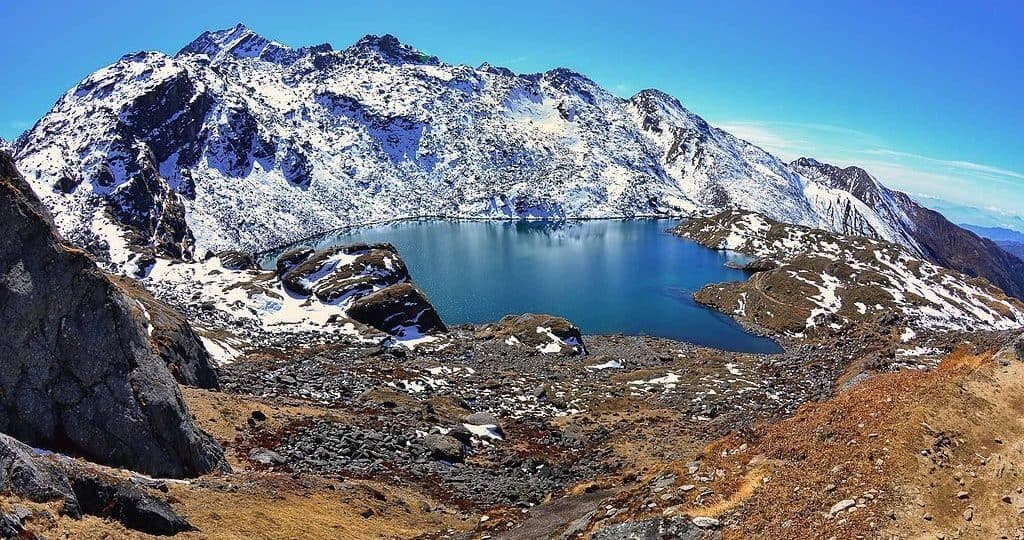
The Gosaikunda Trekking Route is the defined trail system that leads to the sacred alpine lakes of Gosaikunda in Langtang National Park. Trekkers can reach the lake through two main approaches: the Dhunche route and the Sundarijal route. Each follows a different elevation pattern, walking distance, and acclimatization profile.
This guide focuses specifically on the route of Gosaikunda trek, helping you understand trail structure, daily walking logic, safety considerations, and which route is best based on your time, fitness, and experience.
Why Choose the Gosaikunda Trek?
Gosaikunda Trek is one of Nepal’s most cherished trekking destinations, attracting both domestic and international adventurers. Known for its sacred lakes, thriving forests, and panoramic mountain views, it’s an ideal choice for those seeking a short yet rewarding Himalayan trek.

According to Nepal’s Department of Tourism, over 15,000 trekkers visit the Langtang region annually, with Gosaikunda being a top highlight due to its accessibility and cultural significance.
This trek is perfect for:
Time-constrained travelers: The trek can be completed in 5-7 days, making it ideal for those with limited time.
Nature lovers: Expect lush rhododendron forests, exotic wildlife, and jaw-dropping views of peaks like Ganesh Himal and Langtang Lirung.
Spiritual seekers: The sacred Gosaikunda Lake holds deep religious significance for Hindus and Buddhists, especially during the Janai Purnima festival, when thousands of pilgrims visit.
Where is Gosaikunda?
Gosaikunda is a cluster of alpine freshwater lakes located in Nepal’s Langtang National Park, Rasuwa District, at an elevation of 4,380 meters (14,370 feet). The main lake, Gosaikunda, is one of 108 lakes in the area, including Bhairav Kunda, Nagkunda, and Suryakunda. Fed by melting glaciers, the lake’s waters flow into the Trishuli River, but it remains frozen from October to June.

The area is steeped in mythology. According to Hindu legend, Lord Shiva created Gosaikunda by thrusting his trident (Trishul) into a mountain to extract water, soothing his throat after consuming poison during the churning of the cosmic ocean. This spiritual significance draws thousands of pilgrims annually, especially during the Janai Purnima festival in August.
Main Highlights of the Gosaikunda Trek
Stunning Landscapes: Marvel at snow-capped peaks like Ganesh Himal, Langtang Lirung, Manaslu, and Annapurna, set against vibrant pine and rhododendron forests.
Sacred Gosaikunda Lake: Revered by Hindus and Buddhists, this holy lake is believed to cleanse sins when you take a dip (though beware of the freezing water!).
Rich Biodiversity: Langtang National Park is home to rare wildlife, including red pandas, Himalayan tahr, and diverse bird species.
Cultural Engagement: Engage with the Tamang communities of Rasuwa, known for their unique traditions, pre-Buddhist practices, and warm hospitality.
Accessible Adventure: Just a 6-7 hour drive from Kathmandu, Gosaikunda is perfect for those seeking a Himalayan experience without venturing too far.
Gosaikunda Trek Itineraries
The Gosaikunda Trek can be approached via two primary routes: Dhunche and Sundarijal. Both offer unique experiences, with Dhunche being slightly shorter and Sundarijal offering a scenic start closer to Kathmandu.
Before looking at day-by-day details, here is a direct comparison of the two main Gosaikunda trekking routes.
Quick Comparison: Dhunche vs Sundarijal Route
| Feature | Dhunche Route | Sundarijal Route |
|---|---|---|
| Starting Point | Dhunche (drive from Kathmandu) | Sundarijal (1 hr from Kathmandu) |
| Typical Duration | 5 days | 6 to 7 days |
| Acclimatization Pattern | Faster ascent | Gradual altitude gain |
| Scenic Variation | Alpine forest and ridge views | Forest, villages, high pass crossing |
| Best For | Short holiday trekkers | Trekkers wanting gradual adaptation |

The comparison above outlines structural differences. The section below explains how to decide based on your situation.
How to Choose the Best Gosaikunda Trekking Route
Choosing the right Gosaikunda trekking route depends on your time, fitness level, and altitude experience.
Choose the Dhunche route if:
- You have only 5 days available
- You prefer a direct approach to the lake
- You are comfortable with quicker altitude gain
Choose the Sundarijal route if:
- You want gradual elevation gain
- You prefer a varied trail through villages and forest
- You want to cross Laurebina Pass for extended scenery
In our experience guiding this trek for many years, first-time high altitude trekkers often feel more comfortable approaching via Sundarijal due to better natural acclimatization progression.
Season also affects which route feels more comfortable. Here is how timing impacts the Gosaikunda route.
Best Time to Trek Gosaikunda
The ideal seasons for the Gosaikunda Trek are spring (March-May) and autumn (September-November), when the weather is clear, temperatures are moderate, and mountain views are spectacular. During spring, blooming rhododendrons add vibrant colors to the trail, while autumn offers crisp air and stable weather. Winter treks are possible but challenging due to snow and freezing temperatures, while the monsoon season (June-August) brings heavy rain and slippery trails.
Check the seasonal weather on the Gosaikunda route before your trip and pack layers accordingly.
Below, we’ve outlined detailed itineraries for both routes.
The Dhunche approach is the shorter and more direct route. Below is the standard walking structure.
Gosaikunda-Dhunche Route (5 Days)
Day 1: Drive from Kathmandu to Dhunche
Elevation: 2,090 meters (6,857 feet)
Travel Time: 6-7 hours by bus/jeep
An early morning drive from Kathmandu takes you to Dhunche, the district headquarters of Rasuwa. The journey winds through charming villages and offers glimpses of snow-capped Langtang Himal peaks. Upon arrival, settle into a local lodge and ensure your permits are ready, as checkpoints are common.
Carry a reusable water bottle and light snacks for the drive.
Day 2: Trek from Dhunche to Chandanwari
Elevation: 3,580 meters (11,745 feet)
Trekking Time: 4-5 hours
After breakfast, the trail climbs steadily from Dhunche toward Deurali and continues to Chandanwari, home to the Singompa Monastery and a famous cheese factory. Explore the monastery to learn about Tamang culture or visit the factory for a taste of local cheese.
Chandanwari has several simple teahouses that provide reliable food and overnight stays.
Day 3: Trek to Gosaikunda
Elevation: 4,380 meters (14,370 feet)
Trekking Time: 5-7 hours
This is the main ascent day on the Dhunche route. The trail climbs steadily above tree line toward Laurebina before reaching Gosaikunda at 4,380 meters. Because altitude increases rapidly on this route, walking slowly and maintaining hydration is essential.
Trekkers who feel symptoms of altitude discomfort should descend immediately. If you prefer a more gradual altitude profile, the Sundarijal route provides better acclimatization pacing.
On clear days, early mornings offer wide views of Langtang Lirung and surrounding ridgelines.
Day 4: Trek Back to Dhunche
Trekking Time: 6-7 hours
After breakfast, the trail descends back through Singompa toward Dhunche, enjoying views of pine and rhododendron forests and peaks like Ganesh Himal and Manaslu. The descent can be tough on the knees, so consider using trekking poles for balance. Stop for lunch at Singompa before continuing to Dhunche for the night.
Walk slowly on the descent to reduce knee strain.
Day 5: Return to Kathmandu
Travel Time: 6-7 hours by bus/jeep
After spending the night in Dhunche, you return to Kathmandu by road. Spend the rest of the day exploring the vibrant capital or relaxing after your trek.
For trekkers who prefer a longer approach, the alternative route begins from Sundarijal. The Sundarijal approach adds extra walking days and a more gradual altitude profile.
Gosaikunda-Sundarijal Route (7 Days)
Day 1: Sundarijal to Chisapani
Elevation: 2,167 meters (7,110 feet)
Trekking Time: 5 hours
From Kathmandu, a short drive leads to Sundarijal where the walking begins. Trek 2 hours to Mulkharka village for lunch, then climb through lush forests to Chisapani. This village offers stunning views of the Himalayan range and lush valleys.
Most lodges in Chisapani sit along the ridge and offer open views toward the Himalayas when the weather is clear.
Day 2: Chisapani to Tuksang
Elevation: 3,180 meters (10,433 feet)
Trekking Time: 6 hours
The route passes through forest and Tamang settlements as altitude gradually increases, with occasional views of distant ridgelines.
Overnight stay is usually in a locally managed lodge run by Tamang families.
Day 3: Tuksang to Ghopte
Elevation: 3,340 meters (10,958 feet)
Trekking Time: 6-7 hours
The route moves through mixed forest before reaching the small settlement of Ghopte. The trail gradually gains altitude, preparing you for the high-altitude days ahead. Ghopte’s serene setting is perfect for a restful night.
Maintain steady hydration as altitude increases.
Day 4: Ghopte to Gosaikunda
Elevation: 4,380 meters (14,370 feet)
Trekking Time: 6-7 hours
The trail climbs steadily toward Laurebina Pass (4,610 meters) before descending to Gosaikunda. From Laurebina Pass, the descent follows open ridgeline terrain toward the lake basin. If you’re up for it, take a dip in the holy lake, but be cautious of the cold.
Day 5: Rest Day at Gosaikunda
This day is kept for acclimatization and short walks around the lake. Wander among the 108 lakes, relax by the main lake, or soak in the spiritual ambiance. This rest day helps prevent altitude sickness and lets you fully appreciate the scenery.
Day 6: Trek Back to Dhunche
Elevation: 1,764 meters (5,787 feet)
Trekking Time: 6 hours
After breakfast, descend gradually back toward Dhunche through scenic trails and Tamang villages. The descent is easier but can be tiring, so take breaks as needed. Celebrate your trek’s success with a relaxing evening in Dhunche.
A warm meal at the lodge helps recovery after a long descent.
Day 7: Return to Kathmandu
Travel Time: 6-7 hours by bus/jeep
A morning drive brings you back to Kathmandu, concluding your Gosaikunda adventure. Spend the day exploring Kathmandu’s cultural sites or resting after your journey.
WhatsApp us to plan your next Himalayan trek!
Tips for a Successful Gosaikunda Trek
Prepare for Altitude: Learn about Acute Mountain Sickness (AMS) and carry medications like Diamox if advised by a doctor.
Pack Smart: Bring warm layers, waterproof gear, and sturdy trekking boots. Check the weather forecast to pack accordingly.
Extend Your Adventure: Add nearby destinations like Surya Peak (5,100 meters), Langtang Valley, or Ama Yangri Peak (3,771 meters) for a longer itinerary.
Respect Local Culture: Honor the spiritual significance of Gosaikunda Lake and follow local customs, especially during festivals.
Stay Safe: Carry a first-aid kit, sufficient water, and trekking poles for stability on steep trails.
Permits: Ensure you have the Langtang National Park permit and TIMS card, as checkpoints are frequent.

Local Route Knowledge Matters
The Gosaikunda route passes through changing weather zones, steep ridge sections, and high altitude terrain. Our team has operated treks in this region for many years, adjusting daily pacing based on season, snow conditions, and group strength.
We can organize the full trek with guide and porter support.
For route planning support, you can contact Mosaic Adventure directly.
Want more information? Send us your query, and our experts will get back to you within 24 hrs.

Madhav Prasad is a seasoned trekking and tourism expert with over two decades of experience in the field. Starting his career in 2001 as a porter, Madhav quickly advanced to the role of trekking guide, gaining invaluable hands-on experience in Nepal’s diverse trekking routes. In 2009, after eight years of dedication to the industry, he co-founded Mosaic Adventure, a leading trekking and tour company known for its commitment to safety, sustainability and personalized service.
Madhav has personally trekked to nearly every major trekking destination in Nepal, including Everest Base Camp, Annapurna Base Camp, the Annapurna Circuit, Poon Hill, Jomsom Muktinath, the Indigenous Peoples Trail, Langtang Valley and Mardi Himal, among others. His experience extends beyond Nepal, as he has also successfully summited Mount Kilimanjaro, Africa’s highest peak.
In addition to his extensive trekking credentials, Madhav is well traveled globally, having explored countries such as Australia, the USA, the UK, France, Japan, China, and many others. His global exposure enhances his ability to understand and cater to the diverse needs of international trekkers.
Madhav is the primary point of contact for many clients at Mosaic Adventure, personally addressing inquiries and helping plan treks with a meticulous and personalized approach. His deep knowledge of Nepal’s trekking routes, combined with his global travel experience, ensures that every trek is well planned, safe and unforgettable.
