
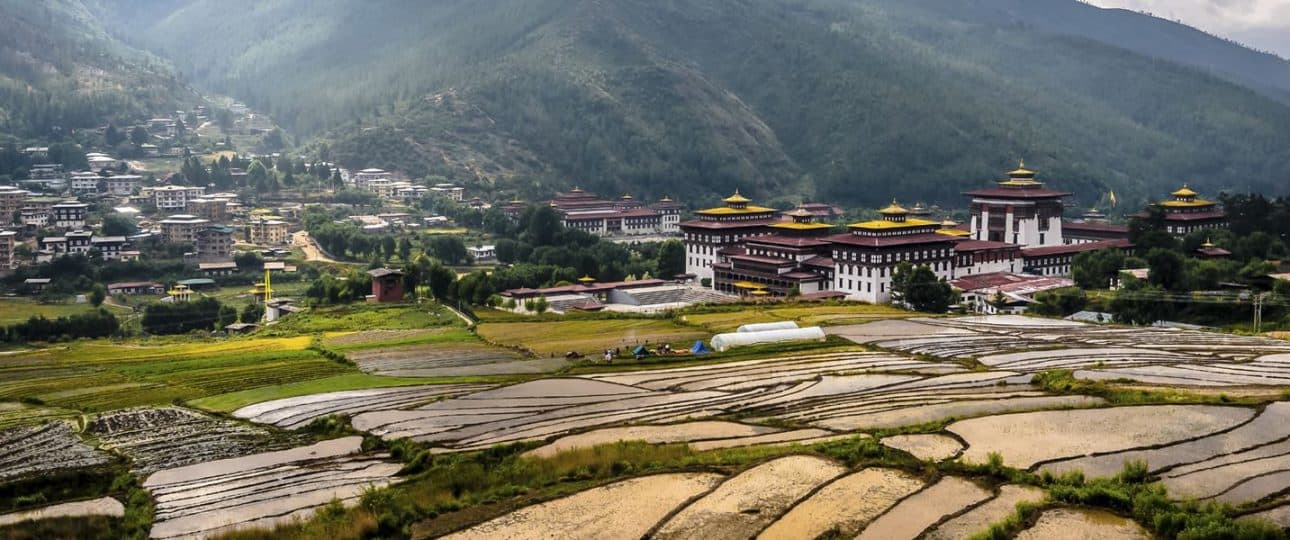
If you are dreaming of crisp Himalayan views, peaceful monasteries, and deep cultural experiences without the crowds, Bhutan in February can be a wonderful choice. As the final month of winter, February often brings clear skies, dry weather, and a calm pace that many travelers love.
If you want strong mountain visibility without peak-season crowds, February in Bhutan is one of the best months to consider. It is also your last good window to see the black-necked cranes before they migrate back north.
Bhutan in February: Quick Overview
- Season: Late winter
- Weather: Cold mornings, sunny days, mostly dry skies
- Typical temperature: 2°C to 15°C in the main valleys, below 0°C at high passes
- Rainfall: Very low
- Snow: Possible at Dochula and Chele La, more likely early in the month
- Best for: Clear mountain views, festivals, birdwatching, quiet travel
- Not ideal if: You want green landscapes, warm evenings, or long high-altitude treks
- Main highlights: Black-necked cranes, Punakha festivals, snow-capped views, hot springs
February is still winter in Bhutan, so temperatures depend a lot on altitude. The high passes and mountain areas stay cold, while the valleys feel much milder during the day.
Southern Bhutan, including places like Gelephu and Phuentsholing, is usually warm and pleasant in February. Paro and Thimphu can feel chilly, and light snowfall is possible, especially early in the month.
Weather and Climate in Bhutan in February
The weather in Bhutan in February is cold but mostly dry, with plenty of sunshine. Because Bhutan has big altitude changes, the temperature can feel very different from one valley to the next.
In western valleys like Thimphu and Paro, daytime temperatures often sit between 8°C and 15°C, while nights can drop below freezing. Lower valleys like Punakha are noticeably warmer and feel comfortable for sightseeing.
High passes such as Dochula and Chele La can get snow, and a fresh fall may slow travel for a short time. In the far south, places like Phuentsholing and Gelephu feel almost spring-like in February.
| Location | Daytime | Night | Rain |
|---|---|---|---|
| Thimphu | 10°C to 14°C | -2°C to 3°C | Low |
| Paro | 9°C to 13°C | -3°C to 2°C | Low |
| Punakha | 15°C to 20°C | 5°C to 8°C | Very low |
| Phobjikha | 6°C to 10°C | -5°C to 0°C | Low |
| Phuentsholing | 22°C to 27°C | 12°C to 16°C | Very low |
Tip: Dress in layers. A warm base layer, fleece, and a windproof jacket usually covers most February days.
Want more information? Send us your query, and our experts will get back to you within 24 hrs.
Is February a Good Time to Visit Bhutan?
February is a great match if you want quiet roads, clear mountain views, and a slower, more peaceful trip. It is also a strong month for photography and winter wildlife, especially in Phobjikha.
February may not be the best choice if you want warm evenings, green landscapes, or long high-altitude trekking. Snow can occasionally affect high passes for a short time.
If you are comparing winter travel, you can also read about Bhutan in January or see how things start to change in Bhutan in March.
Bhutan in February Itineraries (5, 6 and 7 Days)
These sample itineraries are designed specifically for February, keeping winter road conditions, daylight hours and comfortable travel pace in mind. They focus on Bhutan’s western and central valleys, which are most accessible and rewarding during winter.
5 Days Bhutan February Itinerary (Classic Highlights)
This itinerary is ideal for first-time visitors who want to experience Bhutan’s most iconic sights within a short time frame.
- Day 1: Arrive in Paro (2,280 m / 7,480 ft), explore Paro town and local temples
- Day 2: Hike to Tiger’s Nest Monastery (3,120 m / 10,240 ft)
- Day 3: Drive to Thimphu (2,320 m / 7,610 ft), sightseeing in the capital
- Day 4: Cross Dochula Pass (3,100 m / 10,170 ft) to Punakha (1,250 m / 4,100 ft)
- Day 5: Return to Paro and depart
6 Days Bhutan February Itinerary (Culture and Nature)
This option adds the beautiful Gangtey Valley and is perfect for travelers interested in nature and winter wildlife.
- Day 1: Arrive in Paro (2,280 m / 7,480 ft)
- Day 2: Tiger’s Nest hike (3,120 m / 10,240 ft)
- Day 3: Paro to Thimphu (2,320 m / 7,610 ft)
- Day 4: Thimphu to Gangtey Valley, Phobjikha (3,000 m / 9,840 ft)
- Day 5: Black-necked crane observation and valley walk
- Day 6: Return to Paro and depart
7 Days Bhutan February Itinerary (Deep Winter Experience)
This itinerary offers a slower pace with more cultural depth, ideal for travelers who want to fully immerse themselves in Bhutan’s winter atmosphere.
- Day 1: Arrive in Paro (2,280 m / 7,480 ft)
- Day 2: Tiger’s Nest hike (3,120 m / 10,240 ft)
- Day 3: Paro to Thimphu sightseeing (2,320 m / 7,610 ft)
- Day 4: Thimphu to Punakha via Dochula Pass (3,100 m / 10,170 ft)
- Day 5: Punakha to Gangtey Valley (3,000 m / 9,840 ft)
- Day 6: Cultural villages or hot springs (season permitting)
- Day 7: Return to Paro and depart
Accommodation During Bhutan Tour in February

Most hotels, lodges and guest houses in Bhutan are generally smaller and traditional. And they are in traditional architectural style.
February, being the low season in Bhutan you will have plenty of options to choose from.
Although the hotels in Bhutan aren’t as high standard as those in western society, they offer the necessary facilities. For example, in winter they provide a heater for you to stay warm in the cold nights.
Basically, hotels in western Bhutan (Thimphu, Paro, and Punakha) are better appointed. And accommodation in the central and eastern part of the country are more modest with fewer amenities.
Food & Drinks During Bhutan Tour in February
Traditional Bhutanese food is warming, flavorful, and often spicy. Locals use a lot of fresh and dried chilies, especially in winter.
Do not leave Bhutan without trying Ema Datshi, the national dish made with chilies and cheese. Every home and restaurant makes it a little differently, so it is fun to try it more than once.
Most hotels also serve a buffet with Bhutanese dishes alongside Indian, continental, and Chinese options, so even picky eaters can stay comfortable.
For cold evenings, momos and noodle soups are simple favorites.
For drinks, many people enjoy butter tea (suja). Always choose bottled or filtered water instead of tap water.
If you drink alcohol, you may come across ara (a local spirit) and chang (local beer). Enjoy them slowly, especially at higher altitude.
Highlights of Bhutan in February
February has a few special advantages, especially if you prefer a quieter style of travel.
Fewer Tourists
Winter is one of the calmest seasons in Bhutan. Even popular places like Tiger’s Nest feel more peaceful, and you can take your time without feeling rushed by crowds.
Easy for Last-Minute Travel
Because February is not peak season, it is usually easier to find hotel availability and flight seats. Paperwork and arrangements also tend to move faster simply because fewer travelers are applying at the same time.
Better Value
February often offers better overall value compared to the busiest months. If you want a quieter trip without giving up clear skies and mountain views, it is a strong time to visit.
Clear Skies and Great Visibility
February is one of the best months for crisp mountain visibility. The air is usually dry, which helps the Himalayan views look sharp from viewpoints like Dochula and Chele La.
Chance of Snow in the High Passes
Snow is possible in early February, mainly on higher passes. If it happens, it usually melts quickly, but it can slow travel for a short time.
Cold Mornings, Comfortable Days
It can feel cold early in the morning and after sunset, but daytime can be surprisingly comfortable when the sun is out. This is why layering is so important in February.
Top Things to Do in February
See the Black-Necked Cranes in Phobjikha
February is one of the last months to see black-necked cranes in Bhutan before they migrate. Phobjikha Valley is the best place for spotting them, and it is also one of Bhutan’s most peaceful winter landscapes.
These elusive birds travel south from northern Tibet. While they fly to China’s province to the lower reaches of Tibet and Bhutan for the winter months when northern Tibet gets very cold.
The cranes usually arrive in the middle of November and stay in Bhutan for roosting and winter foraging until the end of February.
The best places to spot them are at the Gangtey Monastery in the Phobjikha valley, and around the area of Chummey in Bumthang.
Enjoy Lower Altitude Bhutan Winter Treks
In February, there are several treks at lower altitudes that you can do. One of the most popular options for winter trekking in Bhutan is the Nabji Korphu trek, in the Trongsa District. It is a relatively low-altitude trek at around 2000m.
Other popular treks you can take are the Phobjikha Valley trek and Druk Path trek.
Witness Snow-capped Mountain Peaks of Bhutan from Dochula Pass
 On the way from the Bhutanese capital of Thimphu to Punakha, you will come across the Dochula Pass. A famous site for its views as much as for the 108 memorial Chortens.
At an elevation of 3100m, you will get the view of snow-capped mountains in February. From here you will see several mountains above 7000m like Jomolhari, Masanggang, Kangphugang, and others.
Visit Royal Manas National Park
A trip to Bhutan is not just about temples and fortresses. While for some, it may be cold to trek in the Himalayas in February, there is another option to head down south to visit Royal Manas National Park.
The park is Bhutan’s oldest national park. And is what the government considers as a showpiece of conservation. Here you will witness an oasis of remarkable and diverse flora and fauna amid a pristine natural habitat.
Some activities to do here are boating, tropical safaris and hiking. There are two eco-lodges here that come with kitchen, bathroom and toilet facilities.
Take a Dip at Gasa Hot spring
You can find hot springs throughout Bhutan but one of the most popular ones are those you will find in Gasa in northwest Bhutan.
Needless to say, February is a great time to take a dip in such waters or Tsachus which consist of healing properties. The hot springs at Gasa have natural remedies to rheumatism, arthritis, indigestion and other ailments.
Most Bhutanese visit the hot spring during winter and some even stay for days to maximize the potential of the hot spring. Some believe that water has stronger curing power in the colder months.
Hence, it is the secluded location of the Tsachu. And its stunning views of the natural Bhutanese landscape have made it one of the best places to visit in Bhutan in February.
Celebrate Festivals in Bhutan with the Locals
Along with natural beauty, Bhutan’s never-ending festivals provide visitors with a wide array of experiences. During February in Bhutan, you can witness festivals such as Punakha Drubchen and Punakha Tsechu.
Punakha Drubchen: The Punakha Drubchen is a unique festival. It hosts a dramatic re-creation of the scene from the 17th century battle with Tibetan army. The ‘Pazaps’ or local militia men dress in traditional gear and they re-enact the ancient battle scene.
This festival not only plays an important role in preserving Bhutan’s rich culture and traditions. But also provides devout Buddhists with an opportunity for prayer and pilgrimage.
They reflect the richness of the Bhutanese cultural heritage. And are very special in the eyes and hearts of both Bhutanese and tourists who visit Bhutan.
Punakha Tsechu: In February you can also experience the spectacular Punakha Tsechu. It takes place in the grounds of the magnificent Punakha Dzong. A Tsechu is a Buddhist festival in honor of Guru Rinpoche, the saint who brought Buddhism to Bhutan.
Locals gather in the spirit of festivity, celebration and deep faith to witness unique masked dances and celebrations. Tsechu is one of the best ways to experience the ancient living culture of Bhutan.
Things to Carry for Bhutan Tour in February
February weather changes quickly between sun and shade, and between valleys and mountain passes. Layers make a big difference, so you can stay comfortable throughout the day.
You can start with thermal inner wear and add to a shirt, pile jacket and windbreaker. Down below are some of the essentials for Bhutan trip in February:
- Backpack
- Woolen/Cotton trousers (warm clothes for mornings and evenings)
- Down jacket (wind stopper) – especially for higher altitudes
- T-shirts or long sleeved shirts (not sleeveless)
- Sandals or flip flops
- Sunhat
- Comfortable shoes (sneakers)
- Pairs of socks and vests
- Sunglasses
- Sunscreen lotion and lip protection
- Personal medical kit
- Warm gloves and a beanie
- Thermal socks (2 to 3 pairs)
- Light scarf or neck warmer
Useful Tips for Bhutan Tour in February

- Bhutan uses 220V electricity. Bring a universal adapter.
- Bhutan is wonderful for photography, but always ask before photographing people, monks, or religious ceremonies.
- Tipping is a gesture of appreciation for your driver and guide who are with you for the whole trip. Be careful not to insult with small tips. They may not receive your tips at first out of Bhutanese tradition, but please do give it a second try.
- Bargaining isn’t that usual as you may find in other countries. The seller probably will give you a discount when you buy more than one item.
- Bhutan banned import and sale of all tobacco products since 2004, and smoking in the public is not permitted.
- Credit cards are not widely accepted in Bhutan, and cause high fees. Hence it is best to carry sufficient cash.
Ready to plan? WhatsApp for customized itineraries, festival dates and exclusive deals!
February vs Other Months in Bhutan: Which One Is Right for You?
Choosing the right month to visit Bhutan depends more on your travel style than on weather statistics.
If you visit in January, you will experience the coldest part of winter. It is very quiet and peaceful, but mornings and nights can feel quite harsh, especially in Paro and Thimphu.
February is often considered the most balanced winter month. The cold is still there, but it feels more manageable, the skies are clearer, and road conditions improve. You get most of the winter advantages without the extreme discomfort.
In March, the landscape slowly starts waking up. Temperatures rise, flowers begin to bloom, and more travelers arrive. It feels more lively, but also less peaceful than February.
By April, Bhutan is fully in spring mode. Days are warmer, valleys turn green, and festivals attract large crowds. It is beautiful, but also much busier and more expensive.
In simple terms, February is best for travelers who value calmness, clear mountain views, and cultural depth over comfort and greenery.
Bhutan in February: Frequently Asked Questions
Many travelers worry about winter conditions before planning a February trip to Bhutan. These are the most common questions people ask, along with honest answers based on real travel experience.
How cold is Bhutan in February really?
In the main valleys like Paro, Thimphu and Punakha, daytime temperatures usually feel cool but comfortable, especially in the sun. Mornings and evenings are cold, and nights often drop below freezing. If you dress in layers, most travelers find the cold very manageable.
Does it snow a lot in Bhutan in February?
Snowfall is usually limited to higher elevations such as Dochula Pass and Chele La. Heavy snow is not common in the valleys, but occasional snow can temporarily affect mountain roads for a day or two.
Are roads and flights reliable in February?
Most roads and flights operate normally in February. Short delays can happen after snowfall, but major routes between Paro, Thimphu and Punakha are generally well maintained.
Is Tiger’s Nest safe to hike in February?
Yes, Tiger’s Nest is safe in February for most travelers. The trail can be cold in the morning, but it is usually dry and less crowded than in peak seasons. Good shoes and warm clothing are enough.
Is February too quiet or boring in Bhutan?
February is quiet, but not boring. It is one of the most peaceful months, with fewer tourists, active monasteries, and local festivals like Punakha Drubchen and Punakha Tsechu.
Can I still see wildlife in February?
Yes, especially the black-necked cranes in Phobjikha Valley, which stay until late February. Winter is also a good time for birdwatching in lower valleys.
Is February worth the cost of traveling to Bhutan?
For travelers who enjoy peaceful travel, cultural depth and clear mountain views, February offers excellent value. You pay less than peak season and experience Bhutan without crowds.
Who should avoid visiting Bhutan in February?
February may not suit travelers who dislike cold weather, want lush green landscapes, or plan long high-altitude treks. Spring and autumn are better for those preferences.
Final Advice: Should You Visit Bhutan in February?
Bhutan in February is a great choice if you want quiet roads, clear skies, and meaningful cultural experiences. It is not the warmest month, but it can be deeply rewarding if you come prepared for winter mornings and cool evenings.
If you are comfortable with a winter climate and you prefer peaceful travel over crowds, February may be one of the best months for you.
If you have questions about routes, festival timing, or what to expect in different regions, you are welcome to contact us. We will help you plan a trip that fits your comfort level and travel goals.
If you would like to compare seasons, our guide to the best time to travel to Bhutan explains other months, festivals, and seasonal highlights.
Want more information? Send us your query, and our experts will get back to you within 24 hrs.

Madhav Prasad is a seasoned trekking and tourism expert with over two decades of experience in the field. Starting his career in 2001 as a porter, Madhav quickly advanced to the role of trekking guide, gaining invaluable hands-on experience in Nepal’s diverse trekking routes. In 2009, after eight years of dedication to the industry, he co-founded Mosaic Adventure, a leading trekking and tour company known for its commitment to safety, sustainability and personalized service.
Madhav has personally trekked to nearly every major trekking destination in Nepal, including Everest Base Camp, Annapurna Base Camp, the Annapurna Circuit, Poon Hill, Jomsom Muktinath, the Indigenous Peoples Trail, Langtang Valley and Mardi Himal, among others. His experience extends beyond Nepal, as he has also successfully summited Mount Kilimanjaro, Africa’s highest peak.
In addition to his extensive trekking credentials, Madhav is well traveled globally, having explored countries such as Australia, the USA, the UK, France, Japan, China, and many others. His global exposure enhances his ability to understand and cater to the diverse needs of international trekkers.
Madhav is the primary point of contact for many clients at Mosaic Adventure, personally addressing inquiries and helping plan treks with a meticulous and personalized approach. His deep knowledge of Nepal’s trekking routes, combined with his global travel experience, ensures that every trek is well planned, safe and unforgettable.
