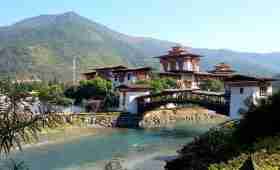
Bhutan is one of the most exclusive tourist destinations in Asia. Although a small and landlocked kingdom, Bhutan consists of immense natural as well as cultural beauty.
If you like to avoid the higher tariff and the cold winter, consider visiting Bhutan in July. However, monsoon will be in its earnest in July.
Having said so, monsoon in Bhutan is quite limited to the afternoons with a light shower once every 2 to 3 days. You can, however, miss out on seeing some outlying district such as Gangtey in July as the road will be muddy due to the rain.
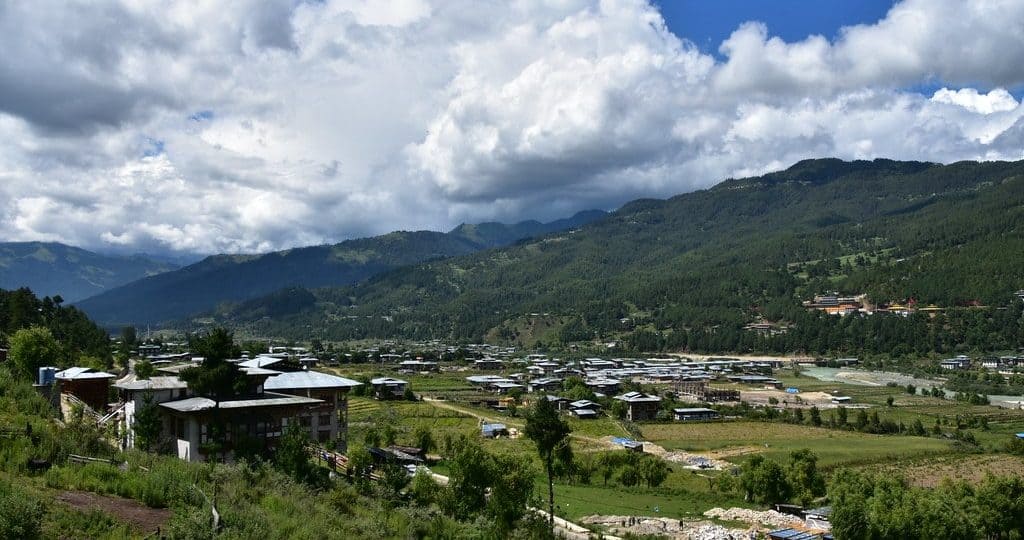
Other than that, July often offers vibrant green foresting and flourishing paddy fields. With a backdrop of the clear blue sky after the rain.
July is also the off-season and you can easily find flights and accommodations. So if you don’t mind the rain, visiting Bhutan in July has its own perks. All you have to do carry your raincoat and umbrella.
Table of Contents
Weather and Climate of Bhutan in July
Monsoon season in Bhutan begins from July. The country is less crowded in this off-season in Bhutan.
The visibility in the high mountains can be very poor due to rain and high humidity. And much of the trails are wet and muddy which isn’t the best time for trekking.
The western and southern regions of the country experience much rain. Yet some of the northern valleys sees less rainfall. Moreover, many of the sheltered inland valleys tend to be much drier than the rest of the country.
The temperature across the country ranges from 25 degrees and can reach as high as 31 degrees in July.
The weather of some of the popular cities in Bhutan in July are
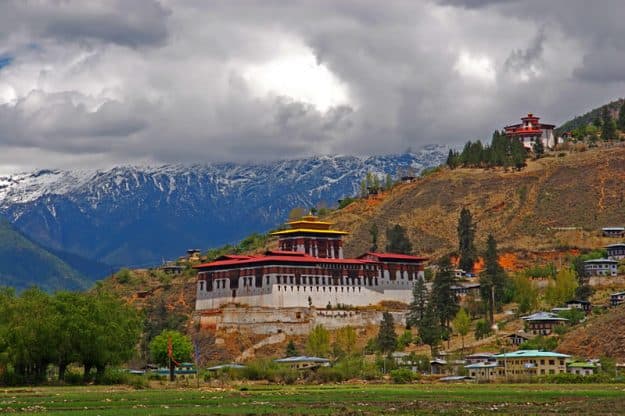
Paro Weather in July
Average Maximum Temperature: 22 °C
Average Minimum Temperature: 15 °C
Average Temperature: 18 °C
Precipitation: 428 mm
July in Paro is the wettest time of the year with more than 420mm of monsoon rain falling throughout the month.
With most days being overcast with low visibility, Paro experiences an increase in cloud cover in the entire month of July.
The average temperature during this time is around 18 degrees, which can reach high up to 22 degrees during the day. And drop low to around 14 degrees at night. Winds come up from the south and peak at around 4 to 5 km/h.
Want more information? Send us your query, and our experts will get back to you within 24 hrs.
Thimphu Weather in July
Average Maximum Temperature: 22 °C
Average Minimum Temperature: 14 °C
Average Temperature: 18 °C
Precipitation: 364 mm
Thimphu is the capital of Bhutan which is just a short distance from Paro. It is one of the wettest areas of northern Bhutan in July with around 373 mm of rain. However, most showers are in the late afternoon and evening.
The temperature in July ranges from 18 degrees during the daytime and 13 degrees at night. With a monthly average temperature around 16 degrees.
Jakar Weather in July

Average Maximum Temperature: 22 °C
Average Minimum Temperature: 14 °C
Average Temperature: 18 °C
Precipitation: 317 mm
July in Jakar is not as wet as many other areas of Bhutan. This could be due to the protection of the hills and mountains that surround the area. The weather is warm with relatively average rainfall.
The temperature in Jakar ranges from 22 degrees in the daytime. And it drops as low as 13 degrees at night. Thus, July is a pleasant time to visit Jakar with warm temperatures.
Bumthang Weather in July
Average Maximum Temperature: 21°C
Average Minimum Temperature: 13 °C
Average Temperature: 17 °C
Precipitation: 289 mm
A large part of Bumthang is warm in July with a lower amount of rainfall than most westerly areas of Thimphu and Paro. Again the surrounding mountains protect the area from the heavier rains.
Bumthang is one of the few drier places in July. The temperature here can get as high as 21 degrees in the daytime and drops to around 13 degrees at night.
Punakha Weather in July
Average Maximum Temperature: 27 °C
Average Minimum Temperature: 20 °C
Average Temperature: 23 °C
Precipitation: 743 mm
Punakha, one of the wettest areas for tourism in the northern half of Bhutan sees a high amount of rain in July.
The precipitation during this time is more than 740mm. Temperatures, however, are also warmer with day time temperature reaching as high as 27 degrees. And night time dropping to around 19 degrees. Thus, Punakha is a hot and humid area in July.
Accommodation in Bhutan in July
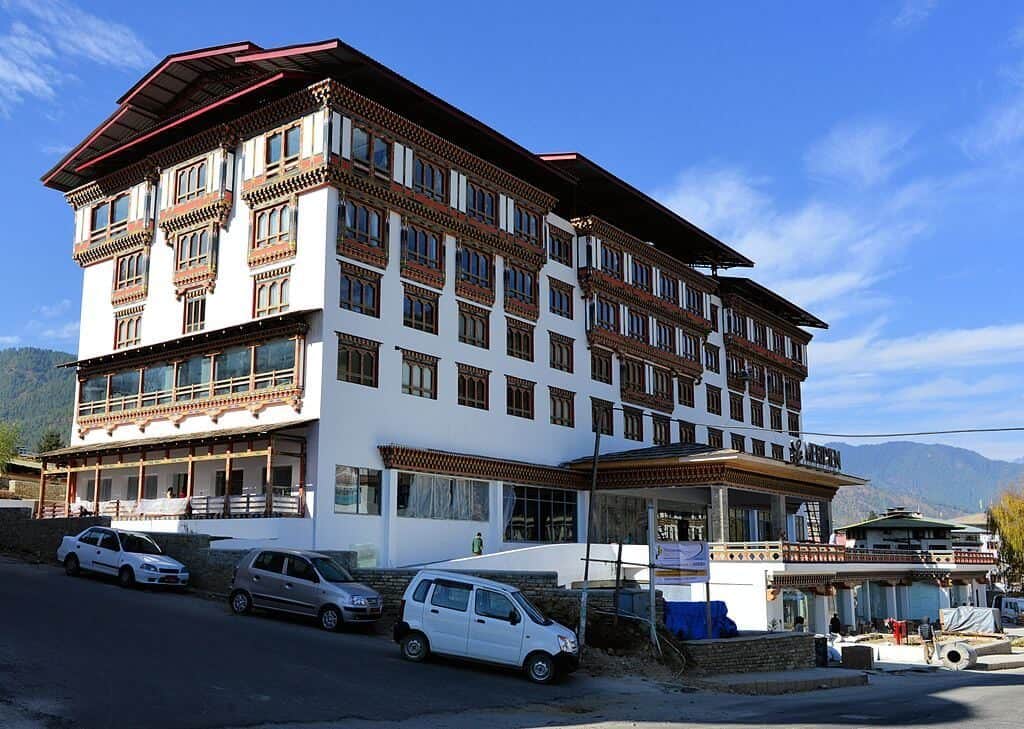
Bhutan has a wide variety of accommodation options to choose from.
There are luxurious 5-star hotels that offer incredible services. You can also find cozy little budget hotels that charm you with their simplicity.
In July, you do not have to worry about getting rooms. In fact, small traditional Bhutanese homestays will welcome you with the utmost warmth and comfort.
Hotel in Bhutan offers a unique blend of new age facilities, unequaled beauty, and rustic charisma.
Taj Tashi ( Thimphu), Uma by COMO (Punakha), Le Meridien (Thimphu) are some of the best hotels in Bhutan. All the hotel are well equipped with heaters and provide 24-hour hot water supply and wifi too.
Food in Bhutan in July
Bhutan is unique in its own way and the food is no exception. The country will blow your mind with the flavorsome and the delicious Bhutanese food. The aroma of the spice and chilies will leave you salivating.
Bhutanese love chilies in their food so much so that the chilies are an important ingredient in their meal. Ema Datshi is the national dish of Bhutan. They make it with chilies and cheese.
Red rice is one of the staple foods of the Bhutanese people. And it goes very well with Ema Datshi (Chilli Cheese), Kewa Datshi(Potato Cheese) and Shamu Datshi (Mushroom Cheese).
You can also try momo( dumplings stuffed with meat). Some restaurant serves momo with soup which is a great meal on rainy days in July.
In Bhutan, Indian dishes are widely available too. However fast food is not readily available, even in the capital city Thimphu.
Also, while in Bhutan do try the Bhutanese butter tea, Suja. The locals usually serve this tea after a meal and are great during rainy days and cold weather.
Bhutan Tour Packages in July

Bhutan in July sees fewer people compared to other months as it is a part of the monsoon season. The weather can get wet and humid with high temperature.
However, while there may be a lot more rain in July, esp in the southern areas, it is not impossible to visit the kingdom. And there are plenty of things to do and see.
Though trekking is not really an option. Much of the rainfall in areas such as Paro and Thimphu falls in the late afternoon and evenings. Hence you have the days free for sightseeing.
Some of the Bhutan tours you can take are
Day 01: Arrive in Paro
Day 02: Paro excursion and drive to Thimphu
Day 03: Thimphu to Punakha
Day 04: Punakha- Wangdue Phodrang- Trongsa
Day 05: Trongsa- Thimphu
Day 06: Thimpu- Paro- Departure
5 days Bhutan tour exploring city and scenic tourist area
Day 1: Arrive Paro & Paro – Thimphu
Day 2: Thimphu- Punakha, and Wangdue
Day 3: Punakha- Short Nature Hike & Sightseeing; Punakha – Thimphu
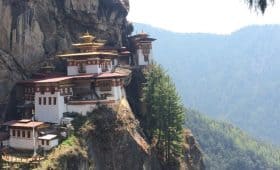
Day 4: Thimphu – Paro; One Day Hike to Taktsang Gompa (The Tiger’s Nest Monastery)
Day 5: Paro Departure
These city tours in Bhutan’s monsoon is great. The view from the higher place and the pure beauty of the cities after the rain can be both an amazing and fulfilling experience.
NOTE: The itineraries are flexible. And we can arrange and include places according to your preference and that is appropriate for you in July.
Trekking in Bhutan in July
During July, some days may be clear and bright. But there are always chances of torrential rainfall in July even in the drier areas of the northwest.
With poor visibility and cloud cover along with rain, trekking in July is not normally as an option. As most trails become muddy and slippery due to the rain.
Bumthang and Punakha are two popular trekking regions seeing rainfall of 300mm and 700mm respectively.
Though the trekking trails are still passable in the rain, there is no fun getting soaked and walking in muddy paths. So, you can take short day hikes.
Festivals to Participate in July
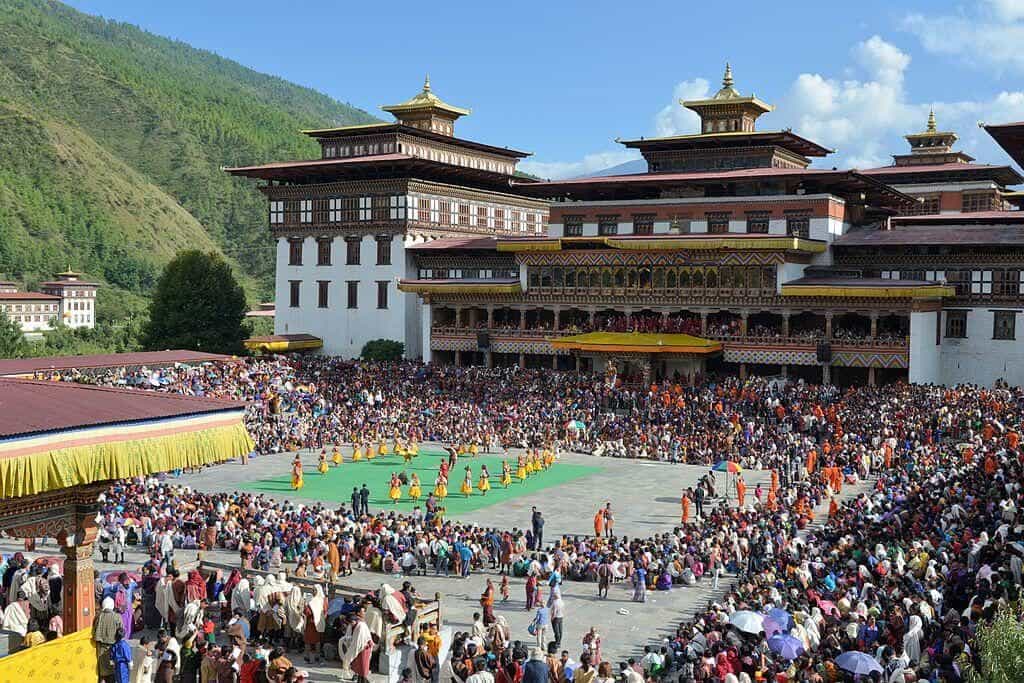
There are a few festivals that you can be a part of if you have the time in July in Bhutan. They are as follows:
Nimalung Tshechu
Held in Bumthang District on the 5th month in the Bhutanese calendar, Nimalung Tshechu is a three-day festival. It is a major religious festival of the Nimalung temple in the Chummey valley of Bumthang.
The main event of the festival is the unveiling of the giant Thongdrol painting. This is similar to the Tibetan Thangka that they put on display for three days.
Thousands of people come to the temple to pray at the foot of the Thongdrol to cleanse their sins. The festival also includes a number of mask and folk dance for the pleasure and entertainment of the local visitors.
Kurjey Tshechu
Kurjey Tshechu takes place in the Kurjey Lhakhang in Bumthang Dzongkhag. During this time, hundreds of local villagers come to pay respect to the Guru Rinpoche who brought Buddhism to Bhutan.
It is a one-day festival that features mask dances, folk dancing. And the unveiling of a giant Thongdrol depicting scenes of the Buddha.
Haa Summer Festival
The Haa Summer festival takes place in July, the 5th month of the Bhutanese calendar. It is a lively celebration of the traditional Bhutanese culture, ancient nomadic lifestyle, and the Buddhist faith.
This festival is a showcase of the living culture of the Haa Valley, in western Bhutan in the Haa Dzongkhag. It displays traditional local culture.
You get to taste the local cuisine and enjoy traditional Bhutanese sports. You can also enjoy religious performances and mask dances.
It is a two-day festival which is a great time to spend as a homestay for the night in the valley.
Tips: Besides tasty food, there are a lot of interesting things to do in the Haa Summer festival. Such as watching skilled local craftsmen weaving yak hair into their traditional tents. The art of yak shearing and wool making.
Also, you can either participate in or watch traditional sports like archery, yak and horse riding, Darts, light javelin throwing, etc.
Packing for Bhutan in July

While traveling to Bhutan in July, it is important to pack well. Aside from the usual summer clothing, you need to pack something to keep the rain off.
Raincoats and umbrella are very useful in July in Bhutan and it is necessary to keep them handy as rain is quite unpredictable.
Moreover, despite the warm temperature in July, you need to pack at least one sweater in case the temperature drops and gets a little too cold for you.
A good pair of boots for a muddy and slippery road is a must. Some area can even get waterlogged. You can also carry normal running shoes while walking in the major cities where there is normally less mud around.
Other necessary items you can pack are insect repellents as the rainy season is likely to infest insects like mosquitoes. And water purifier because the water from the taps is not filtered water.
Things to Know for Bhutan Tour in July
- Most of the hotel in Bhutan have wifi, but if you need more connectivity you can get a local SIM card from Tashi Cell or B-mobile and top up with prepaid cards.
- The official language of Bhutan is Dzongkha, but most Bhutanese are fluent in English.
- The local currency is the Ngultrum. Note that Bhutan no longer accepts the Indian rupee in denominations of 500 and 1000.
- There are ATM’s in Bhutan but only in the main towns. Moreover, the ATM’s do not always work and if they do, one can only withdraw small amounts.
- Bhutan is the only country that bans the consumption and sale of Tobacco. Hence Bhutan doesn’t allow smoking in public areas. If you want to smoke, ask your guide where you can light up.
- In July, make sure to pack waterproof items to stay dry as it is monsoon season.
- You can bargain in most shops but do not expect more than a 10 percent discount.
- The roads in Bhutan tend to be windy that can cause motion sickness. Hence take the necessary medication to prevent nausea.
- While taking photos inside Dzongs, monasteries and temples, do check with your guide whether or not you can click photos as some area do not allow it.
- Dress modestly while visiting religious centers.
- Keep extra days in case of any unplanned circumstances.
Conclusion
There is always something to do in Bhutan no matter what time of the year it is. And Bhutan in July is no different. While it may be a little wet, but it is still a good time to take some great sightseeing of the kingdom.
The showers are mostly during the evening and night. So the day time is mostly clear. Moreover, after the rain, the air is clean and the scenery is great. You could even catch a glimpse of a rainbow.
For someone who doesn’t mind the rain, July is a good time to explore the architecture and religious sites of this ancient Himalayan Kingdom.
For further question or queries, please feel free to contact us. It is our pleasure to guide and assist you with the best of our knowledge.
Want more information? Send us your query, and our experts will get back to you within 24 hrs.
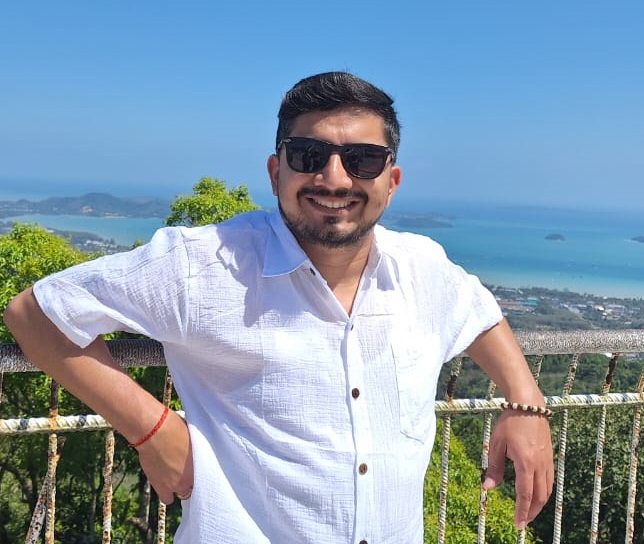
Madhav started working as a porter in 2001 and then moved on to work as a trekking guide. After working in the trekking and tourism industry for eight years, he co-founded Mosaic Adventure in 2009.
Madhav has trekked to most of the trekking destinations in Nepal, including Everest Base Camp Trek, Annapurna Base Camp, Annapurna Circuit Trek, Poon Hill Trek, Jomsom Muktinath Trek, Indigenous Peoples Trek, Langtang Valley Trek, Mardi Himal Trek, and all of the day hikes around Kathmandu.
He has also extensively traveled to other countries such as Australia, the USA, the UK, France, Hong Kong, Japan, China, the Philippines, the UAE, Saudi Arabia, Bahrain, Thailand, Turkey, and India. Madhav is the one who answers most of your questions about trekking and tours and helps to plan your trip by giving a personal touch.