
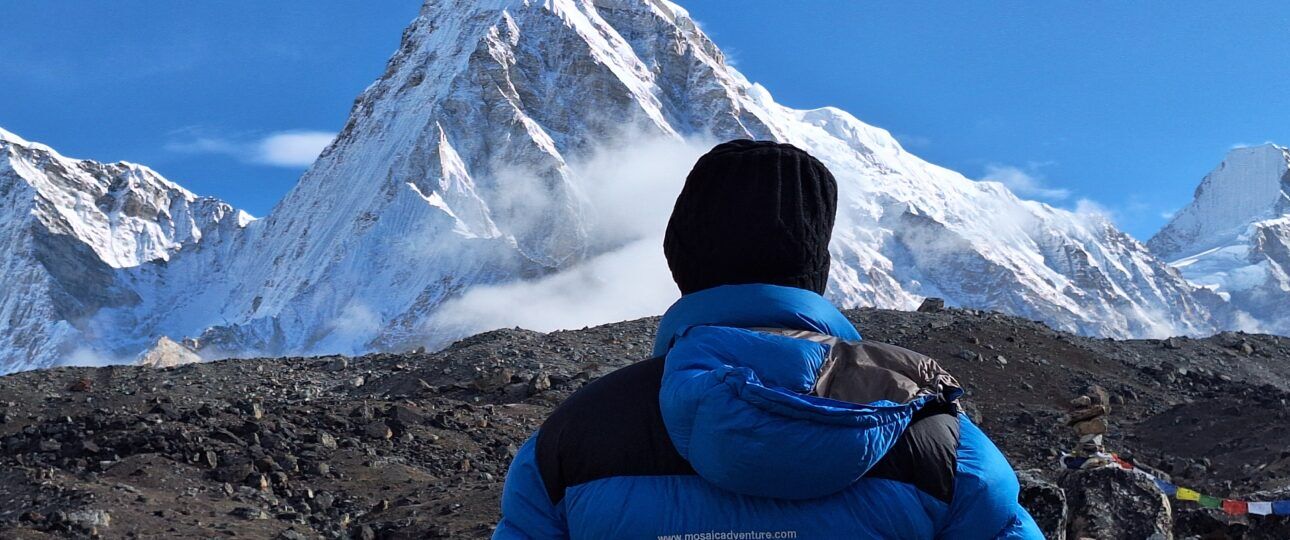
Everest Base Camp. Three words that stir something in people who dream of walking in the Himalayas. For some, it is adventure. For others, it is escape. But for many, it is something more: a way to test their limits, find clarity, or heal from something heavy.
The Everest Base Camp trek is not just a physical journey. It is a mental and emotional one too. You walk for days through mountain villages, over rocky trails and under towering peaks. You face cold, altitude and fatigue. And somewhere along the way, you also face yourself.
I started on this trail as a porter in 2001, and since we founded Mosaic Adventure in 2009 our team has guided more than 300 trekkers on the Everest Base Camp trail every year, from their 20s to their 70s and from all over the world. This post is about what I have seen in them: why people really come, and what has changed by the time they go home.
- People trek to Everest Base Camp for challenge, milestones, healing, curiosity, nature, history and connection.
- Long days of walking at altitude slow the mind and remove daily distractions.
- Tiredness and altitude can make emotions stronger, which is normal. Confusion or unusual behaviour is not, and is a medical warning sign.
- Many trekkers return calmer and more confident, and many also feel a low after coming home.
Why People Choose to Trek to Everest Base Camp
Every trekker has their own reason. Some want to check off a goal. Some want to feel strong. Others are chasing peace. These are the reasons we hear most often.
Adventure and Curiosity
For some, the reason is simpler than you might expect. They have been curious about Everest since they were young. They read about it in school, saw it on a map, or watched a documentary late at night and never quite forgot it. The trek becomes a chance to finally see it with their own eyes, to walk into a place that lived only in their imagination for years.
Curiosity is a quiet but powerful motivator. And for many trekkers, it is what started everything.

Achievement and Challenge
For many, reaching Everest Base Camp is about proving something to themselves. It is a way to say: I did this. I made it through something hard. These trekkers are not looking to climb Everest, but they want to push themselves, physically and mentally.
Some have trained for months. Others arrive with doubts but keep going anyway. The challenge becomes a way to build confidence and shake off fear.
Many people describe the Everest Base Camp trek as one of the hardest yet most rewarding things they have ever done.
Life Goals and Milestones
Some people come to Everest Base Camp to mark a moment. A birthday. A retirement. A new start. Or the end of something.
Trekking becomes a way to say goodbye, or to welcome a new chapter. The mountains offer space to think, to reset and to reflect. It is common to meet people walking to celebrate life, or to honour someone they lost.
Grief and Healing
Not every reason is full of excitement. Some people come to the trail with heavy hearts.
People walk to Everest Base Camp carrying memories of loved ones they have lost. Some bring ashes. Others bring pain they have not yet spoken out loud.
The quiet of the trail, the stillness of the mountains and the long hours of walking can all create space to process grief and find some form of peace. The trek is not a replacement for support at home, but for many people it becomes part of how they heal.
Connection With Nature
Not everyone comes to prove something or push their limits. Some come because they miss the natural world: the open sky, the sound of rivers, the feeling of cold air that has not passed through a city.
The scale of the Himalayas does something to people. It shifts perspective in a way that a weekend in the countryside rarely can. The mountains feel ancient. The silence feels rare. And somewhere between the first day and the last, many trekkers describe feeling genuinely grounded for the first time in years.
Some call it spiritual. Others just call it necessary.
Escape and Simplicity
Life at home is fast and often overwhelming. Phones buzz. Deadlines press. The noise never stops.
The trail offers a different rhythm. Walk. Eat. Sleep. Wake up and do it again. There is no traffic, no office, no endless scrolling. Just mountains, sky, your feet and your breath. For many, this simple way of living is the break their minds badly need.
Many people tell us the Everest Base Camp trek gave their mind a rest they did not know they needed.
Social Media and the Photos Everyone Has Seen
Let us be honest. Some people hear about Everest Base Camp from social media or friends and simply want to be part of it. They saw the sunrise from Kala Patthar and the prayer flags at Base Camp, and they want their own version.
That reason may sound less deep, but it still counts. Sometimes we start a journey for simple reasons and come away with something far more meaningful.
Love of Photography and Landscapes
The Everest region does not need a filter. Sunrise lighting up Ama Dablam. Frozen rivers cutting through stone valleys. Prayer flags stretched across high ridges. Villages that feel untouched by time.
For photographers, the light changes fast and the scale is hard to believe. And the human stories, porters moving through fog, monks in quiet courtyards, children outside stone schools, add something that landscape photography alone rarely captures. Even trekkers who have never called themselves photographers often come home with thousands of images and a new passion they did not expect.
Inspiration From Everest History
Some people feel connected to Everest long before they book a flight. They grew up reading about Tenzing Norgay and Edmund Hillary, and watched documentaries about early expeditions, the failed attempts, and the climbers who never came back. Over time, the mountain became something personal.
Walking the same trails those mountaineers once used gives the journey a weight that is hard to explain. You are not climbing Everest, but you are walking in the footsteps of people who changed what humans believed was possible. For many trekkers, this history is not background. It is the reason they came.
Building Human Connections
The trail brings people together quickly. Strangers end up sharing teahouse tables, walking the same pace for hours and swapping stories over dal bhat at the end of a long day. Shared difficulty creates an honesty between people that can take months to build at home.
Many trekkers say the friendships they formed on the trail were one of the biggest surprises of the whole experience. If you are going alone, do not worry about it for long. The trail has a way of making sure you are not.
Real Stories From the Trail
If you want to hear it in trekkers’ own words, read one trekker’s personal journey to Everest Base Camp, with the hidden challenges and rewards along the way, and Natascha’s day-by-day Everest Base Camp diary, written on the trail in late winter.
Can Anyone Do the Everest Base Camp Trek?
Most healthy people can, with preparation. The people we guide include office workers, students, parents and retirees, from their 20s to their 70s. You do not need to be an athlete or a climber, but you do need to train, walk slowly and respect the altitude.
If you are wondering whether it is right for you, read is Everest Base Camp right for you. For how hard it really is, see Everest Base Camp trek difficulty, and if this would be your first high trek, our guide for beginners. Over 60? See Everest Base Camp for seniors.
What Happens to the Mind During the Everest Base Camp Trek
Walking to Everest Base Camp is not just about views. It is about what happens to you as you move through the landscape. The environment strips away distraction. You become aware of your body, your breath and your thoughts.
The Trail Slows You Down
At home, life rushes by. On the trail, everything takes longer: hours of walking each day, slow meals, rest days spent letting your body adjust to the altitude.
This slow pace creates a natural pause. You start to notice the sound of your boots on stone, the wind in the prayer flags, and the way your mind begins to quiet down.
Tiredness and Strong Emotions
Altitude makes you tired. So do long days and cold nights. And when your body is tired and adjusting to less oxygen, emotions can feel stronger. Little things can feel big. A kind word might make you cry. A clear view might feel like a gift.
Often this is simply your mind making space for things you have not faced in a long time. It is normal, and it usually passes with rest.
When it is not just emotion: altitude can affect your mood and sleep, but confusion, unusual behaviour, extreme drowsiness, slurred speech or loss of balance are warning signs of high altitude cerebral edema (HACE), a serious form of altitude sickness. If you notice any of these in yourself or a trekking partner, tell your guide straight away. The treatment is to go down. Our guides check every trekker’s oxygen level each evening for exactly this reason. Read more about preventing altitude sickness on the Everest Base Camp trek.
Facing Yourself
There is no hiding on the trail. No meetings, no errands, no noise. You walk. You think. You feel things more clearly.
Some people describe it as meeting their true self. Others say the silence helped them understand things they could not explain before. The physical effort and emotional openness make deep reflection happen naturally.
The Inner Changes the Trek Brings
Most people return from Everest Base Camp changed in some way. Not because they saw Everest, but because they saw themselves more clearly. These are the changes trekkers describe to us most often.
Presence and Mindfulness
Walking forces you to focus: where to place your foot, how your breath feels, what the weather is doing. This focus leads to something we rarely feel at home, which is true presence. You stop thinking about next week or last year. You are simply there, one step at a time.
Confidence and Resilience
Reaching Base Camp takes grit, and every step teaches you that you can keep going. You learn to adjust to change and to trust your body and mind. Many people leave feeling stronger than they have in years.
Thinking of doing the trek yourself? We run Everest Base Camp treks with careful pacing and experienced guides. See our 14-day Everest Base Camp trek.

A Shift in Perspective
In the shadow of Everest, you feel small, but in a freeing way. You realize how much noise you live with, and how much you think you need. Many trekkers say the trail helped them let go of things that no longer mattered.
Human Connection
Shared struggle builds strong bonds. You help each other on tough climbs, share tea in cold lodges and talk late into the night with people from the other side of the world. These connections are real, and they remind us how much we need one another.
What Happens After the Trek
Coming back is not always easy. You have walked for almost two weeks through some of the highest trails in the world, seen beauty that is hard to describe, and faced parts of yourself that surprised you. Then you land back in a noisy city and your old routine, and something feels off. Few people are prepared for this part, and the return can be almost as emotional as the trek itself.
The Emotional High
For the first few days, most trekkers feel amazing. They talk about the mountains nonstop, scroll through their photos, and feel proud, grateful and light. You may feel more open, more patient and more joyful. This is the afterglow of having done something that really mattered.
The “Everest Hangover”
After a while, the glow can fade. You may feel restless, flat or even sad. Some describe a quiet sadness, or a feeling of being lost. You went on the journey of a lifetime, and now what?
This is what some call the Everest hangover, and it is common. You have changed, but the world around you has not. Conversations that once excited you may feel dull, and you may feel disconnected from people who were not on the trail with you. It is your mind adjusting to bring what you learned back into everyday life.
Staying in touch with the people you trekked with, sorting your photos, and planning small walks at home all help. If a low mood lasts for more than a couple of weeks or feels heavy, talk to someone you trust or a health professional.
Making Long-Term Changes
Some people return and make big decisions: they leave a job, move somewhere new or start a creative project. Others begin to live more slowly, more mindfully, more kindly. Not every change is dramatic, but many are deep.
One of our recent Everest Base Camp trekkers, Jordan A., told us: “The mountains showed me I was living for the wrong reasons. I came back and made small changes that felt big to me.”
The trek does not fix everything. But it gives many people a chance to see clearly, and once you see clearly, you cannot unsee it.
Why Everest Base Camp Changes People More Than Most Treks
There are many beautiful trails in the world. What makes this one different is everything that surrounds it: the setting, the culture, the altitude and the meaning.
The Power of the Himalayas
Something about the Himalayas humbles people. The size of the peaks, the silence of the valleys, the feeling that the earth is ancient and alive. You feel small, but you also feel part of something huge.
Many trekkers describe this as awe, and they say it stays with them long after they come home, as more gratitude, more presence and more patience with others. On this trail, you meet that feeling every day.
“I cried at Tengboche Monastery,” one of our trekkers told us. “Not because I was sad, but because, for the first time in years, I felt quiet inside.”
Sherpa Culture and Human Warmth
The people you meet on the trail are as inspiring as the mountains. Sherpa families who open their homes to strangers. Guides who walk with quiet wisdom. Porters who carry heavy loads with a smile.
Their kindness, strength and simplicity touch something deep. You see a different way of living, one that values people, peace and presence. Many trekkers leave with more respect for others and a wish to live with more heart. To learn more about life along the route, read about the cultural highlights of the Everest Base Camp trek.
A Trek With a Symbol
Unlike most long walks, this one has a goal that carries deep meaning. Even if you are not climbing Everest, standing at its base carries weight. Everest is a symbol of challenge, of human drive, of survival.
When people reach Base Camp, they often think about their own “Everests”: the personal things they have struggled through, or are still trying to face. The mountain becomes a mirror. It shows you how far you have come, and how strong you really are.
A Personal Reflection
I once met a woman on the trail who was walking alone. We shared tea in a lodge near Lobuche. She said, “I came here because I felt like I lost myself in the middle of my life. This walk is helping me remember who I used to be.”
I did not ask what had happened to her. I did not need to. The trail was giving her something no city ever could. That is the power of this trek. It does not just take you somewhere new. It brings you back to yourself.
What Are You Really Climbing?
When people start planning for Everest Base Camp, they think about gear, training and altitude, and those all matter. But what if you also prepared your heart and mind? What if you asked yourself why you are really doing this?
Is it to prove something? To let go of something? To remember something? The mountain may not give you all the answers, but it will give you the space to ask better questions.
In the end, reaching Base Camp is just one part of the journey. The real summit might be something else: the moment you cry alone on a ridge, the night you share stories with a stranger, or the deep breath you take when you realize, I am okay. I am enough.
What You Can Do Before You Go
- Keep a journal, and write down your reasons for going.
- Spend time alone in nature, even on short walks.
- Talk to people who have done the trek about how it changed them.
- Read books or watch films about inner journeys, not just physical ones.
- Let go of expectations, and be open to what the trail offers.
For the practical side of getting ready, see preparing for the Everest Base Camp trek.
Suggested Resources
- Book: The Snow Leopard by Peter Matthiessen, a spiritual journey through the Himalayas
- Podcast: The Moth, true stories from people who went through change
- Film: Everest (2015), not just for the climbing drama but for the emotional truth about human limits

Questions People Ask About the Meaning of the EBC Trek
Why do people trek to Everest Base Camp?
People trek to Everest Base Camp for many reasons: to take on a big physical challenge, to mark a milestone such as a birthday or retirement, to see Everest after years of curiosity, to process grief, to reconnect with nature, or simply because they saw the photos. Many say the reason they came was not the reason that mattered most by the end.
Does the Everest Base Camp trek change people?
Many trekkers say it does. After two weeks of walking with few distractions, people often return calmer, more confident and with a clearer sense of what matters to them. Some make big life changes; for most, the changes are smaller but lasting.
Why do people get emotional on the Everest Base Camp trek?
Long days, cold nights and the lower oxygen at altitude leave you tired, and that can make emotions feel stronger. Crying at a view or a kind word is common and normal. Confusion, unusual behaviour or extreme drowsiness are not, as they can be signs of serious altitude sickness, so tell your guide straight away.
What is the Everest hangover?
It is the flat or low feeling some trekkers have a few days or weeks after coming home, when the excitement fades and everyday life feels dull. It is common and usually passes. Staying in touch with your trekking group and getting outdoors help. If a low mood lasts or feels heavy, talk to someone you trust or a health professional.
Can the Everest Base Camp trek help with grief?
For some people it does. The quiet, the slow rhythm of walking and the scale of the mountains give space to think and feel. Some trekkers walk in memory of someone they lost. The trek is not a replacement for support at home, but many find it becomes part of how they heal.
Final Words
The trek to Everest Base Camp is more than a hike. Many people take it to find something they have lost, or something they have never known. It asks a lot from your body, but it often gives even more to your mind.
So if you are planning to walk the trail, ask yourself: what are you really climbing? And when you return, be ready, because you might bring back a version of yourself that feels more true than ever before.
If this post stirred something in you, we would love to hear from you. Ask us anything, or join one of our Everest Base Camp treks when the time feels right.
Want more information? Send us your query, and our experts will get back to you within 24 hrs.

Madhav Prasad is a seasoned trekking and tourism expert with over two decades of experience in the field. Starting his career in 2001 as a porter, Madhav quickly advanced to the role of trekking guide, gaining invaluable hands-on experience in Nepal’s diverse trekking routes. In 2009, after eight years of dedication to the industry, he co-founded Mosaic Adventure, a leading trekking and tour company known for its commitment to safety, sustainability and personalized service.
Madhav has personally trekked to nearly every major trekking destination in Nepal, including Everest Base Camp, Annapurna Base Camp, the Annapurna Circuit, Poon Hill, Jomsom Muktinath, the Indigenous Peoples Trail, Langtang Valley and Mardi Himal, among others. His experience extends beyond Nepal, as he has also successfully summited Mount Kilimanjaro, Africa’s highest peak.
In addition to his extensive trekking credentials, Madhav is well traveled globally, having explored countries such as Australia, the USA, the UK, France, Japan, China, and many others. His global exposure enhances his ability to understand and cater to the diverse needs of international trekkers.
Madhav is the primary point of contact for many clients at Mosaic Adventure, personally addressing inquiries and helping plan treks with a meticulous and personalized approach. His deep knowledge of Nepal’s trekking routes, combined with his global travel experience, ensures that every trek is well planned, safe and unforgettable.
