
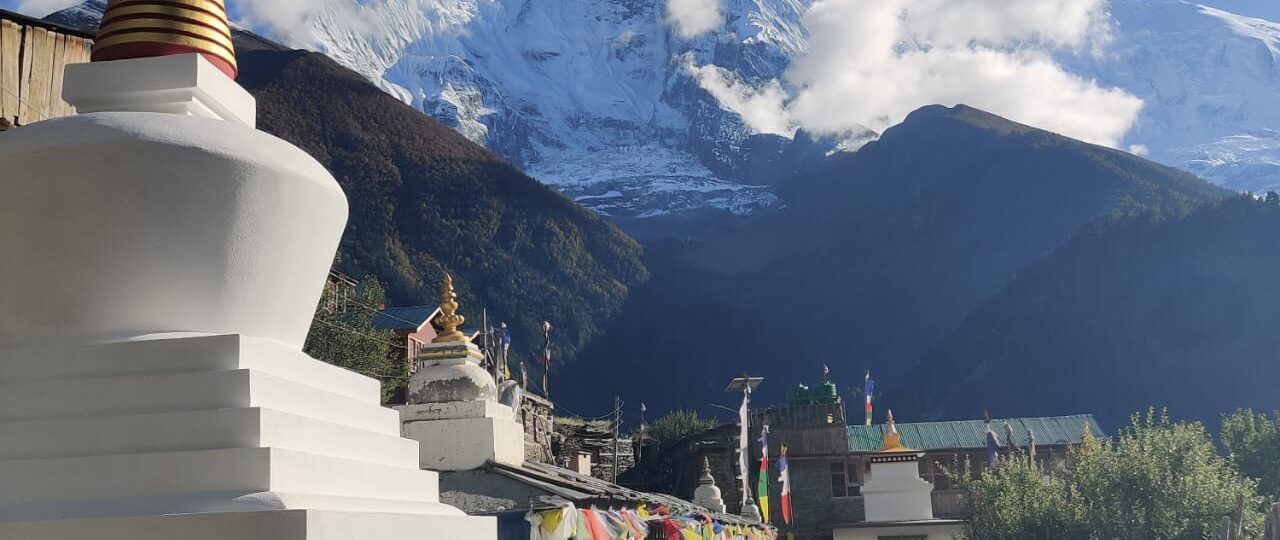
For more than twenty years, I have worked on the Annapurna Circuit route. I started as a porter on these trails and now work as a guide and co-founder of Mosaic Adventure. Over time, I have learned where costs usually rise, what tends to surprise first-time trekkers, and what is worth paying for. Those years have taught me that a successful and memorable trek starts with a realistic and well-prepared budget.
This guide is based on that experience. It is not just a list of numbers. It breaks down common costs for the Annapurna Circuit trek in different seasons and explains what usually changes with altitude, comfort level, and transport choices. You will find clear and current information on permits, transportation, food, accommodation, and the important cost of hiring a guide or porter.
By the time you finish reading, you will have all the details you need to plan your budget with confidence. That way, you can focus on the breathtaking scenery and the rich cultural experiences of the Himalayas, without worrying about unexpected costs.
Trekking with a Tour Operator
You can trek independently, but many people choose a tour operator for simpler logistics and extra support on the trail, especially on a first high-altitude trek. A tour operator like Mosaic Adventure can arrange transport, permits, accommodation, meals, and staffing. Before you book, check what is included (and what is not), because packages vary.
There are two main types of operators to choose from:
Local Tour Operators: These companies are based in Nepal and operate in the region directly. Packages often fall between USD 900 and USD 2,000 depending on trek length, group size, and included services.
International Tour Operators: These companies are usually based outside Nepal and often charge more, commonly between USD 1,500 and USD 4,000. They may partner with a Nepal-based operator for staffing and ground logistics.

Breakdown of Annapurna Circuit Trek Cost
Daily Cost & Typical Trek Budget Scenarios
It helps to think in daily cost ranges and a total budget based on how you trek: independent, guided, or fully organised.
- Independent / Budget Trekking: approx USD 25 to 40 per day, usually covers basic teahouse accommodation, meals, and local transport once you are on the route (permits and gear are extra).
- Mid-Range (Guided + Better Tea Houses): approx USD 45 to 70 per day, usually includes a guide, slightly more choice in meals, and some private transport.
- Premium / All-inclusive: approx USD 80 to 120+ per day, often includes private transport, full logistics, and a guide and porter.
For most people, the total cost for a 10 to 18 day Annapurna Circuit trek (excluding international flights) usually sits between USD 900 and 2,000, depending on route choice, transport style, and personal spending.
Visa Cost
You will need a visa to enter Nepal regardless of which country you’re from, except for India. Indians can enter Nepal without a visa. While you can get your visa before you come to Nepal, many travellers use a visa on arrival at Kathmandu airport.
The cost of your visa will depend on your duration of stay. All visas allow multiple entries into the country within the visa time frame. The up-to-date visa rates are:
- 15 days: USD 30
- 30 days: USD 50
- 90 days: USD 125

Transportation Cost
There are two ways to choose domestic transportation. You can either take a flight or go by land via bus or a private jeep/taxi.
If you choose to take a flight, the cost can vary seasonally. The flight tickets are generally costlier during the peak trekking months (February to May, and September to November).
However, if you book your flight well ahead of your trek, you might be able to get some good deals.
- Flight from Kathmandu to Pokhara (including return): approx USD 215
- Local Bus from Pokhara to Besisahar (starting point of the trek): approx USD 8
- Local transport at the end of the trek (for example, from Jomsom area towards Pokhara): costs vary by route and vehicle type, but local buses and shared jeeps are the cheapest options.
And if you are traveling in a group, you can choose to hire a private vehicle in which you can share the cost amongst the group members.
- Local Bus from Kathmandu to Besisahar: approx USD 9 to 10 (one way)
- Private Jeep from Kathmandu to Besisahar: approx USD 160 to 170 (one way)

Food and Drinks Cost
Tea houses have improved in many villages, and menus are often wider than they used to be. The quality of the food has also gotten better, and you can find more varieties. Most tea houses now serve dishes like spaghetti, pasta, and sandwiches.
Yet the best value for the money is Dal Bhat, the Nepali staple food. It is tasty, filling and inexpensive.
As you ascend, food prices rise with altitude. Typical meal costs on trail are:
- Dal Bhat / simple meal at lower altitudes: USD 6 to 9
- Meals higher up (Manang, Thorong Phedi): USD 9 to 15+
- Snacks & extras (momos, noodles): USD 3 to 7
Many trekkers budget around USD 20 to 35 per day for food and drinks, depending on appetite, snacks, hot drinks, and how often you buy bottled water.

Accommodation Cost
Accommodation is usually affordable on the route. A basic twin room often costs around USD 15 to 16 when you also eat dinner and breakfast at the same tea house. If you do not, some places charge more for the room.
The tea houses are clean for the most part. The rooms are basic. They have power outlets and occasionally have attached bathrooms with western or squat toilets.
Many tea houses have a simple common area, often with a stove in colder months. Though limited, wifi is available in some tea houses.
Guide or Porter Cost
Guides and porters support the trek in different ways. A guide helps with route decisions, timing, communication, and handling problems early (weather, health, logistics). A porter can carry the main bag so you can walk with a lighter daypack, which many people find reduces fatigue on long days.
Many operators set porter limits around 20 kg per porter, but this can vary. It is better to pack light and confirm limits before the trek.
Recommended Vaccinations Cost
Vaccinations are a personal health decision. They are not a trekking requirement, but some travellers choose them based on their itinerary and medical history.
Before you travel, speak to a travel clinic or your doctor about what is suitable for you (for example, tetanus boosters and food-and-water related risks).
The average cost of vaccination for Annapurna Circuit trek is anywhere between USD 150 to 200. Also, in order to prevent yourself from waterborne diseases, we recommend that you carry a portable water purifier.

Permits for the Annapurna Circuit
Permit rules can change, and enforcement can vary by checkpoint. For the Annapurna Circuit, plan for the following:
- Annapurna Conservation Area Permit (ACAP): NPR 3,000 for most foreign nationals and NPR 1,000 for SAARC nationals.
ACAP fees are set in Nepali rupees, and permits can be arranged in Kathmandu or Pokhara. There is also an official online permit system run by NTNC. (If you get a permit at a checkpoint, fees can be higher.)
TIMS card: TAAN describes TIMS as compulsory for trekking areas, but on the Annapurna Circuit it is not always checked in practice. If you are trekking with an agency, confirm the current situation close to your travel date.
Travel Insurance Cost
Trekking to the mountains always comes with its own set of risks, and Annapurna Circuit trek is no different.
You never know what you might have to deal with while you are trekking. Anyone can suffer from acute mountain sickness, muscle sprain, and general fatigue.
So it is wise to stay on the safe side by having travel insurance. Your travel policy should cover every extra expenditure that might occur as a result of various injuries, health issues, or accidents.
It should also cover the cost of a helicopter rescue, treatment cost as well as the repatriation costs, including theft and liability, cancellation, and misplaced luggage.
The Annapurna Circuit trek in Nepal goes over the elevation of 5,000 meters, therefore, make sure your policy covers trekking up to at least 6,000 meters, since the route includes a high pass.
With all of these, the average cost for trekking insurance (not including mountaineering) is USD 150 (based on 30 days cover).
Make sure your policy specifically covers:
- Helicopter evacuation above 4,000 meters
- High altitude sickness (up to at least 6,000 meters)
- Medical treatment, repatriation, trip cancellation
Equipment Cost
The cost of equipment is difficult to estimate as it varies from one individual to another. It also depends on how much equipment you already own and how much you are willing to buy or rent.
If you are someone who does not trek frequently, then renting can be a good option. You might not want to spend much on buying something that may not be of much use later.
However, renting gear also has a cost. Whether you choose to buy or rent, you will find many trekking gear shops both in Kathmandu and Pokhara.
You will need various gear and equipment for Annapurna Circuit trek. Some of the basic ones are
- A warm sleeping bag
- Duffel bag and a day pack
- Warm and waterproof jacket
- Trekking trousers and shirts, including a base layer and second layer fleece
- A pair of lightweight, well-fitted trekking boots
- Pair of regular shoes for when you want to take a stroll
- Warm gloves (inner and outer layers) and thermal socks
- Trekking Poles
A rough estimate for buying key items you do not already own can be around USD 500, but it varies widely depending on what you already have and whether you rent or buy.
Miscellaneous & Hidden Costs to Budget For
- Wi-Fi / mobile data: USD 2 to 5 per session in some tea houses.
- Charging devices: USD 2 to 5 per charge.
- Hot showers: USD 2 to 4 each.
- Emergency buffer: $100 to 150 (recommended), especially for weather delays or extra nights.
Total Annapurna Circuit trek cost
For a 10 to 14 day Annapurna Circuit trek, a typical mid-range budget often ranges from USD 1200 to 1600 (excluding international flight).
The cost includes domestic transportation, trek permits, accommodation, and meals. Yet, this cost does not include insurance, visa, and personal equipment.
Tips for Annapurna Circuit trek
- While choosing a tour operator, make sure it is registered with relevant tourism bodies (for example, TAAN) and uses licensed guides. Also ask how they handle staff insurance, wages, and porter load limits.
- Though there are various views regarding tipping in Nepal, we suggest you tip your guide and porter. The general rule of thumb is tipping about 10 percent of your trekking cost. And if you wish to pay more, it is totally up to you.
- Carry extra money for facilities like wifi, charging electronics, hot showers, buying snacks, etc.
Ways to Reduce Your Annapurna Circuit Trek Cost
The Annapurna Circuit is a long high-altitude trek, and with careful planning, you can manage costs without sacrificing safety or basic comfort. Here are some practical ways to keep costs low while still enjoying the beauty of the Himalayas.
Trek in the Off-Season
Traveling during quieter months, such as the monsoon (June to August) or winter (December to January), usually means lower prices for flights and accommodation. You will also meet fewer trekkers, making for a more peaceful experience, although the weather can be less predictable.
Tip: In monsoon and winter, plan more buffer days and be flexible with transport.
Use Local Transportation
Taking local buses or shared jeeps to starting points like Dharapani can save a lot compared to private transfers. After finishing in Jomsom, you can also choose a jeep instead of a flight, and the same applies when traveling from Pokhara to Kathmandu. This not only saves money but also lets you experience local life.
Tip: Shared vehicles cost less, but delays are common on mountain roads.
Rent Trekking Gear
If you do not trek often, renting equipment like sleeping bags, down jackets, and trekking poles in Kathmandu is much cheaper than buying.
Tip: Check zips, seams, and insulation before you rent, especially for sleeping bags and down jackets.
Save on Water
Bottled water costs add up quickly on the trail. Carry a reusable bottle and use purification tablets or a portable filter to drink safely from local sources, saving money and reducing plastic waste.
Tip: A filter or tablets usually pays for itself after a few days on the trail.
Bring Your Own Snacks
Snacks like energy bars, nuts, and dried fruits are much cheaper in Kathmandu or Pokhara than at high-altitude tea houses.
Tip: Buy snacks in Kathmandu or Pokhara; prices rise quickly after Manang.
Choose Local Meals
Traditional Nepali meals such as dal bhat are more affordable than Western dishes and often come with free refills, keeping you full for less.
Tip: Dal bhat is usually the best value and can help keep daily food costs stable.
Get Permits Through a Reliable Operator
You will need permits for the Annapurna Circuit. Getting them through a reputable operator avoids scams, extra charges, and unnecessary hassle.
Tip: If you want less admin work, have your operator arrange permits and keep digital and paper copies.
Why Choose Mosaic Adventure?
If you want help organising the Annapurna Circuit, Mosaic Adventure can arrange permits, transport, accommodation, and staffing based on your budget and pace. We keep planning practical: what is included, what is optional, and what costs tend to change with season and altitude. Contact us if you want a clear itinerary and cost outline before you book.
Conclusion
The Annapurna Circuit trek is a long walk in high mountains. The total cost is not fixed and can be adjusted based on your comfort level, transport choices, and whether you hire support. If you understand the main cost areas (permits, transport, food, accommodation, and staffing), you can plan realistically and avoid stress on the trail.
If you have questions or want a cost plan based on your dates and trekking pace, you can contact us. We can help you estimate costs and confirm what is included before you decide.
Want more information? Send us your query, and our experts will get back to you within 24 hrs.

Madhav Prasad is a seasoned trekking and tourism expert with over two decades of experience in the field. Starting his career in 2001 as a porter, Madhav quickly advanced to the role of trekking guide, gaining invaluable hands-on experience in Nepal’s diverse trekking routes. In 2009, after eight years of dedication to the industry, he co-founded Mosaic Adventure, a leading trekking and tour company known for its commitment to safety, sustainability and personalized service.
Madhav has personally trekked to nearly every major trekking destination in Nepal, including Everest Base Camp, Annapurna Base Camp, the Annapurna Circuit, Poon Hill, Jomsom Muktinath, the Indigenous Peoples Trail, Langtang Valley and Mardi Himal, among others. His experience extends beyond Nepal, as he has also successfully summited Mount Kilimanjaro, Africa’s highest peak.
In addition to his extensive trekking credentials, Madhav is well traveled globally, having explored countries such as Australia, the USA, the UK, France, Japan, China, and many others. His global exposure enhances his ability to understand and cater to the diverse needs of international trekkers.
Madhav is the primary point of contact for many clients at Mosaic Adventure, personally addressing inquiries and helping plan treks with a meticulous and personalized approach. His deep knowledge of Nepal’s trekking routes, combined with his global travel experience, ensures that every trek is well planned, safe and unforgettable.
