
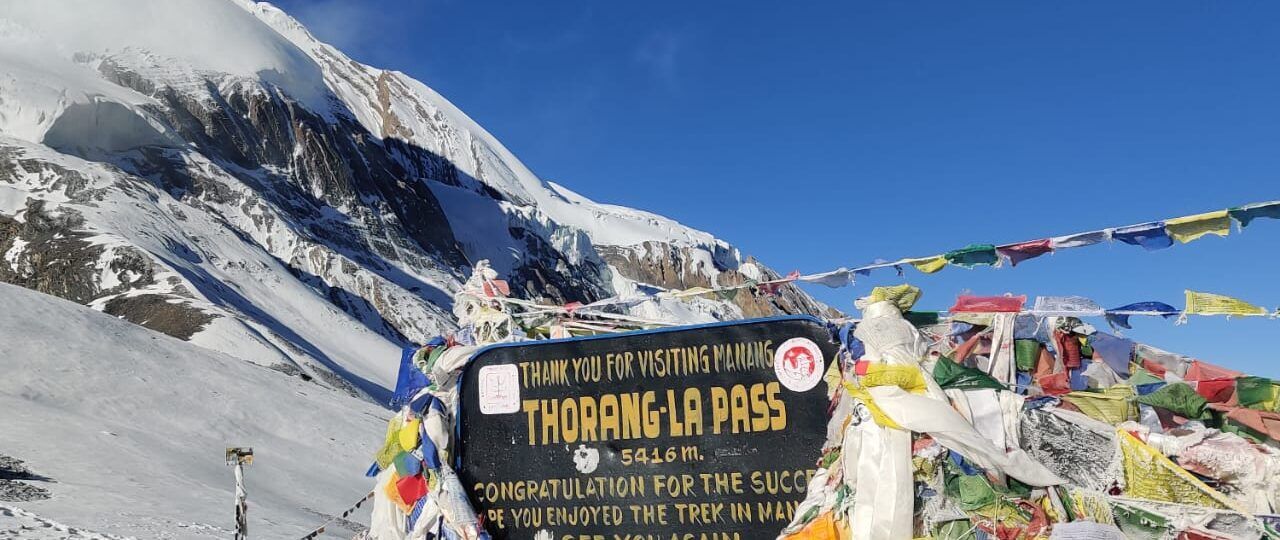
Most people planning the Annapurna Circuit in 14 days ask the same thing: is it enough time to cross Thorong La safely without rushing the trek?
Below is a day-by-day itinerary with realistic walking times, plus the practical details that often shape the trek on the ground: road sections, teahouses, cold on the pass, cash planning, and what to do if weather or altitude forces a change.
The route is normally walked anti-clockwise (Besisahar side to Muktinath side). This direction helps your body adjust before the 5,416m Thorong La Pass.
Annapurna Circuit 14 Days: Quick Facts
| Total duration | 14 days (including travel days) |
|---|---|
| Highest point | Thorong La Pass: 5,416m |
| Typical walking days | 10 to 11 days of hiking (varies by transport choices) |
| Daily hiking time | Usually 4 to 7 hours (pass day is longer) |
| Start / finish (common) | Besisahar (or Chame/Dharapani) to Pokhara/Kathmandu via Muktinath, Marpha, Tatopani, Ghorepani |
| Accommodation | Teahouses (basic rooms, shared bathrooms common) |
| Permits | ACAP is required. TIMS and guide rules can change, so confirm what applies to your route before you start. |
Overview of Annapurna Circuit Trek
The Annapurna Circuit is a long, varied mountain walk that crosses Thorong La Pass (5,416m). In 14 days, most trekkers can complete the classic circuit if they keep the Manang acclimatization day and accept that some lower sections now include road or jeep track walking.
Road reality (important): Over the years, road access has expanded in parts of the lower circuit, so some sections can feel more like a jeep track than a footpath. To keep the trek enjoyable, many trekkers use a mix of walking trails and short drives, and they follow side trails that avoid the road where possible (often called the NATT trails, short for New Annapurna Trekking Trails).
Why most people walk anti-clockwise: It gives you more days to gain altitude slowly before the pass, which lowers the risk of altitude sickness.
In this article: the 14-day plan, what each day feels like, where the trek is quieter or more developed, how to choose Thorong Phedi vs High Camp, and the practical details that affect comfort and safety.
If you also want a shorter route option, see our Annapurna Circuit Trek 10 Days.
Highlights of Annapurna Circuit Trek (14 Days)

This itinerary is built around three things: safe acclimatization, the Thorong La crossing, and a gradual change of landscapes and culture from the Marsyangdi Valley to the Kali Gandaki Valley.
- Thorong La Pass (5,416m): The highest point of the trek and the hardest day for most people.
- Manang acclimatization day: A planned day to adjust before you go higher.
- Mountain viewpoints: Annapurna and Dhaulagiri range views on multiple days, plus sunrise at Poon Hill near the end.
- Muktinath area: A major pilgrimage site for Hindus and Buddhists, with a very different landscape to the Manang side.
- Kali Gandaki Valley: A wide, windy valley with big views and strong local culture.
- Thakali villages (like Marpha): Known for food culture and apple farming.
- Tatopani hot springs: A simple recovery stop after long days.
- Ghorepani and Poon Hill: A classic finish with forest trails and a short, early-morning viewpoint walk.
Is 14 Days Enough for the Annapurna Circuit?
For many people, 14 days is enough if you are comfortable with long travel days at the start, you keep the Manang acclimatization day, and you are flexible on the Thorong La crossing day.
- 14 days works well if: you have decent fitness, you can walk 5 to 7 hours most days, and you do not rush altitude.
- Consider more days if: you want to add Tilicho Lake, you prefer shorter walking days, or you want extra buffer for weather.
- Consider fewer days only if: you are already acclimatized or you use more transport. Faster plans increase risk if you gain altitude too quickly.
If you want to add Tilicho Lake, see our Annapurna Circuit with Tilicho Lake Trek.
Want more information? Send us your query, and our experts will get back to you within 24 hrs.
Annapurna Circuit Trek 14 Days Itinerary in Detail
Times below are realistic ranges. Weather, trail condition, and your pace can change the plan. On the Thorong La day, we start early because wind and clouds often build later.
| Day | Route | Sleep altitude | Typical time | Notes |
|---|---|---|---|---|
| 1 | Arrive Kathmandu | 1,345m | – | Light walk, gear check |
| 2 | Drive Kathmandu to Chame | 2,650m | 11 to 12 hrs | Long drive, road can be rough after Besisahar |
| 3 | Trek Chame to Pisang | 3,060m | 5 to 6 hrs | First trekking day, steady ascent |
| 4 | Trek Pisang to Manang | 3,440m | 5 to 6 hrs | High route vs low route choice |
| 5 | Acclimatization day in Manang | 3,440m | 2 to 5 hrs | Short hike, sleep low |
| 6 | Trek Manang to Yak Kharka | 4,020m | 4 to 5 hrs | Noticeable altitude change |
| 7 | Trek to Thorong Phedi or High Camp | 4,450m or 4,900m | 4 to 5 hrs | Choose based on sleep and comfort |
| 8 | Cross Thorong La to Muktinath | 3,800m | 7 to 9 hrs | Hardest day, start early |
| 9 | Trek Muktinath to Marpha | 2,670m | 6 to 7 hrs | Big descent, easier breathing |
| 10 | Drive Marpha to Tatopani | 1,190m | 4 to 6 hrs | Road day, hot springs |
| 11 | Trek Tatopani to Ghorepani | 2,860m | 6 to 7 hrs | Long climb through forest |
| 12 | Poon Hill sunrise, trek to Nayapul, drive to Pokhara | Pokhara | 5 to 6 hrs walk + drive | Early start, finish trek |
| 13 | Drive Pokhara to Kathmandu | 1,345m | 6 to 7 hrs | Flight option saves time |
| 14 | Depart Kathmandu | – | – | Airport transfer |
Day 01: Arrival in Kathmandu

Altitude: 1345m
After landing at Tribhuvan International Airport, you transfer to your hotel. If you are trekking with us, we arrange the pickup. Once you are settled, a short walk in Thamel helps you stay awake and adjust to the time zone.
Practical notes:
- Check your main gear and clothing and fix missing items early.
- Keep a digital copy of your passport and a clear personal photo ready on your phone or email. If you are trekking with us, we collect these in advance to process permits.
- Rest well. Tomorrow is a long drive.
Overnight: 3-star hotel.
Day 02: Drive from Kathmandu to Chame
Altitude: 2,650m
Driving time: 11 to 12 hours
An early start takes you along the Trishuli and Marsyangdi rivers toward the mountains. The road is smooth until Besisahar, then becomes rougher as it climbs into the valley.
Expect a long but scenic day with waterfalls, terraces, and narrow gorges. Road conditions vary by season, so delays are normal.
Overnight: Lodge in Chame.
Day 03: Trek from Chame to Pisang
Altitude: 3,060m
Walking time: 5 to 6 hours
Today’s walk follows the Marsyangdi River through pine forests and steep valley walls. Suspension bridges and rock cliffs mark the change from road valley to mountain trail.
As you approach Pisang, views open toward Pisang Peak and Lamjung Himal.
Overnight: Lodge in Pisang.
Day 04: Trek from Pisang to Manang

Altitude: 3,440m
Walking time: 5 to 6 hours
There are two routes today. The higher trail is steeper but more scenic. The lower trail is easier and follows the valley.
Both routes lead through dry alpine landscapes into Manang, a large village with wide mountain views.
Overnight: Lodge in Manang.
Day 05: Acclimatization in Manang
Altitude: 3,440m
This is your planned acclimatization day before going higher. A short hike helps, but the key is to return and sleep in Manang.
Common options are Braga Monastery, Gangapurna Lake, or a viewpoint above the village. Strong hikers sometimes go higher (Ice Lake is a long day).
Keep the pace easy, drink regularly, and take the afternoon to rest.
Overnight: Lodge in Manang.
Day 06: Trek to Yak Kharka

Altitude: 4,020m
Walking time: 4 to 5 hours
The trail climbs gradually through open alpine slopes. From today the air feels thinner, so keep the pace steady and conservative.
Yak Kharka is a small settlement with basic lodges.
Overnight: Lodge.
Day 07: Trek from Yak Kharka to Thorong Phedi or High Camp
Altitude: 4,450m (Thorong Phedi), 4,900m (High Camp)
Walking time: 4 to 5 hours
You walk slowly along the Thorong River toward the base of the pass. How you feel today matters more than speed. Many trekkers decide after dinner, once they know how their body is handling the altitude.
The trade-off is simple: High Camp makes the pass morning shorter, but sleeping higher can feel harder.
Thorong Phedi is better if: you want lower altitude and better sleep.
High Camp helps if: you feel strong and want a shorter pass day.
If you feel unwell in the afternoon, stay lower.
Overnight: Lodge.
Day 08: Trek from Thorong Phedi to Muktinath via Thorong La Pass
Highest point: 5,416m (Thorong La Pass)
Walking time: 7 to 9 hours
You start before sunrise to cross the pass while weather is more stable. The climb is slow and steady. If you lose appetite or develop a strong headache, tell your guide early. Do not wait until the top.
After reaching the pass, you descend for several hours to Muktinath.
Overnight: Lodge in Muktinath.
Day 09: Trek from Muktinath to Marpha
Altitude: 2,670m
Walking time: 6 to 7 hours
The trail drops into the Kali Gandaki Valley through dry landscapes and traditional villages.
Marpha is known for apple orchards and Thakali culture.
Overnight: Lodge in Marpha.
Day 10: Drive from Marpha to Tatopani

Altitude: 1,190m
Driving time: 4 to 6 hours
The road follows the Kali Gandaki River through deep valleys and warmer air.
Tatopani has natural hot springs that many trekkers use to relax tired legs.
Overnight: Lodge.
Day 11: Trek to Ghorepani
Altitude: 2,860m
Walking time: 6 to 7 hours
A long uphill walk through forested hills leads to Ghorepani, a village on a ridge. Start early. On this climb, short breaks tend to work better than long rests.
Overnight: Lodge.
Day 12: Hike from Ghorepani to Poon Hill and Then to Nayapul and Drive to Pokhara

Altitude: 1,850m
Early morning walk to Poon Hill for sunrise. After breakfast, descend through forest to Nayapul and drive to Pokhara.
Overnight: 3-star hotel in Pokhara.
Day 13: Drive from Pokhara to Kathmandu
Altitude: 1,345m
Driving time: 6 to 7 hours
You return to Kathmandu by tourist bus. A flight is available if you prefer to save time.
Overnight: Hotel in Kathmandu.
Day 14: Departure from Kathmandu
Altitude: 1,345m
Transfer to the airport for your onward flight.
With this, we come to an end of our 14 days Annapurna Circuit Itinerary. You, however, have the option of extending your journey or taking part in another trek.
You can also check our Annapurna Circuit Trek 10 Days.
This itinerary was prepared by Madhav Prasad, co-founder of Mosaic Adventure, based on 15+ years of guiding and planning treks in the Annapurna region. It was last updated on January 31, 2026 and is reviewed regularly using recent trail reports from local guides and teahouse owners. The pacing includes a planned acclimatization day in Manang and a conservative approach to the Thorong La crossing, with route adjustments recommended if weather, road conditions, or altitude symptoms change.
Trail Conditions and Road Sections (What to Expect Now)
It is important to know that parts of the Annapurna Circuit now overlap with roads, especially in some lower areas. This does not ruin the trek, but it changes how you plan.
- Where you may notice roads: sections after Besisahar and parts of the Kali Gandaki side can include jeep track walking or short drives.
- How trekkers avoid the worst parts: by using older foot trails and side paths often described as the NATT trails (New Annapurna Trekking Trails).
- Seasonal reality: road conditions can change fast due to landslides, especially in and after the monsoon. Build in flexibility and listen to local updates.
If you are very sensitive to road walking, tell your guide early. In many places, there is a better foot trail nearby, even if it adds some time.
Best Time for Annapurna Circuit Trek (14 Days)
Most trekkers choose spring (March to May) or autumn (September to November). These seasons usually have clearer skies and more stable walking conditions.
Autumn (Sep to Nov): often the clearest mountain views after the monsoon. October and November are popular for the Thorong La crossing, but mornings can be very cold at high altitude.
Spring (Mar to May): warmer days, blooming rhododendrons in lower sections, and good visibility. Late spring can bring more cloud in the afternoons.
Winter (Dec to Feb): fewer trekkers and very cold nights. Thorong La can close temporarily after heavy snow, so you need extra flexibility.
Monsoon (Jun to Aug): lower sections can be wet and leech-prone, but parts of the circuit sit in a rain-shadow area. Expect more clouds, and plan for muddy trails and possible road delays from landslides.
The Difficulty of the Trek
The Annapurna Circuit trek is a moderate to strenuous trek reaching a maximum altitude of 5,416m.
Though it doesn’t involve technical climbing, some hiking experience helps.
You will be walking for 6 to 7 hours each day. And the trek will go through different terrain, rocky steps, steep ascents and descents full of loose rocks, and creeks.
And the higher you climb, the harder it will get due to the altitude. Make sure you take proper rest in between and to acclimate properly.
Also, we recommend prior physical training such as morning jogging and exercise, etc.
Altitude Sickness (Read This Before You Go Higher)
Altitude sickness can happen to anyone, even if you are fit. On the Annapurna Circuit, risk increases once you sleep above 3,000m and it rises again above 4,000m.
Do not try to “push through” symptoms. The safe response is to stop gaining altitude, rest, and tell your guide. If symptoms get worse, the correct treatment is to descend.
Common early symptoms: headache, loss of appetite, nausea, unusual tiredness, poor sleep, dizziness.
Basic prevention that works:
- Go up slowly and keep the Manang acclimatization day.
- Drink enough water and eat regular meals.
- Avoid alcohol before and during the high-altitude part of the trek.
- Walk at a pace where you can still talk in full sentences.
For a deeper, step-by-step safety guide, see our detailed post: Acute Mountain Sickness: A Guide to Safe High Altitude Trekking.
Accommodation During the Trek
The Annapurna Circuit trek is a tea house trek which means there are guesthouses in almost every village.
But generally, most rooms are basic. And they come with shared bathrooms.
All rooms come with a blanket, bed and a pillow. However, it is a good idea to bring your own sleeping bag as it gets very chilly in the higher altitude and there are no heating systems inside the rooms.
Some places may offer hot gas showers for an additional fee. In that case, take advantage while you can.
Because above Manang, you won’t get the chance to shower until you reach Muktinath, on the other side of the pass.
Trekking Permits
ACAP (Annapurna Conservation Area Permit) is required for the Annapurna Circuit. Permit fees are commonly listed around NPR 3,000 for most foreign nationals and lower for SAARC nationals, but fees and rules can change, so confirm close to your travel date.
TIMS and guide rules: You will see mixed information online. Nepal has had rule changes around TIMS and guiding, and enforcement can vary by route and checkpoint. The safest approach is to confirm the current process with an official source or a licensed agency when you arrange your trek.
- Official Nepal Tourism Board TIMS page (agency process): TIMS Card
- Rule-change background (April 2023): many summaries note a shift toward licensed guides for foreign trekkers.
What you usually need: a passport copy and a clear personal photo. Keep your passport with you during travel, and keep digital copies backed up in your email or cloud storage.
Packing List for Annapurna Circuit Trek 14 Days

Pack for your season and expect big temperature swings between valleys and high passes.
And the rule is to pack all the necessary items without overpacking.
Packing wisely plays a huge role in making your trekking experience smooth and comfortable.
Packing Essentials
- Supportive Day Pack
- Packing Satchel
- Waterproof Dry Bag
- Travel Insurance
- A Sleeping Bag
- Sleeping Bag Liner
- Reusable water bottle
- Portable Solar Charger
- A kindle or a book
- A first aid kit
Clothing Essentials
- Sturdy Hiking Boot
- Tea house shoes or flip flops
- 6 pair of underwear, 4 pair of socks
- Thermal tops and bottoms
- 2 pair of hiking pants
- 1 pair of shorts
- 2 to 3 pair of T-shirts or tops
- 2 Jumpers (Fleece or woolen)
- Warm Down jacket
- 1 Rain jacket
- 1 pair Waterproof Pant
Essential Accessories / Toiletries
- Hiking pole
- Head Lamp
- Sunglasses
- Sunhat
- A beanie/ a buff
- Warm gloves
- Lip Balm
- Sunscreen
- Soap, Shampoo
- Tissue Paper
NOTE: Above lists are just guidelines. You can add or remove items according to your needs.
Tips for Annapurna Circuit Trek 14 Days
- Choose a suitable season and pack accordingly. And always know the weather condition before trekking.
- Since you will be walking for 5 to 6 hours every day. Make sure you have a good sturdy hiking boot.
- While trekking maintain your own pace because you are not in a competition. And take proper rest whenever you need.
- Trekking over 3,000m brings a risk of altitude sickness. So, in order to minimize the risk, drink plenty of water and stay hydrated.
- Avoid drinking alcohol as it can cause dehydration and increase the risk of altitude sickness.
- The water from the taps is not suitable to drink. Hence carry water purification tablets or use bottled water.
- Hire a professional guide and porter. They are helpful both for safety and convenience.
- Always reach out for help from the guide or team leader in case of any problem.
- There are no ATMs in the remote areas. So take enough cash that will last you for the trip.
- Keep extra days in case of any unplanned situation such as flight delays and accidents etc.
Cost of Annapurna Circuit Trek 14 Days
It costs USD 1180/person for above outlined 14-day itinerary. Minimum 2 participants required for the tour to proceed.
Available on any date throughout the year.
This tour is our standard offering. If you wish to customize the itinerary, please feel free to contact us.
You can customize the trip in the following ways:
- Add more days to the trek.
- Change from a drive from Pokhara to Kathmandu to a flight option.
- Any other customization you have in mind.
The Cost Includes
- Arrival and departure transfers.
- Hotel in Kathmandu with breakfast.
- Kathmandu to Chame drive.
- All standard meals (breakfast, lunch, and dinner) during the trek.
- Teahouse accommodation during the trek.
- English speaking guide and required number of porters (1 for 2 trekkers) with their food, accommodation, salary, insurance, equipment, and medicine.
- Required trekking area entry permits.
- Transfer from Marpha to Tatopani on a local vehicle.
- Nayapul to Pokhara transfers.
- Bus from Pokhara to Kathmandu.
- Jacket, sleeping bag, and duffel bag for use during the trek (available on request).
- Government-imposed taxes.
The Cost Excludes
- Lunch and dinner during your stay in Kathmandu and Pokhara.
- Personal expenses such as laundry, telephone calls, sweets, snacks, etc.
- All beverages and bar bills (tea, coffee, bottled/hot water, coke, etc.).
- Travel Insurance (Essential).
- Personal trekking equipment, except stated above.
- Tipping (expected by guide and porter).
- Any loss arising due to unforeseen circumstances beyond Mosaic Adventure’s control.
Typical extra spending on the trail includes hot showers, charging, hot drinks, snacks, and tips.
FAQs for the Annapurna Circuit Trek (14 Days)
These questions come up often when people plan a 14-day Annapurna Circuit itinerary. Answers are written for practical planning, not marketing.
Is the Annapurna Circuit Trek suitable for beginners?
The Annapurna Circuit is a moderately challenging trek, suitable for anyone with a reasonable fitness level. You do not need technical climbing skills, but the varied terrain and higher altitudes require stamina and preparation. We recommend starting a fitness routine, such as cardio, strength training, or regular hiking, about three to four months before your trip. Our guides will set a pace that suits you and offer support throughout the trek.
When is the best time to trek the Annapurna Circuit?
Spring (March to May) and autumn (September to November) offer the best conditions, with clear skies, comfortable temperatures, and spectacular views. Thanks to the Annapurna region’s rain shadow, parts of the circuit are also possible during the monsoon (June to August), although trails may be muddy. Winter treks are an option, but expect colder temperatures. We can help you choose the best season based on your preferences.
How much cash should I carry, and are ATMs available?
Once you leave Besisahar, there are no ATMs, so bring enough Nepali Rupees for personal expenses such as snacks, hot showers, or tips. A budget of USD 20 to 30 per day per person is usually enough. Your main costs, including meals, lodging, and permits, are covered by Mosaic Adventure, so you can focus on enjoying the trek. We also guide you on tipping customs for our team of guides and porters.
What kind of accommodation can I expect?
You will stay in small, family-run teahouses that offer a warm welcome and a simple but comfortable place to rest. Rooms usually have twin beds with blankets and pillows. At higher altitudes, we provide quality sleeping bags for extra warmth. Bathrooms are often shared, but some teahouses have private facilities or hot showers available for a small fee.
How can I prevent altitude sickness?
Your safety comes first. Our 14-day itinerary includes an acclimatization day in Manang to give your body time to adjust. We follow the “climb high, sleep low” approach, encourage you to drink plenty of water, and advise avoiding alcohol. Our guides are trained to watch for symptoms and carry emergency equipment, including oxygen, to keep you safe.
Do I need trekking permits?
Yes. ACAP (Annapurna Conservation Area Permit) is required for the Annapurna region. TIMS and guide requirements have changed over time and enforcement can vary by route and checkpoint, so confirm the current process close to your travel date. If you arrange the trek through an agency, they can handle the paperwork and explain what is required for your specific route.
Is the water safe to drink on the trail?
We recommend avoiding untreated tap or stream water. Bring water purification tablets, a SteriPen, or a filtered bottle. Boiled water is available in teahouses, and bottled water can be purchased, though we encourage eco-friendly choices to reduce plastic waste. Our team will advise you on the safest options each day.
What should I pack for the trek?
Pack for both comfort and changing weather. Essentials include sturdy hiking boots, layered clothing (thermals, fleece, down jacket), a rain jacket, headlamp, and a small first-aid kit. We provide a duffel bag, sleeping bag, and down jacket for your use. We also give you a detailed packing list so you can prepare with confidence.
Can I charge my devices on the trail?
Most teahouses offer charging for a small fee, but electricity is less reliable at higher altitudes. A power bank or extra batteries is recommended to keep your phone or camera ready for the views. Our guides can suggest the best places to charge and help you plan device usage.
What is a typical trekking day like?
Your day begins with a filling breakfast before trekking for five to seven hours at a steady pace. We take breaks to rest, drink water, and enjoy the scenery. Lunch is served at a teahouse along the way, and we usually arrive at our destination by mid-afternoon. This leaves time to relax, explore the village, or enjoy a warm dinner in the communal dining area.
How cold is Thorong La Pass?
It depends on month and weather. Even in good seasons, mornings at high altitude can be below freezing and wind can make it feel much colder. Plan warm layers, gloves, and a warm hat for the pass day.
What if Thorong La Pass closes due to weather?
If there is heavy snow or dangerous wind, the safe choice is to wait, descend, or change plan. This is why many itineraries work better with at least one flexible buffer day if your schedule allows it.
Conclusion
A 14-day Annapurna Circuit itinerary can be a sensible plan if you keep the Manang acclimatization day, take the pass day seriously, and stay flexible with trail and weather changes.
If you want help choosing dates, transport options, or a safer pacing plan for your fitness level, you can contact our team here: Contact Mosaic Adventure.
Want more information? Send us your query, and our experts will get back to you within 24 hrs.

Madhav Prasad is a seasoned trekking and tourism expert with over two decades of experience in the field. Starting his career in 2001 as a porter, Madhav quickly advanced to the role of trekking guide, gaining invaluable hands-on experience in Nepal’s diverse trekking routes. In 2009, after eight years of dedication to the industry, he co-founded Mosaic Adventure, a leading trekking and tour company known for its commitment to safety, sustainability and personalized service.
Madhav has personally trekked to nearly every major trekking destination in Nepal, including Everest Base Camp, Annapurna Base Camp, the Annapurna Circuit, Poon Hill, Jomsom Muktinath, the Indigenous Peoples Trail, Langtang Valley and Mardi Himal, among others. His experience extends beyond Nepal, as he has also successfully summited Mount Kilimanjaro, Africa’s highest peak.
In addition to his extensive trekking credentials, Madhav is well traveled globally, having explored countries such as Australia, the USA, the UK, France, Japan, China, and many others. His global exposure enhances his ability to understand and cater to the diverse needs of international trekkers.
Madhav is the primary point of contact for many clients at Mosaic Adventure, personally addressing inquiries and helping plan treks with a meticulous and personalized approach. His deep knowledge of Nepal’s trekking routes, combined with his global travel experience, ensures that every trek is well planned, safe and unforgettable.
