Everest Base Trek in April is ranked as one of the most trekked times of the year and it is the month with the most satisfied trekkers due to its beautiful views, clear skies and nice weather.
April is the second month of the spring season in Nepal, and due to the resultant spring weather conditions, it has become one of the most popular months for the Everest Base Camp Trek.
In April, the daytime gets longer and it continues to warm up in Nepal. Usually, during this month, the temperature is mildly warm at the lower altitude. As you move towards the high altitude, the temperature starts to get moderate.
Overall with the good weather conditions, April has a pleasant and comfortable weather for trekking to Everest Base Camp.
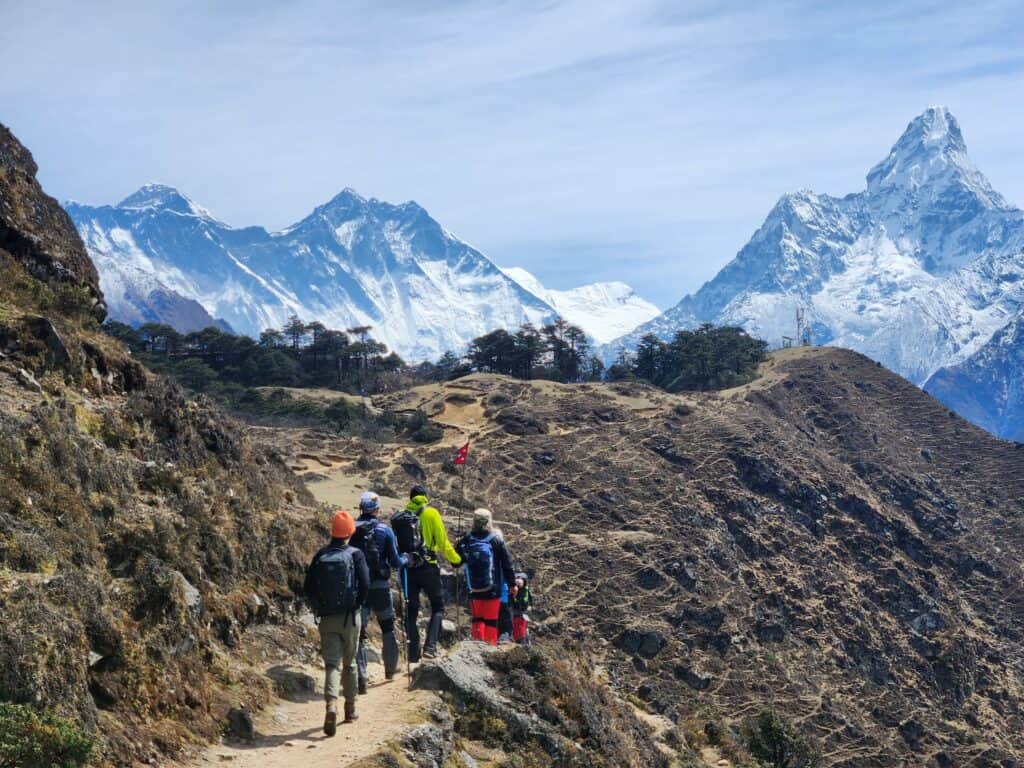
Everest Base Camp trek in April offers you plenty of photographic opportunities. You’ll walk via green dense rhododendron forests and incredible Sherpa villages.
You’ll also get an incredible view of the world’s highest glacier i.e Khumbu Glacier.
Spring is especially the season known as the blooming season. Many varieties of wildflower along the rhododendron make hillside the ‘haunting paradise’.
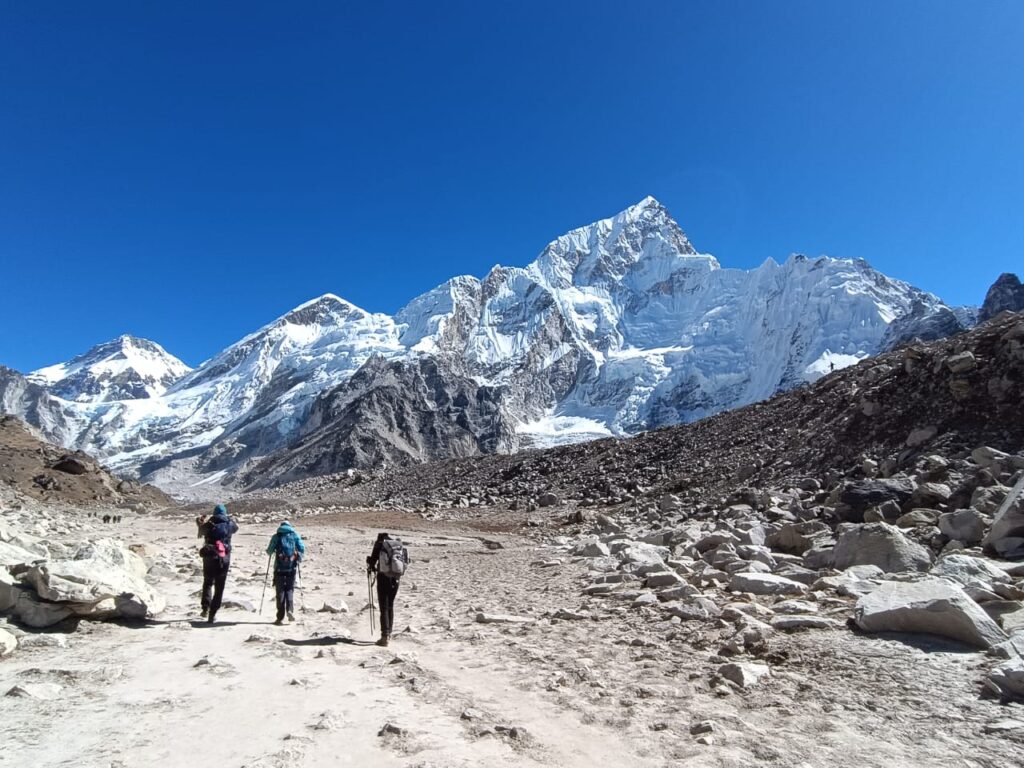
Thus, in April, there are more colors on the route to Everest Base Camp with the flowering rhododendrons and verdant terraced fields on the lower part of the trek.
Being one of the popular time for trekking, you need to be prepared to share the trail with other trekkers. Despite this, it is not as busy as September and October.
The best part of trekking during this month is you can see some climbing groups preparing for their ascent from Everest Base Camp. You can have small interactions with them.
Hence, at the end of the April and beginning of May, Everest Base Camp will be full of life due to the start of the climbing seasons.
Beside this, it is also a festive month for the Mountaineers. You can see a lot of yaks going up the same trail carrying some expedition kits to the Base Camp.
All these beautiful things will be part of your adventurous experience !!!
Table of Contents
- Everest Base Camp Trek Itinerary and Package Details for April 2024 and 2025
- Weather Conditions of Everest Base Camp Trek in April
- Highlights along the Everest Base Camp Trek in April
- Best of Everest Base Camp Trek in April
- Tips for Everest Base Camp Trek in April
- Best Reasons for Everest Base Camp Trek in April
- April Events Not to Be Missed
- Recommended Trekking Equipment Everest Base Camp Trek in April
- Final Thought
Everest Base Camp Trek Itinerary and Package Details for April 2024 and 2025
In this article, we will discuss the schedule and offerings for the Everest Base Camp Trek in April.
Before delving into the trek highlights, packing advice and other tips, let’s explore the itinerary and package provided by Mosaic Adventure.
Mosaic Adventure offers multiple departure dates throughout the year, including April, with the following itinerary and costs applicable for 2024 and 2025.
#Day 01: Arrival in Kathmandu (1345m/4412ft); airport pickup and transfer to hotel. Pre-trek meeting in the evening.
#Day 02: Transfer from Kathmandu hotel to airport for a short flight to Lukla (2840m/9320ft), then trek to Phakding (2610m/8560ft) – approximately 3.5 hours.
#Day 03: Trek to Namche Bazaar (3440m/11290ft) – Approximately 6 hours.
#Day 04: Acclimatization day in Namche Bazaar, including side trips to higher altitudes.
#Day 05: Trek to Tengboche (3860m/12660ft) – Approximately five hours.
#Day 06: Trek to Dingboche (4360m/14300ft) – Approximately 5 hours.
#Day 07: Another acclimatization day in Dingboche.
#Day 08: Trek to Lobuche (4940m/16207ft) – Approximately 5 hours.
#Day 09: Trek to Everest Base Camp (5300m/17400ft) and return to Gorak Shep (5170m/16961ft).
#Day 10: Hike to Kalapatthar (5545m/18192ft) for sunrise viewing, then trek to Pheriche (4270m/14070ft) – Approximately 7 hours.
#Day 11: Return trek to Namche Bazaar – Approximately 6 hours.
#Day 12: Trek from Namche to Lukla – Approximately 6 hours.
#Day 13: Fly back to Kathmandu and transfer to the hotel.
#Day 14: Departure or extend your tour for other activities in Nepal.
The 14 day package costs USD 1445 per person, valid from January 2024 to December 2025.
The package includes:
- Arrival/departure airport transfers.
- Hotel accommodation in Kathmandu with breakfast.
- Standard meals (breakfast, lunch, and dinner) during the trek.
- Teahouse accommodation during the trek.
- Government-licensed professional English-speaking guide (1 lead guide for up to 5 participants; additional assistant guide for 6 or more participants).
- Porters to carry baggage during the trek (1 porter between 2 participants).
- Return flight to Lukla with airport transfers.
- Required trek entry permits.
- Mosaic Adventure duffel bag, jacket, and sleeping bag (provided upon request).
- Trek completion certificate (available upon request post-trek).
- First aid kit.
- All applicable taxes.
Not included in the package:
- Lunch and dinner in Kathmandu.
- Personal expenses (Wi-Fi, battery charging, laundry, snacks, etc.).
- Beverages (tea/coffee, soft drinks, bottled water, etc.).
- Travel insurance (highly recommended but not mandatory).
- Personal trekking gear and clothing.
- Tipping for guides and porters.
- Loss arising due to unforeseen circumstances beyond Mosaic Adventure’s control.
This comprehensive package aims to provide an enriching and safe trekking experience to Everest Base Camp for all adventurers.
Please click here to visit the Everest Base Camp Trek page, and feel free to get in touch if you need additional information to help plan your trip of a lifetime.
Weather Conditions of Everest Base Camp Trek in April
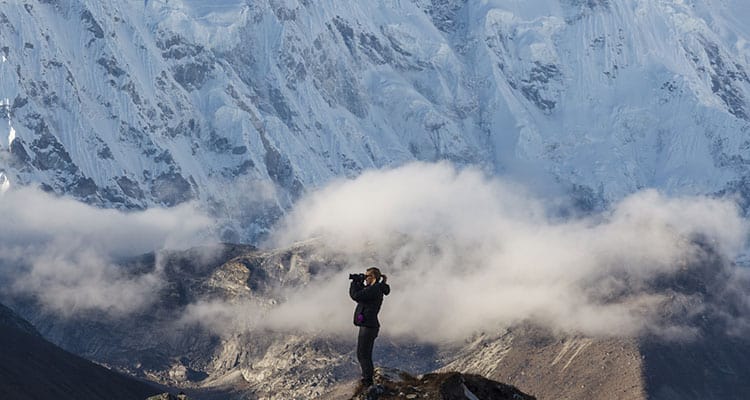
April is one of the best months to trek Everest Base Camp in Everest region. The weather starts to turn warm and the best thing is it’s still a dry season as the Nepalese monsoon starts in mid-June.
Thus, April is a good time to see Nepal for early spring weather and witness the clearest view of the impeccable, Mt. Everest.
During this time, many tourists come to Nepal from the different corner of the world. The weather turns comfortable in Everest Base Camp area with max 15°C and min -10°C.
Normally, during April, it is sunny and dry with sunshine 7 hours a day.
While trekking in Everest region besides the temperatures, wind speed also plays a major role. But don’t you need to worry, the wind speed is 14 km/hr, a normal speed.
Here is a rough approximation of weather in April in Everest region:
| Place | Elevation | Avg Temp | Min Temp | Max Temp |
| Lukla | 2,829 m/9281 ft | 11°C | 5°C | 16°C |
| Namche | 3,463 m/11,361 ft | 7°C | 0.6°C | 13°C |
| Dingboche | 4,483 m/14,708 ft | 0.7 °C | -7°C | -8.5°C |
From the above table, you can see that the higher you move along altitude, more the temperature starts to decline. The average temperature significantly declines from Lukla to Dingboche.
Want more information? Send us your query, and our experts will get back to you within 24 hrs.
Highlights along the Everest Base Camp Trek in April
- Experience an unforgettable flight to Lukla airport. Enjoy the panoramic views of Himalayan range from the plane during the flight.
- Explore Namche Bazaar and soak up into the Sherpa culture.
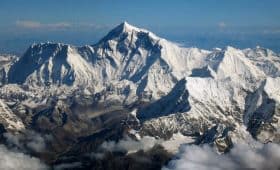
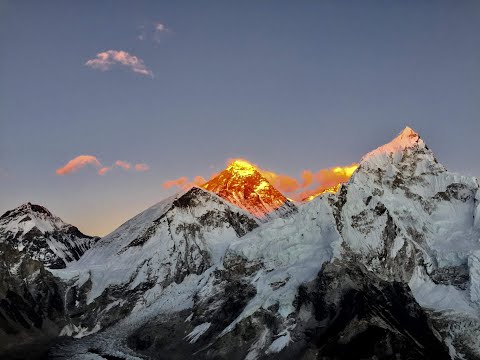
- An amazing view of incredible mountains including Mt. Everest, Mt. Nuptse, Mt. Lhotse, and Mt. Ama Dablam.
- Visit one of the highest monasteries in Khumbu region, Tengboche Monastery.
- Ascend to Kala Patthar, one of the best vantage points for the close-up view of Mt. Everest.
- Visit Khumjung village and the school opened in name of Edmund Hillary Foundation.
- Immersion into Sherpa culture (traditions, customs, and language).
- Walk via the highest suspension bridges above the raging river.
- Explore the surroundings of Namche Bazaar.
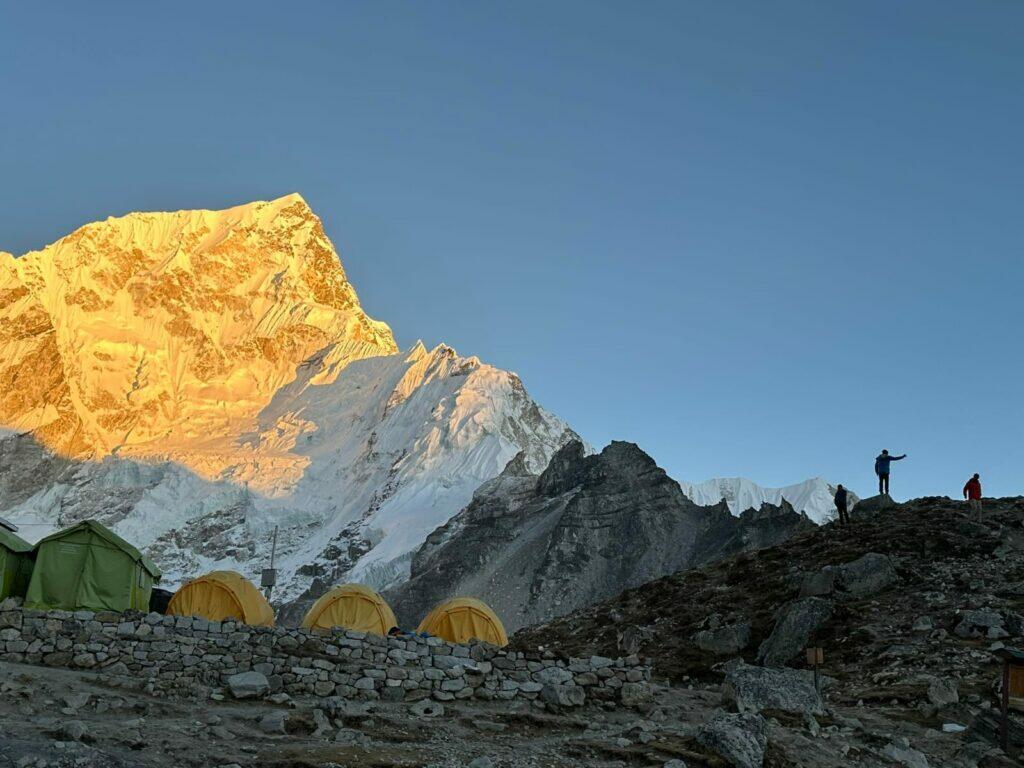
Best of Everest Base Camp Trek in April
Here are some of the interesting sights you’ll visit while doing the Everest Base Camp trek in April:
Lukla
The name Lukla actually means “a place of goats and sheep”. But now the place has totally changed due to the urbanization, so you could hardly see any animal in this area.
Well, Lukla is a starting point for trekking in the Everest region. It is a home of the world’s most thrilling airport, the Tenzing-Hillary Airport.
During the peak trekking season, this place is flooded with trekkers. Most of the trekkers take a few hour tea breaks and move forward for further trekking destinations.
But the natural beauty of this small town makes it worth to spend at least one night. Despite this, the landscapes here are also enough to admire the beauty of this small town.
Namche Bazaar
In the beginning time, Namche Bazaar was a trading hub for the entire Khumbu region. But nowadays, it has become the biggest commercial site for the entire zone.
Nowadays, many locals are engaged in the tourism industry working as Porter and Guide.
Being a perfect place to acclimatize, Namche Bazaar is famous among the trekkers.
The bitter truth is the Namche Bazaar is the last place to get all the luxurious facilities and amenities. As on the trail, you’ll just get basic accommodation facilities.
The place is full of alpine resorts with bars and bakeries all over. After or before the trek, you can easily spend one or two days and enjoy the cool and refreshing environment.
Tengboche Monastery
Tengboche Monastery, also called Thyangboche or Dawa Choling Gompa, is a Tibetan Buddhist Monastery. It is located at an altitude of 3,867 meters. It is one of the most prominent and largest monasteries in the entire Khumbu region.
The top of the monastery offers magnificent views of nearby Mt. Everest, Mt. Nuptse, Mt. Lhotse, Mt. Ama Dablam, and Mt. Thamserku.
While doing the Everest Base Camp Tour, you shouldn’t miss visiting this monastery. It is the most important sacred place in the entire region.
Visiting this holy place will give you an immense opportunity to understand the Sherpa culture, their pride, and traditions.
Everest Base Camp and Kala Patthar
Everest Base Camp is the final trekking destination of the journey and from here, the ascent of Mt. Everest also starts.
Kala Patthar is a big black rock at the elevation of 5,643 m. It is also known as the best vantage point to view Mt. Everest.
Well, from base camp the view of Mt. Everest can be seen but not much clear as from Kala Patthar. As Kala Patthar offers the closest and awesome view of Mt. Everest.
From this place, you can see the entire view of Mt. Everest i.e from base camp to the top including the Khumbu glacier.
Tips for Everest Base Camp Trek in April

Prepare for altitude sickness
The bitter truth is no matter how great of a shape you’re in, altitude sickness can hit you hard on the trail.
One of the most important Everest Base Camp trek tips is to make sure to bring Diamox pills (an altitude sickness medication).
Beside this, you have to drink plenty of water throughout the trek.
Be mentally and physically prepared well before the trip
Trekking to a base of the world highest mountain is not an easy task. So, you need to be both physically and mentally prepared for it. Normally, you’ve to trek 4-8 hours per day.
So, before heading EBC trail, you can go for a few hours of hiking each weekend. This will help you to build up your strength gradually.
Aside from this, you also need to remember one thing throughout the EBC trail, the tea houses are fairly basic. So, be mentally prepared there’ll not be a hot shower, attached bathroom, and even comfortable mattresses.
Don’t rush the trek, after all, you’re on vacation!
Never do rush as this is your vacation, not a marathon competition. So, it’s really important to take it slow. Never try to compete with other trekkers on the trail.
During April, the days are quite long so you’ve plenty of time to trek and soak up the spectacular surrounds. Also, it’ll help your body more time to adjust as you’re heading up.
Best Reasons for Everest Base Camp Trek in April
Perfect Temperatures
April lies in the middle month of Spring season. Spring comes in between two extreme kinds of weather- harsh winter and searing summer. Normally, the weather is stable with a pleasant temperature.
That’s why this gorgeous month has the ideal temperature to pursue the Everest Base Camp adventures.
More Sunny Hours in a Day
During April, you’re able to enjoy the longer days and shorter nights. This means exactly you’ll have a lot of daylight hours for hiking.
That’s why it’s a perfect time to plan a high-altitude trek. So, don’t think much! Take this month as the ultimate month of opportunity.
Flowers, Flowers Everywhere!
During this month, everywhere you go you’ll see the beautiful flowers fully blooming and popping up. You’ll see flowers like the national flower, rhododendron in vibrant colors.
Also, the trees have their fresh green looks with its own blooming going on.
Wouldn’t they look gorgeous?
April Events Not to Be Missed
Nepali New Year
Nepali New Year is the official new year of the country Nepal. Nepalese people celebrate this festival with full happiness and enjoyment.
This festival falls in mid-April of the English calendar. It is one of the popular Nepalese festival celebrated with family gatherings, parties, and a lot of activities.
Nepal is famous for its diverse culture in the world. In Nepal, there are more than 60 ethnic groups with their unique culture, customs, languages, and traditions. In whole one year, total 9 different New Years are celebrated. So, if you plan your Everest Base Camp trek in April, you also can celebrate Nepali New Year festival.
Bisket Jatra
Bisket Jatra is celebrated in Bhaktapur for two days; the last day of a Nepali year and the first day of the new year calendar.
It is an ancient celebration of two important deities of Bhaktapur; god Bhairav and goddess Bhadrakali. On this festival, you can also witness a unique activity like ‘Tongue Piercing’.
During this festival, you can experience great varieties of food, drinks, and some traditional music. You can have a great excitement and lifetime memory.
So, you can enjoy this festival while planning your Everest Base Camp Trek in April.
Chaite Dashain is a Hindu festival celebrated mainly in the month of Chaitra in Nepal. This festival carries equal significance as Bada Dashain. It is also called as Sano Dashain in most of the places around Nepal.
This festival also symbolizes the victory of good over evil. It is celebrated for two days, in the Chaitra Shukla Ashtami and Navami Tithi.
While trekking Everest Base Camp in April you can enjoy them which adds little joy to your trip.
Recommended Trekking Equipment Everest Base Camp Trek in April
Clothing
Bodywear
- Long Sleeve Hiking Shirt
- Short Sleeve Hiking Shirt
- Fleece Jacket
- Down Jacket
- Lightweight Wind Jacket
- Lightweight Hiking Pants
- Thermal Tops
- Thermal Bottoms
- Underwear
- Sports Bra
- Waterproof Shell Jacket and Trousers
Headwear
- Hat
- Neck Gaiter
- Sunglasses
Hand wear
- Light Inner Gloves
- Waterproof Outer Gloves
Footwear
- Hiking Boots
- Camp Sandals
- Warm Thermal Socks
- Gaiters
Bags and Backpacks
- Duffel Bags
- Sleeping Bags
- Daypack
- Rucksack
Sleeping Gear
- Sleeping Bag
- Pillow Case
- Sleeping Bag Liner
- Ear Plugs
- Eye Mask
Other Miscellaneous Accessories
- Trekking Poles
- Headlights
- Water Bottles
- Quick-drying Hand Towel
- Pee Funnel
- Lock
Medication and Toiletries
- Water Purification Tablets
- Diamox Pills
- Common Medications
- First Aid Kit
- Sunscreen
- Baby Wipes
- Toothpaste and Toothbrush
- Hand Sanitizer
- Feminine Hygiene Products
Final Thought
Everest Base Camp trek in April gives you a good fortune to stand at the base of the greatest natural wonder in the world. So, there is no need to be upset if you can’t climb the world’s tallest mountain.
The excellent weather condition with moderate temperature and clear sky make the best time for Everest Base Camp trek in April.
People from around the world madly come to Nepal during April to get a great mountain view.
Capture the best moments in front of the world highest mountain.
Everest Base Camp trek in April can be your best experience and memorable for your lifetime.
Indeed, April calls out for taking out the hiking shoes and setting off on the adventure !!
Trust me, Everest Base Camp trek in April will surely become worthwhile memories for whole life !!!
Want more information? Send us your query, and our experts will get back to you within 24 hrs.
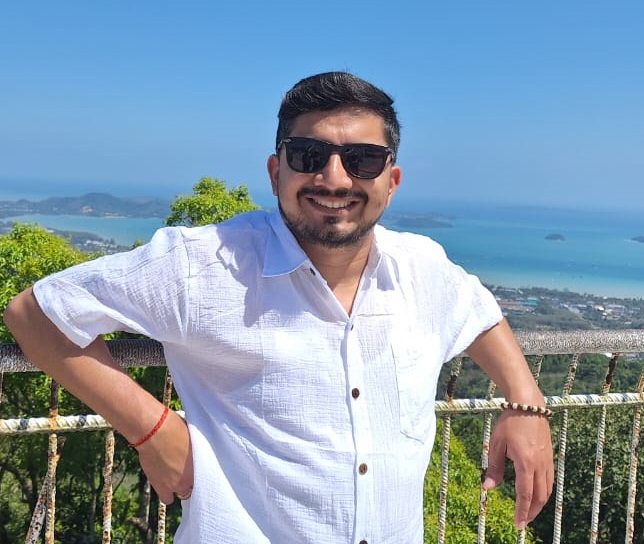
Madhav started working as a porter in 2001 and then moved on to work as a trekking guide. After working in the trekking and tourism industry for eight years, he co-founded Mosaic Adventure in 2009.
Madhav has trekked to most of the trekking destinations in Nepal, including Everest Base Camp Trek, Annapurna Base Camp, Annapurna Circuit Trek, Poon Hill Trek, Jomsom Muktinath Trek, Indigenous Peoples Trek, Langtang Valley Trek, Mardi Himal Trek, and all of the day hikes around Kathmandu.
He has also extensively traveled to other countries such as Australia, the USA, the UK, France, Hong Kong, Japan, China, the Philippines, the UAE, Saudi Arabia, Bahrain, Thailand, Turkey, and India. Madhav is the one who answers most of your questions about trekking and tours and helps to plan your trip by giving a personal touch.