
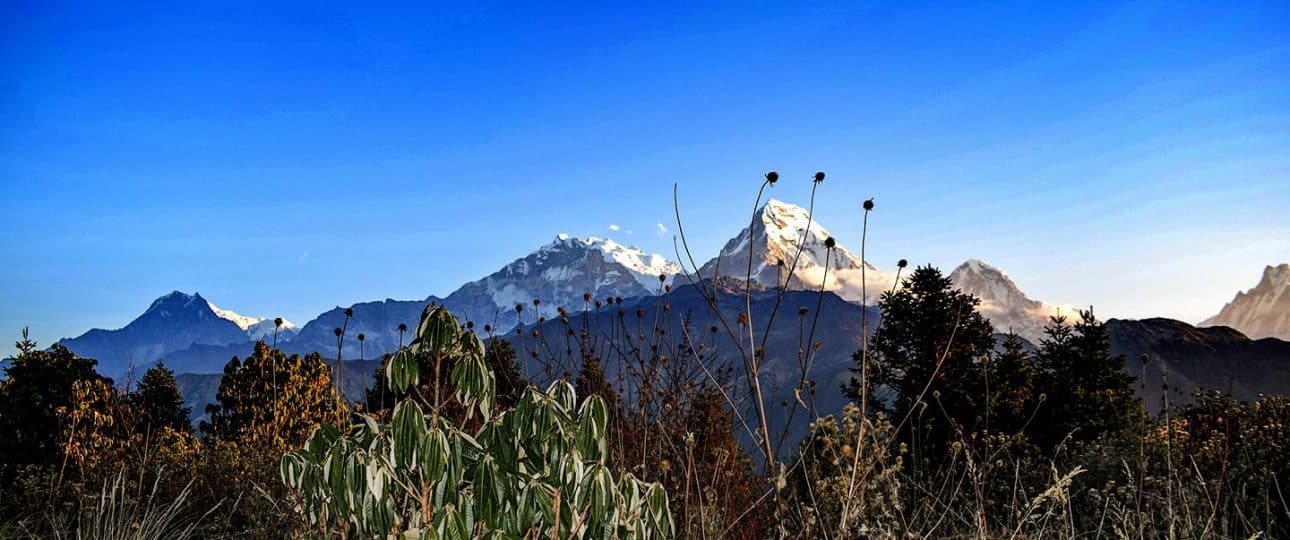
November and December are usually clear months on the Poon Hill trail. Many trekkers choose this period for better visibility. The main thing to prepare for is the cold, especially early in the morning on the walk up to the viewpoint.
Before you go, it helps to know how cold sunrise can feel, whether snow is likely, how many days you need from Pokhara, and what paperwork is required. You will also find a packing list, a basic cost outline, and a few simple ways to stay warm in teahouses.
If you want to see the standard 4 day route with transport and lodging, you can also look at our Poon Hill Trek itinerary page.

Poon Hill in November vs December: Quick comparison
| What to expect | November | December |
|---|---|---|
| Sky and visibility | Often clear after the monsoon | Often clear, cooler air |
| Daytime walking | Comfortable with light layers | Cooler, still comfortable in sun |
| Sunrise hike temperature | Cold | Very cold |
| Chance of snow or icy patches | Low, but possible late in the month | Possible, especially early morning and in shaded forest |
| Crowds | Busy early month, quieter later | Usually quieter |
| Who it suits best | First-time trekkers, families | Those comfortable with cold mornings |
Why Poon Hill is one of Nepal’s most popular short treks
Poon Hill is a popular short trek with teahouses each night and a moderate high point of 3,210 m at the viewpoint. It also fits easily into a trip that includes Pokhara and Kathmandu.
Compared to longer routes like the Everest Base Camp trek, the walking is simpler and altitude issues are less common. It suits beginners, families with older children, and travellers who want mountain views without a long schedule.
What the trail is like now
The main Poon Hill route is a classic teahouse trek, with villages placed at comfortable distances for most walkers. Rooms are simple, meals are hot, and evenings are spent in the shared dining room. In colder months, some dining rooms are heated in the evening, but bedrooms are usually not heated.
Trail signs are generally clear on the classic route (Nayapul or Ulleri to Ghorepani, Poon Hill, then Tadapani and Ghandruk). Weather can change quickly. Starting early helps, and it is best not to be on the trail after dark in December.
The route also passes through the Annapurna Conservation Area, where conservation rules support waste management and safer trekking. The Annapurna Conservation Area Project (ACAP) promotes responsible tourism in the region.
To help you pack, here is a quick look at typical day and night temperatures on the route.
November vs December temperatures on the Poon Hill route
Temperatures drop as winter begins. These figures are useful for planning layers.
| Place | November | December | ||
|---|---|---|---|---|
| Day | Night | Day | Night | |
| Pokhara | 23°C / 73°F | 12°C / 54°F | 20°C / 68°F | 8°C / 46°F |
| Ulleri | 14°C / 57°F | 6°C / 43°F | 11°C / 52°F | 2°C / 36°F |
| Ghorepani | 14°C / 57°F | 0°C / 32°F | 10°C / 50°F | -3°C / 27°F |
| Tadapani | 13°C / 55°F | 2°C / 36°F | 9°C / 48°F | -1°C / 30°F |
Note: Sunrise can feel much colder than daytime, especially if there is wind.
Poon Hill weather in November and December
By November and December, the monsoon has ended and the air is usually dry. Visibility is often better than in summer. The hardest part for many people is the cold on the sunrise walk to Poon Hill.
| Place and time | November (typical feel) | December (typical feel) |
|---|---|---|
| Lower trail villages (daytime) | Mild to cool | Cool |
| Ghorepani area (night) | Cold, near freezing on some nights | Colder, often near or below freezing |
| Poon Hill viewpoint (before sunrise) | Wind-chill often feels harsh | Wind-chill often feels harsher |
| Rain and snow | Usually dry | Usually dry, light snow is possible |
Snow and ice: December can bring light snow, frost, or icy patches, especially in shaded forest and on stone steps early in the morning. Even a thin layer can be slippery on stone steps. In colder weeks, simple traction (microspikes) can help.
How cold does it feel inside teahouses? Dining rooms are often warmer in the evening, but bedrooms can feel cold. Many people sleep well under blankets, even if the room air stays cold. A good sleeping bag and warm base layers help a lot.
Local note: Dam Bahadur Pun, a local guide and owner of The Sunny Hotel in Ghorepani, says, “November is my favorite time to host trekkers; the trails are quiet and the views are crystal clear.”
Simple sunrise tip: Wear your warm layers before you leave the teahouse, and carry one extra warm layer in your daypack just for the viewpoint. Standing still at the top feels colder than walking. Most people warm up again once they start moving.

Permits and guide rules for Poon Hill (important)
The Poon Hill trail lies inside the Annapurna Conservation Area, so you need an entry permit (ACAP). Checkpoints may also ask for additional documents depending on current enforcement.
- ACAP permit: Required for the Annapurna region, including Ghorepani and Poon Hill.
- TIMS card: Trekking agencies can arrange TIMS through official channels. Confirm the current requirement before you start.
- Guide requirement: Rules for foreign trekkers in protected areas can vary. Confirm the latest guidance close to your travel date.
For the most reliable updates, check the Nepal Tourism Board guidance close to your travel date and confirm with your trekking agency before you start.
Best Poon Hill itineraries for November and December
Most people trek Poon Hill in 4 to 5 days from Pokhara. Longer plans (8 to 10 days) usually include Kathmandu sightseeing and extra villages. In colder months, a steadier pace helps, so you do not feel rushed on frosty mornings.
Option 1: Classic 4 day Poon Hill trek (best for most people)
- Day 1: Drive from Pokhara to Hile, trek to Ulleri
- Day 2: Trek to Ghorepani
- Day 3: Sunrise hike to Poon Hill, then trek to Tadapani
- Day 4: Trek to Ghandruk (or Kimche), drive back to Pokhara
If you want the standard 4 day plan with logistics, see: Poon Hill Trek (4 days).
Option 2: 5 day loop (easier pace, good in late November and December)
- Day 1: Drive and short trek to Ulleri area
- Day 2: Trek to Ghorepani
- Day 3: Poon Hill sunrise, trek to Tadapani
- Day 4: Trek to Ghandruk and explore the village
- Day 5: Drive back to Pokhara
| Choose this if you want | Best option |
|---|---|
| Shortest trek with the main viewpoint | 4 days |
| More comfort in colder mornings | 5 days |
| More village time and photography pace | 5 days |
If you are planning from Kathmandu, this guide helps with transport and timing: How to reach Poon Hill from Kathmandu.
Questions about dates, route options, or cold-weather packing? Email or WhatsApp our team.

Why trek to Poon Hill in November and December
This season is a good choice if you want to avoid the busiest months of September and October while still having clear weather.
Here are the main reasons many trekkers choose Poon Hill in late autumn and early winter:
Clear views are the main reason
These months often bring the clearest skies on the Annapurna foothills. If your main goal is to see the mountains from the Poon Hill viewpoint, November and December work well for this.

Fewer crowds (especially late November and December)
September and October can feel busy. Late November and December are often quieter, which usually means a calmer trail and more space in teahouses.
Beginner friendly altitude
Poon Hill is 3,210 m, so the risk of altitude sickness is lower than on high routes. Most people still feel better when they walk slowly, hydrate, and avoid alcohol on the trek.
If you want a detailed difficulty breakdown (including the long stone steps), see: Poon Hill Trek difficulty guide.
What is harder in these months
- Cold mornings and cold rooms at night
- Shorter daylight in December (starting early matters)
- Possible icy patches on stone steps and shaded trail
Packing list for Poon Hill in November and December
A simple layer system works best: one layer to stay dry, one for warmth, and one to block wind. Days can feel pleasant when you are walking, but mornings and nights can be cold.

| Item | Why it matters in Nov and Dec |
|---|---|
| Base layers (top and bottom) | Helps you stay warm at night and on the sunrise hike |
| Warm mid-layer (fleece or light insulated layer) | Easy warmth while walking |
| Down jacket or warm insulated jacket | Most useful when you stop at viewpoints |
| Windproof outer layer | Wind can make sunrise feel much colder |
| Warm hat and gloves | Small items, big comfort difference |
| Headlamp | Essential for the early morning hike to Poon Hill |
| Sleeping bag (warm rating) | Teahouse rooms can be cold even with blankets |
| Water bottle + purification | Cold air can hide dehydration, and bottled water adds cost |
| Optional: simple traction (microspikes) | Helpful if you meet icy steps in December mornings |
Tip: Keep one warm layer in your daypack for the viewpoint. You may feel fine while climbing, then feel cold once you stop moving.
Practical planning notes (guides, transport, teahouses, money)
Guided vs independent trekking
Many travellers like Poon Hill because it is a well-used route. Requirements and checkpoint checks can differ by time and place, so confirm the current rules before you start, especially for foreign trekkers in protected areas.
A licensed guide can also help with pacing, finding the best teahouses in colder months, and dealing with weather delays. If you prefer a supported trek, this is our standard route: Poon Hill Trek.
Transport: getting to the trailhead
Most treks start from Pokhara, then continue by road toward Nayapul or Ulleri depending on current road conditions and your route. In November and December, early starts help because daylight is shorter and evenings get cold quickly.
Teahouses in November and December
Teahouses stay open on the main route. Dining rooms are often warmer in the evening, but bedrooms can be cold. A warm sleeping bag and warm sleep layers help most people feel comfortable.
Cash, charging, and wifi
- Carry enough cash for the trail. ATMs are not reliable once you leave Pokhara.
- Charging and hot showers may cost extra in some places.
- Wifi can work in some villages, but it can be slow and weather-dependent.
Cost of the Poon Hill trek (what most people spend)
Costs depend on your route, your pace, and whether you hire support. Prices also change with season, transport costs, and local supply. The numbers below give a rough idea of typical spending.
| Cost item | Typical notes |
|---|---|
| Permits | ACAP is required for the Annapurna region; other paperwork depends on current rules |
| Teahouse room | Often low cost, but you usually spend more on meals |
| Meals and hot drinks | Prices rise as you go higher |
| Guide / porter (optional or required) | Varies by service level and season |
| Transport | Pokhara to trailhead and return |
If you want a deeper budget explanation for trekking in Nepal (permits, transport, food), see: Trekking in Nepal cost guide.
Tips for Poon Hill trek in November and December
- Pack for cold mornings and nights. A sleeping bag makes a big difference.
- Dress in layers to stay warm.
- Wear comfortable hiking boots.
- Start your trek early since it gets dark very soon during winter.
- Drink enough water while trekking. Since it is cold, you may not feel the urge to drink, but keep reminding yourself.
- Walk slowly and take enough rest. Do not rush on the trails.
- Keep extra days in case of any unplanned situations.
If you want help choosing dates or routes, you can WhatsApp our team.
Poon Hill in November and December: FAQs
These are common questions when planning a late November or December trek.
Is Poon Hill a good trek in November and December?
Yes. Clear skies are common in these months, so mountain views are often better. The main downside is cold mornings, especially on the sunrise hike. If you are comfortable with cold mornings and bring the right layers, it works well.
How cold is it at Poon Hill sunrise?
It often feels much colder than the daytime walk because you are standing still and there can be wind. Many people feel fine while climbing up, then feel cold at the viewpoint. Wear warm layers before you leave the teahouse, and carry one extra warm layer just for the top.
Will there be snow on the trail in December?
Sometimes. Heavy snowfall is not common most days, but light snow, frost, or icy patches can happen, especially in shaded forest sections and on stone steps early in the morning. Even a thin layer can be slippery, so walk carefully.
Is November warmer than December?
Usually, yes. Early and mid-November often feel more comfortable during the day, while December mornings and nights are colder. Late November can already feel like winter at Ghorepani and Poon Hill.
Are teahouse rooms heated in winter?
Most teahouse bedrooms are not heated. Dining rooms are often warmer in the evening because many lodges use a heater there. A warm sleeping bag and warm sleep layers make a big difference at night.
Do I need a sleeping bag in November and December?
It is strongly recommended. Teahouses provide blankets, but rooms can feel cold at night, and blanket warmth varies from place to place. A sleeping bag helps you sleep better and recover for the next day.
Is the trek suitable for beginners at this time of year?
Many beginners do this trek in November and December. The altitude is moderate, but there are long uphill sections and many stone steps. If you can walk 4 to 6 hours a day at a steady pace, you can usually manage it. Taking short breaks and starting early helps.
What is the hardest part of the trek in late autumn and early winter?
For most people, it is the cold sunrise start and the long stair sections between Tikhedhunga or Ulleri and Ghorepani. The walking itself is not technical, but the steps can be tiring, especially if the trail is frosty in the morning.
Is it very crowded in November and December?
Early November can still be busy because it follows peak autumn season. Late November is often quieter, and December is usually calmer. You should still book teahouses in advance if you want specific rooms during holiday periods.
How many days do I need for Poon Hill from Pokhara?
Most people choose 4 or 5 days. Four days is the classic plan. Five days gives you a slower pace, which many travellers prefer in colder months.
How early should I start the sunrise hike?
Most people leave around an hour or more before sunrise, depending on their walking speed and trail conditions. If the trail is frosty or icy, allow extra time and walk carefully. Your lodge can advise the best departure time that day.
Do I need a guide for Poon Hill?
Rules and checkpoint enforcement can change in Nepal, so it is best to confirm the current requirements close to your travel date. Even when a guide is not required, some trekkers choose one for pacing help, local insight, and support if weather changes.
Final Thoughts
If you want a clear Himalayan sunrise without a long trek, late November and December are a sensible time to go. Plan for cold mornings, walk at a steady pace, and pack for warm nights in teahouses.
If you are choosing between routes or dates, it helps to share your timeframe, fitness level, and whether you want a slower pace for winter comfort. You can reach our team here: Contact Mosaic Adventure.
If you are considering other short treks in the same season, this comparison can help you decide: Poon Hill vs Mardi Himal. For deeper winter conditions, see: Poon Hill in January and February.
Want more information? Send us your query, and our experts will get back to you within 24 hrs.

Rajendra Sapkota is the co-founder of Mosaic Adventure and a veteran in the trekking industry with over three decades of experience guiding adventurers through Nepal’s stunning landscapes. . His unparalleled knowledge of every trail, from the popular Everest Base Camp to the remote Upper Mustang, has earned him a reputation as a trusted authority on Nepal’s geography and culture. Raj’s passion for the Himalayas is matched only by his dedication to ensuring a safe and memorable journey for every traveler.
If you have any questions or need personalized advice to plan your trip to Nepal, you can reach out to him directly at [email protected].
