
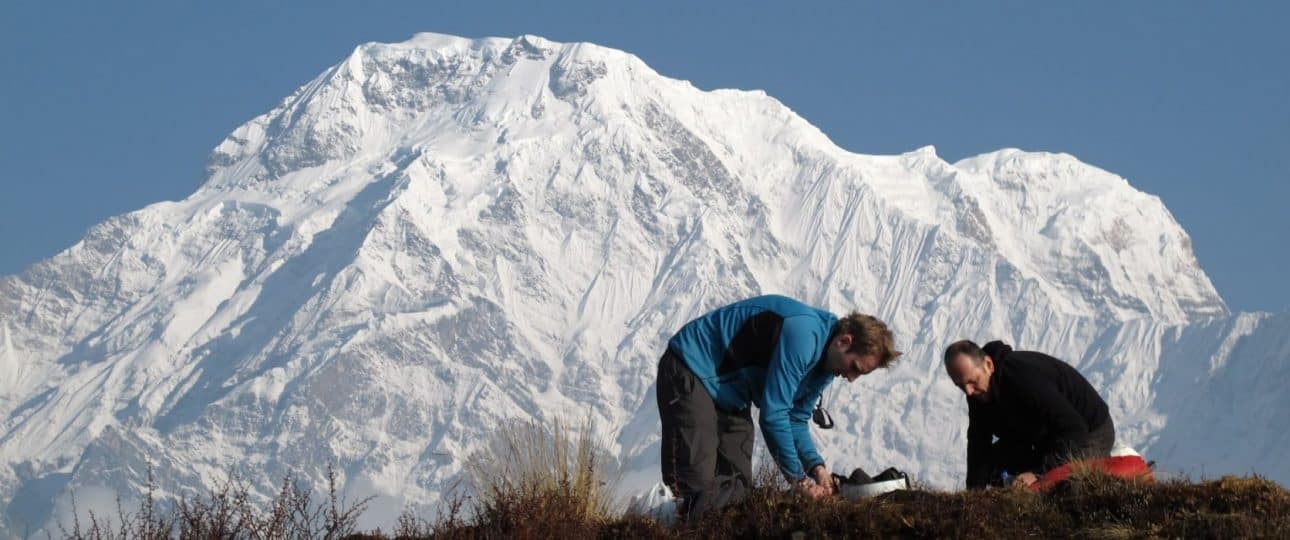
August might not be the first month you think of for trekking in Nepal, but if you do not mind some rain, it can be a quiet and memorable adventure. The hills turn bright green, wildflowers show up on the trail, and the air feels fresh after a shower.
- Best for: Experienced trekkers, photographers, nature lovers, and those seeking quiet trails
- Weather: Monsoon season with frequent rain at lower elevations and clearer conditions higher up
- Trail conditions: Lush, green, sometimes muddy, fewer crowds
- Visibility: Mixed, with clear mountain views often appearing after rain
- Recommended regions: Everest, Manaslu, Nar Phu, Langtang, rain-shadow areas
- Not ideal for: Fixed schedules with no buffer days
This guide explains what trekking in Nepal in August is really like, where to go, what to avoid, and how to plan safely so you can decide with confidence.
Plus, with fewer people on the trails, you get more space, more peace and quiet, and a real chance to connect with nature and local culture. If you’re ready to see the Himalayas in a different, refreshing light, monsoon trekking could be exactly what you’re looking for.
Overview of trekking in Nepal in August
After a couple of hot months, the monsoon brings some cooling moments to the country. The green hillocks that stretch into the horizon and the ultimate beauty of the Himalayas are a treat for nature lovers.
Nepal trekking in August provides a fantastic opportunity to admire the vivid vistas of the Himalayas in a very different way. From our experience leading treks during the monsoon, the mountains often reveal themselves in dramatic bursts after rainfall, while the valleys stay deeply green and alive.
Planning help: See our best season to trek in Nepal guide, plus the ultimate guide to trekking in Nepal for permits, packing, and route planning.
Exploring the wilderness in the monsoon season offers a quite unique experience. The green hills become more vibrant, and colorful monsoon wildflowers add a splash to the lush green canvas. Everywhere you’ll find freshness in the air. The rainfall drops the temperatures by a couple of degrees and changes the atmosphere from dry and arid to fresh and lush green.
In comparison to low altitudes, there is less rain at high altitudes. Sometimes, clouds obstruct the best mountain views, but you can still enjoy the trip. As the saying goes, “the journey counts more than the destination.”
Trekking Nepal in August can be challenging, but it can also be very rewarding if you plan for monsoon conditions. However, if you’re planning to go trekking in Nepal in August, you can also do short treks like Ghorepani Poon Hill trek and Chisapani Nagarkot trek. With proper planning and preparation, you can even sign up for the Everest Base Camp Trek in August.
Highlights of Trekking in Nepal in August
Season of Festivals
One of the highlights of trekking in Nepal in August is the celebration of traditional festivals.
Gai Jatra
The Gai Jatra, or festival of cows, marks the acceptance and celebration of death in a positive way. Cows are decorated and led through the streets. Families of the deceased join the procession and distribute food packets to others. Mask dances and traditional Ghinta Ghisi dances are also observed during this festival.
Janai Purnima
This popular thread festival in Nepal is celebrated in August. All Hindu men change their old Janai (the sacred thread) and wear a new one. Also, every Hindu ties a sacred thread on their wrist. It is also called Raksha Bandhan, where sisters tie the holy thread to their brothers and pray for their good health and prosperity.
Shree Krishna Janmashtami
Also known as Krishna Jayanti or Janmashtami, this festival marks the celebration of Lord Shree Krishna’s birth. Krishna is believed to be the eighth incarnation of Lord Vishnu. During this festival, Hindu devotees visit Krishna Mandir in Patan.
Other Highlights
- Absence of large crowds
- Lush green vegetation
- Blooming colorful flowers
- Less chance of altitude sickness because of summer weather that suits your body.
- Clean, fresh atmosphere

Is August a Good Time to Trek in Nepal?
August can be an excellent time to trek in Nepal if you understand the conditions and plan accordingly. Monsoon trekking is not for everyone, but for the right traveler, it can be deeply rewarding.
If your priority is dry trails, jump to the rain-shadow section below. If your priority is green landscapes and fewer crowds, August can be a great fit.
August is a good choice if you:
- Prefer quieter trails and fewer trekkers
- Enjoy lush landscapes and dramatic skies
- Can keep a flexible schedule
- Are comfortable trekking in mixed weather conditions
August may not be ideal if you:
- Have very limited vacation days
- Expect constant clear mountain views
- Prefer dry, predictable trail conditions
In short, August is not the easiest month to trek in Nepal, but it is one of the most atmospheric and peaceful.
Weather Conditions while Trekking in Nepal in August
August marks the end of the monsoon season in Nepal. Due to the altitude, weather can change suddenly. Thus, preparing for seasonal changes on the trail is a good place to start.
Pokhara and the southern side of Nepal receive more rain during the monsoon. When it rains, it can be heavy for hours, but then it can clear up for the rest of the time. However, the countryside comes alive during these months. It is gorgeously green, and rivers and lakes are teeming with water.
Temperature
The temperature cools down during the rain when it is cloudy and overcast, and the countryside turns green. During this month, the average daytime temperature is 28°C. The climate is hot and humid on sunny days. Likewise, the average nighttime temperature is comfortable at around 19°C.
At higher trekking altitudes, temperatures are much cooler and more comfortable for walking. From our experience, early mornings and evenings in the mountains can feel chilly, especially after rainfall, so proper layering is essential.
Sunshine
In August, there are usually 13 hours of daylight, with about 3 hours of bright sunshine each day.
Rainfall
During August, expect 474 mm (18.7 inches) of rainfall across the whole country. Maximum UV levels will be extreme at midday when the skies are clear. The probability of rainfall decreases as the month progresses, starting at 60% and dropping down to 55%.
Humidity
It can get pretty hot and humid during this month. The relative humidity around Kathmandu in August is 93%. The air tends to be driest when the relative humidity falls below 93%. It is most humid around August 2 when it rises above 95%.
Wind
Typical wind speeds in Kathmandu in August range between 4.8 miles per hour to 4.3 miles per hour. Over the course of the month, the wind speed gradually decreases.
Travel delays in August (flights and roads)
August weather can affect mountain flights and hilly road transfers. Lukla flights are more likely to be delayed or cancelled, and some highways can have slowdowns during heavy rain.
Our best advice is to add at least 2 buffer days if you have a fixed international flight. This keeps your trek relaxed and avoids rushing if plans change.
Note: Conditions on the trail can vary by region and altitude. Our team plans and leads treks across Nepal throughout the monsoon season and adjusts routes based on real-time local weather.
Weather data source: Average rainfall, humidity, temperature, and wind figures are based on long-term climate data for Nepal from the World Bank Climate Knowledge Portal and regional weather records.
Best Trails for Trekking in Nepal in August
Here is a selection of trekking routes that still work well in August, especially if you start early, stay flexible, and choose regions with less rainfall. Short on time? Keep scrolling for shorter August treks and easy routes near Kathmandu and Pokhara.
If you want more route ideas, see our list of best treks in Nepal and our guide to easy treks in Nepal.
Which August Trek Should You Choose?
If you tell us your time, fitness, and what matters most (dry trails, big peaks, or easy walking), we can match you with the right route. Here is a quick way to decide:
- I want the driest option in August: Choose a rain-shadow trek like Upper Mustang. If you are unsure about permit rules, check restricted area permits and fees.
- I want a classic bucket-list trek with teahouses: Go for Everest Base Camp. It can work in August if you plan buffer days and start early.
- I want fewer crowds and a wilder feel: Choose Manaslu Circuit or the remote Nar Phu Valley.
- I have 4 to 6 days and want close mountain views: Pick Mardi Himal or a short classic like Poon Hill.
- I want a shorter trek from Kathmandu: Consider Langtang Valley (5 days), or browse our beginner-friendly route ideas in easy treks in Nepal.
- I only have 1 to 2 days: Do an easy hike like Australian Camp and keep your timing flexible around the weather.
Not sure yet? If you share your dates, how many days you have, and your hiking experience, we will suggest 2 or 3 routes that fit August conditions and your comfort level.
August Trek Finder: Compare Routes at a Glance
Tip: If you want the driest trekking experience in August, rain-shadow regions like Upper Mustang are usually the safest choice. For greener scenery and shorter walks, treks around Pokhara work well if you keep your schedule flexible.
Everest Base Camp Trek
It is an amazing journey, and it can be a strong choice for monsoon trekking in Nepal if you come prepared. While it’s not strictly a ‘rain shadow’ zone like Upper Mustang, the EBC region generally sees less rain compared to many other trekking areas during monsoon.
With the right gear and a bit of planning, you can still have a great trekking experience in July and August. The occasional rain showers often help clear the dust off the trails and make the lower valleys incredibly green and vibrant. Up higher, it tends to stay pretty dry and the scenery is spectacular.
If Everest is your main goal, read our detailed Everest Base Camp Trek in August guide for flight reliability, rain patterns, and packing tips.
Your adventure begins with an exciting flight from Kathmandu to Lukla. From there, you’ll slowly make your way through lively Sherpa villages such as Namche Bazaar and Tengboche, getting a real sense of their unique culture and warm welcome. You’ll trek through beautiful rhododendron forests, cross those famous suspension bridges, and even visit ancient monasteries along the way.
The main highlight, of course, is reaching Everest Base Camp at 5,364 meters. Imagine standing right at the base of the world’s tallest mountain! Do not miss Kalapatthar (5,545 m). It is one of the best viewpoints that gives you those stunning panoramic views of Everest, Lhotse, Nuptse, and all the other magnificent Himalayan peaks.
For a broader season comparison, see our best time to trek Everest Base Camp guide.
While it’s definitely a demanding journey physically, it’s very achievable with good fitness and proper acclimatization. Plus, the excellent teahouse infrastructure means it’s accessible for a wide variety of trekkers.
So, whether you’re after dramatic mountain scenery, a genuine cultural immersion, or just a truly challenging adventure, the Everest Base Camp trek is incredibly rewarding. Even during the monsoon months, with the right preparation, it’s a trip of a lifetime.
And if you’re looking to explore even more, you can customize this trek with other routes like the beautiful Gokyo Lakes or the more challenging Three Passes Trek.
Nar Phu Valley trek
The Nar Phu Valley trekking trail is one of Nepal’s quieter and more remote routes, and it can be a perfect monsoon trekking destination if you want fewer crowds. It is also famous as the hidden valley trek as it offers you a chance to explore two hidden remote valleys of Nepal: Nar and Phu in the upper Manang district.
Trekking through this region is often difficult but rewarding in terms of natural beauty that surrounds you.
The best part of the trek is the untouched beauty of the region. On the other hand, the landscape just after monsoon is spectacular with lush meadows. The freshness can be overwhelming.
Trekking in Nar Phu Valley is a rare privilege. You’ll get a chance to explore the lifestyle, culture, and traditions of true Himalayan people along with breathtaking views of Himalayan landscapes.
Furthermore, the trek offers awesome views of the Annapurna massif, Dhaulagiri range, Lamjung Himal, Machhapuchhre Himal, Manaslu Himal, and Tilicho peak.
This amazing trek begins from Kathmandu to Besisahar and the trail ascends via the Marsyangdi river valley, following the same trail as the Annapurna Circuit till Koto.
Then, the trek continues by following the off-beaten trail to Nar and Phu Valley.
Passing through peaceful forests, narrow canyons, interesting rock formations, colorful caves, and remote villages, the trail leads you to the north of Manang district. The Phu valley is famous for the Tashi Gompa. Many Buddhist pilgrims visit the Gompa to receive blessings from Lama Rinpoche.
Kang La Pass is the highest point of the trek. Though the trekking lies in the famous Annapurna region, this trail is less explored. You’ll find few trekkers on the trail, so you’ll experience a more peaceful trek and a better chance to enjoy the natural beauty.
If you wish, you may join the Annapurna Circuit trail through the Pisang route and head towards Thorong La Pass. You can return through lower Mustang where you can explore Jomsom, Marpha village, and finally back to Kathmandu from Pokhara.
Manaslu Circuit trek
Just like the Nar Phu valley trek, the Manaslu Circuit trek is another best option for trekking in Nepal in August. The landscape of the Manaslu region is every bit picturesque and magnificent. The charm of this trekking region will sweep you off your feet at the first encounter.
Monsoon trek in the Manaslu region is a treat for the eyes! The beauty of the Manaslu region is legendary for adventure enthusiasts.
During the first half of the trek, you’ll experience some rain, but as you progress, the probability of rainfall decreases significantly.
During the entire trek, you’ll get a chance to know the lifestyle of the Himalayan people who are not much in touch with the rest of the world. The region is mostly inhabited by traditional Sherpa and Tamang people.
The eye-catching, astonishing mountain views are the special highlights of this trek.
You’ll be rewarded with the most beautiful views of Mt. Manaslu, Himchuli, Ganesh Himal, and many other snow-capped mountains.
The Circuit trek starts from Arughat at a mere 700 meters, and the trail leads via up and down hills to a height above 5000 meters.
The challenging part of the trek is crossing the Larkya La Pass at an altitude of 5135 meters above sea level. After crossing one of the most adventurous high alpine passes, you’ll get magnificent views of Annapurna II, Kang Guru, Himlung, and Cheo Himal.
The trail passes through dense rhododendron forests, beautiful landscapes, and mind-capturing valleys like Samdo, Bimthang, Samagaun, and Namrung. Finally, the trek ends through the globally renowned Annapurna Circuit trail to Besisahar.
This trek offers you the chance to visit several Buddhist monasteries that are highly influenced by Tibetan culture. The dense forests, freshwater streams, waterfalls, and some awe-inspiring views make this a memorable trek.
Understanding Rain-Shadow Regions in August
One of the biggest advantages of trekking in Nepal during August is access to rain-shadow areas. These regions lie north of the main Himalayan range and receive significantly less rainfall even during the monsoon.
Treks like Nar Phu Valley, parts of Manaslu, Upper Mustang, and Upper Dolpo stay relatively dry compared to central and eastern Nepal. This makes them especially suitable for August trekking, offering dramatic landscapes, ancient villages, and clearer skies.
Important: Some rain-shadow treks require restricted permits and a registered local agency. Here is our guide to Nepal restricted area permits and fees.
Short and Sweet August Treks in Nepal
Dreaming of a Himalayan adventure this August but short on time? You’re in luck! Nepal offers incredible shorter treks that are perfect for experiencing the majestic mountains without a lengthy commitment. We’ve handpicked three fantastic options, all designed to deliver breathtaking views, rich cultural encounters, and unforgettable memories.
The Classic: 4-Day Poon Hill Trek (from Pokhara)
If you’re looking for iconic panoramic views without the high-altitude challenges, the Poon Hill Trek is your perfect match. Starting with a scenic drive from Pokhara to Nayapul, this well-loved trail winds through charming Gurung and Magar villages like Ghandruk, famous for their warm hospitality. You’ll trek through terraced fields and vibrant rhododendron forests, making your way to the highlight: an early morning hike up to Poon Hill (3,210m/10,531ft). Prepare to be amazed as the sun rises, painting the Annapurna and Dhaulagiri ranges in spectacular shade. It’s a truly classic Himalayan experience that’s both accessible and deeply rewarding.

The Tranquil Gem: 4-Day Mardi Himal Trek (from Pokhara)
For those seeking a more serene and less-traveled path, the Mardi Himal Trek is a fantastic choice. Also departing from Pokhara, this relatively newer route in the Annapurna region offers unbelievably close-up views of iconic peaks like Machhapuchhre (Fishtail), Mardi Himal, and Annapurna South. The journey takes you through dense, pristine forests, gradually ascending to high alpine pastures. The ultimate reward is reaching the Mardi Himal Viewpoint (around 4,200m/13,779ft) or Base Camp, where you’ll be greeted by unobstructed, never-seen mountain vistas. If you’re looking for peace, stunning scenery, and a unique perspective, Mardi Himal won’t disappoint.

The Valley of Glaciers: 5-Day Langtang Valley Trek (from Kathmandu)
Venture into the captivating “valley of glaciers” with the 5-day Langtang Valley Trek. This adventure kicks off with a scenic drive from Kathmandu to Syabrubesi. From there, you’ll follow the Langtang River, trekking through lush forests, vibrant traditional Tamang villages, and eventually into the wide, impressive glacial valley. Highlights include exploring the Langtang village, visiting the spiritual Kyanjin Gompa (3,830m/12,566ft), and for those feeling adventurous, hiking up to Kyanjin Ri (4,773m/15,659ft) for incredible panoramic views of Himalayan giants like Langtang Lirung and Ganesh Himal. This trek offers a profound cultural glimpses into Tamang life alongside truly magnificent Himalayan landscapes.
Trekking in Nepal in August
Pros
- Fewer tourists, offering solitude on the trails
- Off season bargains at hotels
- Spectacular sunrise views
- Lush green landscapes and cool atmosphere
Cons
- Encounter with mosquitoes and leeches
- Slippery and muddy trails
- Increased humidity and wet conditions
Useful Tips for Trekking in Nepal in August
Trekking in Nepal in August is full of adventure as there will be greenery all around the mountains, mesmerizing waterfalls, and a pleasant atmosphere. Though trekking in Nepal in August is delightful, it can be a bit risky if proper care is not taken.
Here are a few tips you should keep in mind to avoid unpleasant situations and make your journey memorable and safe.
Pack waterproof equipment
August is one of the monsoon months, so expect rain to visit you anytime. But it doesn’t mean that the rain will deter your trip. The thing is, you need to equip yourself with the right gear. Raincoats and umbrellas are helpful to keep yourself dry. Waterproof backpacks and cases for your mobile, laptop, and tablets are essential. Make sure to include these items in your packing list.
Protect yourself from bugs and insects
Monsoon is the time of mosquitoes and leeches. So, be well-prepared to combat them by carrying insect repellents and salt. Insect repellent will help you against mosquitoes. If a leech attaches to your body, you can remove it by rubbing salt on it. Besides this, you’ll also need to avoid leaning on trees or rocks that are away from direct sunlight.
Be updated with weather conditions
While trekking during the monsoon month, you might come across bad weather conditions. You need to listen to local news and weather forecasts before deciding to go ahead or turn back. Because in the mountains, a bad weather situation may quickly worsen, and there is a risk of getting stuck without help for hours. Checking historical weather data for your trekking route can also help you prepare for potential extreme conditions.
Hire and listen to your professional guide
Hiring a professional trekking guide from a reputable company like Mosaic Adventure is a safe choice during a monsoon trek. If you’re trekking in unfamiliar terrain, it’s essential to have a guide with you, as they know the ins and outs of the route. They will guide you safely and take charge in any emergency situations that may arise. Always follow your guide’s instructions, as one wrong step can lead to a dangerous situation. Guides provide personalized service and local knowledge that can greatly enhance your trekking experience.
Research well about the trekking trails and keep a flexible schedule
Most of the Himalayan range might experience heavy downpours which can make the scenery look dramatic and fresh, but the trails can also get slippery. This increases the risk of falls, especially on steep stone steps and muddy sections. Also, some trails might remain closed due to landslides and floods. Plus, it’s good to allow enough flexibility in your schedule. Consider adding buffer days to your itinerary to account for unpredictable weather and potential delays.
Choose the rights clothes and footwear
While trekking in Nepal in August, you need to pack light cotton clothes which can dry quickly. Invest in a good pair of trekking shoes, which provide you with a good grip on the muddy and slippery trails. Plus, the shoes must be comfortable to wear, light in weight, and waterproof. Consider your experience level and the trek’s fitness requirements when choosing your gear.
Additional Trekking Options
For those looking for alternative trekking experiences during the monsoon season, consider these options:
Annapurna View Trek: A shorter trek that still offers breathtaking views of the Annapurna range.
Upper Dolpo Circuit: A challenging trek through one of Nepal’s most remote regions, perfect for experienced trekkers seeking solitude.
Australian Camp Hiking: A short and easy trek near Pokhara, ideal for beginners or those with limited time.
Pikey Peak Trek: A quieter Everest-view trek with fewer crowds and no Lukla flight.
Ama Yangri Trek: A hidden gem near Kathmandu in the Langtang region, perfect for a quick escape into peaceful mountain scenery.
Frequently Asked Questions About Trekking in Nepal in August
Weather and trail conditions
Does it rain all day in Nepal during August?
No. In many places, rain comes in bursts, often later in the day. Mornings are usually your best window for clearer skies and safer trails.
Will I see the mountains in August?
Sometimes yes, sometimes no. Views can be blocked by cloud, but clear panoramas often appear right after rainfall. Higher elevations also tend to see less rain than low valleys.
What is the best time of day to trek in monsoon?
Start early. Aim to be walking by sunrise and reach your lodge by early afternoon when clouds and showers are more common.
Are leeches a big problem in August?
Leeches are common on forested trails at lower elevations. Leech socks or gaiters help a lot, and carrying salt is useful in wet areas.
Are landslides common during August trekking?
Landslides can happen in hilly road sections and some steep trail areas during heavy rain. A good guide will adjust timing and routes, and buffer days reduce stress if plans change.
Planning and safety
Is trekking in Nepal during August safe?
Yes, if you plan well. Choose the right region, keep your schedule flexible, and pay attention to local conditions. Guided treks are strongly recommended in monsoon months.
Do I need buffer days in August?
Yes. Weather can delay flights and sometimes affect road travel. Buffer days make your trip smoother and help you avoid rushing.
Do Lukla flights operate in August?
They can operate, but delays and cancellations are more likely than in peak seasons. If Everest is your priority, plan extra time.
Which areas are best for trekking in Nepal in August?
Rain-shadow areas such as Upper Mustang are often best for drier conditions. Treks like Nar Phu and parts of Manaslu can also work well with the right planning.
What should I pack for monsoon trekking?
Waterproof layers, pack cover, quick-dry clothes, trekking poles, and good grip shoes matter most. Keep electronics in dry bags, and carry a few pairs of socks so you always have a dry option.
Is August okay for beginners?
Yes, if you choose shorter routes or easier trails near Pokhara or Kathmandu, and you trek with a guide. Avoid long high passes if your schedule is tight.
Final Thoughts
Monsoon rains do not automatically mean you should skip trekking. Monsoon brings peace and calm to the atmosphere. The countryside feels fresh, and the landscapes look their greenest.
Furthermore, there is no such thing as bad weather, only wrong clothes and unsuitable attitudes. So, now it’s time to get disconnected from the virtual world and drift into a land of tranquility. Connect with yourself, connect with nature!
All in all, it is possible to trek in Nepal in August. If you enjoy backpacking with small spending and more solitude on the trail, then August is the time for your adventure! Whether you choose to explore the Annapurna Circuit trek, venture into rain shadow areas like Upper Mustang, or discover hidden gems like the Nar Phu Valley, you’re sure to have an unforgettable experience trekking Nepal during the monsoon season.
Remember to respect the local customs, support traditional Nepali villages, and embrace the unique challenges that come with monsoon trekking. With proper preparation, the right mindset, and a sense of adventure, your August trek in Nepal will be a journey to remember.
Want more information? Send us your query, and our experts will get back to you within 24 hrs.

Madhav Prasad is a seasoned trekking and tourism expert with over two decades of experience in the field. Starting his career in 2001 as a porter, Madhav quickly advanced to the role of trekking guide, gaining invaluable hands-on experience in Nepal’s diverse trekking routes. In 2009, after eight years of dedication to the industry, he co-founded Mosaic Adventure, a leading trekking and tour company known for its commitment to safety, sustainability and personalized service.
Madhav has personally trekked to nearly every major trekking destination in Nepal, including Everest Base Camp, Annapurna Base Camp, the Annapurna Circuit, Poon Hill, Jomsom Muktinath, the Indigenous Peoples Trail, Langtang Valley and Mardi Himal, among others. His experience extends beyond Nepal, as he has also successfully summited Mount Kilimanjaro, Africa’s highest peak.
In addition to his extensive trekking credentials, Madhav is well traveled globally, having explored countries such as Australia, the USA, the UK, France, Japan, China, and many others. His global exposure enhances his ability to understand and cater to the diverse needs of international trekkers.
Madhav is the primary point of contact for many clients at Mosaic Adventure, personally addressing inquiries and helping plan treks with a meticulous and personalized approach. His deep knowledge of Nepal’s trekking routes, combined with his global travel experience, ensures that every trek is well planned, safe and unforgettable.
