Often times living in the city for too long urges some people to take a break and go somewhere far. And for people who love adventure, Everest Base Camp Trek is a dream.
Being amidst nature, disconnection from the hustle and bustle of city life sounds like a great idea.
People these days are often restrained to cell phones and internet with their social media sites. So for a change, once in a while not having to check emails and deal with technology can be a fresh breath of air.
Though all these may sound appealing, we now live in the 21st century where almost all region, no matter how remote, remains connected to the web.
Well, having a connection in a hostile area like the Everest region is important for safety reasons. With a good connection, the Mountaineers are able to document their progress. They are able to text and post pictures from the slopes of the world’s highest mountain. GPRS also come to its best use here.
Also, it helps the trekkers to be in touch with their family and near ones. They can share about whereabouts and their progress in the trek. Hence, the internet plays a vital role in the Everest region whether you like it or not.
This article let us answer your question on internet access in the Everest Base Camp trek.
Table of Contents
EBC trek Internet Access
Mobile Coverage
Using a mobile phone is probably the easiest and most common way of connecting to the internet. Up until 2010, there was no mobile coverage in the Everest region.
Later after 2010, a 3G connection on the Everest Base Camp trek is available. All thanks to the Nepalese telecommunications company NCELL. Almost 90 percent of the Nepalese people now have 3G and 2G signal and internet access.
NCell is a local subsidiary of the Swedish company Telia. The company has installed many base stations in various intervals along the trek. The service starting in Lukla (the popular landing point for Everest trekkers) all the way up to Gorak Shep.
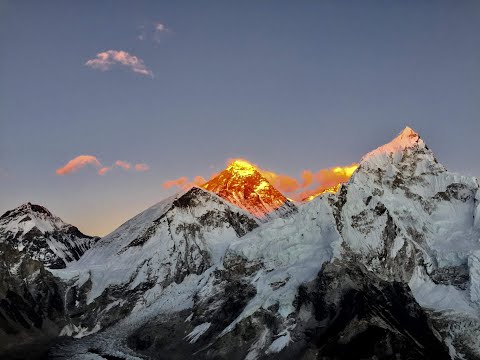
Located just miles from the Everest at an altitude of 5200 meters, the station provides a network signal to hikers along the Everest Base Camp.
SOS calls, Everest Base Camp Trek map routing, location beacons, emergency medical calls are all made possible. It’s through the use of cell phone towers and 3G connectivity.
Also, the mobile strength is fast enough to browse and even make video calls. This has become a great alternative to the pricey satellite phones that people used in the past.
However signal anywhere in the world is never 100 percent guaranteed. Hence there will be the certain area along the trek where the signal goes down. This is one reason why some climbers attempting to reach the Everest summit still stick to the dated yet trusted satellite phones. This is necessary because their lives are often at risk and they need a source to stay updated.
Mobile internet in the Everest Base Camp trek is enough to fulfill every trekker’s need. It is good enough to keep in touch with near and dear ones back home. For checking important emails and even posting pictures.
Want more information? Send us your query, and our experts will get back to you within 24 hrs.
Wifi connectivity
In terms of wifi connectivity, there are very few. There are only two free hotspots along the trek. Those are at the
“Starbucks” in Lukla and a bakery in Namche Bazaar.
Because of this carrying laptop seems useless. So, those who want to take laptop can think of leaving it in Namche and picking it upon your return.
Besides these two places, there are few cafes along the route including a good one in Gorak Shep. But be aware that there is a restriction in wifi hotspots in these areas. And the internet speed will slow down if many people are using it at the same time.
For this, we suggest buying a SIM CARD and using 3G. This doesn’t come with restriction to certain areas. And allows you to keep in touch with other tour members while being miles away from a WIFI hotspot.
However most tea house will offer wifi, but this will cost you more expensive than an internet café.
Everest link is the only internet provider for the entire region. This is why when Everest link goes down, all wifi along the route goes down.
Wifi hotspot, Signal Strength and Mobile Service
The signal strength can vary from place to place and the same is for mobile service.
So, allow us to break down the cost of internet coverage and service availability in the Everest Base Camp trek route.
Lukla
Wifi signal: Good
Wifi cost: USD 5 (unlimited)
Charging cost: USD 1 or 2 per hour
Cell coverage: Ncell 3g Network.
Phakding
Wifi signal: Wifi available only at a local bakery for an hourly fee.
Charging cost: Free
Cell Coverage: 3G, 2G Ncell network
Namche Bazaar
Wifi signal: very good
Wifi cost: USD 2 to 5 per hour at café, USD 10 to 15 unlimited at tea houses.
Charging Cost: Free
Cell Coverage: Ncell 3G
Khumjung
Wifi Signal: Good
Wi-Fi cost: US$ 5 Unlimited
Charging cost: US$ 3 per hrs
Cell coverage: 2G Ncell Network
Tyangboche
Wifi Signal: Poor signal
Wi-Fi cost: US$ 5 per hrs
Charging cost: US$ 5 per hrs
Cell coverage: 3G Ncell Network
Dingboche
Wifi Signal: Good signal
Wi-Fi cost: US$ 7 to 10 per hrs
Charging cost: US$ 5 per hrs
Cell coverage: 3G Ncell Network
Lobuche
Wifi Signal: Good signal
Wi-Fi cost: US$ 10 per hrs
Charging cost: US$ 5 to 7 per hrs
Cell coverage: 3G Ncell Network
Gorakshep
Wifi Signal: Good
Wi-Fi cost: US$ 12 per hrs
Charging cost: US$ 5 to 7 per hrs
Cell coverage: 3G Ncell Network, You will get strong 3G service in Everest Base Camp Nepal.
Pheriche
Wifi Signal: Good
Wi-Fi cost: US$ 7 Unlimited
Charging cost: US$ 3 to 5 per hrs
Cell coverage: 3G Ncell Network
Useful tips for Internet Access on Everest Base Camp Trek
- Due to restriction in wifi hotspot and slow speed, purchase a Sim card. It is data bundle that you can use from almost everywhere.
- If you intend to use masses of data and need a faster internet connection. You can use the internet at some cafes and tea houses that have good wifi signal by paying a hefty fee.
- With each progressing day, connectivity continues to improve in the EBC region. Be sure to check on recent announcements and updated prices. This will ensure you are choosing the best option that will give the best value for your money.
- For a perfect connection, it’s vital for you to have your devices charged. Thus, carry an external support like batteries.
Conclusion
Unlike the old days, the internet access on Everest Base Camp trek is getting better with each year.
One may prefer staying away from the internet and mobile phones while on this wonderful journey. But, having the internet in this region is equally important for one’s safety.
Thus due to all these reasons, the climbers consider the establishment of the base stations as an ambitious and helpful project.
The expensive satellite connections that work on and off is now replaced by this service. And this makes possible for all the climbers to keep in touch with their family and friends.
If you have any further questions, please feel free to contact us. We are here to guide and assist you with our best knowledge.
Want more information? Send us your query, and our experts will get back to you within 24 hrs.
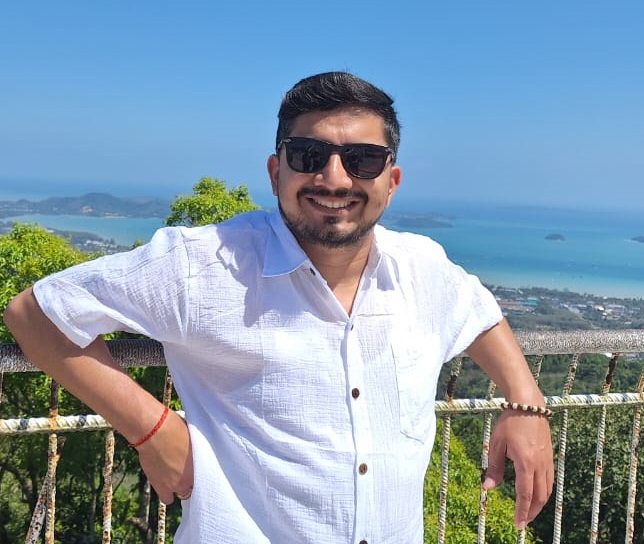
Madhav started working as a porter in 2001 and then moved on to work as a trekking guide. After working in the trekking and tourism industry for eight years, he co-founded Mosaic Adventure in 2009.
Madhav has trekked to most of the trekking destinations in Nepal, including Everest Base Camp Trek, Annapurna Base Camp, Annapurna Circuit Trek, Poon Hill Trek, Jomsom Muktinath Trek, Indigenous Peoples Trek, Langtang Valley Trek, Mardi Himal Trek, and all of the day hikes around Kathmandu.
He has also extensively traveled to other countries such as Australia, the USA, the UK, France, Hong Kong, Japan, China, the Philippines, the UAE, Saudi Arabia, Bahrain, Thailand, Turkey, and India. Madhav is the one who answers most of your questions about trekking and tours and helps to plan your trip by giving a personal touch.