Journey to Everest Base Camp isn’t your everyday regular hike, it’s a thrilling adventure into the heart of the world’s tallest mountains, where each step connects with the stories of legendary climbers and the strong Sherpa culture.
As May unfolds its gentle touch over the Himalayas, the EBC trek becomes even more magical, as the fresh mountain breezes mingle with the colorful beauty of rhododendron flowers.
In this guide, we invite you to come along on a virtual journey, exploring the amazing things and little challenges that come with going for the Everest Base Camp Trek in May.
Think of snow covered towering peaks, prayer flags swaying in the Himalayan air and new fellow trekking friends sharing stories about victories and determination.
May is more than just a month, it is an entrance to an adventure that offers the peacefulness of high altitude landscapes and the excitement of overcoming tough trails.
There is no doubt that the summit of Mt. Everest is the highest point on the planet. However, trekking to its base camp is still an adventure and you shouldn’t miss experiencing this adventure.
Everest Base Camp trek is usually at the top of the bucket list for every adventurer. May is the best time to opt for the Everest Base Camp trek for many reasons.
Among which, on this trek, you walk through rhododendron forests, authentic Sherpa villages, large glaciers and moraines and end at Everest Base Camp.
Trekking to the base camp is packed full of adventure, that begins with flight to reach Lukla taking about 30 minutes from Kathmandu.
Everest Base Camp Trek in May is even more exciting than it sounds!
So, get your hiking boots on, adjust your backpack and let’s dive into the magical world of the Everest Base Camp trek, where every step brings you closer to the top of Mount Everest.
Table of Contents
- Weather Conditions of Everest Base Camp Trek in May
- Itinerary for Everest Base Camp Trek in May
- Highlights of the Everest Base Camp Trek in May include:
- Useful Tips for Everest Base Camp Trek in May:
- Best Reason for Everest Base Camp Trek in May
- Frequently Asked Questions (FAQs)
- What is the weather like in May on the Everest Base Camp trek?
- Is May a good time to avoid crowds on the Everest Base Camp trek?
- How hard is the Everest Base Camp trek in May? What is the difficulty level of the Everest Base Camp trek in May?
- What is the cost of the Everest Base Camp trek in May?
- What are the permits that I need to obtain to do the Everest Base Camp trek in May?
- How safe is it to trek to Everest Base Camp in May?
- Recommended Trekking Routes in Everest Region
- Conclusion
Weather Conditions of Everest Base Camp Trek in May
Nepal has basically four distinct climatic seasons, spring, monsoon, autumn and winter.
But, the beautiful Himalayan country invites adventure seekers during the golden windows of autumn and spring.
These months are popular among trekking enthusiast due to its mild temperature, comparatively dry season and clear blue sky.
As the vibrant mosaic of spring unfolds, May stands out as a prime month for trekking, a sweet spot just before the monsoon curtain descends upon Nepal.
May also holds a special significance as the chosen month for scaling the heights of the world’s tallest peak, Mt. Everest.
As the sun graces the region, the afternoons witness the gentle dance of melting ice, pushing daytime temperatures above freezing while rainfall remains a rare occurrence.
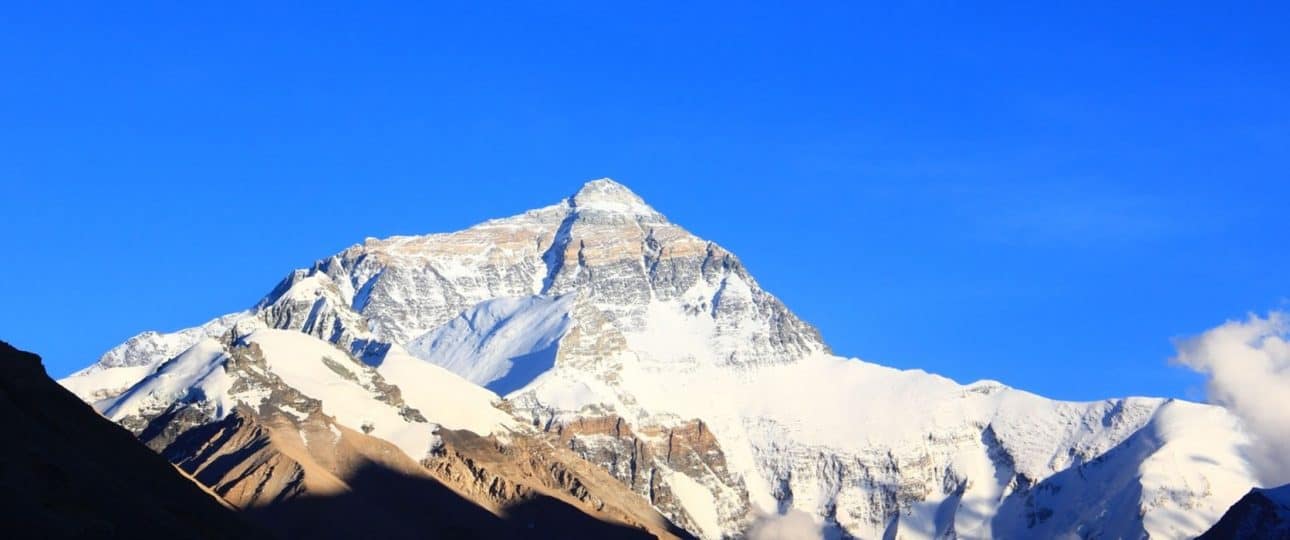
This month gifts trekkers with crystal clear days, unveiling the breathtaking majestic beautify of Mt. Everest and neighboring Himalayan giants, including the Mt. Makalu, Mt. Manaslu and Mt. Kanchenjunga, all standing tall above 8,000 meters.
The clear blue sky and favorable weather weave a magical tapestry, rendering the Everest Base Camp Trek in May an unforgettable journey of a lifetime!
Yet, amid this enchanting backdrop lies one of the trek’s most unpredictable companions – the weather.
The Everest Base Camp area, waiting for you amidst towering peaks, is a small world in itself of fluctuating temperatures, a rollercoaster between day and night.
Prepare for the unpredictable as you navigate through this breathtaking terrain, as harsh weather conditions may throw challenges your way, creating uncomfortable situations.
The night wraps the region in a chilly embrace, a sharp difference from the daytime warmth. Although exact temperature ranges are hard to pin down, in May, daytime highs are typically around 15°C, dropping to nighttime lows near -3/4°C.
Want more information? Send us your query, and our experts will get back to you within 24 hrs.
In May, the sun generously graces the landscape with 8 to 9 hours of daily radiance, presenting brighter and sunnier days compared to the imminent rainy season. The majority of May days remain dry and stable, with a minimal chance of rain. However, as the month bids farewell, the weather may showcase more variability, with clear mornings giving way to cloudy afternoons.
Completing the Everest Base Camp trek in May brings its share of cold temperatures and brisk winds, yet fear not, as the average wind speed hovers around 15 km/h.
This pre-monsoon period also treats trekkers to a vibrant display of colors – not just in the sky, but also on the ground, as various flowers bloom, especially at lower altitudes.
In summary, Everest Base Camp Trek in May offers trekkers a Himalayan paradise with nice weather, promising stunning mountain views and a chance to enjoy the unique beauty of the Everest region. So, get ready for a memorable journey through this breathtaking landscape!
May is certainly the right time for your Everest Base Camp trek!
Itinerary for Everest Base Camp Trek in May
Here’s a recommended itinerary for the Everest Base Camp trek in May:
Day 1: Arrival in Kathmandu
Arrive in Kathmandu and spend a day exploring the vibrant capital. Make sure you have all the necessary gear for the trek.
Day 2: Kathmandu – Ramechap – Phakding
Early morning drive from Kathmandu to Ramechap (approximately 4-5 hours), then take a flight from Ramechap to Lukla. Start trekking from Lukla to Phakding.
Day 3: Phakding to Namche Bazaar
Trek from Phakding to Namche Bazaar. Acclimatize in Namche Bazaar.
Day 4: Acclimatization Day in Namche Bazaar
Explore Namche Bazaar and acclimate to the altitude with a hike to Everest View Hotel.
Day 5: Namche Bazaar to Tengboche
Trek from Namche Bazaar to Tengboche. Visit Tengboche Monastery.
Day 6: Tengboche to Dingboche
Trek from Tengboche to Dingboche. Enjoy the stunning views along the way.
Day 7: Acclimatization Day in Dingboche
Acclimatize in Dingboche. Take a short hike to Nangkartshang Peak for better acclimatization.
Day 8: Dingboche to Lobuche
Trek from Dingboche to Lobuche. Witness the change in landscapes.
Day 9: Lobuche to Gorak Shep, Visit Everest Base Camp
Trek from Lobuche to Gorak Shep. Visit Everest Base Camp. Return to Gorak Shep for an overnight stay.
Day 10: Hike to Kala Patthar, Descend to Pheriche
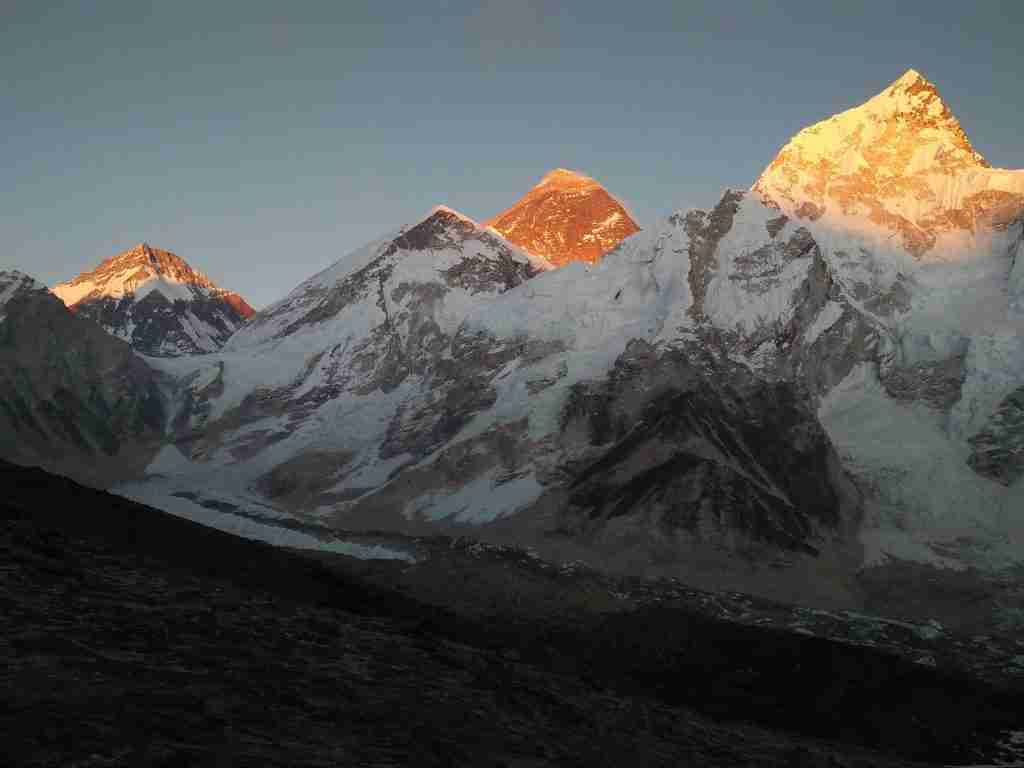
Early morning hike to Kala Patthar for stunning sunrise views. Descend to Pheriche for a lower altitude overnight stay.
Day 11: Pheriche to Namche Bazaar
Trek from Pheriche to Namche Bazaar. Descend to a lower altitude for better acclimatization.
Day 12: Namche Bazaar to Lukla
Trek from Namche Bazaar to Lukla. Celebrate the completion of the trek.
Day 13: Lukla to Ramechap, Fly to Kathmandu
Morning flight from Lukla to Ramechap. Drive back to Kathmandu.
Day 14-15: Buffer Days
Keep these days as buffer days in case of flight cancellations or unforeseen circumstances. Explore nearby areas or rest as needed.
Day 16: Departure
Depart from Kathmandu, taking with you the memories of an incredible Everest Base Camp trek.
Keep in mind that flight schedules to and from Lukla can be unpredictable, no matter which month you choose for this trek.
It’s advisable to have buffer days in your itinerary to accommodate any flight cancellations or delays. Always be flexible with your plans.
Also, if you are traveling from countries with a significant time difference to Nepal, it’s better to arrive in Nepal one day earlier.
Keep two days in Kathmandu before flying to Lukla to start the trek. It gives you time to adjust to the time difference and get over jet lag. It’s better to start with a relaxed body than a tired one.
If you’re considering booking a trek in May, check out our 14-day Everest Base Camp trek package. We offer multiple dates in May for you to choose from.
Ensure an unforgettable adventure with our industry-leading guides and the entire team. Visit our product page for more details.
Highlights of the Everest Base Camp Trek in May include:
- Namche Bazaar, the Khumbu Sherpa Capital.
- Trekking to the base of the breathtaking world’s highest mountain, Mt. Everest.
- Hiking to Kala Patthar, one of the best vantage points to get a close-up view of Mt. Everest.
- Stunning views of other peaks, including Mt. Lhotse, Mt. Nuptse, Mt. Makalu, Mt. Ama Dablam, and Mt. Cho Oyu.
- Walking through Sagarmatha National Park and witnessing a wide range of flora and fauna.
- Visiting Tengboche Monastery, one of the largest monasteries in the Khumbu region.
- Exploring different authentic Sherpa villages, like Tengboche, Dingboche, Lobuche, Pheriche, and Gorak Shep.
- Learning about the culture and lifestyle of the local Sherpa people.
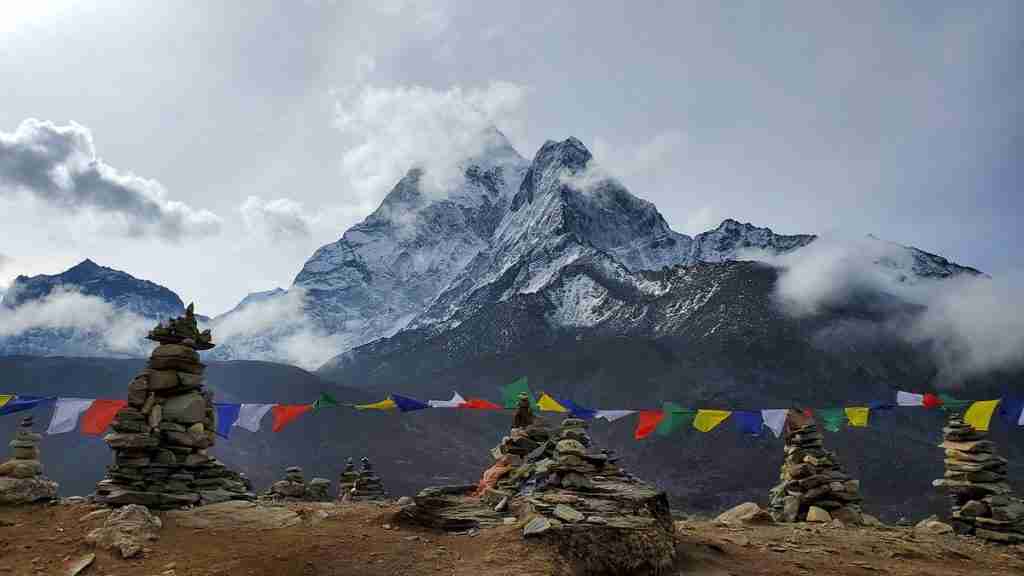
Useful Tips for Everest Base Camp Trek in May:
Advance Booking for flight and accommodation
May is the end of the spring season, which is the second-best time for trekking in Nepal.
Thus, the trail might be crowded but not as much as during the autumn season.
However, it’s a good idea to pre-book your flight tickets and accommodation.
If you don’t book your accommodation on time, you might not get a room or have to share a room with an unknown person.
Also, you might have to sleep in a communal area or dormitory.
After tiring walks, no one wants to sleep on the plain floor only on a sleeping bag without a heater at freezing temperatures.
Do you?
Hire a guide or porter
Trekking in the Himalayas is an adventure.
Sharing this adventure with someone will make your journey more memorable and enjoyable.
Besides, it’s also a good idea to hire a guide or porter for your own safety.
If you trek independently on the mountain trail, you might get lost.
A guide or porter will lead you throughout the trail, and there is no chance of getting lost.
A guide will also help you with booking accommodation and flights.
They’re also familiar with the local language, so with their help, you can communicate easily with locals.
Learn about weather conditions
Remember, trekking in Nepal covers a wide variety of landscapes and climates.
Thus, temperatures will vary drastically with altitude.
So, you need to be updated with the current weather situation around the Everest Base Camp area.
Likewise, the higher you go, the colder it gets. Roughly, the temperature drops by 6 degrees Celsius for every 1000m rise in altitude.
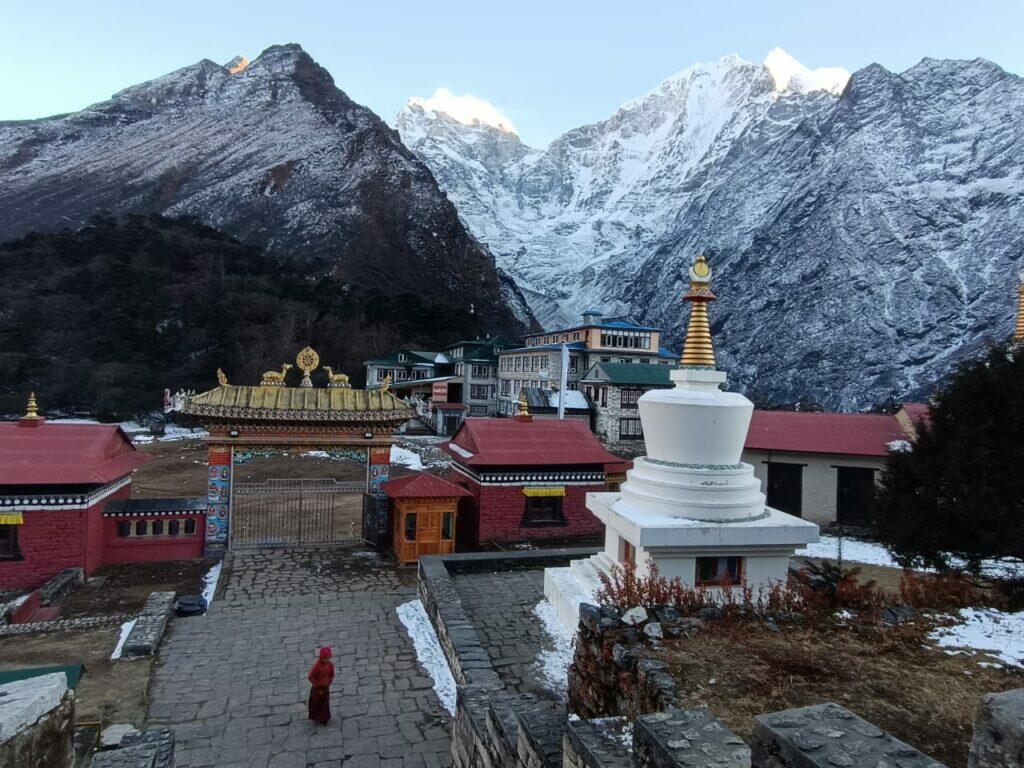
Choose your Travel Clothing Wisely
When preparing your Everest Base Camp Trek packing list, you need to be a bit tricky.
As you have to match all your clothes with your travel activities.
In this situation, layering is a must.
It’ll save your time, make you as comfortable as possible in changing trail conditions, and weather conditions.
During May, the daytime temperature is hot, so you can hike in light t-shirts and trekking shorts or convertible pants.
At night and early morning, the temperatures are below freezing level, so you’ll require a heavy down jacket, sweater, fleece jacket, and heavyweight pants for high elevations.
Hiking boots, camp shoes, wool socks, and lightweight socks are also essential.
You also need gloves to keep your hands warm and comfortable. At the same time, you need waterproof lightweight gloves.
Pack some rain trekking gears
At the end of May, the pre-monsoon rain starts, especially at lower altitudes.
So, it’s better to carry an umbrella, raincoat, waterproof jackets, and trousers for yourself.
Also, to be on the safe side, you need to invest a few dollars in good waterproof boots.
Prepare for Altitude sickness
Everest Base Camp is situated at an altitude of 5,200 meters above sea level.
Acclimatization to the altitude of EBC is not always possible, so staying at the base camp can reduce the risk of altitude sickness.
So, it’s always a good option to descend to a slightly lower altitude for a night when ascending high.
To prevent and avoid altitude sickness, you need to drink plenty of water, about 2-3 liters per day.
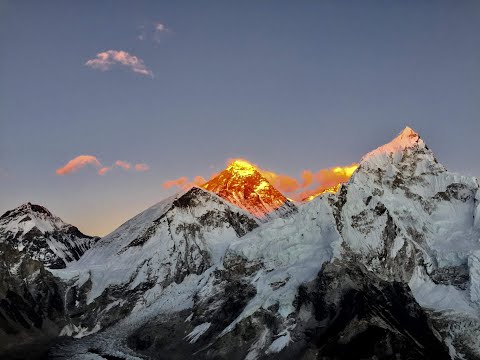
Best Reason for Everest Base Camp Trek in May
The Best Reason for Everest Base Camp Trek in May is the pleasant weather conditions, low chance of rainfall, and bright sunny days.
During this month, you do not have to wear heavy trekking gear since the temperature is fine, and you will be comfortable enough to walk with light trekking gear.
The clear skies will reward you with stunning mountain vistas.
May is the month of climbing expeditions, and you will get a chance to meet a few inspiring summit attempters.
The mostly clear skies also mean a lower chance of flight cancellation while getting into/from Lukla.
Additionally, the terrain is colorful, and the trails are not overcrowded.
If you want solitude, then May might be the best time for you.
Furthermore, Dumje, a masked festival, is celebrated in various places like Junbesi of Solukhumbu and Tengboche, Namche Bazaar, Khumjung, and Pangboche of the Khumbu region.
It is one of the major festivals celebrated in the highlands of the Khumbu region.
Frequently Asked Questions (FAQs)
What is the weather like in May on the Everest Base Camp trek?
May is a good time to trek to Everest Base Camp as the weather is usually mild and dry, with clear skies and warm temperatures during the day.
However, temperatures can drop to freezing at night, so warm clothing is essential.
May is pre-monsoon season, so you should expect some light rain till Tyangboche. Be prepared with rain gear to avoid getting wet.
Is May a good time to avoid crowds on the Everest Base Camp trek?
May is one of the popular months to trek to Everest Base Camp, so you may still encounter some people, particularly in the area between Namche – Dingboche – Gorakshep.
However, it’s less busy than the peak trekking season of October/November or March/April.
To avoid crowds, you can also take an alternative route going via Gokyo Lakes.
You will need four more days to take this route to reach EBC.
How hard is the Everest Base Camp trek in May? What is the difficulty level of the Everest Base Camp trek in May?
Everest Base Camp Trek in May is pretty much similar to other months.
The good thing about doing it in May is that the temperature is lower and it is still considered one of the best months to do it.
The Everest Base Camp trek is very achievable with proper preparation in advance and led by an experienced local guide.
In May, you may also be able to see people around the EBC area preparing to climb Mount Everest itself.
Start cardiovascular work, which will help the most while trekking. Lots of cycling, running, and swimming are recommended exercises.
What is the cost of the Everest Base Camp trek in May?
Like the trek in other months, the cost of the Everest Base Camp Trek in May is USD 1445 per person for our 14-day trip.
What are the permits that I need to obtain to do the Everest Base Camp trek in May?
Whatever month you choose to trek, you will need similar permits throughout the year.
You need to have two permits for the Everest Base Camp trek, which are the Sagarmatha National Park entry permit along with the Khumbu Village Municipality entry permit.
These are included in the tour cost of USD 1445 per person.
How safe is it to trek to Everest Base Camp in May?
May is one of the safest months to trek to Everest Base Camp.
It is generally safe to trek to Everest Base Camp throughout the year.
You must be aware of the dangers that can arise if you trek without proper acclimatization.
It is really important to follow the advice of your guide to ensure a safe adventure and an enjoyable trip.
Recommended Trekking Routes in Everest Region
The Everest Base Camp trek is a dream trip for many trekkers who dream of walking to the base of the world’s tallest peak.
During the Everest Base Camp trek, you can also do side trips that offer a great opportunity to explore hidden gems of the Everest region, such as the Gokyo Valley, Cho-La Pass, and Gokyo Ri peak.
Likewise, if you want to explore the Everest Base Camp trek in a short time, we also offer the Everest Base Camp Helicopter trek.
Generally, the weather is clear during May, so there is a rare chance of flight cancellation.
Thus, you can try the Everest Base Camp Helicopter trek.
Another option is to try the Everest Base Camp Trek and Fly Back by Helicopter, which is a few hours’ flight that takes you to Everest Base Camp and offers an amazing experience.
Gokyo and Everest Base Camp Trek
For avid trekkers who seek more adventure, challenges, and want to enjoy off-beaten trails, the Gokyo with Everest Base Camp trek is the perfect option.
Actually, it is more tranquil than other trekking routes in the Everest region.
The Gokyo and Everest Base Camp trek begins with a scenic mountain flight to Lukla from Kathmandu.
This trek is packed with full of adventures!
You’ll first hike to the base of the world’s tallest peak, Mt. Everest, crossing Cho-La Pass, the highest pass in the Khumbu region, hike to the famous vantage point of the best mountain views, i.e., Gokyo Ri, and finally explore the Gokyo valley.
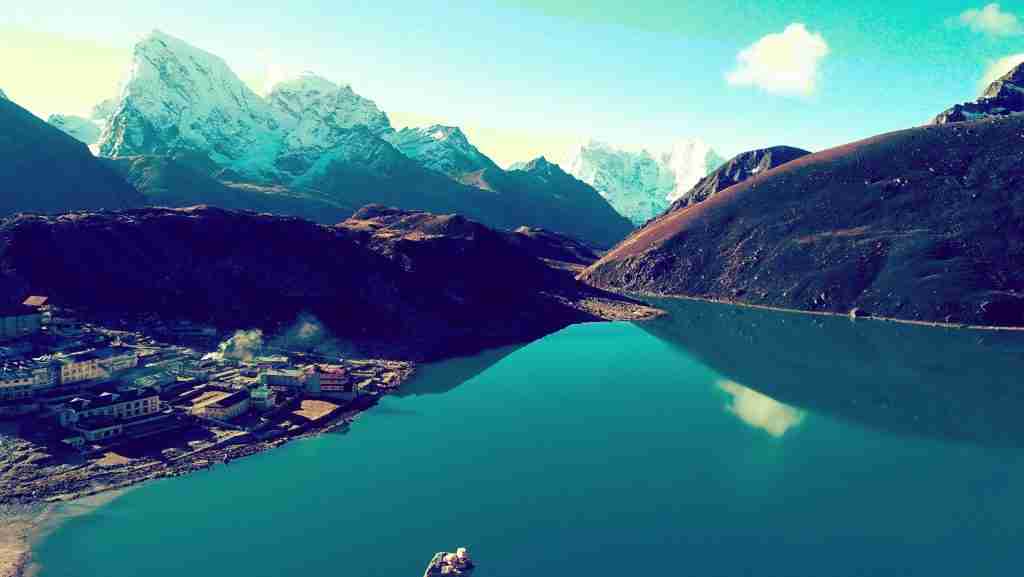
At Gokyo Valley, you’ll visit the stunning Gokyo Lake surrounded by snow-capped mountains.
The hike to the Gokyo ridge offers a 360-degree glimpse of the Himalayas.
Furthermore, the trail joins the Chola Pass, the famous highest mountain pass.
This trek offers ample time for acclimatization.
En route, you’ll walk past interesting Sherpa villages and ancient Buddhist monasteries.
This place offers you a great insight into the vibrant Sherpa culture and their lifestyle.
This trek also requires a good level of fitness with previous hiking experience, as well as strong determination and endurance.
However, you don’t need to be a serious trekker, but previous trekking experience would be a big asset.
Highlights:
- Enjoy the sunrise over Everest from Gokyo Ri
- Explore the Gokyo Valley
- Visit Everest Base Camp and hike to Kala Patthar for the best view of Mt. Everest
- View the large Khumbu icefall
- Superb views of Mt. Everest, Lhotse, Makalu, and Cho-Oyu from Gokyo Ri
- Cross one of the popular high passes of the Himalayas, the Chola Pass at 5,300 m.
- Hike through traditional Sherpa villages and experience their culture and lifestyle.
Jiri to Everest Base Camp Trek
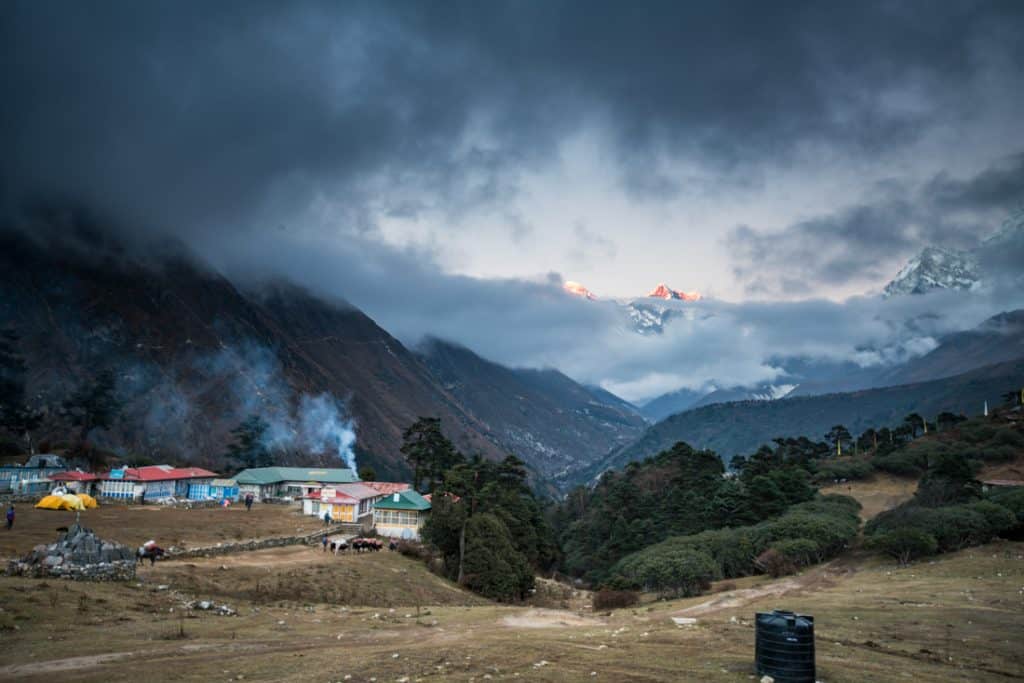
The trail of the Jiri to Everest Base Camp trek is infinitely rewarding for a number of reasons.
It is the most authentic trek in the region as it follows the same trail that early iconic mountaineers would have used.
It is the longest trekking route in the Everest region, starting from Jiri and ending at Lukla.
Apart from this, if you’re scared of the mountain flight, then you can opt for the Classic Jiri route.
This trek will be a once-in-a-lifetime experience, as you’ll be walking via the peaceful trekking trail and only accompanied by the mighty Himalayan peaks.
On the trail, you’ll come across some beautiful mountain villages like Dughla and Bupsa.
From Lukla, the trek follows the same classic Everest Base Camp trek trail via Phakding, Namche Bazaar, Tengboche, Dingboche, and Gorakshep.
During this trek, you’ll get plenty of opportunities to see wildlife in Sagarmatha National Park.
Commonly seen animals are the Himalayan Tahr, Ghoral, Musk deer, and occasionally Jackal.
Other rarely seen animals are the Himalayan black bear, wolf, and snow leopard.
In this trek, you’ll get a chance to visit numerous Buddhist monasteries and more culturally rich ethnic villages.
Highlights:
- Walk via the classic trekking route, which was discovered by Tenzing Norgay Sherpa and Edmund Hillary during their expedition in 1953.
- Explore the landscape of the Khumbu region
- Visit the famous Tengboche Monastery
- View the Khumbu Icefall
- Breathtaking view of the world’s tallest peak, Mt. Everest, from Kala Patthar
- Explore the National Park at the highest altitude in the world, Sagarmatha National Park
- Observe the unique Sherpa culture and lifestyle
- Enjoy the panoramic view of Mt. Ama Dablam, Mt. Lhotse, Mt. Pumori, and Mt. Nuptse from the base camp.
Conclusion
So, to sum it up, Everest Base Camp trek is like a super exciting adventure where people can totally get lost in the amazing views of the Himalayas.
May is like the perfect time to hop onto this crazy journey because the weather is nice, there’s not much rain and the sky is all clear.
May is when the land starts turning all green and flowery before the big rains come.
You can see the really tall peaks like Mt. Everest and other huge mountains that are like above 8,000 meters.
The whole path you walk is full of cool stuff to see and do.
There are cool villages with Sherpa people, a cool monastery and Sagarmatha National Park with nature things.
You walk through forests, big ice blocks and rocky land, and you can’t help but go “Wow!” at the whole scene.
But be ready for the weather being kinda crazy sometimes, like it can be hot in the day and really cold at night.
You need to wear the right clothes, like putting on more layers when you go higher and don’t forget your rain stuff.
Picking May for this trek isn’t just about the adventure.
It’s also a chance to watch those brave climbers getting ready to climb Mt. Everest.
May is better because there are fewer people on the path than during the busiest times.
It’s like a more peaceful experience.
May is also when they have a big colorful festival, so it’s not just about the mountains.
But remember, being safe is super important.
Listen to the guides who know stuff.
You don’t want anything bad to happen on this awesome journey in the Himalayas.
Want more information? Send us your query, and our experts will get back to you within 24 hrs.
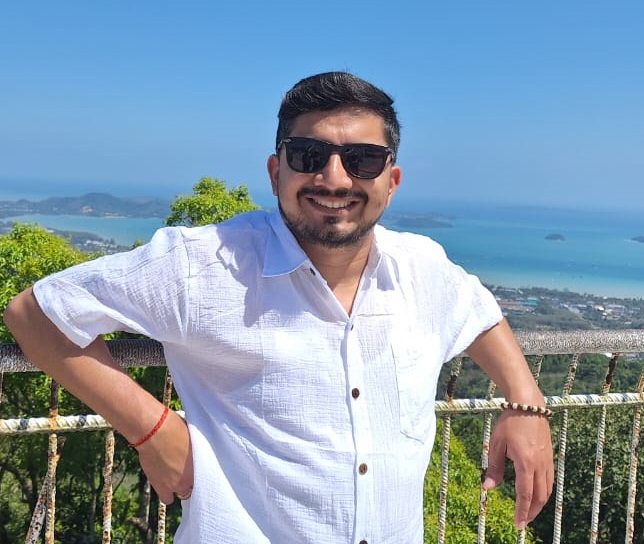
Madhav started working as a porter in 2001 and then moved on to work as a trekking guide. After working in the trekking and tourism industry for eight years, he co-founded Mosaic Adventure in 2009.
Madhav has trekked to most of the trekking destinations in Nepal, including Everest Base Camp Trek, Annapurna Base Camp, Annapurna Circuit Trek, Poon Hill Trek, Jomsom Muktinath Trek, Indigenous Peoples Trek, Langtang Valley Trek, Mardi Himal Trek, and all of the day hikes around Kathmandu.
He has also extensively traveled to other countries such as Australia, the USA, the UK, France, Hong Kong, Japan, China, the Philippines, the UAE, Saudi Arabia, Bahrain, Thailand, Turkey, and India. Madhav is the one who answers most of your questions about trekking and tours and helps to plan your trip by giving a personal touch.