
Peak Climbing in Nepal is one of the most popular adventures in the Himalayas, especially for climbers looking to summit trekking peaks above 6,000 meters. It refers to climbing officially designated trekking peaks, usually between 5,500 and 6,500 meters, that are less technical than major Himalayan expeditions.
While choosing peak climb in Nepal, it is wise to start with slightly lower peaks that carry less risk and lower chances of altitude sickness. Experienced trekkers and climbers often aim for expeditions above 7,000 meters, but many still prefer peak climbing as a safer and more balanced challenge.
For them, peak climbing in Nepal becomes the best way to satisfy their mountain cravings. These climbs are physically less demanding and easier than full-scale expeditions like climbing 8,848-meter Mount Everest, while still offering a true Himalayan climbing experience.
This guide is based on our years of hands-on experience organizing and guiding peak climbing trips across Nepal.
A few decades ago, Nepal was known to the world only as the home of Mount Everest, with people from all over the world summiting the highest peak on earth with different records. But for those who want to stick to traditional and more natural means of adrenaline rush, then peak climbing in Nepal is the perfect option for a moderate form of adventure that is more trying than trekking and easier than summiting the world’s highest peaks.
Some of the Most Popular Peak Climbing Options in Nepal
Island Peak Climbing
Island Peak is situated in the mystic Khumbu valley in the Everest region of Nepal. Climbing Island Peak takes a total of 20 days to complete the trek and reach the summit at an elevation of 6,189 meters.
Spring and autumn are the best months for island peak climbing. It is one of the wonderful and exciting peak climbs in Nepal. You reach the peak after passing through the world-famous Everest Base Camp as well as Kala Patthar, which are also important spots of the standard Everest Base Camp trek.
A longer and slower route is strongly recommended for proper acclimatization, especially for first-time peak climbers in the Everest region. The peak climb is moderately difficult and requires fit climbers with previous climbing experience as it combines both trekking and peak climbing. We have added Everest Base Camp for beginners, to acclimatize properly before attempting to reach the top of Island Peak.

The climb is considered non-technical and works well as an introduction to Himalayan climbing. The actual peak comprises a west face that is glaciated and rises from the Lhotse glacier.
From the Everest Base Camp, one has to pass through a rock ridge to the glacier, and from there, a steep snow head-wall finally leads to the summit. The steep climb is made worth all the effort by the breathtaking panoramic views of the mountains like Mount Everest, Nuptse, Lhotse, Makalu, Baruntse, Ama Dablam and many more.
The challenging peak climb is performed with the use of equipment like harnesses, carabiners, climbing boots, helmets, etc., to witness one of the most beautiful mountain vistas in the world, making the climb a truly unforgettable experience.
Pisang Peak Climbing
Situated in the Annapurna region, Pisang Peak rises above the Pisang village with lush green yak pastures. The peak climbing journey is a total of 17 days and takes you to an elevation of 6092 meters.
The months from September to November and April to May are the best seasons to complete the trek in the region and to finally climb the awesome peak. The Pisang Peak climb is often considered one of the easier peak climbing options in Nepal.
From the Pisang village, the path ascends through sparse forest and pasture lands to Kharka, where the base camp is set. Another high camp is set at an altitude of 5400m. A well-defined ridge from here takes you to a final steep snow slope that leads to the summit and is also the route for the descent.
A high level of physical fitness and good health ensures that you have an exciting trip from Besisahar onward.
The route is dominated by picturesque mountains, including Annapurna, Dhaulagiri, Manaslu, and Lamjung Himal. It also offers encounters with a variety of flora and fauna.
The trek is cultural and scenic, with visits to traditional villages, monasteries, and viewpoints along the Annapurna Circuit route.
Mera Peak Climbing
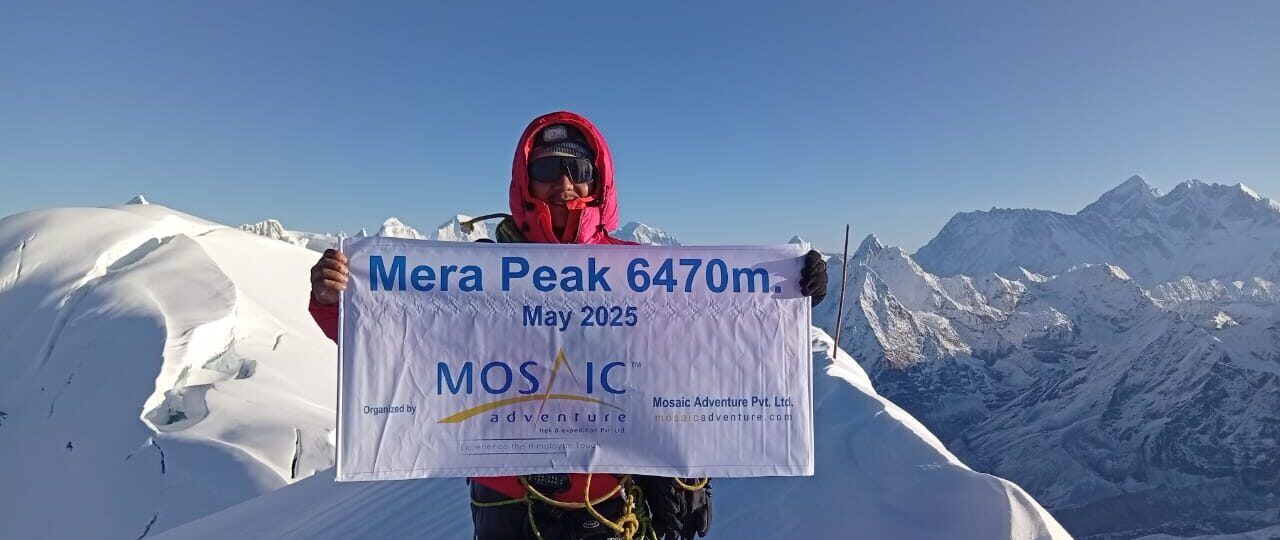
One of the most popular peaks for climbing in Nepal is Mera Peak. It is situated in the Khumbu valley of the Everest region and its summit is at an elevation of 6461 meters. The 19-day expedition and climbing trip is famous for being one of the highest trekking peaks in the region.
Due to its location on the edge of the Khumbu region, you get an unforgettable sight of the mighty Himalayan Mountains such as Everest, Kanchenjunga, Lhotse, Nuptse, Makalu, Cho Oyu, and others.
With a straightforward route, the peak is ideal for climbers with basic mountaineering experience and good fitness. The trip begins at Lukla airport, often described as one of the most challenging mountain airstrips in the world. From there, the trek through valleys could be quite physically demanding, but with proper acclimatization, the Mera peak climb is not that technically difficult. As you will be traversing a glacier, you will be using crampons and roped to others for most of the climb.
The trip is not just exciting because of the climb but also due to the trek from the Hinku valley through rhododendron and bamboo forests where you get to experience a great mixture of cultural and natural beauty.

Lobuche Peak
Lobuche Peak Climbing invites adventurers to the stunning Everest region of Nepal, offering a challenging yet rewarding mountaineering experience. Rising to 6,119 meters (20,075 feet) above sea level, Lobuche peak climbing in Nepal presents breathtaking panoramic vistas of the majestic Himalayas, making it a sought-after destination for climbers seeking both challenge and reward.
The main climbing seasons are from April to May and September to November, characterized by stable weather conditions and clear skies, enhancing the attractions of the journey.
Lobuche Peak expedition promises several highlights, including beautiful views of Everest, Lhotse, Nuptse and Ama Dablam, along with an experience to dive into Sherpa culture and traditions.

Tent Peak
Situated in the Annapurna region, Tent Peak, also known as Tharpu Chuli peak, is one of the best short peak climbing trips in the region. The trek incorporates the Annapurna sanctuary trek and takes you to a maximum elevation of 5663m.
The 2-week long climbing trip in the region allows you to enjoy magical close-up views of the surrounding Himalayan peaks
Annapurna Base Camp is also the base camp for the climb, from where you cross through the moraines of Annapurna south glacier to set up a high camp below North West ridge of the Tent Peak. A steep ascent to the summit ridge takes you up to the summit, which is a great vantage point to see tantalizing mountains like Annapurna range and others.
The ascent to the high camp includes walking on loose scree and steep grass slopes, making the climb a bit tricky.
Yala Peak
A short 15-17 day trip in the Langtang valley region, Yala Peak takes you to an elevation of 5732 meters.
The best season to do the peak climb is from October to April, which provides the best chance to travel to Himalayan regions and climb summits. The trek is through dense forests, valleys, and ethnic settlements to the Yala Base Camp.
It is a relatively easier peak climb, often chosen by trekkers who want their first Himalayan climbing experience. The highlight of the trek has to be the views of mountains like Langtang Lirung, Lenpo Gang, Dorje Lakpa, and the mighty Shishapangma on the Tibetan side.
It is one of the easy, wonderful yet adventurous trips with great views, cultural enrichment, and a physically demanding experience.
Chulu West Peak
This peak climbing experience in the Annapurna region is best suited for experienced trekkers. There are two peaks, Chulu East and West.
The west peak stands at an elevation of 6419 meters and provides a great trail for viewing majestic mountains like Dhaulagiri, Nilgiri, Annapurna, and others.
The trail proceeds to Manang valley, one of the highest valleys in the world, and requires 3 camps, including the base camp. From the base, the route up the North West ridge is followed, leading up to the real peak.
The return trip trail passes through the Thorung La pass and Jomsom, adding more flavor to the already exciting trip.
Final Thoughts
These are a few climbing peaks in Nepal that we believe could be one of the most memorable and exciting trips of your life. Whether you are a novice climber or an expert mountaineer, the mountains of Nepal have a certain type of peak for you that perfectly fits your needs and climbing level.
But before going on these climbing trips, you must do some physical exercises and pack properly with the right equipment for peak climbing in Nepal. You must be well trained to use ice axes, crampons, and ropes. Give yourself a break from the usual adventure sports, and give peak climbing in Nepal a chance to reshape how you see adventure in the Himalayas.
Other than that, a number of adventure sports have made Nepal a Mecca for adventure lovers all around the world. From rafting, and canyoning to bungee jumping, paragliding, and a 1 hour scenic flight to Mount Everest, a number of adventure sports on land, water and air make the trip to Nepal an exciting one.
Want more information? Send us your query, and our experts will get back to you within 24 hrs.

Madhav Prasad is a seasoned trekking and tourism expert with over two decades of experience in the field. Starting his career in 2001 as a porter, Madhav quickly advanced to the role of trekking guide, gaining invaluable hands-on experience in Nepal’s diverse trekking routes. In 2009, after eight years of dedication to the industry, he co-founded Mosaic Adventure, a leading trekking and tour company known for its commitment to safety, sustainability and personalized service.
Madhav has personally trekked to nearly every major trekking destination in Nepal, including Everest Base Camp, Annapurna Base Camp, the Annapurna Circuit, Poon Hill, Jomsom Muktinath, the Indigenous Peoples Trail, Langtang Valley and Mardi Himal, among others. His experience extends beyond Nepal, as he has also successfully summited Mount Kilimanjaro, Africa’s highest peak.
In addition to his extensive trekking credentials, Madhav is well traveled globally, having explored countries such as Australia, the USA, the UK, France, Japan, China, and many others. His global exposure enhances his ability to understand and cater to the diverse needs of international trekkers.
Madhav is the primary point of contact for many clients at Mosaic Adventure, personally addressing inquiries and helping plan treks with a meticulous and personalized approach. His deep knowledge of Nepal’s trekking routes, combined with his global travel experience, ensures that every trek is well planned, safe and unforgettable.
